Skip to content
Brick production facilities waste 12-18% of available floor space through improper pallet sizing decisions, costing mid-size operations $15,000 to $40,000 annually in reduced throughput and inefficient material flow. Facilities producing fewer than 200,000 bricks monthly often overinvest in full-size pallets when half pallets deliver 25-35% better space utilization, while high-volume plants sacrifice productivity by underspecifying capacity. The wrong pallet size reduces production efficiency by 8-15% and increases handling labor costs by 20-30%.
If you want to select the optimal pallet size for your brick manufacturing operation, you need to understand dimensional differences, production volume requirements, space constraints, handling system compatibility, and cost implications across different facility scales. This comparison guide provides factory-verified data to support your pallet sizing decision.
What Are Half Pallets vs Full Pallets in Brick Production?
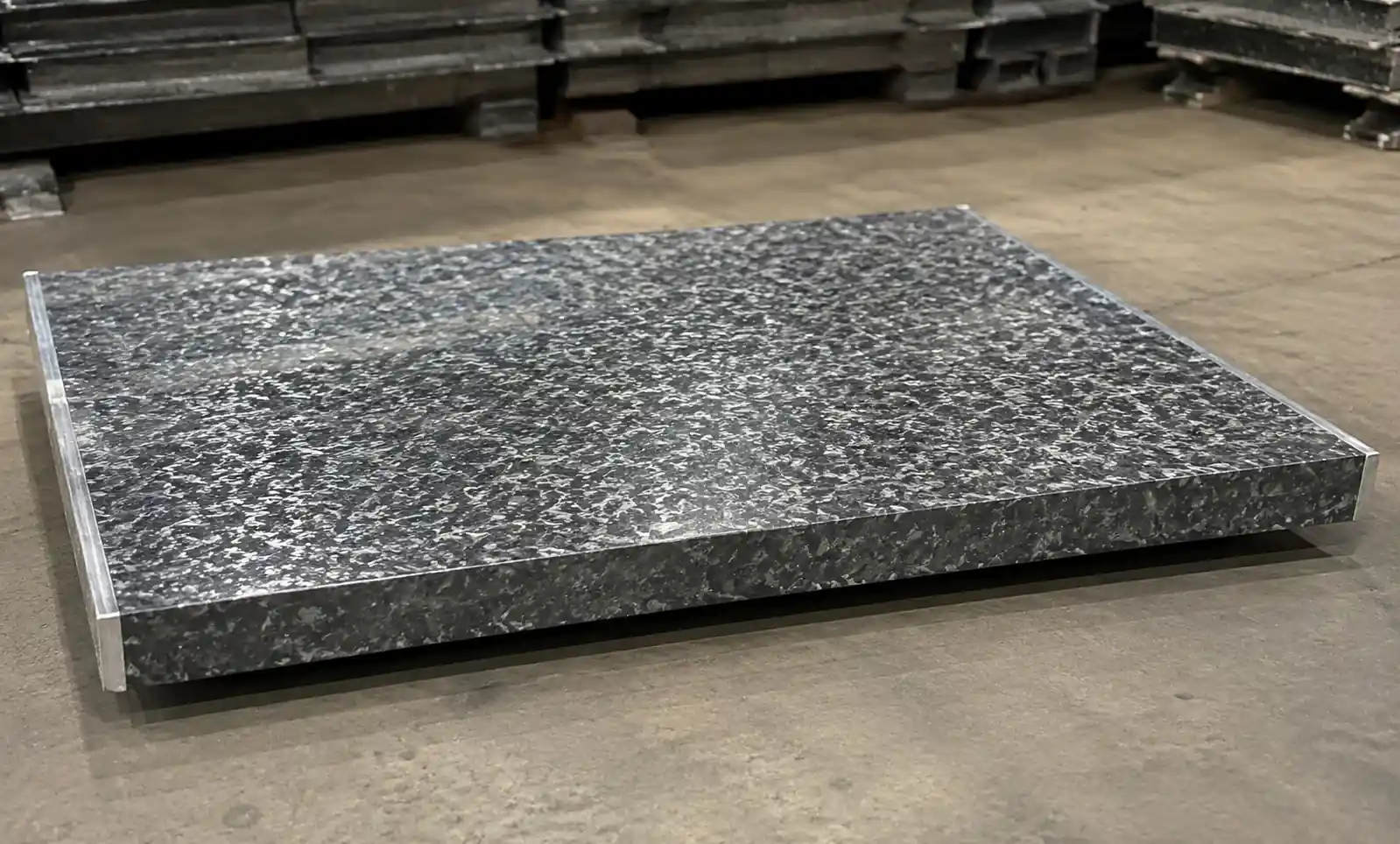
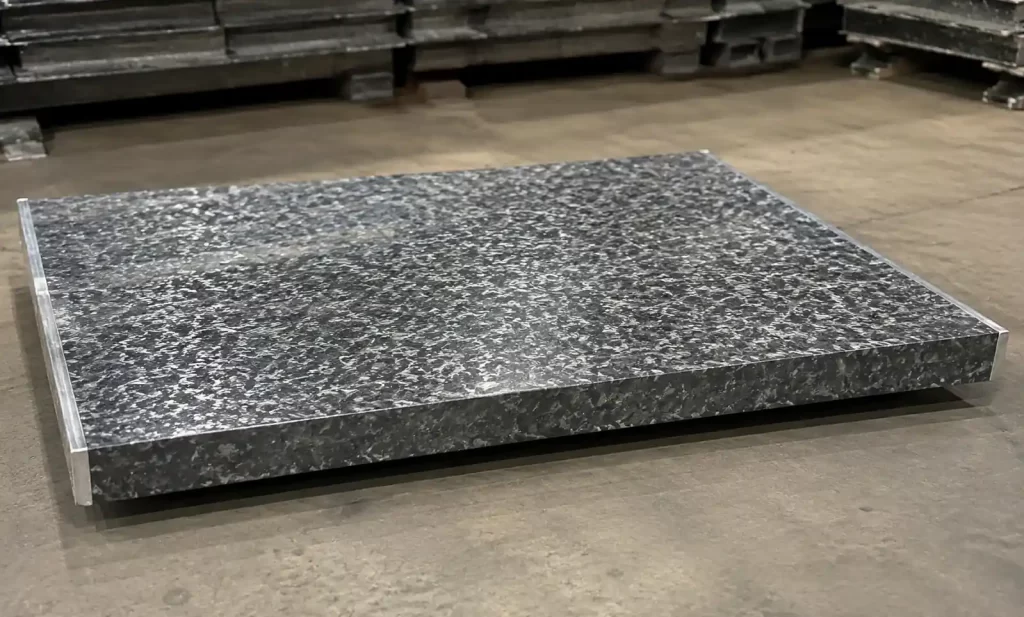
Full-size GMT pallets are standard brick production platforms measuring 850mm × 680mm (33.5″ × 26.8″), designed to support complete brick forming and curing cycles for mid-to-high volume manufacturing. These pallets serve as base molds during brick pressing and remain with bricks through initial curing stages, carrying loads of 2,500-3,000 kg while maintaining surface flatness within ±2mm tolerance.

Half pallets measure 850mm × 340mm (33.5″ × 13.4″)—exactly half the width of standard pallets while maintaining the same length dimension. This configuration allows two half pallets to occupy the same footprint as one full pallet, providing production flexibility for smaller batch runs, mixed product lines, or space-constrained facilities.
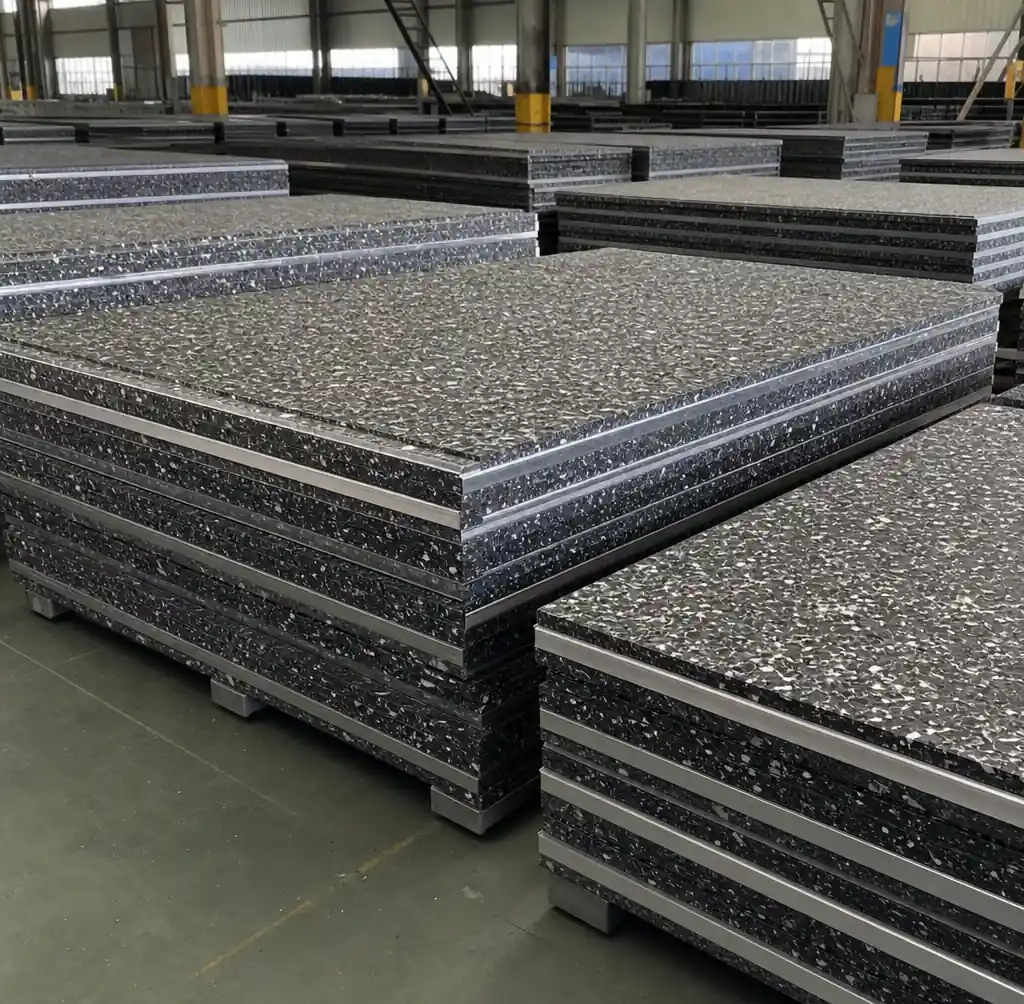
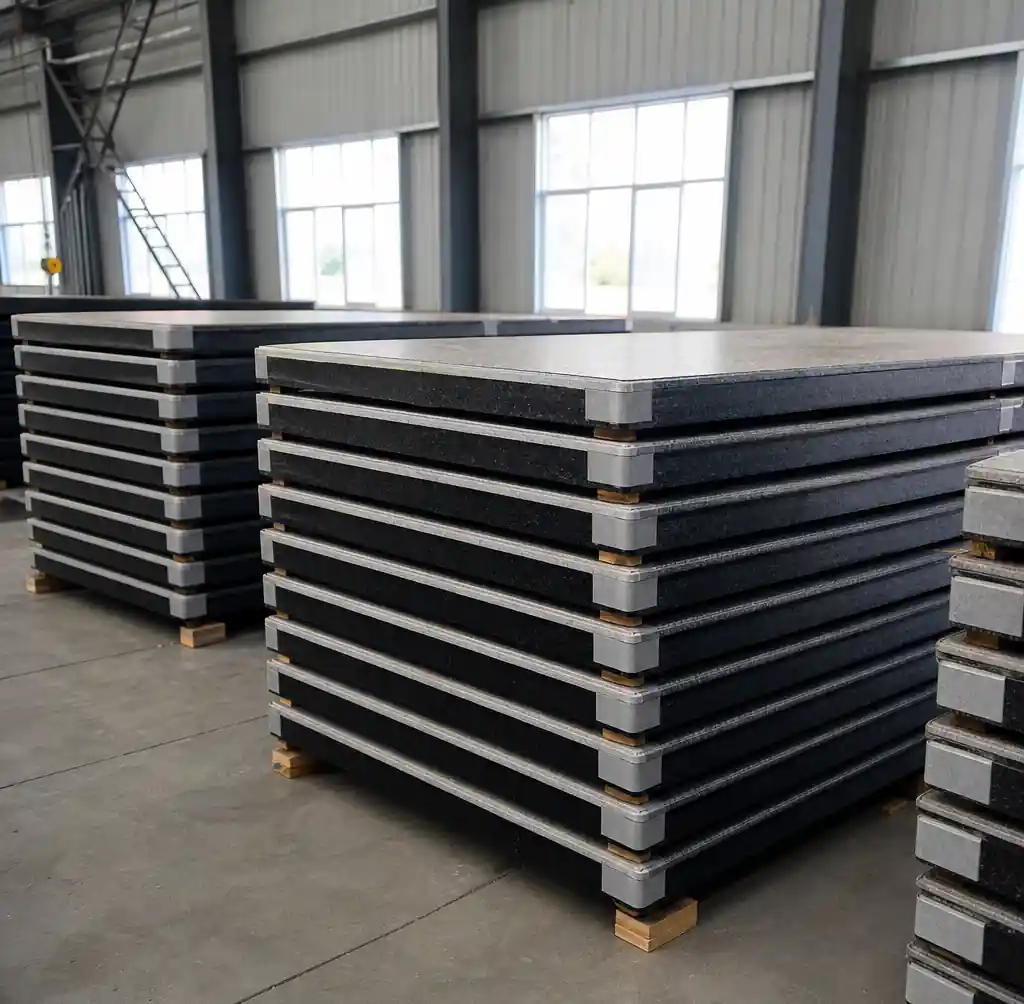
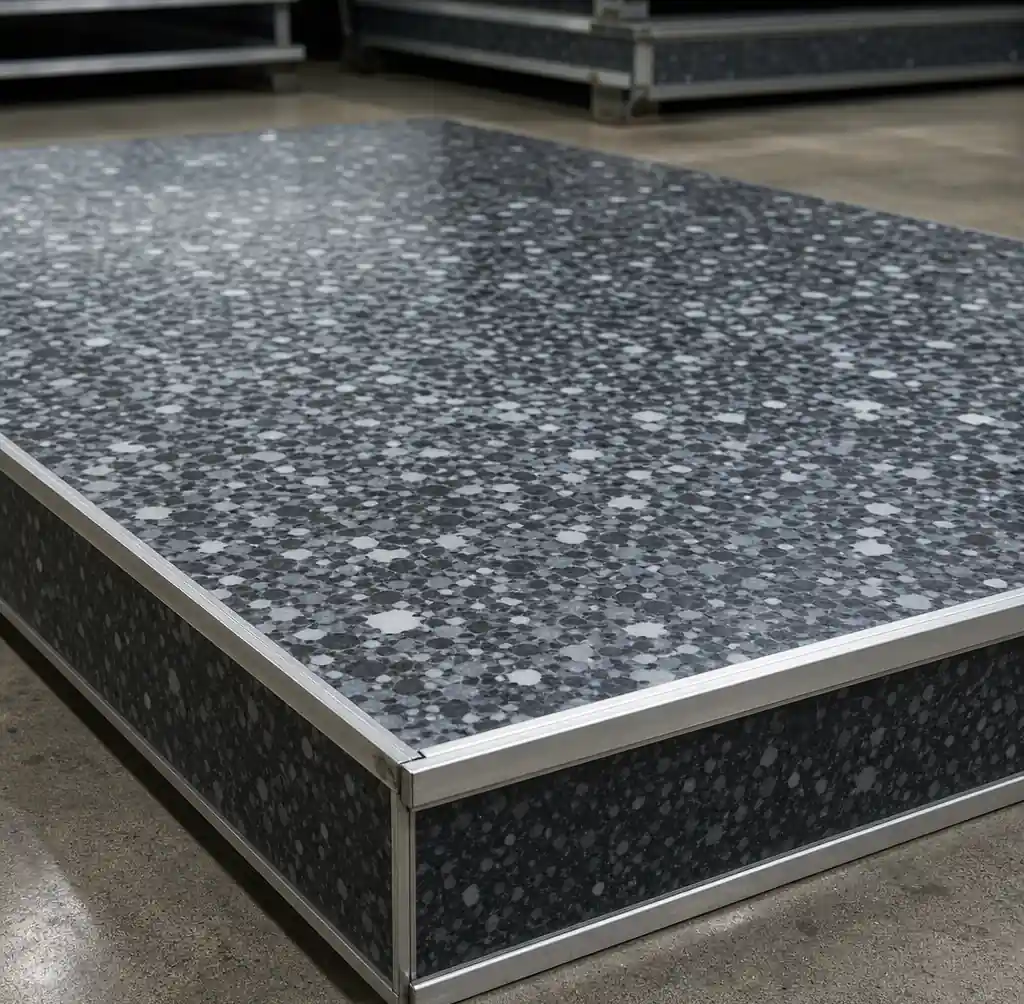
Both sizes use identical glass fiber-reinforced thermoplastic construction with aluminum edge reinforcement, ensuring the same durability characteristics and 10+ year service life. The material composition remains constant—recycled plastic matrix with glass fiber reinforcement creating the characteristic black-gray-white speckled texture. The difference lies purely in dimensional scaling, not material quality or manufacturing process.
Production facilities choose pallet sizes based on brick dimensions, daily output volume, curing area configuration, and handling equipment specifications. A facility producing standard 230mm × 114mm × 65mm bricks places different numbers per pallet depending on size selection, directly affecting throughput calculations and storage density.
Dimensional Specifications Comparison
Standard full GMT pallets measure 850mm × 680mm with thickness ranging from 15-25mm depending on load requirements. This footprint accommodates 12-16 standard bricks per layer in typical configurations, allowing vertical stacking of 6-8 layers for efficient curing and storage. The 680mm width dimension fits standard brick kiln cart widths and automated handling equipment designed for European pallet compatibility.
Half GMT pallets reduce the width dimension to 340mm while preserving the 850mm length, creating a 50% footprint reduction. This narrower profile holds 6-8 standard bricks per layer, maintaining the same stacking height capability as full pallets. The preserved length dimension ensures compatibility with conveyor systems and handling equipment designed for standard pallet lengths.
| Specification | Full Pallet | Half Pallet | Difference |
|---|---|---|---|
| Length | 850mm (33.5″) | 850mm (33.5″) | Identical |
| Width | 680mm (26.8″) | 340mm (13.4″) | 50% reduction |
| Thickness | 15-25mm | 15-25mm | Identical |
| Surface area | 0.578 m² | 0.289 m² | 50% smaller |
| Weight | 18-25 kg | 10-14 kg | 40-44% lighter |
| Bricks per layer | 12-16 units | 6-8 units | 50% fewer |
| Load capacity | 2,500-3,000 kg | 1,200-1,500 kg | 50-52% lower |
Weight reduction in half pallets creates handling advantages in manual operations. A worker moving 10-14 kg half pallets experiences 40% less physical strain than handling 18-25 kg full pallets, reducing fatigue and injury risk during 8-hour shifts. This matters in facilities without complete automation where workers manually position pallets on production equipment.
The identical length dimension means both pallet sizes work with the same conveyor widths, roller systems, and linear handling equipment. Facilities can switch between sizes without modifying conveyor infrastructure, providing production flexibility as output requirements change seasonally or with product mix variations.
Surface flatness specifications remain identical regardless of size—both maintain ±2mm tolerance across their entire surface. This consistency ensures brick quality remains unaffected by pallet size selection. The glass fiber reinforcement distributes loads evenly whether supporting 8 bricks or 16 bricks, preventing the localized deflection that causes brick defects during curing.

Production Capacity and Volume Matching
Production volume determines optimal pallet sizing through the relationship between daily brick output, curing cycle duration, and total pallet inventory requirements. Facilities must own enough pallets to keep bricks supported throughout the complete curing process while maintaining continuous production flow.
Calculate required pallet quantity using this formula: (Daily brick output ÷ Bricks per pallet) × Curing days = Minimum pallet inventory. A facility producing 5,000 bricks daily with a 7-day curing cycle needs different pallet quantities depending on size selection.
Full Pallet Scenario (14 bricks per pallet):
- Daily requirement: 5,000 bricks ÷ 14 bricks/pallet = 358 pallets/day
- Total inventory: 358 pallets × 7 days = 2,506 pallets
- Investment at $100/pallet = $250,600
Half Pallet Scenario (7 bricks per pallet):
- Daily requirement: 5,000 bricks ÷ 7 bricks/pallet = 715 pallets/day
- Total inventory: 715 pallets × 7 days = 5,005 pallets
- Investment at $65/pallet = $325,325
This calculation reveals that half pallets require approximately 2x the quantity but at 60-65% of full pallet cost, resulting in 20-30% higher total capital investment. However, this analysis excludes space utilization and handling flexibility benefits that half pallets provide.
High-volume facilities producing 500,000+ bricks monthly achieve better economics with full pallets due to lower per-unit handling costs and reduced pallet inventory management complexity. The higher upfront investment per pallet distributes across more production cycles, lowering cost per thousand bricks produced.
Low-to-medium volume operations producing 50,000-250,000 bricks monthly benefit from half pallet flexibility. These facilities often run multiple brick sizes, colors, or custom orders simultaneously. Half pallets enable batch segregation without dedicating full pallet positions to partial loads, reducing work-in-process inventory and improving quality traceability.
Seasonal production patterns favor half pallet adoption. Facilities experiencing 40-60% demand fluctuation between peak and low seasons avoid overcapitalizing in full pallets that sit idle during slow periods. Half pallets allow scaling inventory more granularly to match demand cycles.
Choosing the right brick pallet requires aligning pallet capacity with actual production patterns rather than theoretical maximum output. Oversizing pallet capacity wastes capital while undersizing creates production bottlenecks during demand peaks.

Space Efficiency Analysis
Floor space represents one of the highest fixed costs in brick manufacturing, averaging $8-$15 per square meter monthly in industrial areas. Optimizing pallet sizing directly reduces space consumption during curing, storage, and staging operations—typically accounting for 40-50% of total facility area in brick plants.
Full pallets consume 0.578 m² per unit, meaning 100 pallets require 57.8 m² of floor space in single-layer storage. Including aisle access (typically 1.2-1.5 meters between rows), actual space allocation reaches 85-95 m² for 100 full pallet positions in practical layouts.
Half pallets utilize space more efficiently in mixed-product operations. When producing three different brick specifications simultaneously, full pallets force dedicating complete 0.578 m² positions to each product type. Half pallets allow pairing different products within the same footprint, reducing dedicated space by 25-35% for multi-product facilities.
Consider a facility producing standard bricks, pavers, and specialty shapes concurrently. With full pallets, each product line requires separate staging areas consuming dedicated floor space even when production runs don’t fill complete pallets. Half pallets enable flexible space allocation where partially filled positions don’t waste full pallet footprints.
Vertical stacking capabilities remain identical for both sizes—6-8 pallets high depending on brick type and curing stage. This means volumetric space utilization (cubic meters) stays constant regardless of pallet size choice. The efficiency advantage comes from horizontal space allocation flexibility, not vertical storage density.
Curing area layouts benefit from half pallet modularity. Standard curing zones designed around 6m × 12m dimensions (72 m²) accommodate 124 full pallets or 248 half pallets. Facilities producing variable volumes across different brick types achieve better space utilization by mixing sizes within the same curing zone, allocating footprint proportional to production volume rather than dedicating full pallet positions.
Kiln loading efficiency improves with half pallets when firing mixed loads. Modern tunnel kilns operating at 95%+ capacity utilization struggle with full pallets when small specialty orders don’t fill complete positions. Half pallets allow optimizing kiln capacity by combining multiple small orders without leaving empty spaces that reduce fuel efficiency.
Storage areas for finished goods demonstrate similar advantages. When distributors order mixed pallets containing multiple brick types, half pallets enable assembling customer-specific combinations without breaking down full pallet loads. This reduces handling labor by 30-40% compared to manual repacking operations required with full pallet systems.

Handling and Maneuverability Differences
Handling characteristics diverge significantly between pallet sizes, affecting labor requirements, equipment specifications, and operational flexibility. Full pallets weighing 18-25 kg plus 350-450 kg of bricks create 370-475 kg handling loads requiring forklift or mechanical assistance in all operations.
Half pallets reduce loaded weight to 185-240 kg (10-14 kg pallet + 175-225 kg bricks), enabling manual repositioning in limited situations where full pallets mandate mechanical handling. This weight reduction allows one worker to shift empty half pallets or make minor positioning adjustments without equipment, reducing dependency on forklift availability for minor moves.
Manual handling safety regulations in most jurisdictions prohibit workers from lifting loads exceeding 25 kg, making loaded half pallets still require mechanical handling. The advantage appears in empty pallet movement where 10-14 kg half pallets permit manual transport across short distances while 18-25 kg full pallets approach or exceed single-person lifting limits depending on local regulations.
Automated handling systems demonstrate different efficiency patterns. Robotic grippers and transfer arms move full pallets faster in single-SKU high-volume operations where consistent load dimensions optimize motion programming. The system moves twice the brick quantity per cycle compared to half pallets, increasing throughput by 40-50% in fully automated lines.
Half pallets excel in semi-automated facilities mixing automated and manual processes. Workers navigate around smaller pallets more easily in tight production areas, reducing congestion during manual interventions or quality inspections. The narrower 340mm width allows side-by-side positioning on standard 1,500mm work tables where full pallets require staggered placement.
Forklift compatibility differs in approach angle flexibility. Full pallet 680mm width requires perpendicular approach for stable handling, while half pallet 340mm width allows angular approaches that improve maneuverability in confined spaces. This becomes significant in older facilities not designed around modern pallet flow principles where workspace constraints limit equipment movement.
Transportation efficiency favors full pallets for finished goods distribution. Standard truck and container dimensions optimize around full pallet footprints, achieving 90-95% volume utilization. Half pallets create spacing challenges unless shipped in pairs or with mixed loads, potentially reducing transport efficiency by 15-20% if not properly planned.
GMT pallet efficiency improvements apply equally to both sizes when material handling systems match pallet dimensions to facility layout and production volume patterns.
Cost Comparison: Initial and Operational
Initial pallet costs show clear differences: full GMT pallets range $85-$120 per unit while half pallets cost $50-$75 per unit—approximately 60-65% of full pallet pricing. This cost reduction reflects proportional material consumption and manufacturing efficiency, though not achieving full 50% reduction due to fixed costs in edge reinforcement and quality control.
Capital investment comparisons require calculating total pallet inventory needs based on production volume. The earlier example demonstrated that doubling pallet quantity to achieve the same brick capacity partially offsets the per-unit cost advantage of half pallets, resulting in 20-30% higher total pallet investment despite lower per-unit pricing.

Operational costs reveal where half pallets recover initial investment disadvantages. Facilities handling 715 half pallets daily versus 358 full pallets perform 2x the handling operations, potentially increasing labor costs by 40-60% in manual operations. However, automated systems show minimal cost difference per brick handled—the equipment moves smaller loads more frequently at similar total operating cost.
Storage costs directly correlate to floor space consumption. Half pallets enabling 25-35% space efficiency improvements translate to $3,000-$8,000 annual savings per 1,000 m² of production area at typical industrial lease rates. Facilities optimizing space utilization recover half pallet premium investment within 18-24 months through reduced facility size requirements.
Maintenance and replacement costs remain proportional to pallet quantity. Managing 5,000 half pallets versus 2,500 full pallets doubles inspection labor and potential replacement parts inventory. However, the identical 10+ year GMT pallet lifespan means replacement cycles occur at the same frequency regardless of size, with costs scaling linearly to inventory size.
Quality control costs decrease with half pallets in multi-product facilities. Batch tracking becomes more granular when 7-brick half pallet units provide better traceability than 14-brick full pallets. This reduces rejection volumes when quality issues emerge—a defect affecting one half pallet impacts 50% fewer bricks than the same issue on a full pallet, cutting material waste by $200-$500 per incident.
Flexibility value proves difficult to quantify but becomes significant in custom order operations. Half pallets enable accepting smaller orders that don’t justify full pallet allocation, expanding addressable market by 15-25% for specialty brick producers. This revenue opportunity often exceeds operational cost differences.
| Cost Factor | Full Pallet | Half Pallet | Impact |
|---|---|---|---|
| Unit cost | $85-$120 | $50-$75 | 35-40% lower per unit |
| Inventory investment | Lower quantity needed | 2x quantity needed | 20-30% higher total |
| Space cost/year | Baseline | 25-35% reduction | $3,000-$8,000 savings per 1,000 m² |
| Handling labor | Lower touch frequency | 2x handling operations | 40-60% higher (manual) |
| Quality waste | 14 bricks per incident | 7 bricks per incident | 50% lower material loss |
| Order flexibility | Limited small orders | Enables small orders | 15-25% market expansion |
When to Choose Half Pallets
Half pallets deliver maximum value in specific operational contexts where their advantages outweigh higher inventory quantities and increased handling frequency. Select half pallets when your facility matches these criteria:
Multi-product operations: Facilities producing 3+ brick types, sizes, or colors simultaneously benefit from half pallet batch segregation. The ability to dedicate half positions to specific products without wasting full pallet footprints improves quality control and reduces mixed-product errors by 60-70%. Specialty brick manufacturers running 5-10 product variations achieve 30-40% better space utilization with half pallet systems.
Small to medium volume production: Facilities producing 50,000-250,000 bricks monthly avoid overcapitalizing in full pallet inventory that exceeds actual production needs. Half pallets allow building inventory proportional to output, reducing initial capital requirements by 25-35% compared to full pallet systems. Start-up operations particularly benefit from lower capital barriers to entry.
Space-constrained facilities: Operations in urban locations or older buildings with 2,000-4,000 m² production areas achieve 25-35% better space utilization through half pallet flexibility. When expanding production isn’t possible due to building constraints, half pallets increase effective capacity without facility expansion, deferring $150,000-$400,000 in construction costs.
Custom and specialty orders: Manufacturers focusing on architectural bricks, custom colors, or project-specific specifications benefit from half pallet batch control. Orders ranging from 500-3,000 bricks fill 1-6 half pallets cleanly versus requiring fractional full pallet allocation. This improves order fulfillment accuracy and reduces inventory holding costs for work-in-process.
Manual or semi-automated operations: Facilities without full production automation benefit from half pallet 40% lighter weight enabling easier manual repositioning. Workers in semi-automated plants perform quality checks, sampling, and adjustments more efficiently with 10-14 kg empty half pallets than 18-25 kg full pallets, reducing worker fatigue and improving ergonomics.
Seasonal demand variation: Operations experiencing 40-60% output fluctuation between peak and off-peak seasons avoid overcapitalizing in full pallet inventory sized for peak demand. Half pallets allow scaling inventory more granularly, reducing idle pallet investment during slow periods by 30-40%.
Testing and development: Facilities developing new brick formulations or testing market demand for new products use half pallets for small production trials. Running test batches on half pallets (50-100 bricks) prevents committing full pallet resources to unproven products, reducing R&D costs by $2,000-$5,000 per trial batch.
High-quality GMT pallets in half-size configurations provide the same durability and performance characteristics as full pallets while delivering these operational advantages.

When to Choose Full Pallets
Full pallets optimize operations in high-volume, single-product facilities where maximum throughput and minimal handling complexity drive profitability. Choose full pallets when your operation aligns with these conditions:
High-volume automated production: Facilities producing 500,000+ bricks monthly in automated lines achieve optimal efficiency with full pallets. Automated handling systems move twice the brick quantity per cycle, increasing throughput by 40-50% compared to half pallet operations. The investment in handling automation justifies full pallet standardization when daily volumes exceed 2,000-3,000 bricks.
Single-product focus: Manufacturers producing primarily one brick type, size, and color in consistent volumes benefit from full pallet uniformity. Managing 2,500 full pallets proves simpler than tracking 5,000 half pallets when product differentiation requirements don’t exist. Quality control, inventory management, and logistics planning become more straightforward with fewer pallet units to track.
Automated kiln and curing systems: Facilities with tunnel kilns and automated curing zones designed around standard pallet dimensions achieve 90-95% capacity utilization with full pallets. Modern automated systems optimize around full pallet footprints, and retrofitting for mixed sizes reduces efficiency. Facilities with $500,000+ invested in automated handling infrastructure built for standard dimensions should maintain full pallet compatibility.
Distribution-focused operations: Manufacturers selling primarily through distributors and retailers benefit from full pallet alignment with logistics standards. Transportation and warehousing systems optimize around full pallet dimensions, achieving better truck loading density and warehouse racking efficiency. This reduces transportation costs by 15-20% compared to half pallet shipments requiring custom configurations.
Low product variety: Facilities producing 1-2 standard brick types in continuous production runs gain no flexibility benefit from half pallets. The space efficiency and batch segregation advantages become irrelevant when producing homogeneous output. Full pallets reduce handling operations by 50% while delivering identical space utilization in single-product operations.
Mature production processes: Established facilities with optimized workflow built around full pallet dimensions avoid transition costs and operational disruption. When existing systems work efficiently, changing pallet sizes for marginal gains introduces risk and training requirements that may not justify benefits. Process stability often outweighs theoretical optimization opportunities.
Long-distance distribution: Manufacturers shipping to distant markets benefit from full pallet standardization that maximizes transportation efficiency. Half pallets require custom loading patterns that may not optimize standard container and truck dimensions, potentially increasing freight costs by 10-15% per unit delivered.
Mixed Pallet Sizing Strategies
Progressive brick manufacturers increasingly adopt mixed pallet sizing strategies that combine full and half pallets within the same facility, allocating sizes based on specific product lines and production zones. This approach captures advantages of both systems while mitigating individual limitations.
Allocate full pallets to high-volume standard products that represent 60-70% of total output. Use half pallets for specialty products, custom orders, and low-volume items comprising the remaining 30-40% of production. This hybrid strategy optimizes the majority of operations for maximum throughput while providing flexibility where needed most.
Production zone segregation works effectively with mixed sizing. Designate primary production lines for full pallets running continuous standard product operations, while secondary lines use half pallets for specialty work. Physical separation prevents handling confusion and allows equipment optimization for each pallet type without compromise.
Seasonal transitions benefit from mixed strategies. Maintain full pallet inventory sized for 70-80% of peak capacity and supplement with half pallets during demand surges. This reduces capital investment by 20-25% compared to full pallet systems sized for peak demand while maintaining production flexibility.
Implement clear visual management systems when mixing pallet sizes. Color-code half pallets versus full pallets or use different staging areas to prevent handling errors. Facilities report 8-12% productivity losses during initial mixed system implementations due to worker confusion, requiring 4-6 weeks of adjustment training.
Equipment compatibility becomes critical in mixed systems. Ensure forklifts, conveyors, and handling equipment accommodate both sizes without manual adjustments between types. Modern flexible handling systems support mixed sizing, but older fixed equipment may require upgrades costing $15,000-$40,000 for compatibility modifications.
Inventory management complexity increases with mixed sizing. Implement tracking systems that identify pallet size, product type, and production date to prevent allocation errors. Basic spreadsheet tracking becomes inadequate above 1,000 total pallets—consider production management software when operating 1,500+ mixed pallets to maintain accuracy.
Cost optimization occurs when matching pallet size to order patterns. Analyze historical order data to identify the size break point where half pallets become cost-effective. Generally, orders below 5,000 bricks justify half pallet allocation while orders exceeding 10,000 bricks optimize around full pallets.
FAQ
What is the size difference between half pallets and full pallets?
Full GMT pallets measure 850mm × 680mm while half pallets measure 850mm × 340mm—exactly 50% of the width dimension. Both maintain identical 15-25mm thickness and use the same glass fiber-reinforced construction, differing only in width dimension.
How many bricks fit on half pallets versus full pallets?
Full pallets typically hold 12-16 standard bricks per layer (depending on brick dimensions), while half pallets hold 6-8 bricks per layer—exactly half capacity. Both allow the same vertical stacking height of 6-8 layers, so total capacity per pallet stack scales proportionally.
Do half pallets cost less than full pallets?
Half pallets cost $50-$75 per unit compared to $85-$120 for full pallets—approximately 60-65% of full pallet pricing. However, you need twice as many half pallets to handle the same brick volume, resulting in 20-30% higher total pallet investment despite lower per-unit cost.
Can you mix half pallets and full pallets in the same facility?
Yes, many facilities successfully operate mixed pallet systems by allocating full pallets to high-volume standard products and half pallets to specialty items. This requires clear visual management, compatible handling equipment, and tracking systems to prevent allocation errors during production and staging.
Which pallet size is better for small brick factories?
Facilities producing under 250,000 bricks monthly typically benefit from half pallets due to better space utilization, lower capital requirements, and flexibility for multi-product operations. Half pallets reduce initial investment by 25-35% while enabling more granular inventory scaling as production grows.
Do half pallets work with automated brick production equipment?
Half pallets work effectively in semi-automated operations but reduce throughput in fully automated high-volume lines. Automated systems move twice the brick quantity per cycle with full pallets, increasing efficiency by 40-50%. Choose half pallets when flexibility outweighs maximum throughput in your production priorities.
How does pallet size affect storage space requirements?
Half pallets provide 25-35% better space utilization in multi-product facilities by allowing flexible allocation proportional to production volume. Single-product operations show minimal space difference since bricks occupy the same total volume regardless of pallet size—efficiency gains come from allocation flexibility, not storage density.
What is the weight difference between loaded half pallets and full pallets?
Loaded full pallets weigh 370-475 kg (pallet plus bricks) while loaded half pallets weigh 185-240 kg—approximately 50% lighter. This weight reduction improves manual handling safety for empty pallets (10-14 kg vs 18-25 kg) but both sizes still require mechanical handling when loaded per occupational safety regulations.
Conclusion
Half pallets and full pallets serve different operational priorities in brick manufacturing—half pallets optimize flexibility, space efficiency, and multi-product operations while full pallets maximize throughput in high-volume, single-product facilities. The optimal choice depends on production volume, product variety, facility constraints, and automation level rather than universal superiority of either size.
Facilities producing under 250,000 bricks monthly with 3+ product types achieve 25-35% better space utilization and lower capital requirements with half pallets despite handling twice the pallet quantity. High-volume operations exceeding 500,000 bricks monthly in automated facilities gain 40-50% higher throughput with full pallets that optimize automated handling system efficiency. Mixed strategies combining both sizes capture advantages of each approach while minimizing limitations.
If you need durable GMT pallets in either half or full size for your brick production operation, Rhinos Pallet manufactures glass fiber-reinforced pallets with proven 10+ year lifespan. Our precision-molded construction and aluminum edge reinforcement ensure consistent quality across all dimensions, supporting efficient brick production regardless of facility scale or product mix.
Contact us today for custom pallet solutions, technical specifications, and factory-direct pricing for half pallets, full pallets, or mixed sizing strategies.