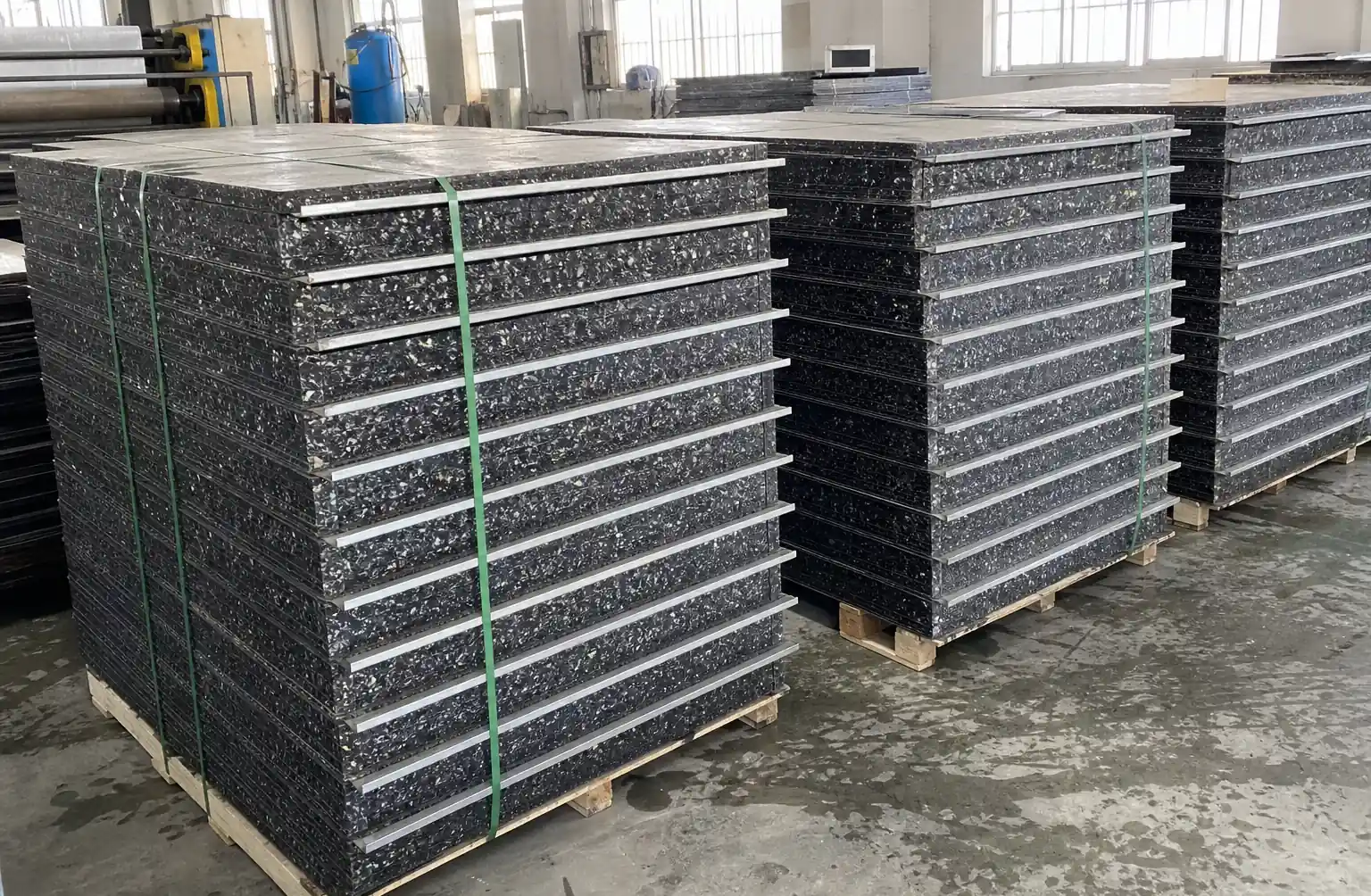
Brick manufacturers waste $8,000-15,000 annually per production line due to pallet confusion—ordering “glass fiber pallets” and receiving products with vastly different performance. Understanding the technical distinction between glass fiber composite pallets and GMT (Glass Mat Thermoplastic) pallets prevents costly mistakes. While both use glass fiber reinforcement, the matrix material, manufacturing process, and resulting performance differ significantly.
What Glass Fiber Pallet Actually Means in Brick Production
“Glass fiber pallet” is an umbrella term covering any pallet using glass fibers as reinforcement. The category includes thermoset composites (polyester/epoxy), thermoplastic composites (polypropylene/nylon), and hybrid constructions.
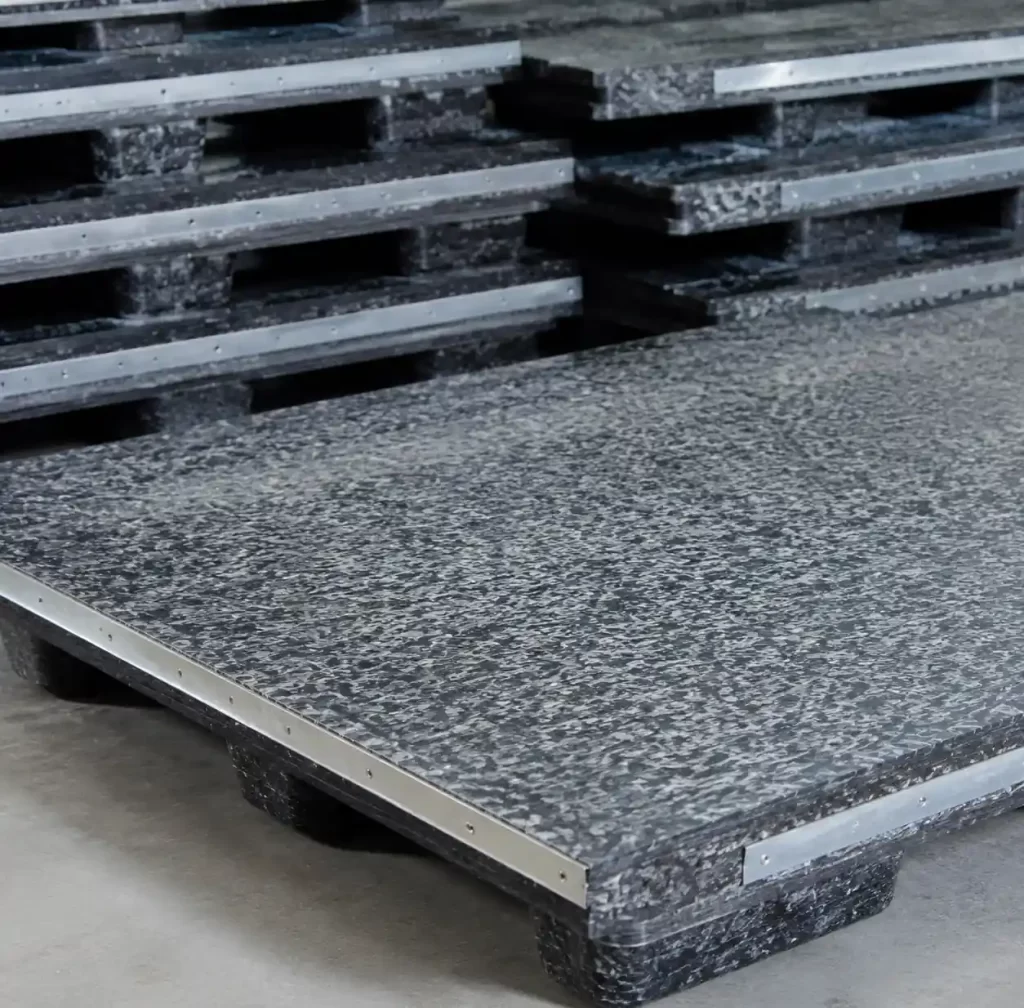
The confusion arises because manufacturers use “glass fiber pallet” in marketing without specifying matrix material or manufacturing method. A pallet advertised as “glass fiber reinforced” might be injection-molded thermoplastic, compression-molded GMT, hand-laid fiberglass, or pultrusion—each delivering different performance.
Two pallets both labeled “glass fiber reinforced” can have drastically different glass content (25% vs 45%), fiber length (chopped vs continuous), and matrix materials (recycled vs virgin)—producing load capacities from 1,800 kg to 3,200 kg and service lives from 5 to 12+ years.
GMT Pallet Defined: A Specific Material Technology
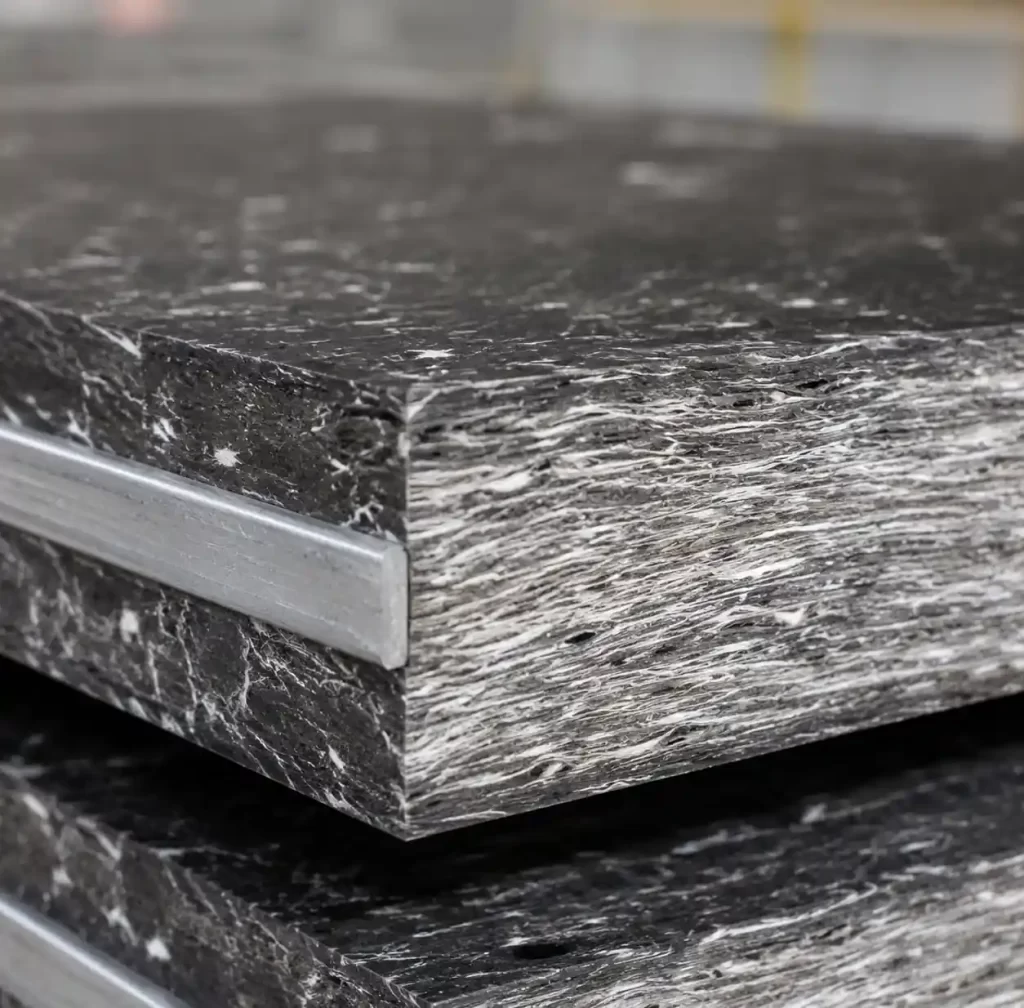
GMT stands for Glass Mat Thermoplastic—a specific composite where continuous glass fiber mats are embedded in polypropylene matrix through compression molding. The “glass mat” refers to continuous strand mats or woven glass fabrics, while “thermoplastic” means the material can be remelted and reformed.
The manufacturing process: Glass fiber mats (30-50% by weight) layer with polypropylene sheets, then compress at 180-220°C under 50-100 bar pressure. This fuses components into a homogeneous structure where continuous glass fibers handle tensile loads while polypropylene provides toughness.
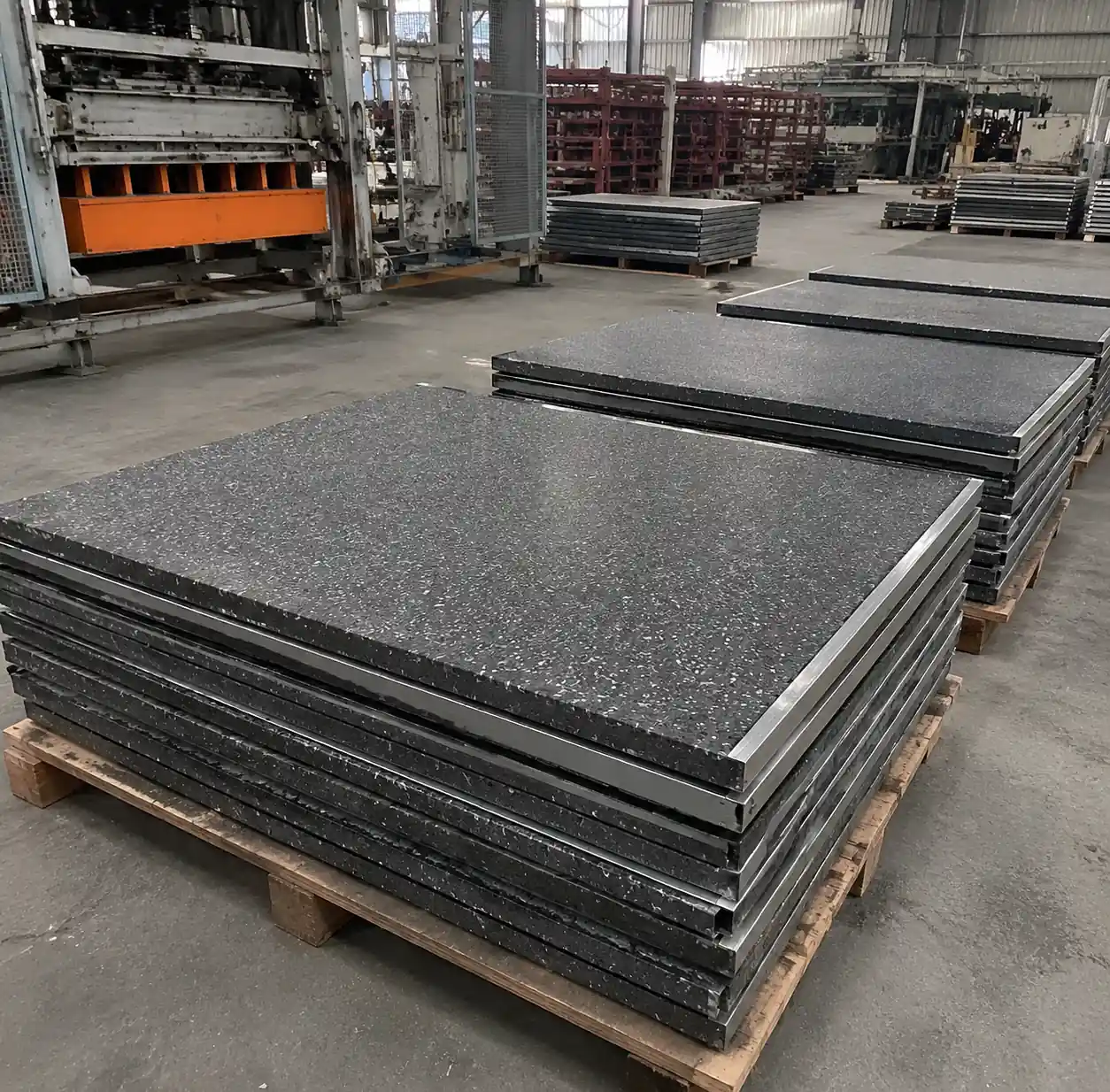
For brick production, GMT pallets deliver predictable performance: 2,500-3,500 kg load capacity, <1% moisture absorption, ±2mm dimensional stability across 10+ years, and resistance to concrete’s alkaline environment (pH 12-13).
Material Composition: Where Performance Begins
| Composition Factor | Generic Glass Fiber Pallet | GMT Pallet | Impact on Brick Production |
|---|---|---|---|
| Fiber Type | Chopped glass (3-25mm) or short strand | Continuous glass mat (100mm+) | Continuous fibers provide 40-60% higher flexural strength |
| Fiber Content | 20-40% by weight | 35-50% by weight | Higher content increases load capacity and rigidity |
| Matrix Material | PP, nylon, or recycled blend | Virgin or high-grade PP | Pure PP resists concrete alkalinity better |
| Fiber Distribution | Random orientation | Directional reinforcement | GMT optimizes strength for expected loads |
| Manufacturing Method | Injection or compression molding | Compression molding only | Compression preserves fiber length and alignment |
Matrix material quality affects long-term durability. Virgin polypropylene maintains properties across 10+ years of concrete contact and UV exposure. Recycled polypropylene blends may contain contaminants that accelerate degradation, reducing service life to 6-8 years.
The fiber-matrix interface determines load transfer effectiveness. GMT’s compression molding achieves superior fiber wet-out compared to injection molding, where high injection speeds can create air pockets and incomplete fiber impregnation.
Manufacturing Process Comparison
Generic glass fiber pallets typically use injection molding—molten plastic with chopped glass fibers injects into closed molds at high pressure (800-2,000 bar). Rapid injection shears glass fibers, reducing average length from 12mm to 3-6mm and creating directional strength properties—stronger along flow path, weaker perpendicular.
GMT manufacturing: Pre-consolidated sheets heat to 200-220°C until matrix softens, then compress in matched molds at lower pressure (50-100 bar) for 60-120 seconds. The slower process preserves fiber length and allows controlled fiber orientation. Cycle time is longer (90-180 seconds vs 30-90 seconds), contributing to GMT’s higher cost.
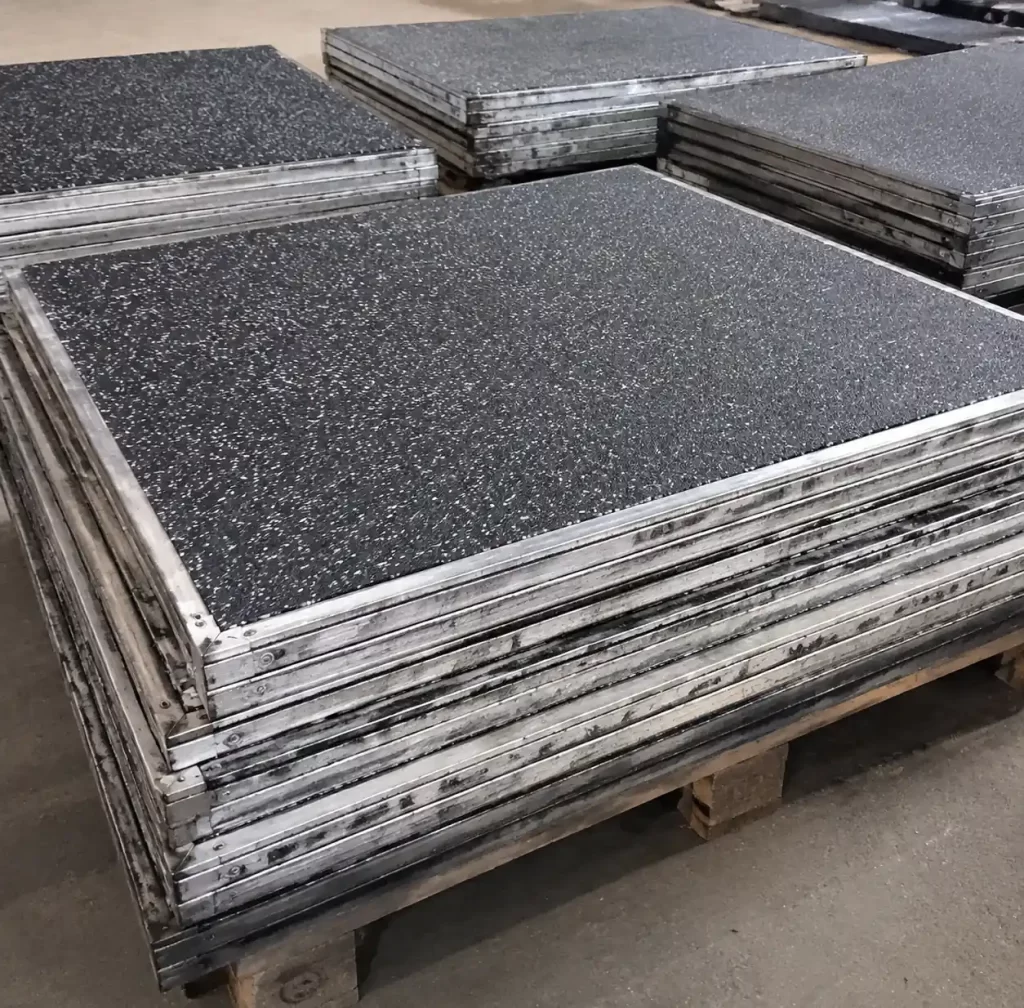
Performance Characteristics: Technical Comparison
| Performance Metric | Glass Fiber Pallet (Generic) | GMT Pallet | Test Standard |
|---|---|---|---|
| Static Load Capacity | 1,800-3,000 kg | 2,500-3,500 kg | ISO 8611 |
| Flexural Strength | 80-140 MPa | 120-180 MPa | ASTM D790 |
| Impact Resistance | 15-35 kJ/m² | 30-50 kJ/m² | ISO 180 |
| Moisture Absorption (24hr) | 0.5-2% | <0.5% | ASTM D570 |
| Temperature Range | -20°C to +70°C | -30°C to +80°C | Manufacturer spec |
| Dimensional Stability | ±3-5mm over 5 years | ±1-2mm over 10 years | Long-term testing |
| Surface Flatness | ±3-4mm | ±1-2mm | Quality control |
| Service Life Expectancy | 6-8 years | 10-12 years | Field performance data |
Moisture resistance impacts dimensional stability in humid environments. Generic glass fiber pallets absorbing 1-2% moisture can dimension-shift 2-4mm as humidity fluctuates. GMT’s <0.5% absorption maintains dimensions within ±1mm regardless of ambient humidity.
Temperature performance: GMT maintains properties from -30°C to +80°C. Some glass fiber pallets using lower-grade polypropylene lose impact resistance below -10°C and soften above 65°C.
Durability and Lifespan: Real-World Performance
GMT pallets in three-shift operations (18-22 hours daily) consistently deliver 10-12 years before replacement. Field inspections of GMT pallets after 8-9 years show minimal surface wear, no dimensional changes beyond initial ±2mm tolerance, and load capacity within 5% of new specifications.
Generic glass fiber pallets show more variable lifespan: 6-8 years for quality injection-molded versions, 4-6 years for budget alternatives. Facilities report increasing defect rates after 5-6 years as surface roughness marks premium bricks and dimensional drift triggers automated line errors.
High-humidity environments (75-95% RH) reduce generic glass fiber pallet life by 15-25% as moisture degrades the fiber-matrix interface. GMT shows negligible humidity effects. UV exposure affects outdoor storage—virgin PP with UV stabilizers (standard in GMT) maintains properties through 10+ years, while recycled PP degrades faster.
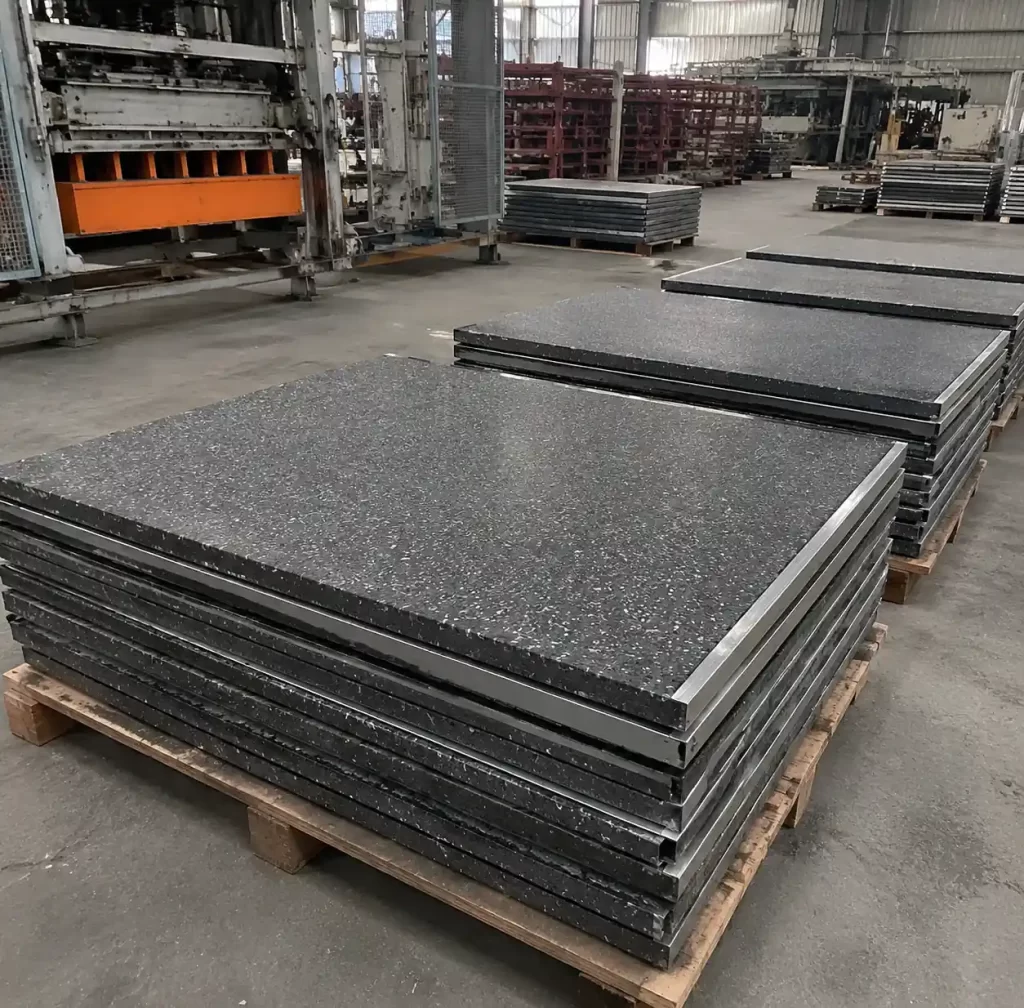
Application Suitability
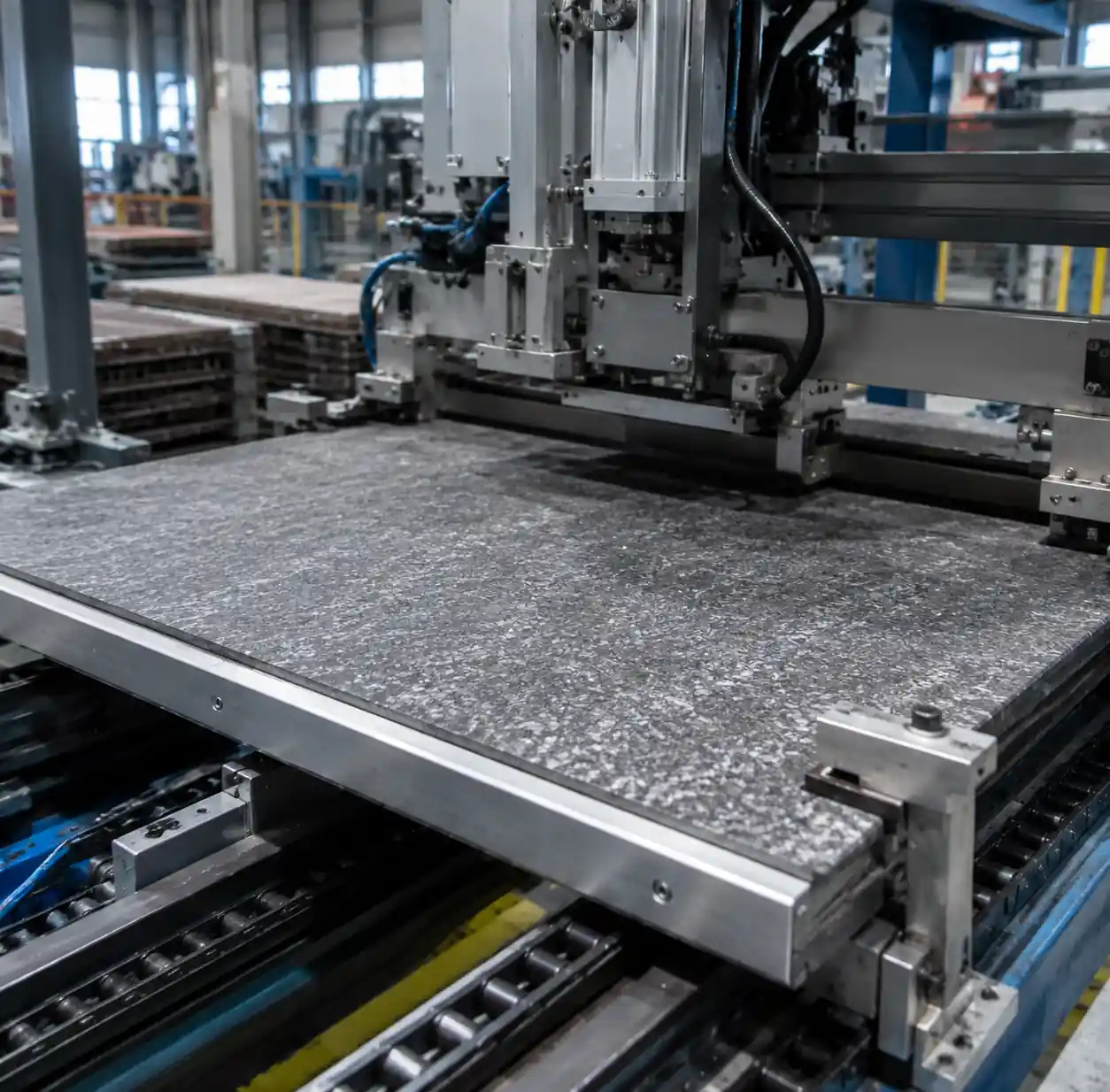
Automated brick production lines processing 60-120+ units per minute demand GMT’s dimensional precision. Vision systems and robotic handling require pallets maintaining ±1-2mm tolerance. Facilities report 40-60% reduction in pallet-related line stops after converting automated sections to fiber brick pallets with GMT specifications.
Manual operations tolerate more dimensional variation. When human operators compensate for 3-5mm pallet variations, quality glass fiber pallets provide acceptable value. The 6-8 year lifespan still outperforms wood (2-3 years) while avoiding GMT’s premium pricing.
High-humidity environments require GMT’s superior moisture resistance. Facilities in Malaysia and Indonesia report 35-45% fewer moisture-related quality issues after switching to GMT.
Heavy concrete block production (3,000+ kg loads) exceeds generic glass fiber pallet capacity. GMT’s continuous fiber reinforcement supports these loads reliably—black glass fiber pallets handle 3,200 kg for 8+ years without structural issues.
Cost Analysis: Investment vs Total Ownership
For a 400-pallet facility over 10 years:
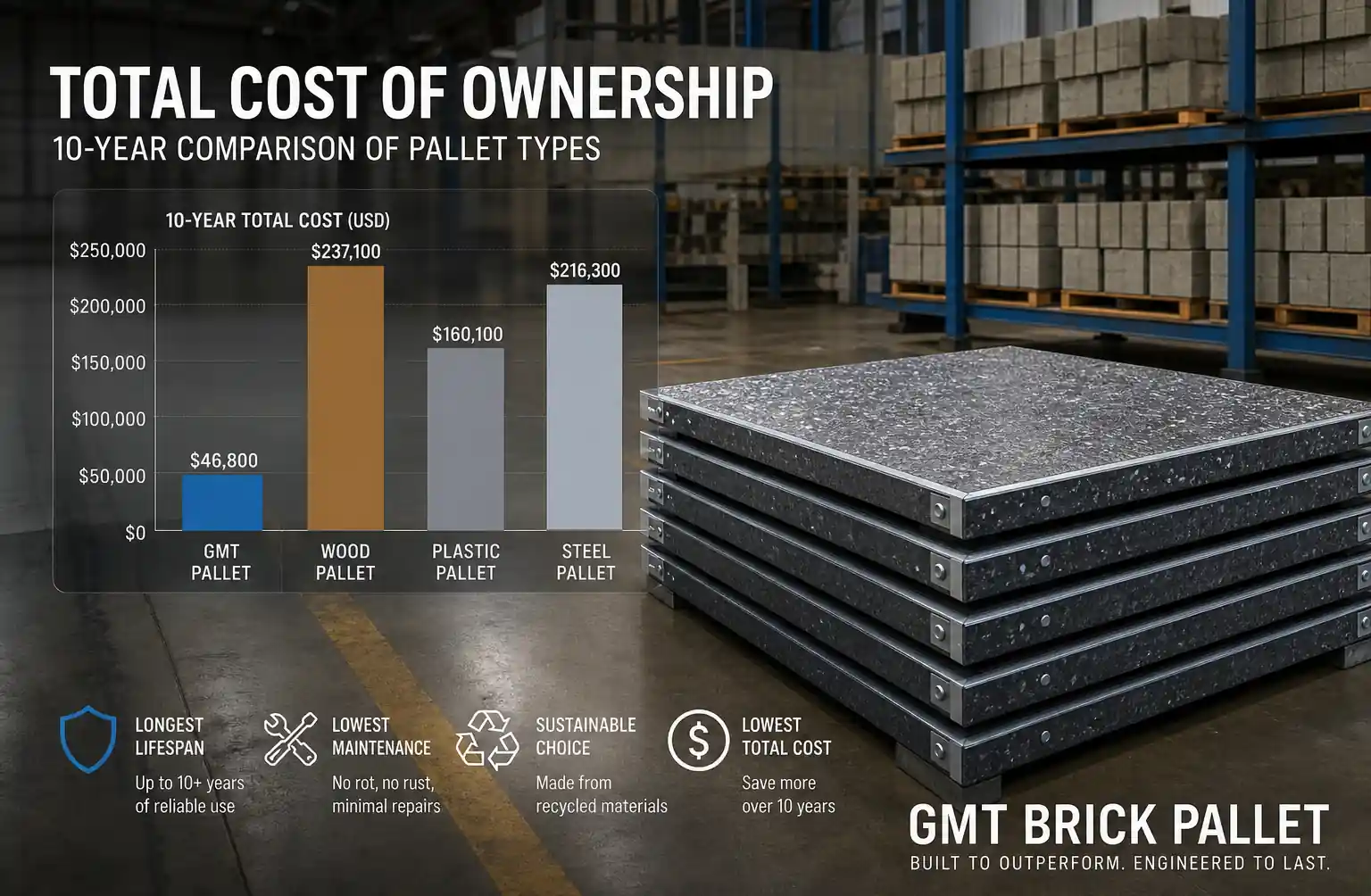
- Generic glass fiber pallets: $24,000-36,000 initial + $12,000-18,000 replacement + $8,000-12,000 maintenance = $44,000-66,000
- GMT pallets: $40,000-60,000 initial + $4,000-8,000 replacement + $3,000-5,000 maintenance = $47,000-73,000
Total ownership difference shrinks to 5-15%, but excludes productivity improvements. GMT’s dimensional consistency reduces automated line stoppages—facilities document 3-6 fewer stops per shift after conversion. At $200-350 per stoppage, GMT pays for its premium within 12-18 months on automated lines.
Brick defect reduction provides additional ROI. GMT’s maintained surface flatness reduces marking on premium architectural bricks. One African producer calculated $18,000 annual savings from defect reduction alone after GMT conversion.
For low-volume operations (under 15,000 bricks monthly), quality glass fiber pallets are more economically rational.
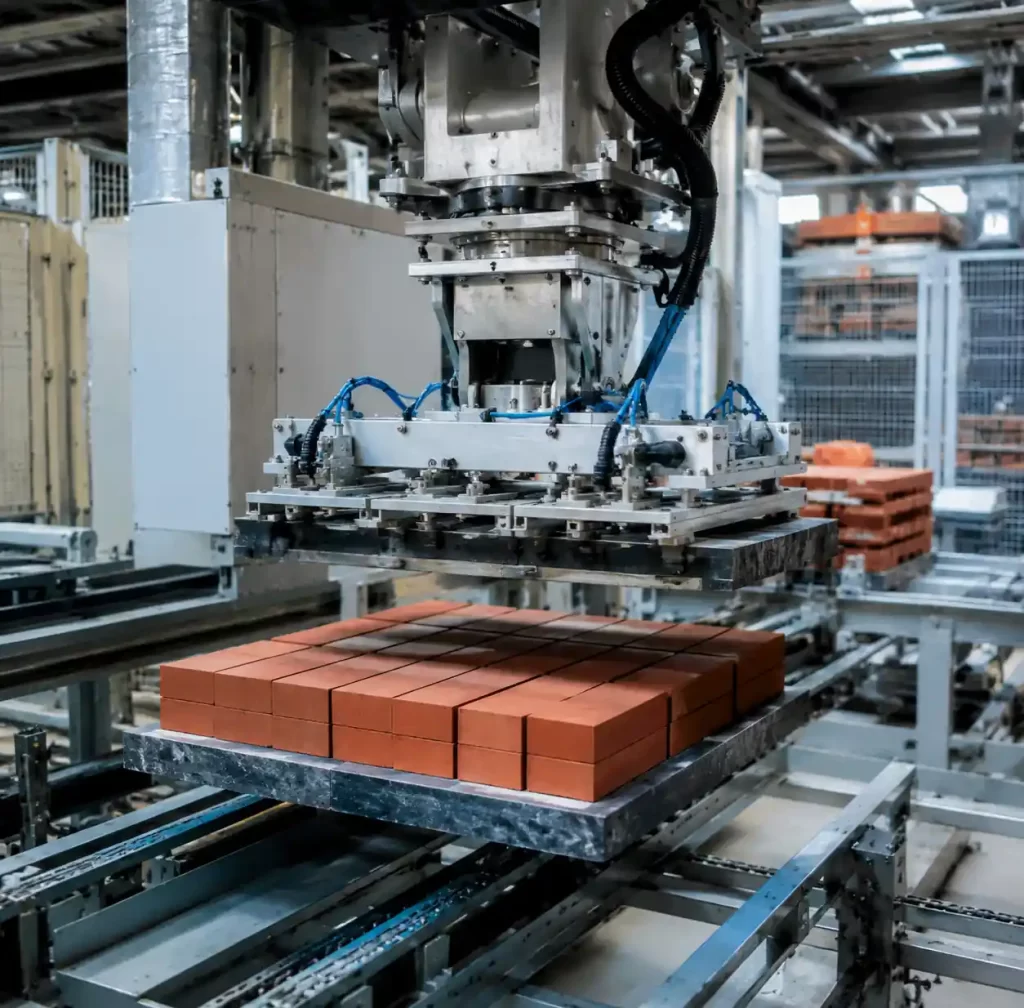
Selection Criteria: Which Fits Your Operation
High-volume automated facilities (50,000+ bricks monthly) justify GMT investment through productivity gains and reduced downtime. Low-volume manual operations (under 20,000 monthly) perform adequately with quality glass fiber pallets, saving 40-60% on initial pallet investment.
Environmental conditions override volume considerations. High-humidity regions require GMT regardless of volume. Extreme temperatures (below -20°C or above 70°C) need GMT’s extended temperature range.
For financially constrained operations, phased GMT adoption works: Convert automated sections first where productivity gains accelerate payback, continue using quality glass fiber in manual areas, then expand GMT as wood pallets reach end-of-life.
When selecting glass fiber over GMT, specify minimum requirements: 35%+ glass content, virgin polypropylene matrix, dimensional tolerance ±3mm, and 2,500+ kg load capacity.
Industry Trends 2026
Material science advances are narrowing the performance gap. New “long fiber thermoplastic” (LFT) pallets deliver 2,800-3,200 kg capacity at 20-30% lower cost than GMT. Recycled content integration enables 40-60% recycled polypropylene in GMT while maintaining virgin-like performance. Hybrid constructions combine GMT cores with injection-molded surfaces. Regional manufacturing expansion in India, Southeast Asia, and East Africa reduces delivered costs by 40-50%.
FAQ
Is GMT actually different from glass fiber pallets?
GMT is a specific subset using continuous glass mats in polypropylene via compression molding. Generic “glass fiber pallets” include injection-molded chopped fiber versions, thermoset fiberglass, and hybrids. Performance difference is real—GMT delivers 30-50% higher strength and 40-60% longer service life.
Can glass fiber pallets handle the same loads as GMT?
Quality glass fiber injection-molded pallets achieve 2,000-2,800 kg—adequate for standard brick production but lower than GMT’s 2,500-3,500 kg. For heavy concrete blocks (3,000+ kg), only GMT provides sufficient safety margin.
Which works better in high-humidity environments?
GMT performs significantly better due to <0.5% moisture absorption versus 1-2% for generic glass fiber. GMT maintains ±1-2mm dimensional stability while glass fiber can shift 3-5mm as humidity fluctuates.
Is GMT’s higher cost justified for manual production?
For manual operations under 20,000 bricks monthly, quality glass fiber pallets deliver adequate performance at lower cost. Above 40,000 monthly or in high-humidity, GMT justifies its premium through longer service life and reduced defects.
Can both types be recycled?
Both GMT and glass fiber thermoplastic pallets are recyclable since polypropylene can be remelted. However, glass fiber complicates recycling—specialized facilities handle fiber-filled thermoplastics. Specify thermoplastic-based pallets (not thermoset) and verify supplier take-back programs.
Conclusion
Glass fiber pallets and GMT pallets represent overlapping but distinct technologies. GMT—using continuous glass mat reinforcement in compression-molded polypropylene—delivers superior load capacity (2,500-3,500 kg), dimensional stability (±1-2mm for life), and service life (10-12 years). The 40-70% cost premium makes GMT essential for automated production lines and high-humidity environments.
Quality glass fiber injection-molded pallets provide viable alternatives for manual operations and lower-volume facilities. Their 6-8 year lifespan and 2,000-2,800 kg capacity serve standard brick production while avoiding GMT’s premium pricing.
Selection hinges on production volume, automation level, environmental conditions, and product mix. High-volume automated facilities justify GMT through productivity gains achieving 12-18 month payback. Lower-volume manual operations perform adequately with quality glass fiber pallets.
If you need durable brick pallets matched to your specific production requirements, Rhinos Pallet offers both GMT and glass fiber composite pallets with verified specifications and performance guarantees. Contact us today for technical specifications, application guidance, and factory-direct pricing.