Skip to content
Brick manufacturers in Southeast Asia lose 15-30% of their wood pallets annually to moisture damage, warping, and fungal decay. Monsoon seasons bring 85-95% relative humidity that swells wooden pallets by 8-15mm within weeks, triggering production line errors and brick quality defects. A Thai brick factory running 18 hours daily documented 12-18 automated line stoppages per week during rainy season—each costing $200-450 in lost throughput—purely from warped pallet positioning errors.
If you operate brick production facilities in humid tropical climates, selecting moisture-resistant pallets eliminates these recurring losses. This guide explains why humidity destroys conventional pallets, which materials resist moisture effectively, and how Southeast Asian manufacturers calculate the real cost of climate-appropriate pallet selection.
Why Humidity Destroys Standard Pallets in Tropical Manufacturing
Wood pallets absorb 15-20% moisture by weight when exposed to 80%+ relative humidity for 30-60 days. This absorption causes three critical failures in brick production environments.
Dimensional instability changes pallet dimensions by 5-12mm as wood fibers swell. Automated brick handling systems operate with ±3mm positioning tolerance—moisture-swollen pallets exceed this threshold within 45-90 days in monsoon conditions. Vietnamese facilities report that wood pallets purchased in dry season (November-March) fail automated line specifications by May-June when humidity peaks.

Surface degradation accelerates dramatically in humid environments. Moisture enables fungal growth that softens wood surfaces, creating rough textures that mark premium brick faces. Indonesian manufacturers producing architectural-grade bricks report 8-12% surface defect rates with wood pallets during rainy season versus 2-3% with moisture-resistant alternatives.
Structural weakness develops as repeated wet-dry cycles break down wood fiber bonds. Pallets operating in 70-95% humidity environments lose 40-60% load-bearing capacity within 18-24 months. Forklift operators in Malaysian brick plants report sudden pallet failures—boards cracking under normal loads—increase 300% during extended rainy periods.
The economic impact compounds beyond replacement costs. Production managers at a 400,000 bricks-per-month Philippine facility calculated that humidity-related pallet problems cost $18,000-24,000 annually through line downtime, increased breakage, accelerated replacement cycles, and labor hours managing deteriorating pallets.
Material Science: How GMT Pallets Resist Tropical Humidity
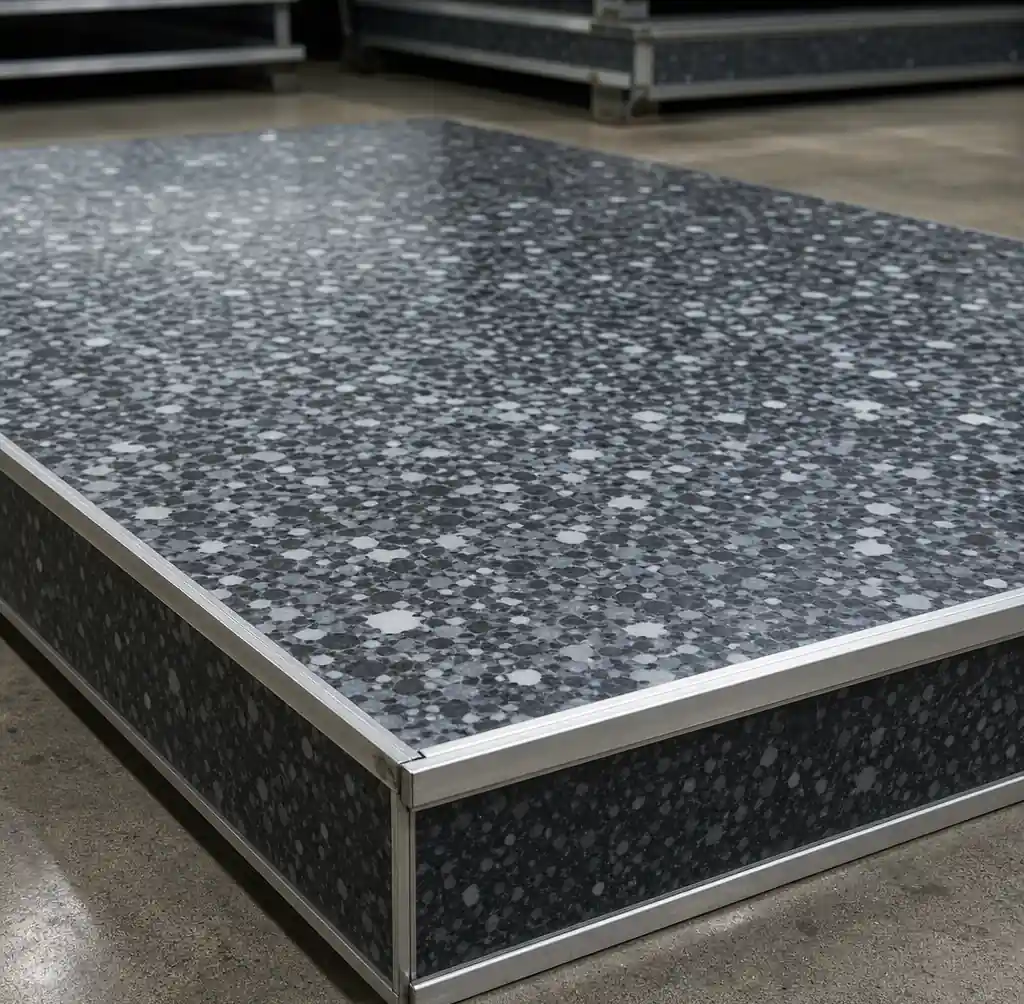
GMT (Glass Mat Thermoplastic) pallets resist moisture through polypropylene’s molecular structure, which contains no hydroxyl groups that bond with water molecules. This chemistry delivers <1% moisture absorption even after 90-day submersion in water—compared to 15-20% for wood exposed to high humidity.
The glass fiber reinforcement remains completely unaffected by moisture. Unlike wood fibers that swell and weaken when wet, continuous glass fiber mats maintain identical tensile strength at 95% relative humidity as at 30% humidity. This stability keeps pallet dimensions within ±2mm across Southeast Asia’s most extreme humidity variations.

Compression molding creates non-porous surfaces that prevent water infiltration. Wood pallets have natural grain structures and micro-cracks that channel moisture deep into material layers. High-quality GMT pallets feature sealed surfaces where water beads and evaporates rather than absorbing, maintaining structural properties through 10+ monsoon seasons.
Temperature cycling combined with humidity creates particularly harsh conditions. Singapore facilities experience 26-35°C temperature swings with 70-95% humidity variations. GMT’s thermoplastic matrix maintains flexibility across this range without the micro-cracking that allows moisture penetration in composite materials using thermoset resins.
Comparing Pallet Materials for High-Humidity Environments
Different materials respond dramatically differently to Southeast Asia’s climate. Testing data from tropical manufacturing facilities reveals clear performance hierarchies.
| Material Type | Moisture Absorption | Dimensional Change (90 days @ 85% RH) | Service Life (Humid Climate) | Surface Stability | Cost per Year |
|---|---|---|---|---|---|
| Wood (Untreated) | 15-20% | +8-15mm swelling | 18-24 months | Degrades rapidly | $35-45 |
| Wood (Heat-Treated) | 12-16% | +6-10mm swelling | 24-30 months | Moderate degradation | $28-38 |
| Standard Plastic | 2-4% | +2-4mm expansion | 5-7 years | Good stability | $18-24 |
| GMT Composite | <1% | <2mm change | 10-12 years | Excellent stability | $9-12 |
| Glass Fiber Reinforced | <0.5% | <1.5mm change | 12-15 years | Superior stability | $7-10 |
Real-world performance data from facilities operating in Thailand, Vietnam, and Indonesia validates these laboratory measurements. A comparative trial at a Vietnamese brick manufacturer tracked 50 wood pallets versus 50 white GMT brick pallets through 18-month monsoon cycles. Results showed:

Wood pallet performance:
- 34% required replacement within 12 months due to warping
- 58% showed visible surface degradation affecting brick quality
- Average dimensional change: 9.2mm at peak humidity
- 23 incidents of structural failure during handling
GMT pallet performance:
- 0% replacements required during trial period
- 100% maintained surface quality specifications
- Average dimensional change: 1.1mm across humidity range
- 0 structural failures despite identical handling conditions
Regional Climate Considerations for Southeast Asian Manufacturers
Southeast Asia encompasses diverse climate zones requiring different pallet specifications. Understanding regional humidity patterns optimizes material selection.
Coastal Manufacturing Zones (Thailand Gulf Coast, Vietnam Mekong Delta, Indonesian Java Coast) experience 75-95% humidity year-round with minimal seasonal variation. These facilities need maximum moisture resistance—moisture-resistant GMT pallets with <0.5% absorption rates maintain specifications continuously. Wood pallets in these zones typically fail within 12-18 months regardless of treatment.
Monsoon-Affected Interior Regions (Central Thailand, Northern Vietnam, Myanmar) face extreme seasonal swings from 40-50% dry season humidity to 85-95% monsoon humidity. This cycling accelerates wood degradation through repeated expansion-contraction stress. Manufacturers report wood pallet service life drops to 14-20 months, while GMT options maintain 10+ year performance despite seasonal extremes.

High-Temperature Humid Zones (Southern Thailand, Malaysia, Singapore, Indonesia) combine 80-90% humidity with consistent 28-34°C temperatures. Heat accelerates chemical degradation in moisture-saturated wood. Fungal growth appears within 30-60 days on wood pallets, requiring chemical treatment that adds $8-12 per pallet annually. Black glass fiber pallets resist both heat and moisture without additional treatment costs.
A Malaysia-based manufacturer operating near Port Klang (85-92% average humidity) calculated their climate-adjusted total ownership costs:
| Cost Factor | Wood Pallets (3-year period) | GMT Pallets (3-year period) | Savings with GMT |
|---|---|---|---|
| Initial Purchase (100 units) | $2,800 | $9,500 | -$6,700 |
| Replacement Cycles | $8,400 (3 cycles) | $0 | +$8,400 |
| Humidity-Related Failures | $3,200 | $0 | +$3,200 |
| Surface Treatment/Maintenance | $2,100 | $0 | +$2,100 |
| Line Downtime Costs | $12,600 (estimated) | $1,800 (minimal) | +$10,800 |
| Total 3-Year Cost | $29,100 | $11,300 | +$17,800 (61% savings) |
Automated Production Lines: Why Humidity Control Matters More
Automated brick production systems magnify humidity-related pallet problems. Manual operations tolerate 5-8mm dimensional variations through operator adjustments, but robotic handling systems cannot compensate for moisture-induced changes exceeding ±2-3mm.
Vision-guided systems programmed for specific pallet dimensions flag moisture-swollen pallets as positioning errors. A Thai facility running 80 bricks-per-minute automated lines documented that each false error triggers 3-8 minute line stops for manual verification and system reset. During monsoon season with wood pallets, these stops occurred 8-15 times per shift, reducing effective throughput by 12-18%.

Precision-molded pallets maintaining ±1mm tolerance throughout their service life eliminate these errors completely. The same Thai facility switching to GMT pallets reduced humidity-related stops to zero, recovering 320-480 production hours annually worth $48,000-72,000 in additional throughput.
Weight consistency matters equally for automated handling. Wood pallets in humid environments gain 2-8 kg from absorbed moisture, forcing robotic systems to use conservative lifting parameters that slow cycle times. Fiber brick pallets maintain ±0.5 kg weight consistency regardless of humidity, enabling optimized handling speeds that increase line capacity 8-12%.
Selection Criteria: Matching Pallets to Your Climate Zone
Choosing optimal pallets requires matching material specifications to your facility’s specific humidity profile and production requirements.
Measure your actual humidity conditions using data loggers over 60-90 day periods covering seasonal variations. Peak humidity levels determine minimum moisture resistance requirements. Facilities experiencing >80% humidity for >120 days annually should specify <1% moisture absorption pallets. Operations with >90% peak humidity need <0.5% absorption specifications.
Calculate dimensional tolerance requirements based on your handling systems. Manual operations tolerate ±5mm variations. Semi-automated lines require ±3mm. Fully automated robotic systems need ±1-2mm consistency. Match pallet specifications to these tolerances with safety margin—if your system requires ±3mm, specify pallets maintaining ±2mm maximum change.

Assess load cycling intensity to determine durability needs. High-volume facilities processing 300,000+ bricks monthly impose 6,000-10,000 annual load cycles per pallet. Combined with humidity stress, this demands maximum durability specifications—yellow fiber brick pallets and similar fiber-reinforced options rated for 10,000+ cycles.
Factor climate-adjusted service life into total cost calculations. Wood pallets rated for 4-5 year service life in temperate climates typically achieve only 18-30 months in Southeast Asian humidity. GMT pallets rated for 10-12 years maintain this performance in tropical conditions. Use actual regional performance data rather than manufacturer specifications developed for moderate climates.
Maintenance and Care in High-Humidity Environments
Even moisture-resistant pallets benefit from proper handling practices that maximize service life in demanding tropical conditions.
Ventilation during storage prevents moisture accumulation even on non-absorbing surfaces. Stack pallets with 50-100mm vertical spacing using separator blocks. Position storage areas to capture prevailing breezes. A Philippine facility implementing forced-air ventilation in their pallet storage zone reduced surface moisture by 60%, preventing the minor dimensional changes that affected even GMT pallets during extreme humidity events.
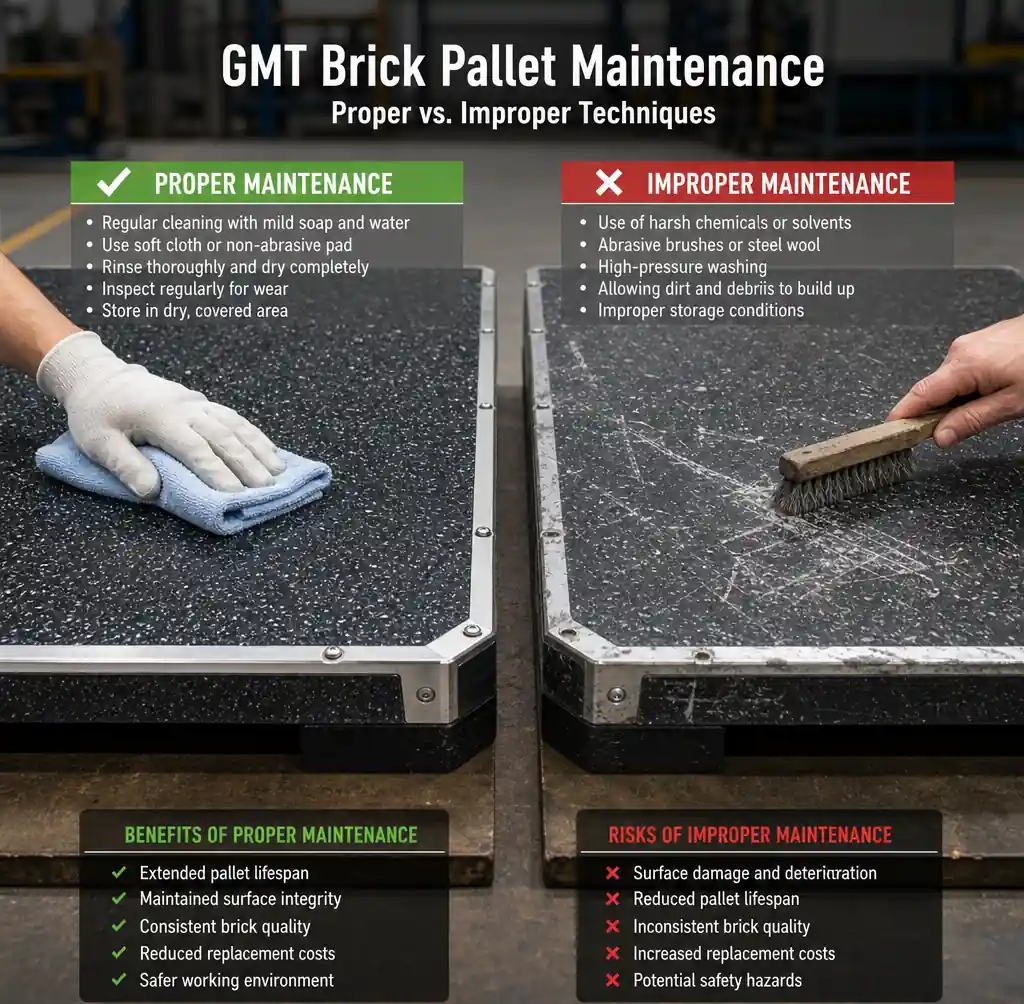
Periodic cleaning removes organic material that promotes fungal growth. While GMT surfaces resist moisture, accumulated concrete dust and organic debris create microclimates supporting mold. Monthly washing with plain water maintains clean surfaces. Avoid high-pressure washing exceeding 100 bar, which may force water into edge seams on lower-grade pallets.

Rotation schedules distribute humidity exposure evenly across your pallet inventory. Pallets stored in covered areas experience less humidity stress than those in open production zones. Rotating stock every 60-90 days prevents uneven aging patterns. This matters more for mixed fleets where wood and GMT pallets operate together during transition periods.
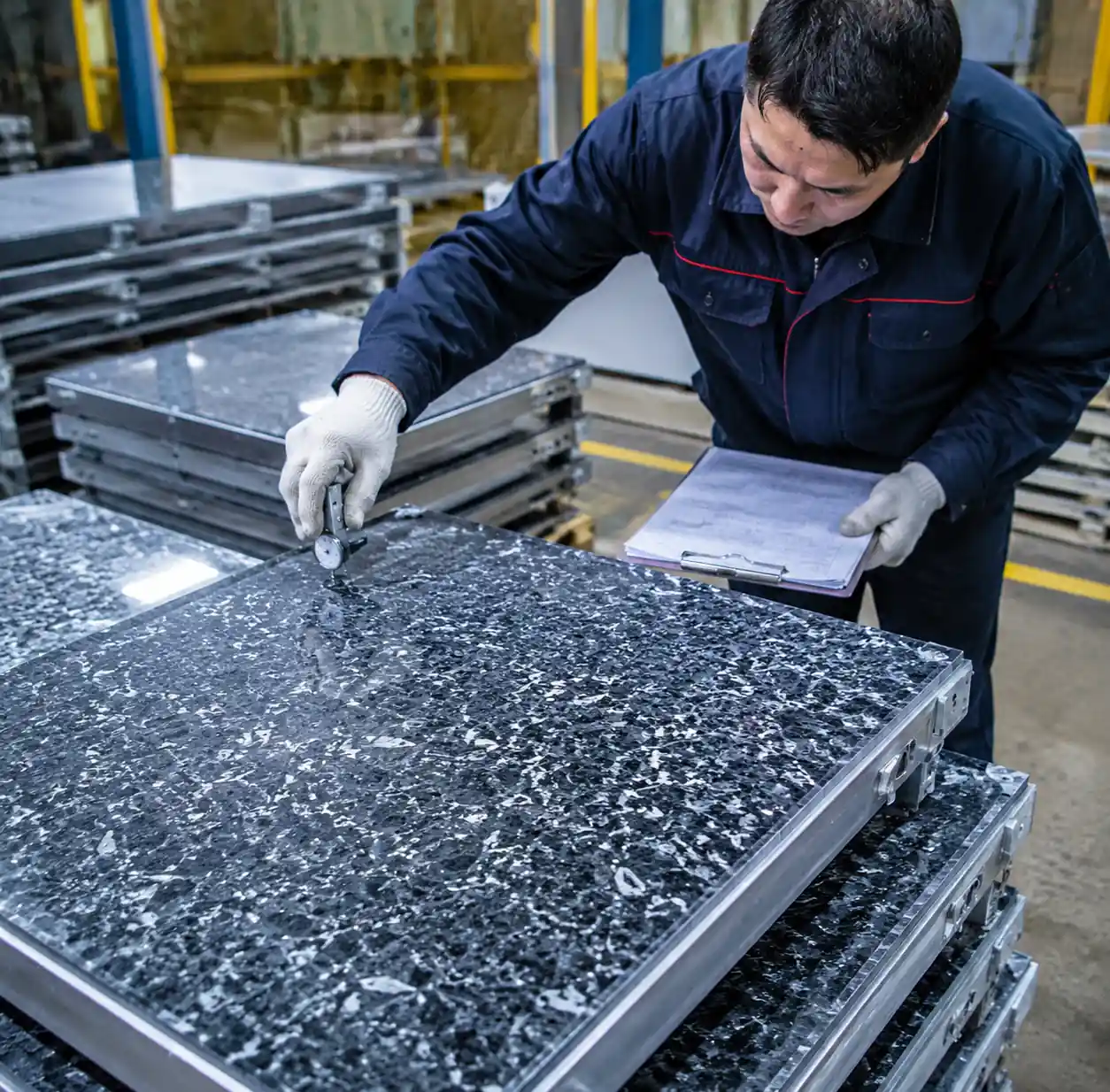
Post-monsoon inspection identifies any pallets developing problems before they cause production issues. Check for surface degradation, dimensional changes exceeding specifications, and weight increases indicating moisture infiltration. Half GMT pallets used in specialized applications may require more frequent inspection due to higher surface-area-to-volume ratios.
Cost Analysis: Humidity-Adjusted ROI Calculations
Standard pallet ROI calculations developed for temperate climates significantly underestimate GMT advantages in tropical manufacturing environments. Humidity-accelerated wood degradation changes the economics dramatically.
Traditional calculations assume 4-5 year wood pallet service life and 10-12 year GMT service life. Southeast Asian field data shows 18-30 month actual wood service life and identical 10-12 year GMT performance. This shifts the replacement cycle comparison from 2-3× advantage to 4-6× advantage for GMT.
Humidity-related failures create costs beyond scheduled replacement. A Vietnamese manufacturer tracked all pallet-related expenses over 24 months:
Wood Pallet Total Costs (200 units, 24 months):
- Initial purchase: $5,600
- Scheduled replacement (40% annually): $4,480
- Premature failure replacement: $2,800
- Line downtime (humidity-related stops): $15,200
- Increased brick breakage: $8,400
- Maintenance labor (inspection, sorting): $3,200
- Total: $39,680 ($198.40 per pallet over 24 months)
GMT Pallet Total Costs (200 units, 24 months):
- Initial purchase: $19,000
- Scheduled replacement: $0
- Premature failures: $0
- Line downtime: $1,200 (minimal)
- Breakage reduction benefit: -$5,040
- Maintenance labor: $400
- Total: $15,560 ($77.80 per pallet over 24 months)
Net savings: $24,120 (61% reduction) over 24 months

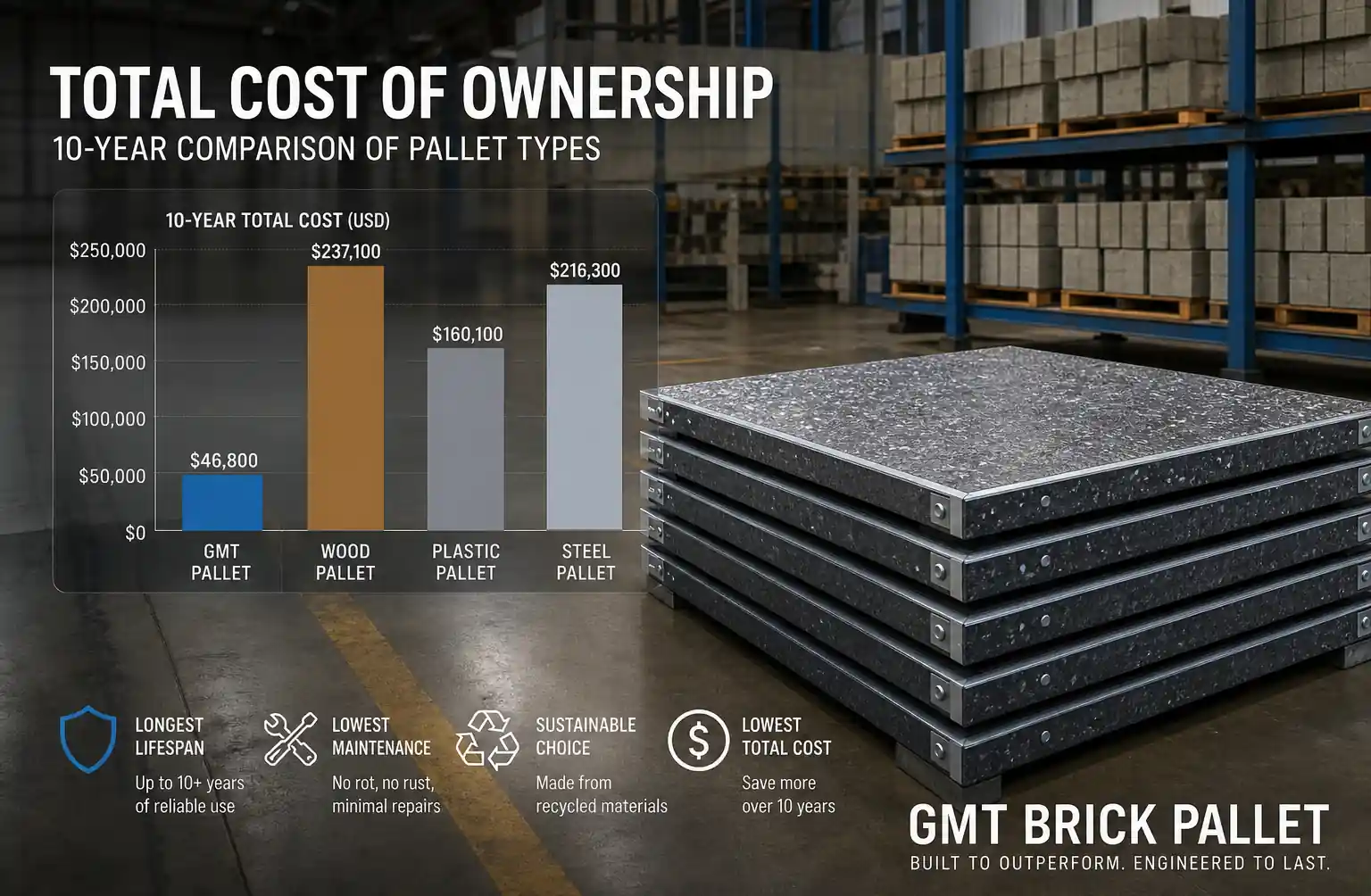
The payback period in high-humidity environments runs 14-22 months versus 24-36 months in temperate climates. Facilities with automated lines achieve faster payback (12-18 months) due to greater downtime cost savings. For detailed ROI calculations incorporating your production parameters, see our comprehensive cost analysis guide.
Real-World Performance: Southeast Asian Case Studies
A 550,000 bricks-per-month facility in southern Vietnam operating in 82-94% average humidity implemented phased GMT conversion over 18 months. They replaced 180 wood pallets with high-quality GMT pallets prioritizing their automated production line first.
Baseline performance (wood pallets, 12-month average):
- Humidity-related line stops: 14 per week
- Pallet replacement rate: 42% annually
- Brick surface defects: 6.8%
- Maintenance hours: 12 per week
- Annual pallet costs: $28,400
Post-conversion performance (GMT pallets, 12-month average):
- Humidity-related line stops: <1 per week
- Pallet replacement rate: 0% (no failures in 18 months)
- Brick surface defects: 2.1%
- Maintenance hours: 2 per week
- Annual pallet costs: $11,200 (amortized)
ROI achievement: 17 months from initial GMT installation
Frequently Asked Questions
How long do GMT pallets last in 90%+ humidity environments?
GMT pallets maintain full structural performance for 10-12 years in continuous 90%+ humidity conditions. The polypropylene matrix and glass fiber reinforcement remain unaffected by moisture at any humidity level below water immersion. Field data from Indonesian coastal facilities shows no measurable performance degradation after 8+ years of 85-95% humidity exposure.
Do plastic pallets perform as well as GMT in humid conditions?
Standard plastic pallets resist moisture absorption but lack GMT’s dimensional stability under load. The glass fiber reinforcement in GMT prevents deflection that occurs in unreinforced plastic when supporting 2,000+ kg loads in high temperatures. Plastic pallets rated for 2,500 kg in temperate climates often deflect 5-8mm under identical loads at 32°C with 85% humidity.
What maintenance do GMT pallets require in tropical climates?
Minimal maintenance beyond monthly washing to remove production residue. Unlike wood pallets requiring drying rotation, surface treatment, and regular inspection for moisture damage, GMT pallets need only basic cleaning. Inspection intervals can extend to quarterly rather than weekly checks required for wood in humid environments.
Are there GMT options optimized specifically for extreme humidity?
Yes, white-yellow GMT pallets incorporate enhanced moisture barriers maintaining <0.5% absorption in 95%+ humidity. These use modified polypropylene formulations and increased glass fiber content specifically for coastal and extreme tropical applications. Standard GMT pallets already perform excellently, but these variants provide maximum insurance against any moisture-related issues.
Conclusion
Southeast Asia’s humid tropical climate demands moisture-resistant pallets that maintain dimensional stability, structural integrity, and surface quality through continuous 80-95% humidity exposure. Wood pallets fail within 18-30 months under these conditions, creating recurring replacement costs, production disruptions, and quality defects that cost manufacturers $15,000-35,000 annually per 100 pallets.
GMT and glass fiber reinforced pallets eliminate moisture-related failures through <1% absorption rates and dimensionally stable construction maintaining specifications for 10-12 years. The 3-4× higher initial cost delivers 60-70% lower total ownership costs in high-humidity environments through eliminated replacement cycles, reduced downtime, and improved production quality. Manufacturers transitioning to moisture-resistant pallets typically achieve positive ROI within 14-22 months.
If you need humidity-resistant brick pallets for Southeast Asian production facilities, Rhinos Pallet offers fiber-reinforced composite pallets proven in 85-95% RH tropical environments. Our moisture-resistant construction maintains dimensional stability within ±2mm and delivers 10+ year service life in the region’s most demanding conditions. Contact us today for custom pallet solutions optimized for your climate zone and production requirements.