After managing thousands of GMT brick pallets across multiple production facilities for over 15 years, I’ve learned that proper maintenance isn’t just about extending equipment life—it’s about protecting your bottom line. A well-maintained GMT pallet from Rhinos Pallet can easily surpass 10 years of continuous service, while neglected units fail within 3-4 years. Here’s everything I’ve learned about keeping these critical assets in peak condition.
Understanding GMT Pallet Construction
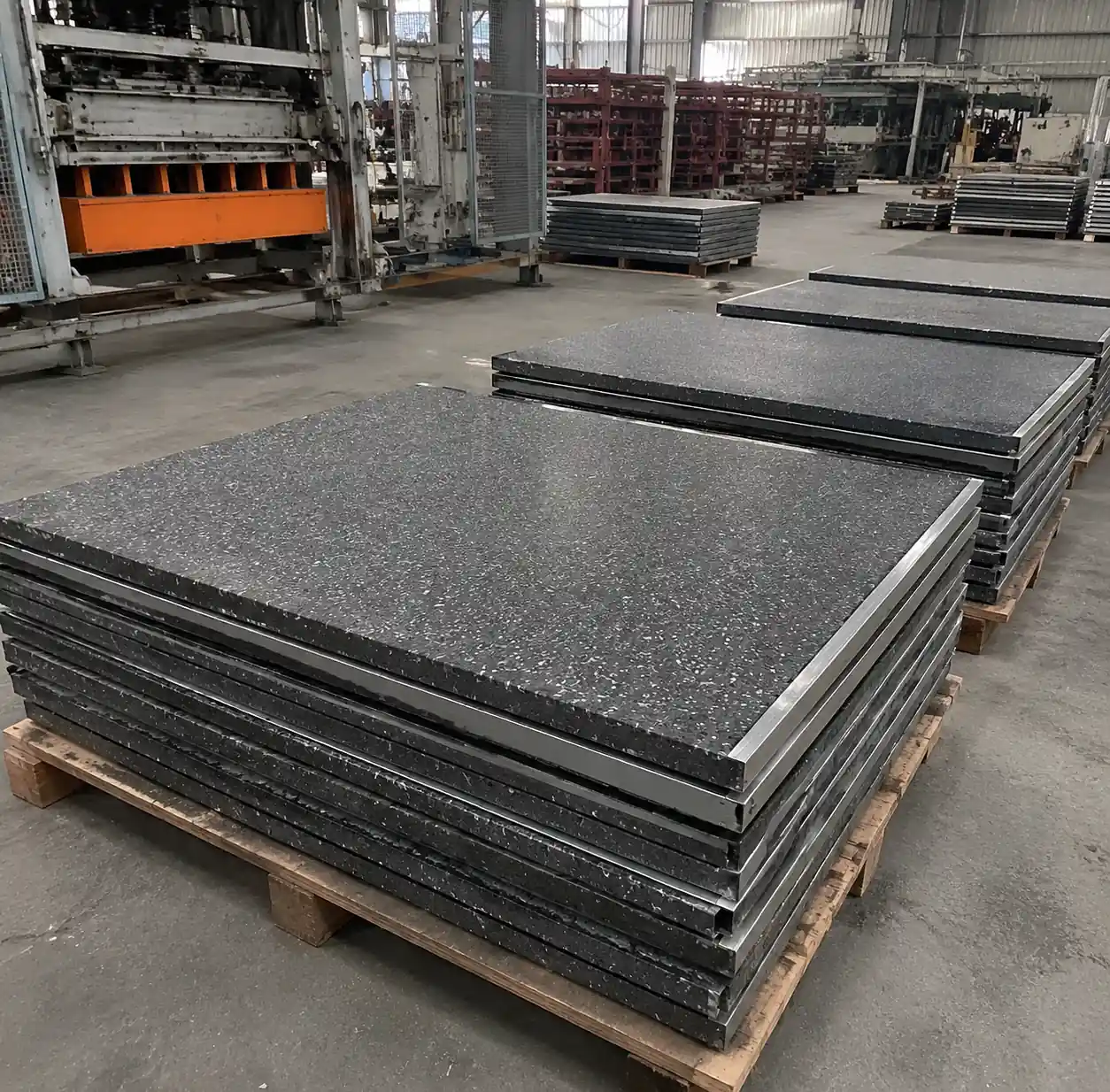
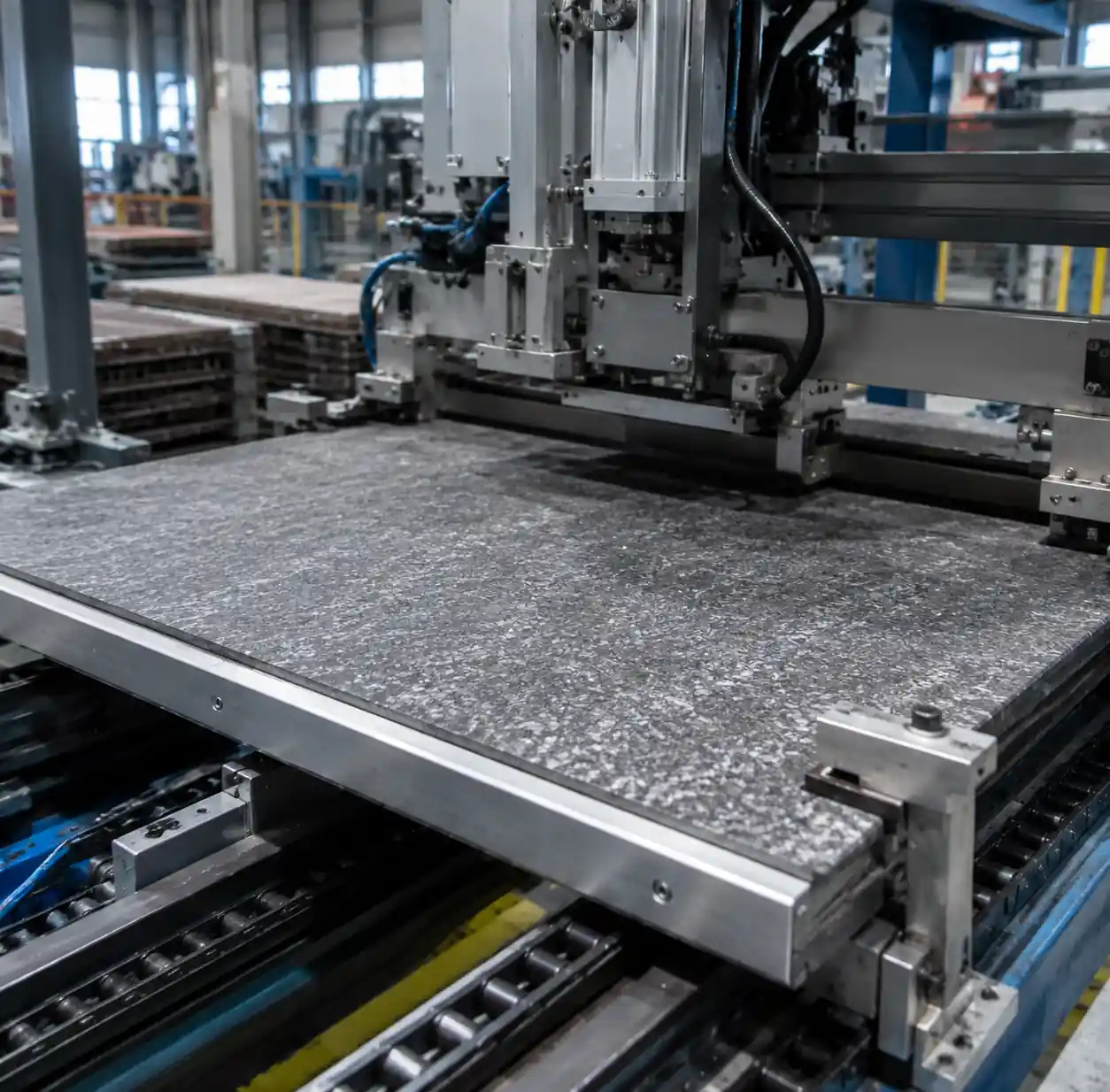
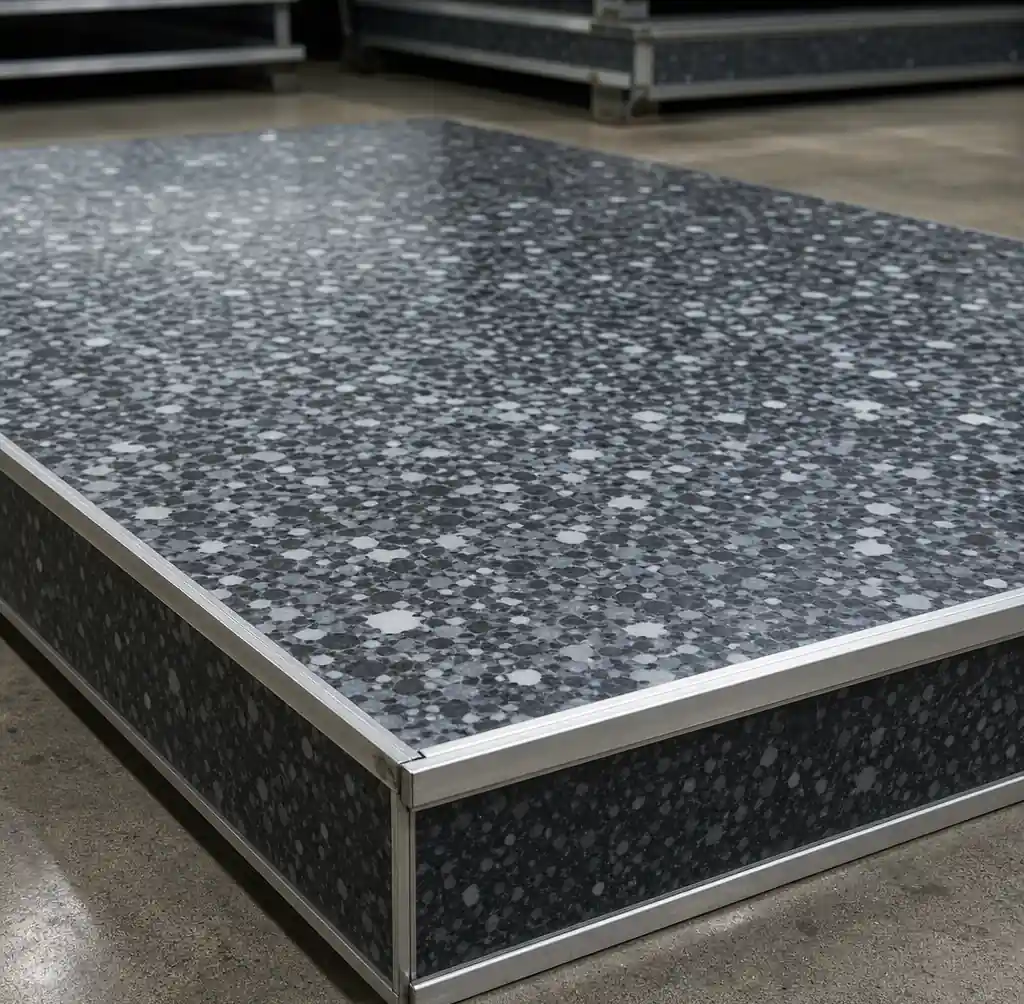
GMT (Glass Mat Thermoplastic) brick pallets are engineered from glass fiber reinforced thermoplastic composites. Unlike traditional wooden pallets, these solid units feature no holes or gaps, with distinctive black-gray-white speckled surfaces and aluminum edge trim. The heavy-duty recycled plastic material provides exceptional durability when properly maintained.
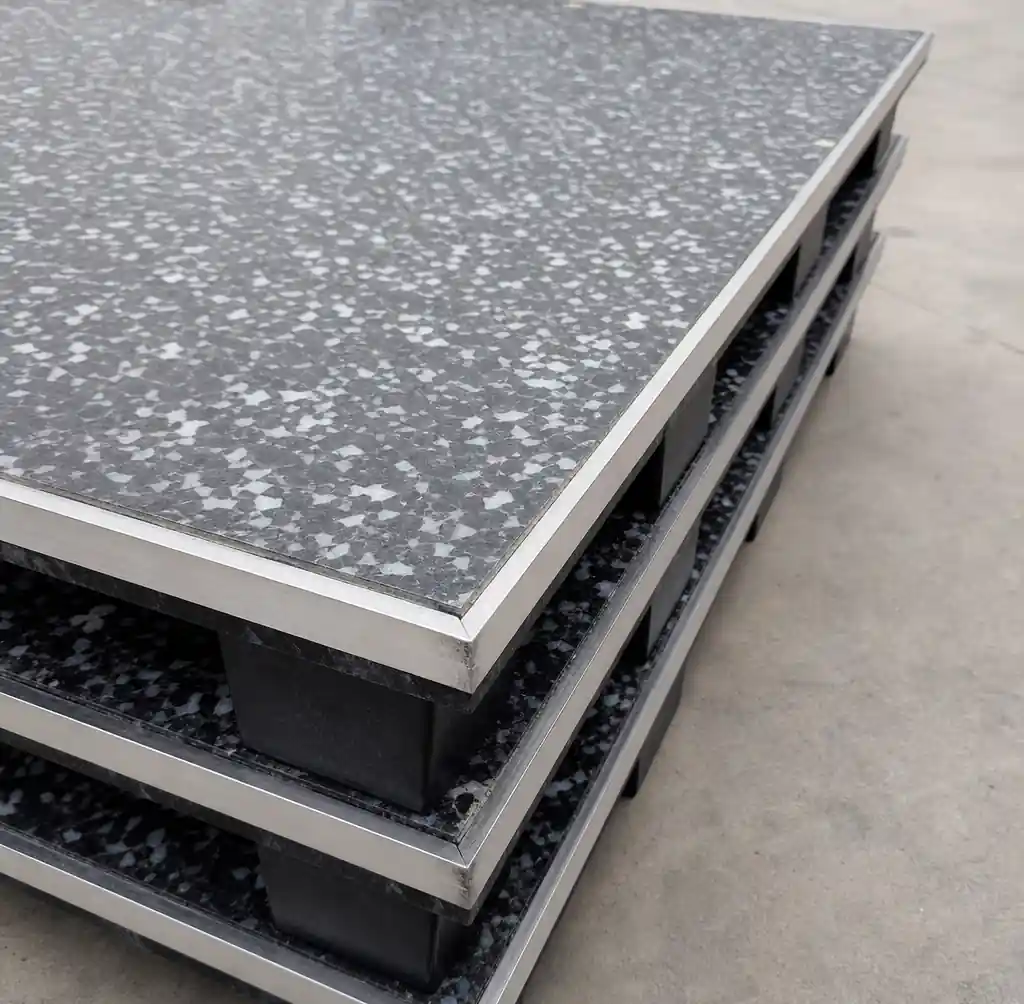
The composite structure offers inherent advantages: resistance to moisture, chemicals, and biological degradation. However, mechanical stress, thermal cycling, and improper handling remain the primary threats to longevity.
Daily Maintenance Protocols
Visual Inspection Checklist
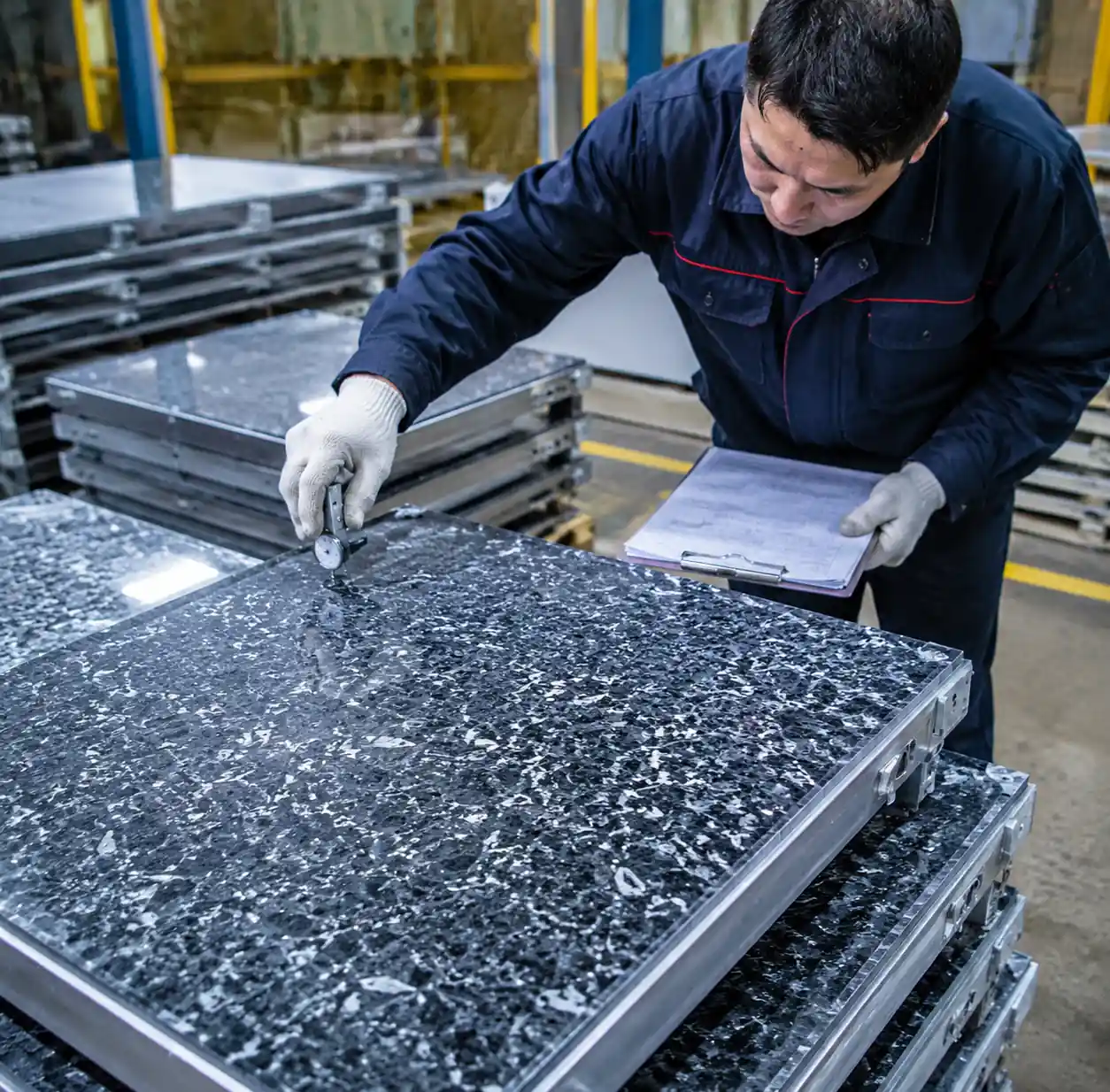
Every production shift should include a 2-minute inspection per pallet. I’ve trained operators to identify these critical warning signs:
- Surface cracks: Hairline fractures near corners or high-stress zones
- Edge damage: Chipped or deformed aluminum trim
- Warping: Deviation from flat plane exceeding 3mm
- Discoloration: Unusual staining indicating chemical exposure
- Loose components: Compromised edge trim attachments
Document findings in your maintenance log. Early detection prevents minor issues from escalating into costly failures.
Cleaning Procedures
GMT pallets accumulate brick dust, mortar residue, and production debris. Clean pallets after every 50-100 molding cycles using this proven method:
- Dry removal: Use compressed air (max 90 PSI) to blast loose particulates
- Wet cleaning: Spray with pH-neutral detergent solution (1:20 ratio)
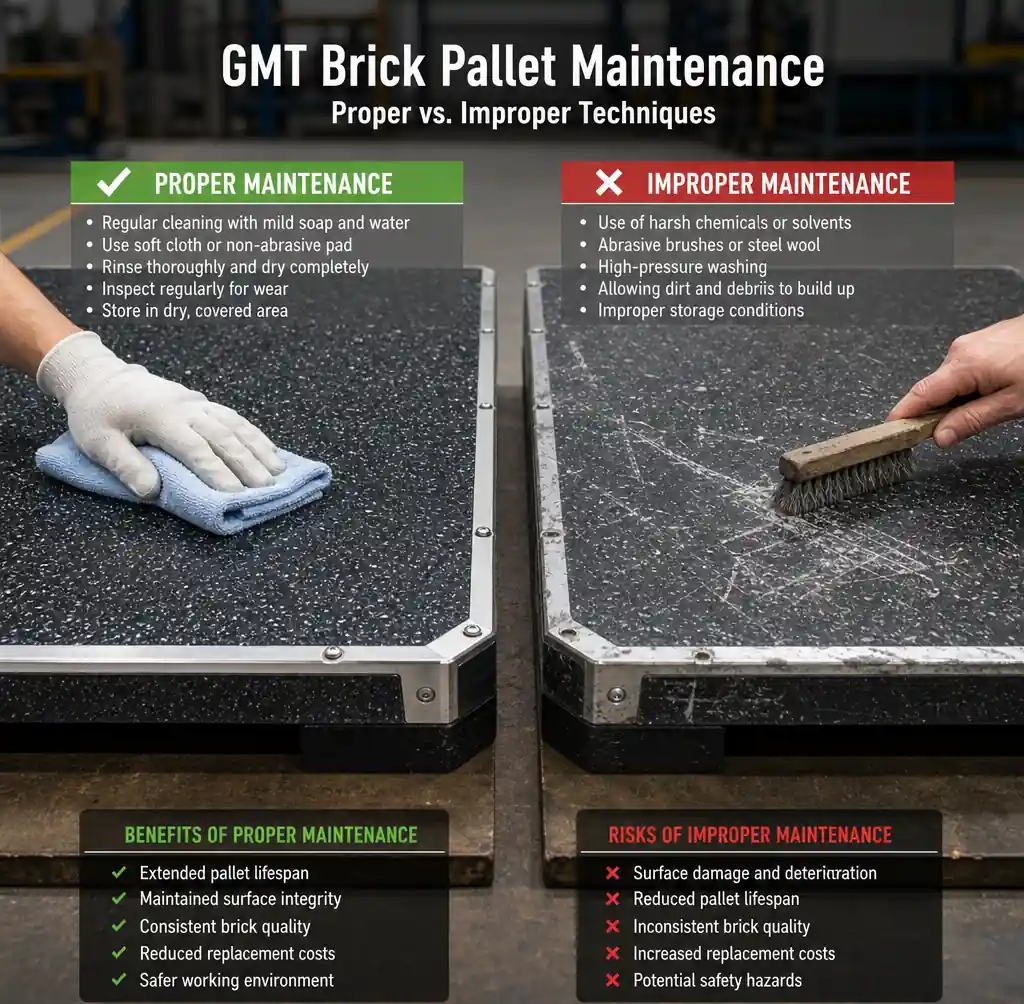
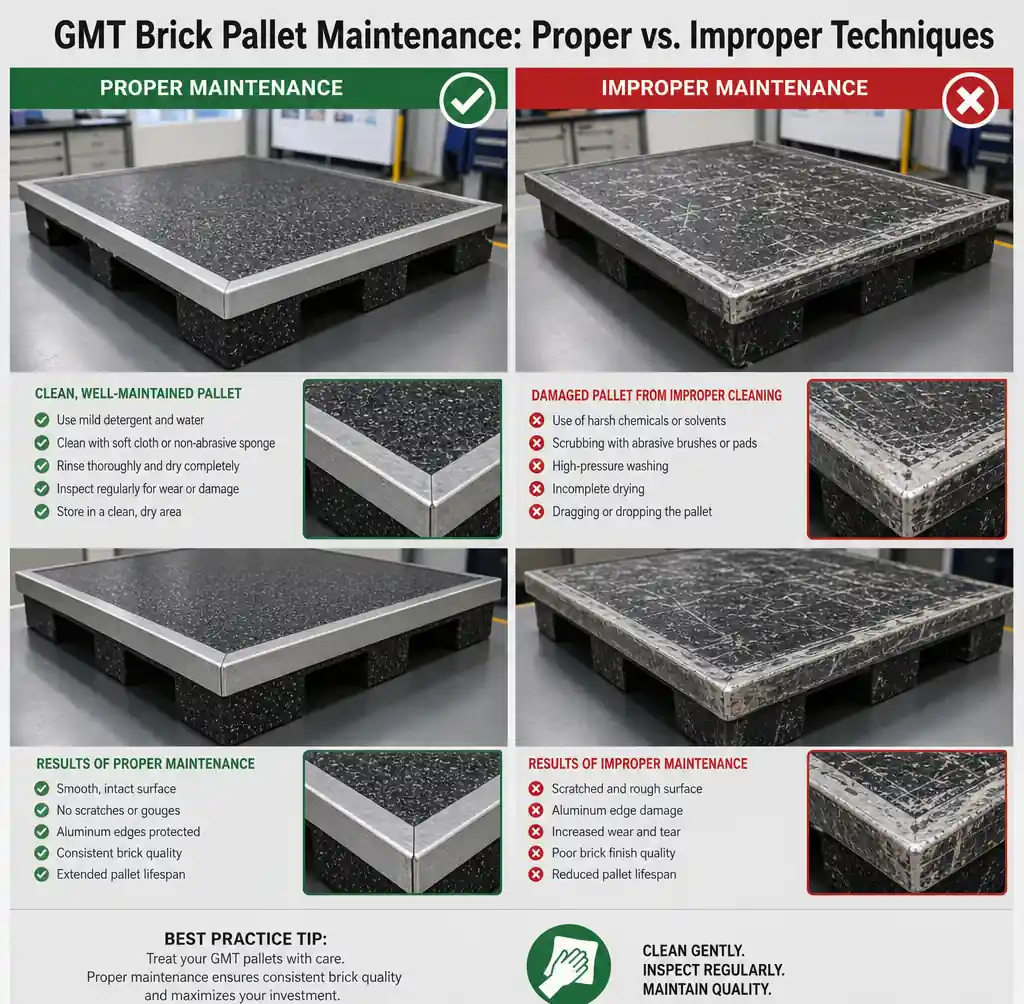
- Scrubbing: Use stiff nylon brushes—never wire brushes that scratch surfaces
- Rinsing: High-pressure water (1500-2000 PSI) at 45-degree angle
- Drying: Air dry completely before stacking or storage
Critical warning: Avoid petroleum-based solvents. They degrade the thermoplastic matrix over time, reducing structural integrity by up to 40% within 6 months.
Weekly Maintenance Tasks
Structural Integrity Assessment
Dedicate 15 minutes weekly to thorough structural checks:
Load bearing test: Place pallet on level surface with 500kg test load at center. Measure deflection at midpoint. Acceptable deflection: less than 5mm. Exceeding 8mm indicates structural compromise requiring immediate retirement.
Edge trim security: Inspect all aluminum edge sections. Loose trim creates stress concentrators leading to crack propagation. Re-secure using manufacturer-specified fasteners.
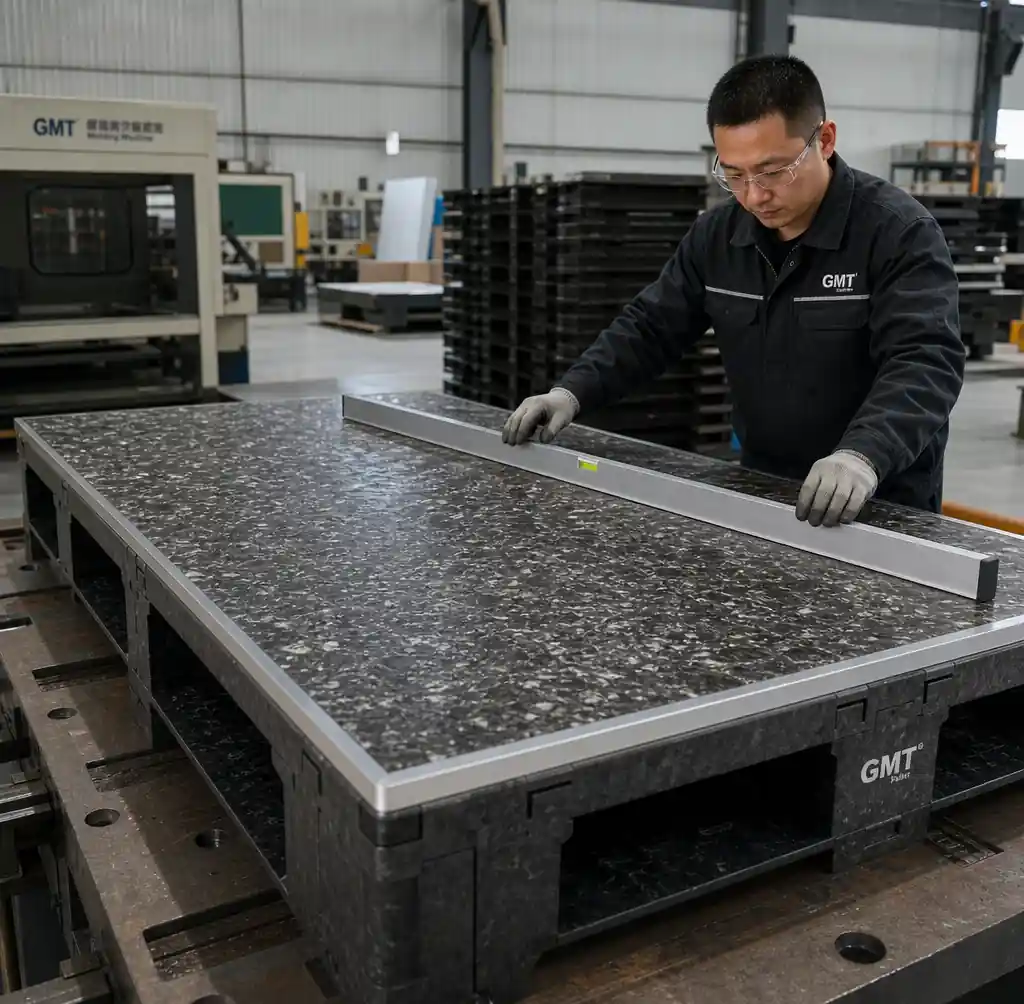
Surface flatness: Use a 2-meter straight edge to check for warping. Maximum acceptable deviation: 5mm across any axis.
Preventive Repairs
Address minor damage immediately:
| Damage Type | Repair Method | Tools Required | Time Investment |
|---|---|---|---|
| Hairline surface cracks | Thermoplastic welding rod repair | Heat gun, welding rod, smoothing tool | 20-30 minutes |
| Loose edge trim | Re-fasten with stainless steel screws | Drill, #8 stainless screws | 10-15 minutes |
| Minor chips (under 10mm) | Fill with epoxy compound | Two-part epoxy, applicator | 15 minutes + cure time |
| Surface contamination | Chemical-specific cleaning agent | Appropriate solvent, safety gear | 10-20 minutes |
Monthly Deep Maintenance
Comprehensive Inspection Protocol
Once monthly, remove pallets from production rotation for detailed assessment:
Thermal imaging: Use infrared camera to detect subsurface delamination. Temperature differentials exceeding 3°C indicate compromised internal bonding.
Dimensional verification: Measure critical dimensions against original specifications. GMT pallets expand/contract with temperature. At 20°C, dimensions should match factory specs within ±2mm.
Load cycle tracking: Review production logs to calculate total load cycles. High-volume pallets (1000+ cycles/month) require more frequent inspection.
Deep Cleaning
Monthly deep cleaning extends pallet life by preventing buildup that causes premature wear:
- Alkaline soak: Submerge in alkaline cleaning solution (pH 10-11) for 30 minutes
- Pressure washing: 3000 PSI hot water (60-70°C) treatment
- Ultrasonic cleaning: For pallets with heavy contamination (optional)
- UV sanitization: 15-minute UV-C exposure eliminates biological growth
- Protective coating: Apply approved surface sealant (annually)
Storage Best Practices
Improper storage causes more damage than production use. Follow these guidelines from Rhinos Pallet specifications:
Environmental Conditions
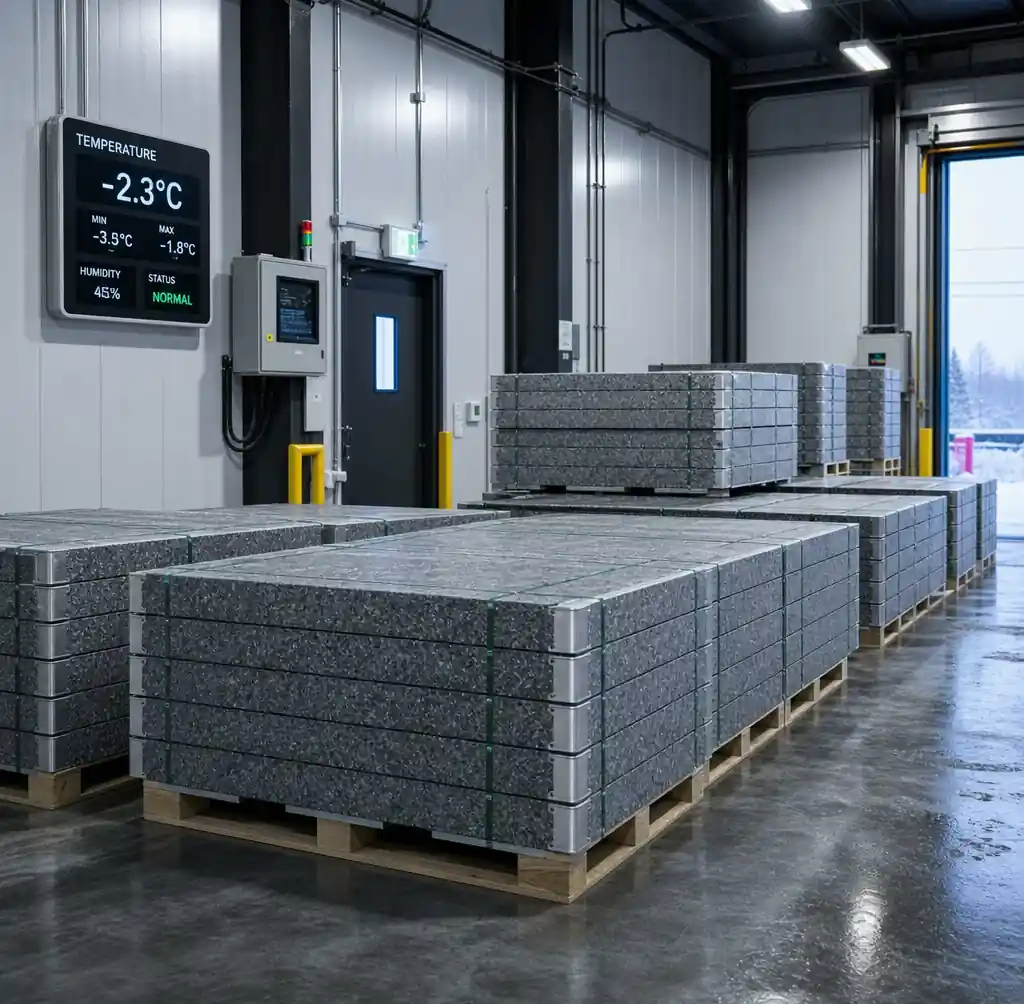
Temperature: Store between 5-35°C. Extreme cold makes GMT brittle; excessive heat causes warping.
Humidity: Maintain 30-70% relative humidity. While GMT resists moisture, aluminum trim corrodes in high-humidity environments.
UV exposure: Minimize direct sunlight. UV degradation reduces surface tensile strength by 15% annually with continuous exposure.
Stacking Protocol
| Stack Height | Configuration | Weight Limit | Support Requirements |
|---|---|---|---|
| 1-5 units | Direct stack | 2500 kg total | Level concrete floor |
| 6-10 units | Alternating 90° rotation | 4000 kg total | Reinforced floor, perimeter support |
| 11-15 units | Rack storage only | 5000 kg total | Industrial pallet racking |
| 16+ units | Not recommended | N/A | Risk of bottom unit deformation |
Always stack on level surfaces. Even 2-degree inclination creates uneven loading, causing permanent deformation within weeks.
Seasonal Considerations
Winter Maintenance
Cold weather presents unique challenges. GMT pallets become more rigid and crack-susceptible below 5°C.
Pre-winter preparation:
- Inspect for existing micro-cracks that will propagate in cold
- Apply cold-weather compatible lubricant to aluminum trim fasteners
- Increase inspection frequency to twice weekly
- Warm pallets to 15°C before high-impact use
Cold-weather handling: Allow 30-minute warm-up period when moving pallets from cold storage to heated production areas. Rapid temperature changes cause thermal shock cracking.
Summer Maintenance
Heat exposure above 35°C accelerates plastic creep and dimensional changes.
Heat management strategies:
- Store in climate-controlled areas or shaded outdoor spaces
- Avoid black asphalt storage surfaces that amplify solar heating
- Schedule heavy loads during cooler morning hours
- Monitor for heat-induced warping weekly
Common Maintenance Mistakes
After consulting with hundreds of brick manufacturers, these errors consistently shorten pallet life:
Mistake #1: Using metal brushes or abrasive cleaners. This creates surface scratches that become crack initiation points. Damage appears 6-12 months later as structural failures.
Mistake #2: Ignoring edge trim damage. Loose trim allows moisture and debris infiltration, causing delamination. Repair costs increase 10x when caught late.
Mistake #3: Overloading during storage. Exceeding weight limits causes creep deformation. Pallets never recover, resulting in uneven brick production.
Mistake #4: Mixing incompatible cleaning chemicals. Chlorinated solvents and aromatic hydrocarbons attack GMT composite structure. Always verify chemical compatibility.
Mistake #5: Neglecting rotation schedules. Using the same 20% of pallets for 80% of production creates uneven wear patterns and premature failures.
Advanced Maintenance Techniques
Load Cycle Optimization
Implement rotation system based on load cycle tracking:
High-cycle pallets (1200+ cycles/month): Inspect weekly, rotate to low-use every 3 months
Medium-cycle pallets (600-1200 cycles/month): Inspect bi-weekly, rotate quarterly
Low-cycle pallets (under 600 cycles/month): Monthly inspection, annual rotation
This strategy distributes wear evenly across your fleet, extending average lifespan 35-40%.
Predictive Maintenance Program
Establish data-driven maintenance using these metrics:
- Cycle count per pallet: Track via barcode/RFID scanning
- Repair frequency: Pallets requiring monthly repairs signal retirement
- Dimensional drift: Plot measurements over time to predict failure
- Production defect correlation: Link pallet condition to brick quality metrics
When repair costs exceed 30% of replacement cost, or quality issues emerge, retire the pallet. For guidance on evaluating replacement options, see our article on how to choose the right brick pallet for your production line.
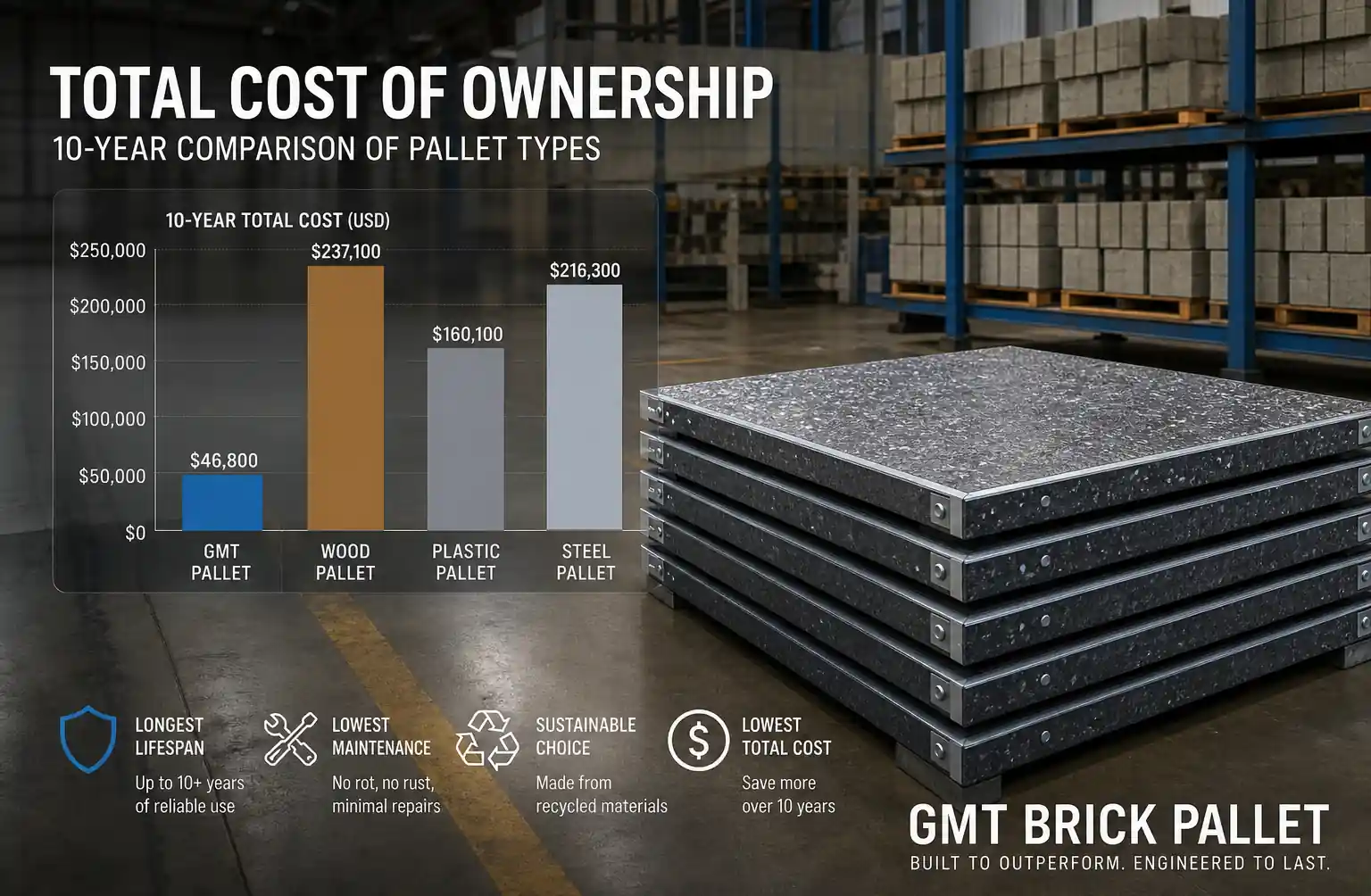
Cost Analysis: Maintenance vs Replacement
Based on 15 years managing 500+ GMT pallets:
Scenario A: Minimal maintenance
- Average lifespan: 3.5 years
- Annual replacement rate: 28.5%
- 10-year total cost: $285,000 (500 pallets × $200 each × 2.85 replacement cycles)
Scenario B: Comprehensive maintenance program
- Average lifespan: 11.2 years
- Annual replacement rate: 8.9%
- 10-year maintenance cost: $45,000 ($900/year × 10 years)
- 10-year total cost: $134,000 (initial investment + maintenance + 0.89 replacement cycles)
Savings with proper maintenance: $151,000 over 10 years for a 500-pallet operation.
For detailed financial analysis of GMT pallet investments, our concrete block pallet cost analysis provides comprehensive ROI calculations.
FAQ
Q: How often should I replace GMT pallets?
A: With proper maintenance, quality GMT pallets from Rhinos Pallet last 10-15 years. Replace when repair costs exceed 30% of replacement cost, structural integrity is compromised beyond repair, or dimensional changes affect brick quality.
Q: What cleaning products are safe for GMT pallets?
A: Use pH-neutral detergents, alkaline cleaners (pH 10-11), or manufacturer-approved products. Avoid petroleum-based solvents, chlorinated cleaners, acetone, MEK, or aromatic hydrocarbons. When in doubt, test on a small inconspicuous area first.
Q: How do I know when a pallet needs retirement?
A: Retire pallets showing: structural cracks exceeding 100mm, warping beyond 8mm, delamination affecting more than 10% of surface area, repeated repairs in same location, or correlation with increased brick defect rates. Understanding common issues can help prevent premature failure—see our guide on common brick production problems solved by better pallets.
Q: Can GMT pallets be refurbished by the manufacturer?
A: Rhinos Pallet offers refurbishment services for pallets with structural integrity intact but showing wear. This typically costs 40-50% of new pallet price and extends usable life 5-7 years. Contact us to evaluate whether refurbishment makes economic sense for your fleet.
Q: How does GMT pallet maintenance compare to wooden pallet maintenance?
A: GMT pallets require significantly less maintenance than wood alternatives. No concerns about splintering, rot, insect damage, or chemical absorption. However, GMT pallets demand attention to mechanical integrity and thermal management that wood pallets don’t require. Overall maintenance time is 70% less than equivalent wooden systems. For a detailed comparison, read our analysis of GMT pallet vs wood pallet for brick production.
Conclusion
Extending GMT pallet lifespan to 10+ years isn’t about complex procedures—it’s about consistent execution of straightforward maintenance protocols. The daily 2-minute inspection, weekly structural assessment, and monthly deep cleaning form the foundation of any successful program.
After managing large pallet fleets across multiple facilities, I can confidently say that maintenance discipline separates operations achieving 3-year lifespans from those reaching 12-15 years. The investment pays for itself many times over through reduced replacement costs and improved production quality.
Start with the basic protocols outlined here. Track your results for 6 months, then optimize based on your specific production patterns and environmental conditions. Your GMT pallets from Rhinos Pallet are engineered for decade-plus service—proper maintenance ensures you realize that full potential. Learn more about 5 ways GMT pallets increase brick production efficiency to maximize your investment.