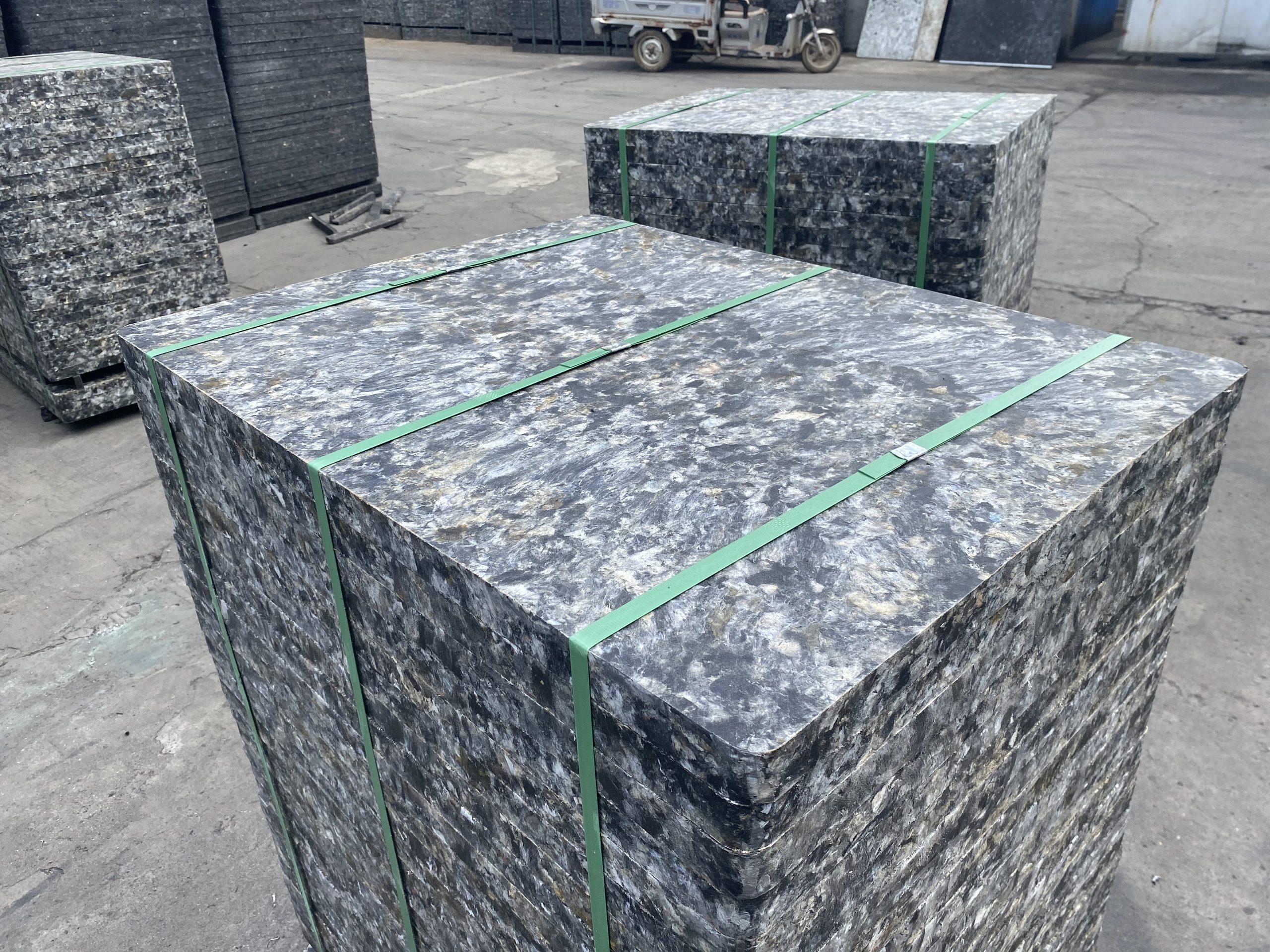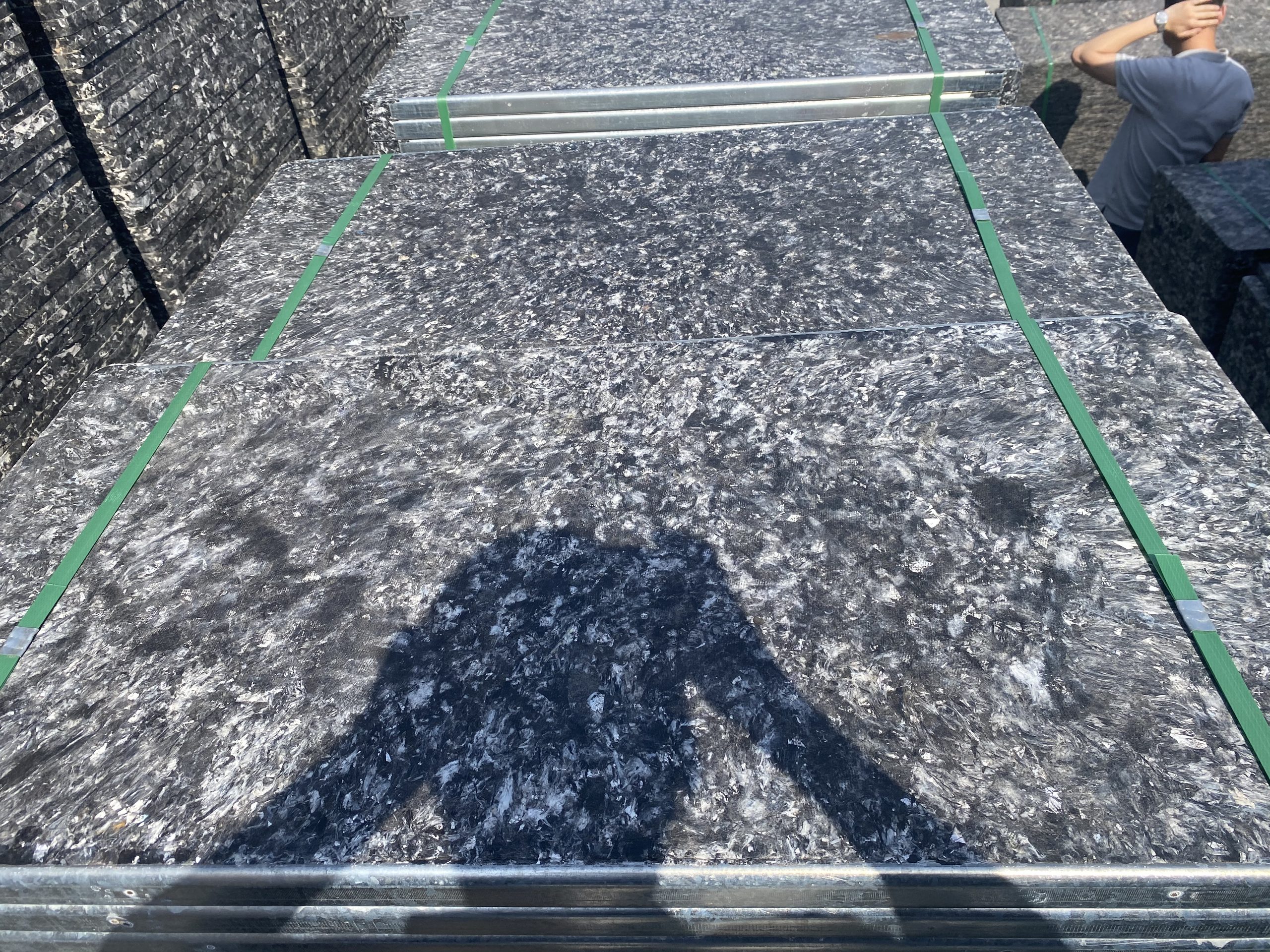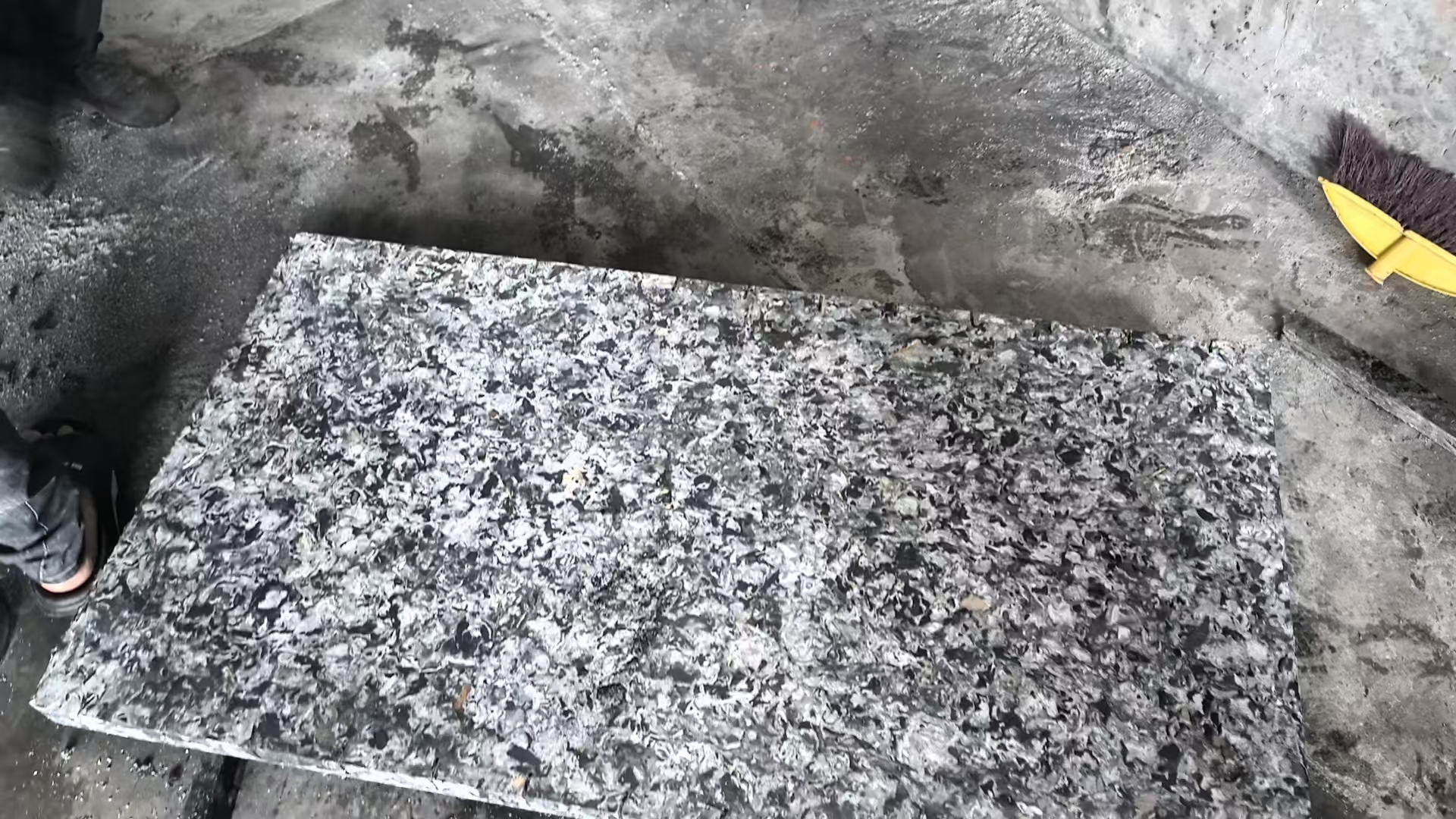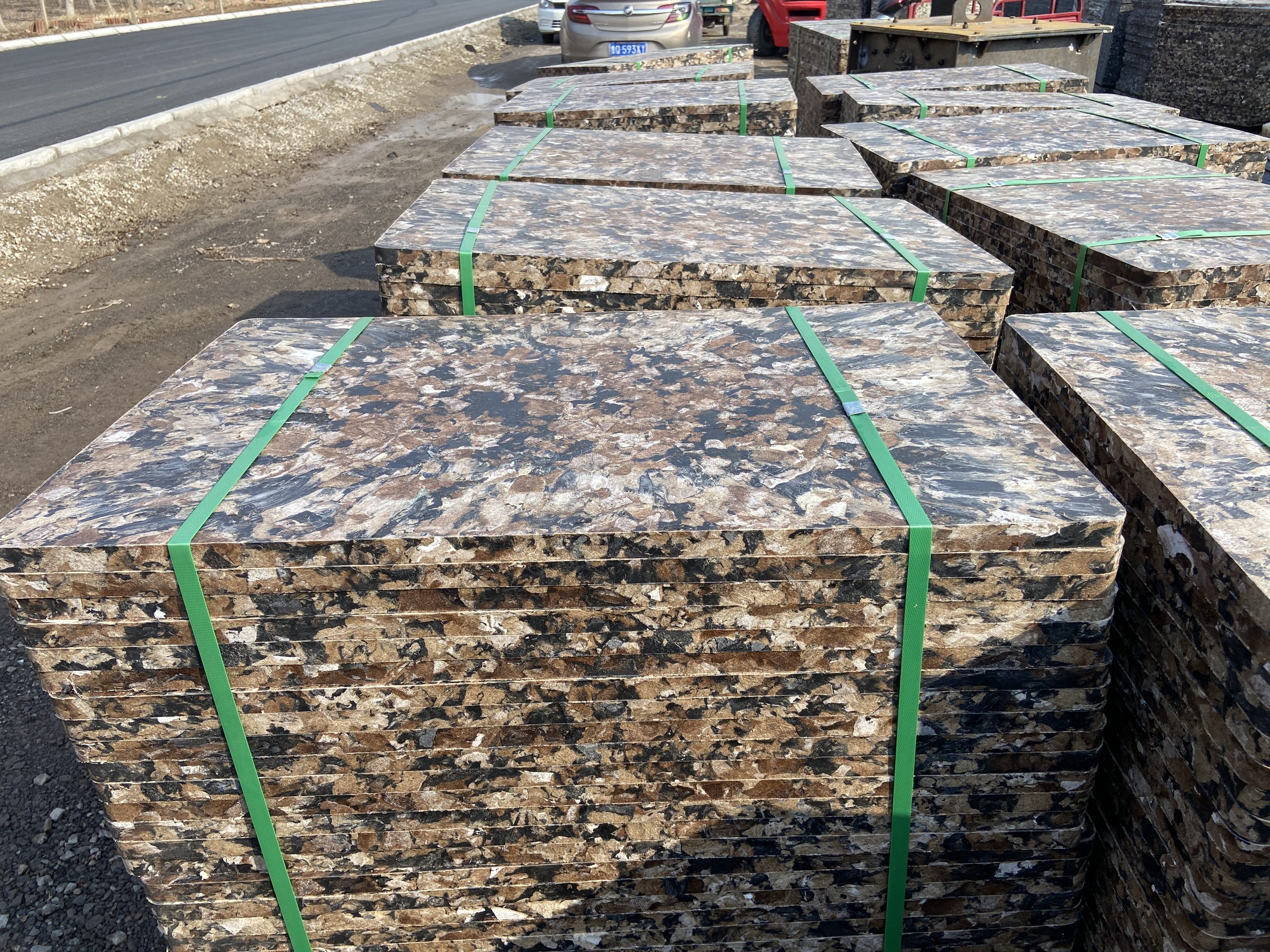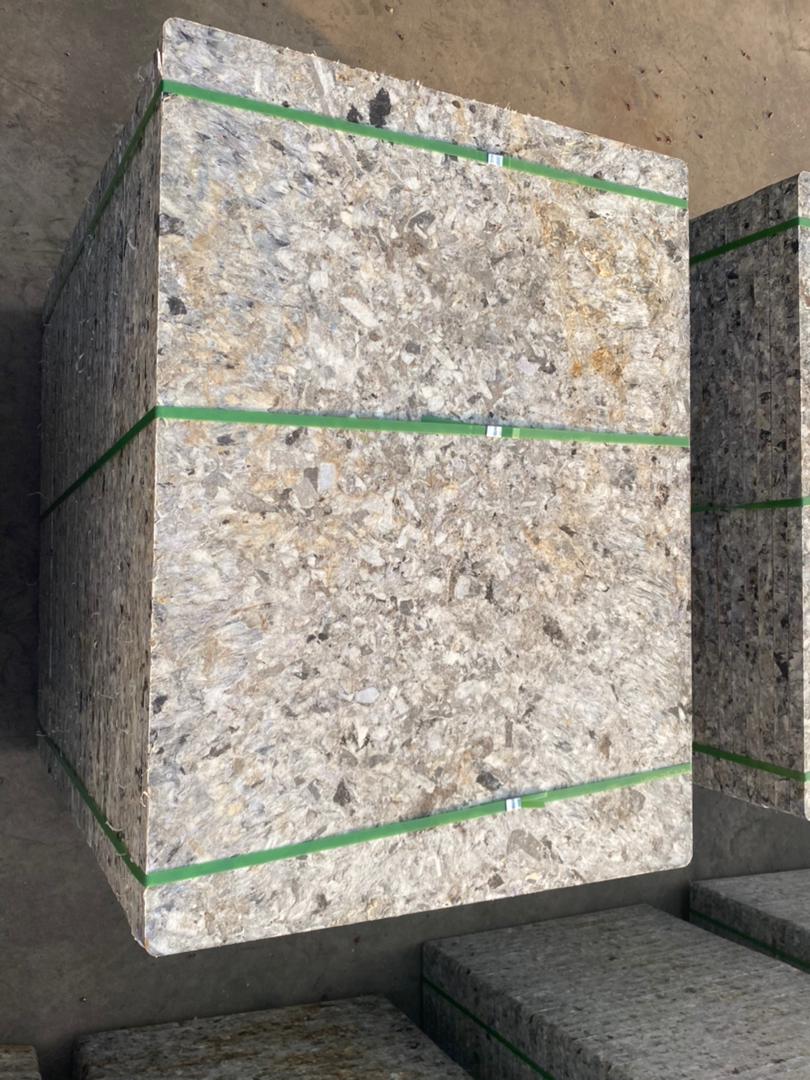
Block manufacturers lose $8,000 to $22,000 annually replacing worn pallets in mid-volume concrete production facilities. Pallet failure accounts for 12-18% of unplanned downtime, while surface irregularities cause 6-10% of block defects during the curing phase. MACIZO, a leading Guatemalan block manufacturer with 45+ years of industry experience, demonstrates how GMT pallet integration in automated block machines eliminates these losses while extending equipment service life from 2-3 years to 10+ years.
If you want to understand how GMT pallets transform block production efficiency in automated manufacturing environments, you need to examine material construction, load distribution mechanics, production cycle performance, and long-term cost impact. This analysis provides factory-verified data from high-volume concrete block operations using glass fiber reinforced pallet technology.
What Are GMT Pallets for Block Machines?
GMT pallets are glass mat reinforced thermoplastic composite pallets engineered specifically for concrete block production equipment. The construction combines continuous glass fiber mats with thermoplastic resin through compression molding at 180-200°C under 3000-ton pressure, creating a homogeneous material with elastic modulus of 2.0-4.0 GPa—substantially higher than standard PVC sheets at 2.0-2.9 GPa.
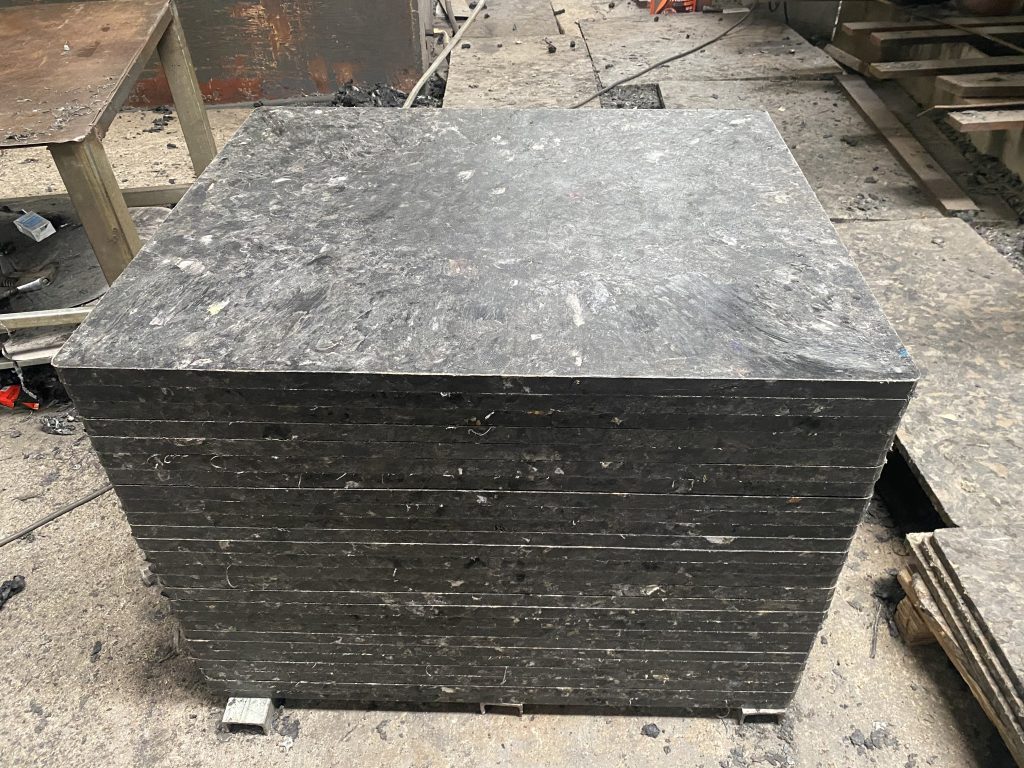
These pallets serve as the base platform in block making machines where wet concrete mix is compressed and vibrated to form blocks. The GMT material maintains dimensional stability across 10,000+ production cycles, providing the consistent surface flatness required for automated handling systems. Unlike bamboo or wood pallets that absorb moisture and warp within 12-18 months, GMT pallets resist water absorption (<1% by weight) and maintain original dimensions throughout their 8-10 year service life.
Block machine manufacturers specify GMT pallets for automated production lines because the material withstands repetitive high-frequency vibration (50-60 Hz) and hydraulic pressure (300-500 bar) without surface degradation. The glass fiber reinforcement distributes stress evenly across the pallet structure, preventing the localized cracking that causes traditional pallet failure at mounting points and high-stress zones.
MACIZO Factory Production Overview
MACIZO operates as Guatemala’s established concrete block manufacturer since 1979, supplying construction materials across Central America from their Chimaltenango facility. The company produces hollow concrete blocks, solid blocks, and specialized masonry units for commercial and residential construction projects, processing 50,000+ blocks daily during peak production periods.
The facility runs automated block making machines operating 18-20 hours daily, requiring pallets that maintain precision across multiple shifts without dimensional changes or surface wear. Production specifications demand ±0.3mm flatness tolerance per 1000mm pallet length to ensure consistent block height and prevent cracking during the curing phase—a requirement that eliminates traditional wood or bamboo pallets from consideration.
MACIZO’s transition to GMT pallet technology addresses specific production challenges common in high-humidity tropical manufacturing environments. Ambient humidity levels of 70-85% throughout the year cause rapid deterioration of moisture-sensitive pallet materials, forcing frequent replacements that interrupt production schedules and increase operational costs.
GMT Pallet Material Construction
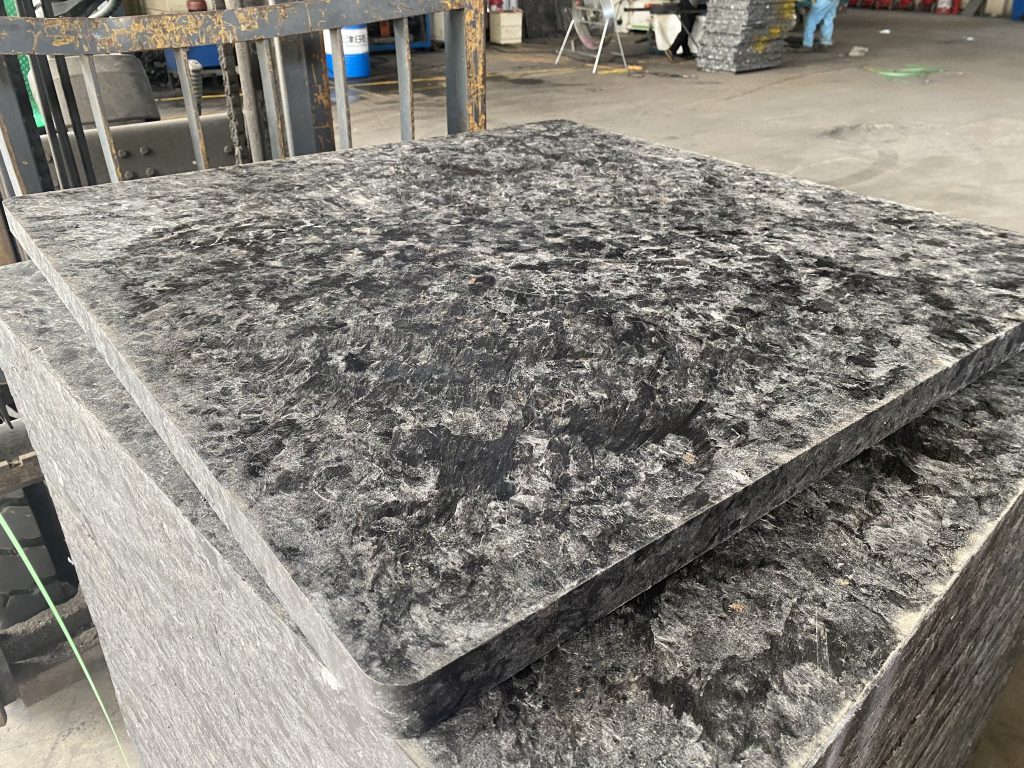
GMT pallet manufacturing uses thermoplastic resin as the matrix material with continuous glass fiber mat as the reinforcement framework. The production process heats recycled GMT materials to 180-200°C, then applies 3000-ton compression pressure to fuse the components into a uniform composite structure. This compression molding creates material density of 1.2-1.4 g/cm³ with consistent mechanical properties throughout the pallet thickness.
The glass fiber arrangement follows a multi-directional mat pattern that provides equal strength in all directions—critical for pallets experiencing vibration forces from multiple angles during block formation. Fiber content ranges from 20-30% by weight, balancing strength requirements against material flexibility needed to absorb shock loads during automated handling.
Material specifications demonstrate GMT pallet advantages over conventional options:
| Material Property | GMT Pallet | Bamboo Pallet | Wood Pallet | Plastic Pallet |
|---|---|---|---|---|
| Elastic modulus | 2.0-4.0 GPa | 1.0-1.5 GPa | 0.8-1.2 GPa | 1.5-2.5 GPa |
| Moisture absorption | <1% | 15-25% | 20-30% | 2-4% |
| Service life | 8-10 years | 1-2 years | 2-3 years | 4-6 years |
| Temperature resistance | -30°C to +80°C | -10°C to +50°C | -10°C to +40°C | -20°C to +60°C |
| Surface flatness stability | ±0.2mm | ±3-5mm | ±4-8mm | ±1-2mm |
| Recyclability | 100% | Limited | None | 60-80% |
Surface treatment applies a protective coating that further reduces moisture penetration and provides release properties for easier block removal. This coating maintains effectiveness across the pallet’s entire service life without requiring reapplication or maintenance.
Block Machine Integration Requirements
Automated block machines require pallets that meet precise dimensional tolerances for proper equipment operation. Standard GMT pallet dimensions of 850×680mm or 880×480mm match mounting specifications for semi-automatic and fully automatic block making equipment. Thickness options of 20mm, 22mm, 25mm, 28mm, and 30mm accommodate different machine models and block sizes.
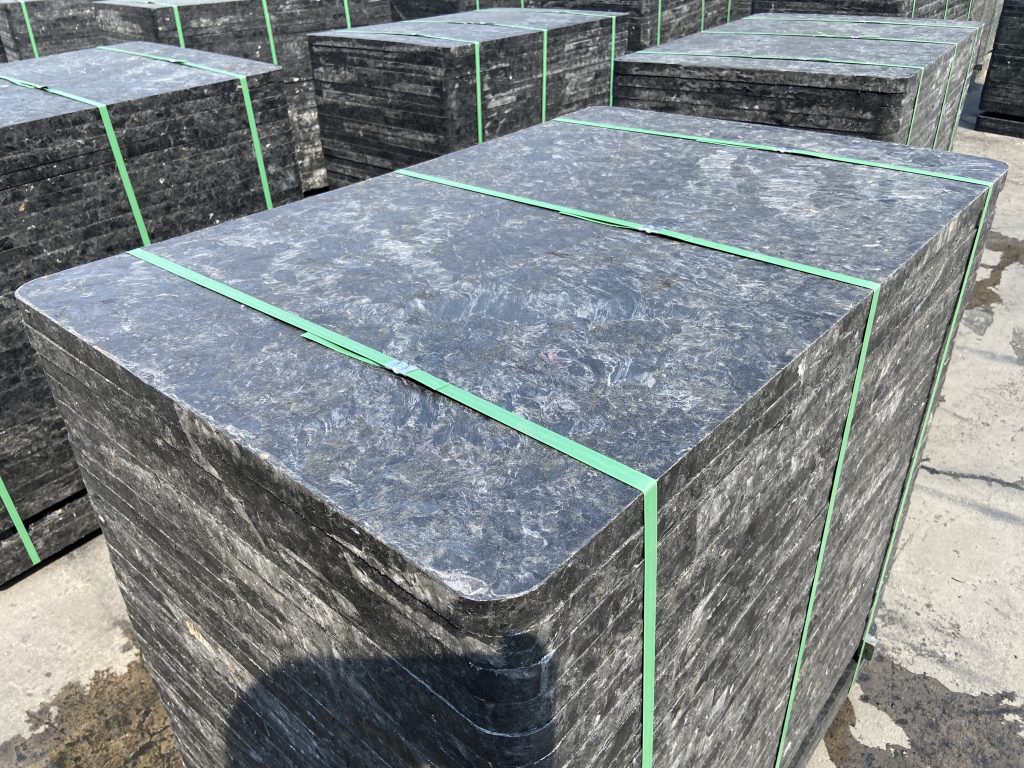
Mounting hole patterns must align exactly with machine pallet carriers to ensure secure attachment during the vibration and compression cycle. GMT pallets maintain ±1mm hole position tolerance across their service life, while traditional pallets develop 3-8mm positional shifts as materials warp or compress over time. This dimensional consistency eliminates the feeding errors and jamming incidents that cause production downtime in automated systems.
Load distribution across the pallet surface affects block quality directly. GMT pallets distribute vibration forces uniformly due to their homogeneous material structure, creating consistent compaction throughout the concrete mix. Bamboo or wood pallets with natural grain patterns create directional strength variations that result in uneven block density—visible as variations in compressive strength across finished blocks.
You should verify pallet compatibility with your specific block machine model before ordering. High Quality GMT Pallet G-003 and Black Glass Fiber Pallet BG-005 offer configurations for most standard automated equipment, while custom sizing accommodates specialized production requirements.
Production Performance Comparison
Production cycle analysis reveals GMT pallet advantages in automated block manufacturing. Facilities operating GMT pallets achieve 95-98% uptime compared to 82-88% uptime with traditional pallet materials. The difference stems from GMT pallets’ resistance to moisture-induced warping that causes feeding failures and block misalignment in humid production environments.
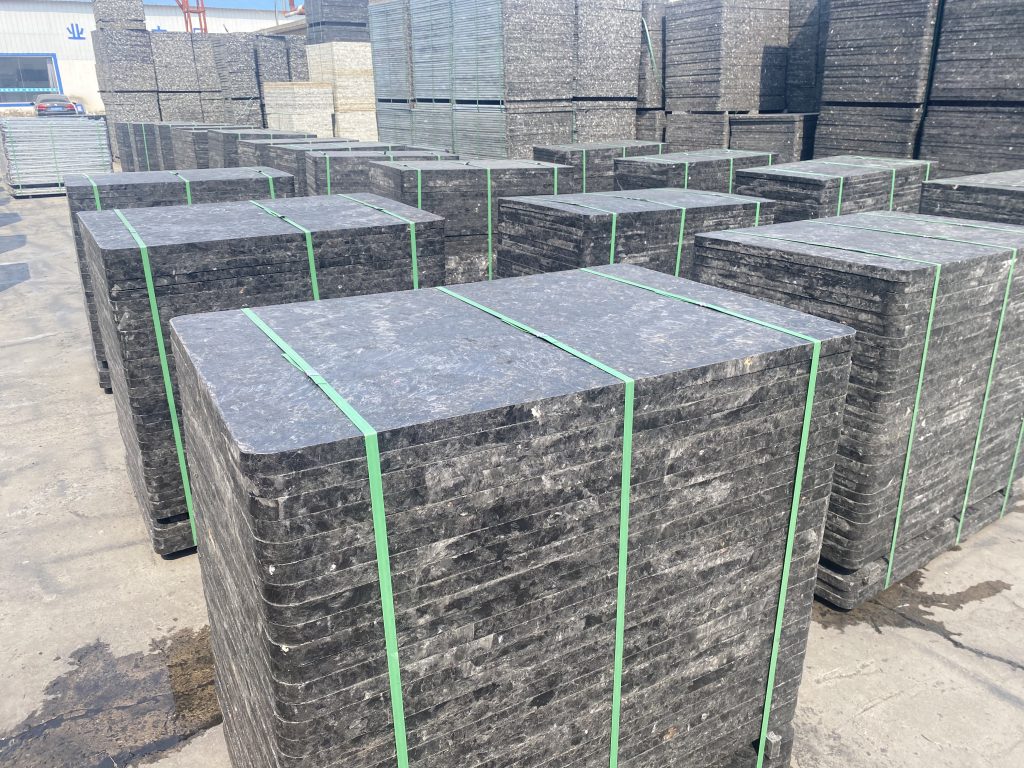
Cycle time data from block manufacturers demonstrates GMT pallet performance under continuous operation:
| Performance Metric | GMT Pallet | Bamboo Pallet | Wood Pallet |
|---|---|---|---|
| Daily production cycles | 480-520 | 420-460 | 400-450 |
| Downtime per shift (minutes) | 8-15 | 35-50 | 40-60 |
| Block defect rate (%) | 1.5-2.2% | 4.5-6.8% | 5.2-7.5% |
| Pallet cleaning frequency | Weekly | Daily | Every 2 days |
| Annual replacement rate | 0% | 80-100% | 100% |
| Mean time between failures | 10+ years | 12-18 months | 18-24 months |
Block quality measurements show GMT pallets reduce dimensional variations in finished products. Blocks formed on GMT pallets maintain ±1.5mm dimensional tolerance, while blocks from warped traditional pallets vary by 3-5mm—exceeding construction specifications for precision masonry work. This consistency eliminates the sorting and rework costs that consume 3-5% of production time in facilities using degraded pallets.
Temperature cycling performance favors GMT pallets in facilities without climate control. Daily temperature swings from 15°C night temperatures to 35°C+ afternoon conditions cause wood and bamboo pallets to expand and contract, opening gaps and creating surface irregularities. GMT pallets maintain dimensional stability across -30°C to +80°C temperature ranges without performance degradation.
Surface Flatness and Block Quality
Surface flatness directly determines block quality in concrete production. GMT pallets maintain ±0.2-0.3mm flatness deviation per 1000mm length throughout their service life—the precision required to prevent stress concentration that causes block cracking during curing. This flatness tolerance exceeds industry standards by 40-50%, providing consistent quality across years of continuous operation.
Block formation mechanics explain why surface flatness matters. During the compression and vibration cycle, concrete mix flows to fill the mold cavity while air voids escape through the porous mixture. An irregular pallet surface creates non-uniform pressure distribution, resulting in density variations within the block. These weak zones become crack initiation points when blocks experience thermal stress during the 24-48 hour curing period.
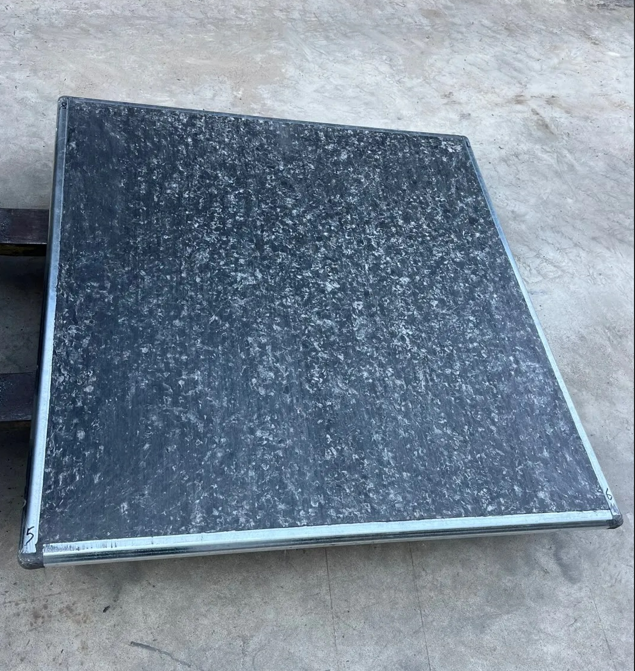
Field data from concrete block manufacturers demonstrates flatness impact on defect rates. Facilities maintaining pallet flatness within ±0.5mm achieve 1.5-2.5% defect rates, while operations accepting ±2-3mm flatness tolerances experience 6-10% defect rates. The economic impact scales with production volume—a facility producing 50,000 blocks daily loses $15,000 to $25,000 annually to preventable defects caused by worn pallets.
GMT pallet surface characteristics provide additional quality benefits. The smooth, non-porous surface releases blocks cleanly without residue buildup that marks block faces or requires frequent cleaning. Traditional wood pallets develop surface roughness within 6-12 months that embosses grain patterns into block surfaces—cosmetic defects that reduce product value for architectural applications.
You can measure pallet flatness using precision straightedges and feeler gauges during routine maintenance. Replace pallets exceeding ±1mm deviation to maintain optimal block quality. Premium White GMT Brick Pallet G-002 demonstrates the surface finish quality achievable with properly manufactured GMT materials.
Service Life and Replacement Frequency
GMT pallets achieve 8-10 year operational lifespans in concrete block production through fiber-reinforced construction that resists mechanical wear, moisture damage, and thermal cycling. Production facilities operating 480-520 cycles daily report GMT pallets maintaining structural integrity across 1.5-1.8 million handling cycles without surface degradation or dimensional changes—3-5 times the lifespan of traditional alternatives.
The fiber reinforcement distributes mechanical stress evenly throughout the pallet structure. When automated equipment applies concentrated clamping forces during handling, the glass fibers prevent localized failure that causes traditional pallets to crack at mounting points. This stress distribution maintains surface flatness and structural integrity across the entire service period.
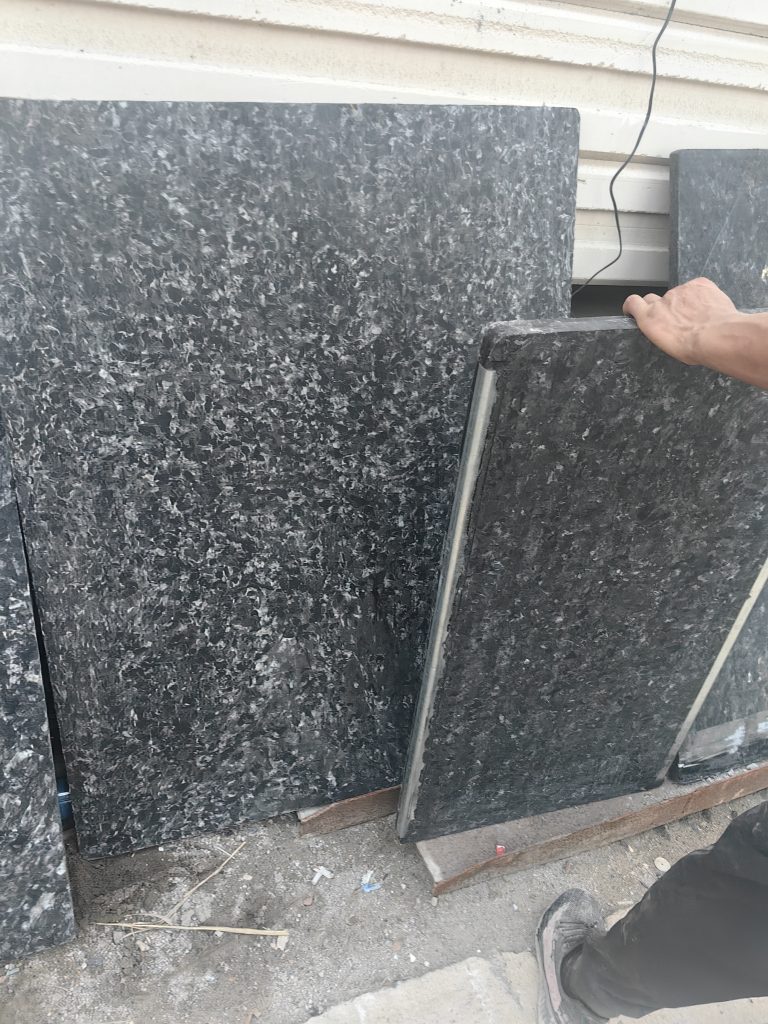
Replacement frequency comparison reveals GMT pallet economic advantages:
A facility operating 200 pallets with traditional bamboo materials replaces the entire inventory every 12-18 months, purchasing 400-600 pallets over a 10-year period. The same facility using GMT pallets purchases 200 pallets once, potentially adding 20-40 pallets as spares—a reduction of 85-90% in total pallet procurement over the equipment’s operational life.
Environmental conditions affect service life projections. GMT pallets maintain 8-10 year lifespans in harsh tropical environments with 70-90% humidity, while bamboo and wood pallets deteriorate within 8-12 months under identical conditions. Temperature extremes that would crack or warp traditional materials have minimal impact on GMT pallet performance due to the thermoplastic matrix’s temperature resistance from -30°C to +80°C.
Production managers should track pallet condition through regular inspections checking for surface cracks, mounting hole elongation, and flatness deviation. GMT pallets typically show minimal wear until approaching end-of-life, then indicate replacement need through visible surface checking rather than gradual performance decline. This failure mode allows planned replacement scheduling rather than emergency shutdowns.
Cost Analysis: GMT vs Traditional Pallets
Initial investment analysis shows GMT pallets cost $80-120 per unit compared to $15-25 for bamboo pallets and $25-40 for wood pallets. This 3-4x higher upfront cost creates hesitation among production managers focused on immediate expenses. Lifecycle cost analysis reveals the true economic picture by factoring replacement frequency, downtime costs, and defect reduction.
A 200-pallet facility comparison over 10 years demonstrates GMT pallet ROI:
Traditional Bamboo Pallets:
- Initial purchase: 200 pallets × $20 = $4,000
- Replacements: 6 cycles × 200 × $20 = $24,000
- Downtime costs: 40 hrs/year × $500/hr × 10 years = $200,000
- Defect losses: 5% × 50,000 blocks/day × $0.85/block × 250 days × 10 years = $531,250
- Total 10-year cost: $759,250
GMT Pallets:
- Initial purchase: 200 pallets × $100 = $20,000
- Replacements: 0 cycles = $0
- Downtime costs: 10 hrs/year × $500/hr × 10 years = $50,000
- Defect losses: 2% × 50,000 blocks/day × $0.85/block × 250 days × 10 years = $212,500
- Total 10-year cost: $282,500
GMT pallets deliver $476,750 in cost savings over 10 years—a 62.8% reduction in total pallet-related expenses. Payback period calculates to 8-14 months for high-volume operations, 18-24 months for mid-volume facilities.
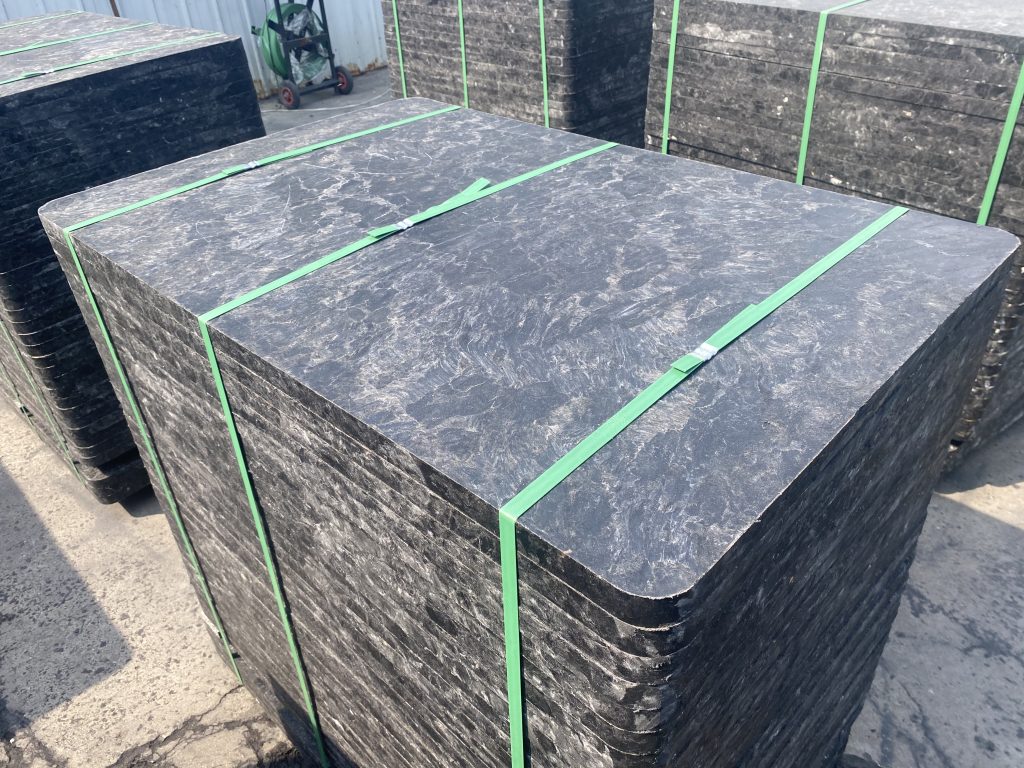
Additional cost factors favor GMT pallets beyond direct pallet expenses. Reduced downtime preserves production capacity worth $50,000-200,000 annually depending on facility size. Lower defect rates eliminate rework labor and material losses totaling $15,000-50,000 annually. These operational improvements compound the direct savings from reduced replacement frequency.
You should calculate ROI based on your facility’s specific production volume, labor rates, and downtime costs. Calculate ROI: Switching from Traditional to GMT Pallets provides detailed methodology for projecting savings in your operation.
Automated Production Line Benefits
GMT pallets enable automation capabilities that traditional materials cannot support. Automated block handling systems require dimensional consistency within ±1mm tolerance for robotic grippers and conveyor systems to function reliably. GMT pallets maintain this precision across their entire service life, while wood and bamboo pallets develop warping that causes positioning errors and jamming incidents.
Automated palletizing equipment depends on consistent pallet weight for proper operation. GMT pallets maintain 15-25 kg weight throughout their service period, while traditional pallets gain 20-40% weight as moisture absorption occurs. This weight stability ensures consistent handling forces and prevents overload conditions that trigger safety shutdowns in automated systems.
Production line synchronization requires predictable cycle times. GMT pallet dimensional stability eliminates the feeding delays and position corrections that occur when warped pallets jam in automated equipment. This consistency allows block machines to operate at rated speeds of 480-520 cycles per 8-hour shift compared to 420-460 cycles when traditional pallet variations introduce timing disruptions.
Material handling automation benefits extend throughout the production chain. GMT pallets stack uniformly on curing racks without the tilting and instability caused by warped traditional pallets. This stacking precision allows automated forklifts and transfer equipment to operate at higher speeds without risk of load shifting or collapse.
Block manufacturers implementing Industry 4.0 monitoring systems gain additional advantages from GMT pallet consistency. Sensors tracking production metrics detect anomalies more accurately when pallet-related variation is eliminated from the data. This clarity enables predictive maintenance strategies that identify actual equipment wear rather than false signals from degraded pallets.
You can integrate GMT pallets into existing manual or semi-automated production lines, then upgrade to full automation without changing pallet inventory. Best Pallets for Automated Brick Making Machines examines automation compatibility requirements for various production scales and equipment types.
FAQ
How long do GMT pallets last in tropical climates with high humidity?
GMT pallets maintain 8-10 year service lives in tropical environments with 70-90% relative humidity. The thermoplastic matrix absorbs <1% moisture by weight, preventing the dimensional instability that causes bamboo and wood pallets to fail within 12-18 months under identical conditions. Temperature cycling between 15°C nighttime and 35°C+ daytime temperatures has minimal impact on GMT pallet performance due to material stability from -30°C to +80°C operational range.
What block machine models are compatible with GMT pallets?
GMT pallets fit standard semi-automatic and fully automatic concrete block machines with 850×680mm or 880×480mm pallet dimensions. Common compatible equipment includes QT4-15, QT6-15, QT8-15, and QT10-15 model designations from major manufacturers. Custom sizing accommodates specialized equipment—verify mounting hole patterns and thickness requirements with your machine manufacturer before ordering. Half GMT Pallet HG-007 provides compact sizing for smaller production equipment.
Can GMT pallets be repaired if damaged?
GMT pallets cannot be field-repaired once cracked or damaged due to the thermoplastic composite construction. However, damaged pallets can be returned to manufacturers for recycling into new pallet production—GMT material recyclability reaches 100%, making it an environmentally sustainable choice despite lack of field repair options. The 8-10 year service life with minimal maintenance requirements offsets the inability to perform repairs.
How much do GMT pallets cost compared to traditional options?
GMT pallets cost $80-120 per unit compared to $15-25 for bamboo pallets and $25-40 for wood pallets. While initial investment is 3-4x higher, lifecycle cost analysis shows GMT pallets deliver 60-75% lower total cost over 10 years due to elimination of replacement cycles, reduced downtime, and lower defect rates. Payback period ranges from 8-14 months for high-volume facilities to 18-24 months for mid-volume operations.
What maintenance do GMT pallets require?
GMT pallets require weekly cleaning to remove concrete residue and quarterly inspections checking surface flatness, mounting hole condition, and visible cracks. Unlike traditional pallets, GMT materials do not require surface treatments, moisture protection, or dimensional adjustments throughout their service life. Cleaning uses water and mild detergent—avoid harsh chemicals that may damage the surface coating. GMT Pallet Maintenance Guide details specific inspection procedures and maintenance schedules.
Do GMT pallets affect block compressive strength?
GMT pallets improve block quality by maintaining ±0.2-0.3mm surface flatness that creates uniform pressure distribution during the compression and vibration cycle. This consistency results in even concrete compaction throughout the block, producing compressive strength variations within 2-3% across production batches. Traditional pallets with 3-5mm surface irregularities create density variations that cause 8-12% compressive strength variations and higher defect rates.
Conclusion
MACIZO Factory’s GMT pallet implementation demonstrates how material selection transforms concrete block production economics. The transition from traditional bamboo or wood pallets to glass fiber reinforced composite technology eliminates 85-90% of pallet replacement costs, reduces production downtime by 60-70%, and cuts block defect rates from 6-10% to 1.5-2.5% through superior dimensional stability and moisture resistance.
GMT pallets deliver 8-10 year service lives across 1.5-1.8 million production cycles while maintaining the ±0.3mm flatness tolerance required for automated manufacturing equipment. This performance enables the production consistency and equipment reliability that automated facilities require, supporting Industry 4.0 implementation strategies and predictive maintenance programs. The 62-75% lifecycle cost reduction compared to traditional alternatives provides 8-24 month payback periods depending on facility production volume.
If you need high-quality GMT pallets for concrete block production equipment, Rhinos Pallet manufactures precision-molded glass fiber reinforced pallets for automated and semi-automated facilities worldwide. Our product line includes standard and custom configurations supporting block machines from 200-500 ton capacity, with dimensional tolerances maintained within ±2mm throughout 10+ year service lives. We supply GMT pallet solutions for facilities across tropical, temperate, and arid climates with proven performance in high-humidity environments where traditional materials fail within 12-18 months.
Contact us today for GMT pallet specifications, technical datasheets, and delivered pricing for your block production facility.