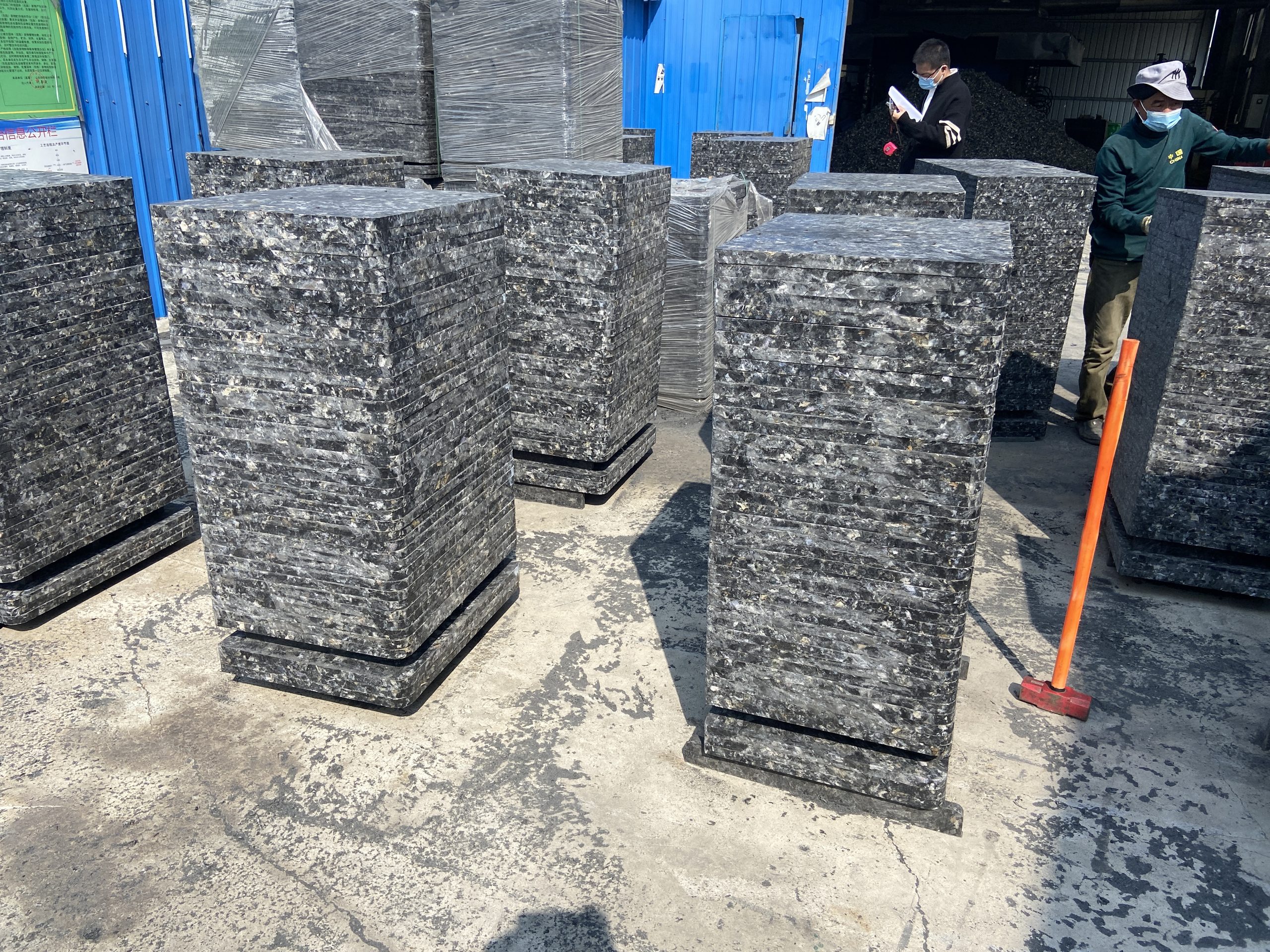
Lightweight concrete hollow block production faces unique challenges costing manufacturers $8,000-18,000 annually in defects and handling damage. Industry data shows 55-70% of dimensional accuracy problems and 40-60% of breakage issues originate from improper pallet selection. Specialized pallets designed for lightweight concrete reduce defects by 45-65% while improving throughput by 20-35%.
If you want to optimize hollow block efficiency, you need to understand how pallet material properties, surface flatness, dimensional stability, and load distribution affect product quality. This guide examines technical requirements and selection criteria based on real manufacturing data.
Understanding Lightweight Concrete Hollow Blocks
Lightweight concrete hollow blocks weigh 28-35 pounds for standard 8×8×16-inch units, compared to 38-51 pounds for normal-weight blocks. The reduced density creates specific handling and curing challenges that require specialized pallet solutions.
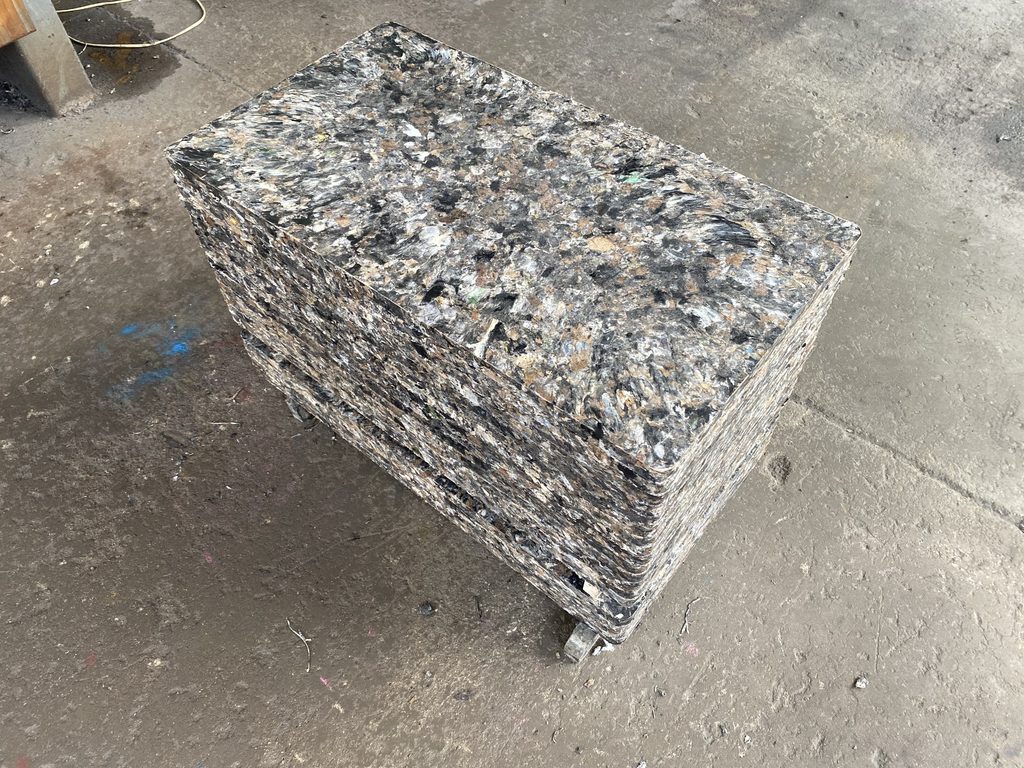
Hollow core designs concentrate 60-75% of block weight through perimeter walls covering just 35-45% of base area. This creates point loads of 200-280 psi along wall zones rather than distributed pressure, placing different mechanical stresses on pallets than solid block production.
Lightweight aggregate materials like expanded clay or pumice create 45-60% porosity that holds 18-25% moisture by weight after molding. This high moisture content demands pallets with exceptional dimensional stability during the critical 24-48 hour initial curing period.
Why Hollow Block Production Requires Specialized Pallets
Standard wood pallets designed for solid blocks fail 40-60% faster in hollow block production. Concentrated wall loads cause localized compression of 2-4mm within 200-300 cycles, creating surface irregularities that generate 15-25% dimensional variation.
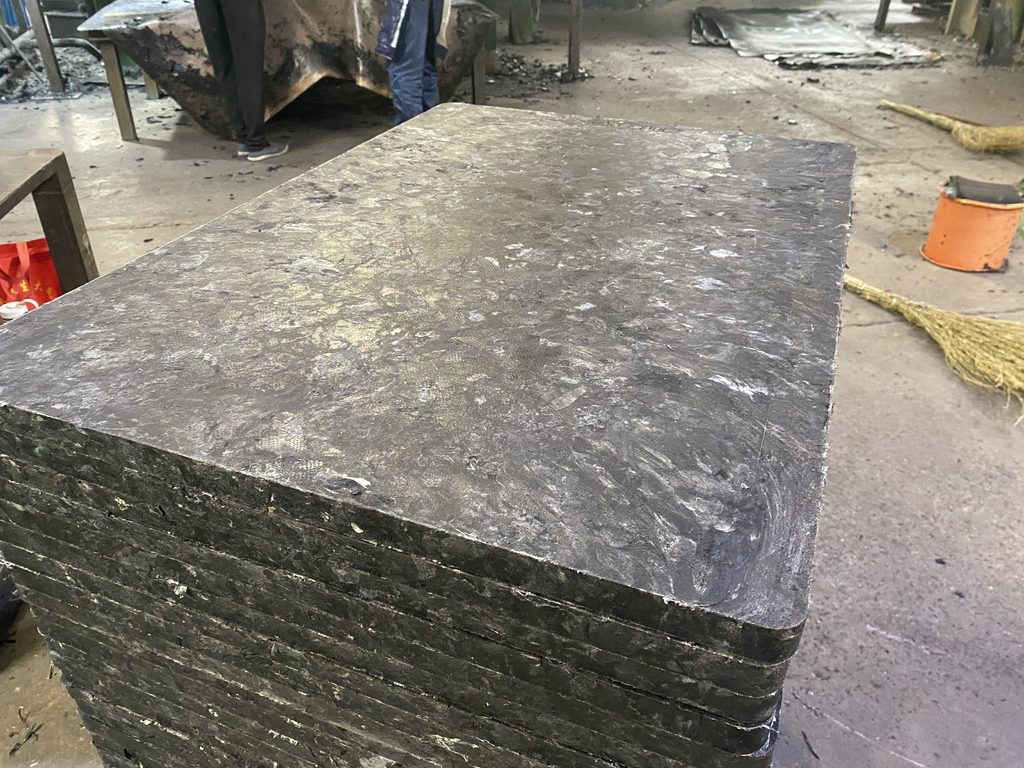
Hollow core structure increases fragility during demolding—defects occur 45-55% more frequently on warped surfaces. High quality GMT pallets provide the dimensional stability and surface smoothness that hollow block production requires.
Lightweight aggregate concrete shrinks 0.08-0.12% during curing versus 0.04-0.06% for normal-weight concrete. This demands pallets maintaining perfect flatness to prevent cracks along hollow core walls.
Critical Pallet Requirements for Hollow Blocks
Specialized hollow block pallets must meet stringent performance criteria that address lightweight concrete’s unique characteristics. Manufacturing data identifies five critical specifications that directly impact product quality and production efficiency.
| Specification | Solid Block Pallets | Hollow Block Requirements | Performance Impact |
|---|---|---|---|
| Surface Flatness | ±3-4mm | ±1.5-2mm | Hollow blocks need 50% tighter tolerance for dimensional accuracy |
| Load Capacity | 2500-3000 kg distributed | 2000-2500 kg concentrated | Must handle point loads 60-75% higher than average |
| Surface Smoothness | Ra 6.3-12.5 μm | Ra 3.2-6.3 μm | Smoother finish prevents surface marking on lightweight aggregate |
| Moisture Absorption | <3% acceptable | <1% critical | Excess absorption causes warping during 24-48hr curing |
| Dimensional Stability | ±2-3mm over 2 years | ±1mm over 5 years | Lightweight blocks require long-term consistency |
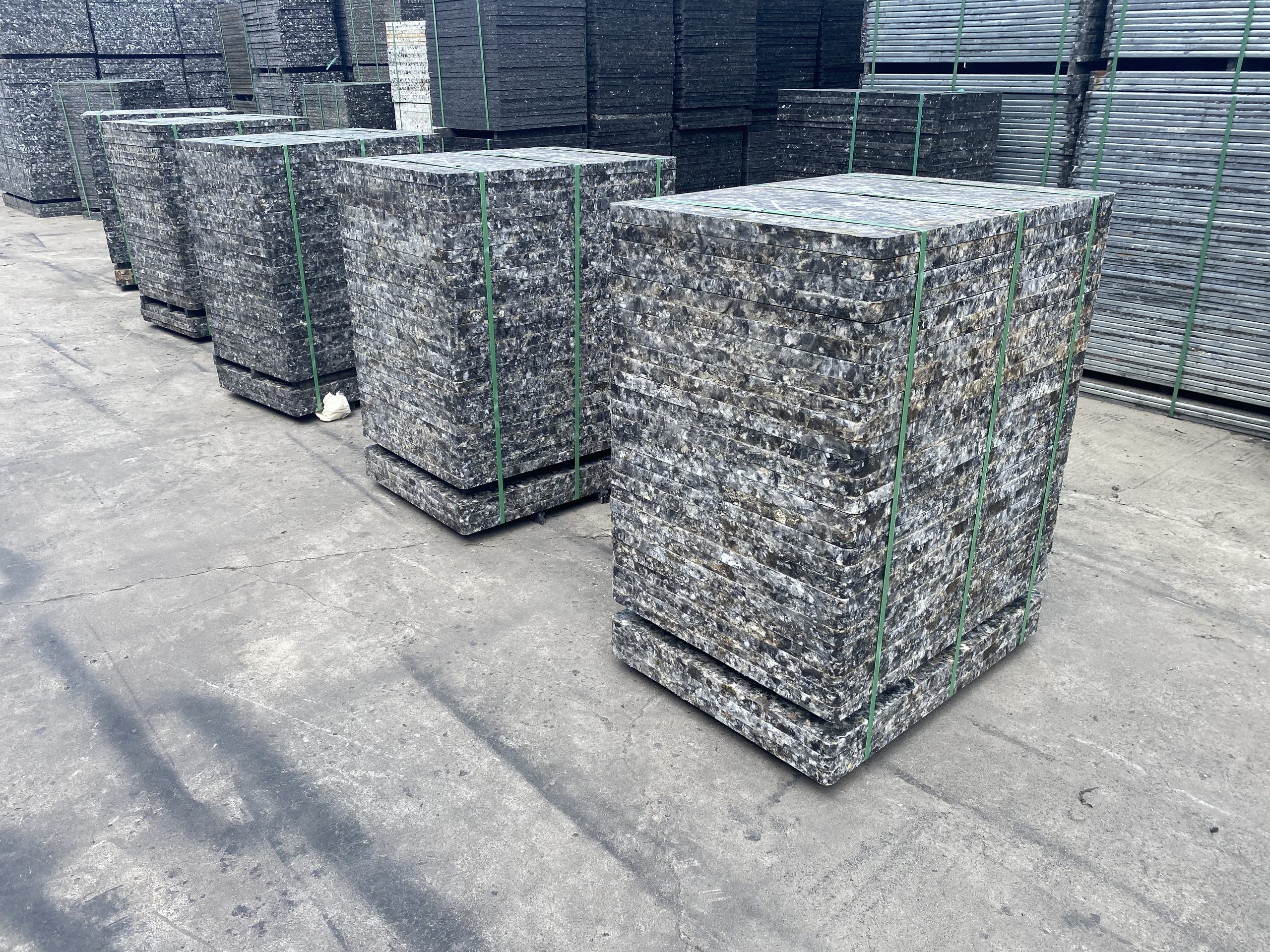
Surface flatness tolerance of ±1.5-2mm prevents the differential support that causes hollow core walls to crack during curing. When one wall section sits 2-3mm higher than another, shrinkage stresses concentrate at the height transition, generating cracks in 25-40% of blocks. White GMT brick pallets maintain flatness within ±1.5mm through 5,000+ production cycles.
Load concentration handling separates adequate pallets from optimal ones. You should specify pallets tested for 200-300 psi point loads rather than just overall weight capacity, as hollow block wall contact creates these concentrated stresses during every production cycle.
Surface Flatness and Dimensional Accuracy
Surface flatness determines dimensional consistency in finished hollow blocks. Each 1mm of pallet variation generates 0.6-0.8mm dimensional error after curing. A pallet with ±3mm variation produces blocks with ±2-2.5mm height differences—exceeding ASTM C90 standards ±3mm tolerance.
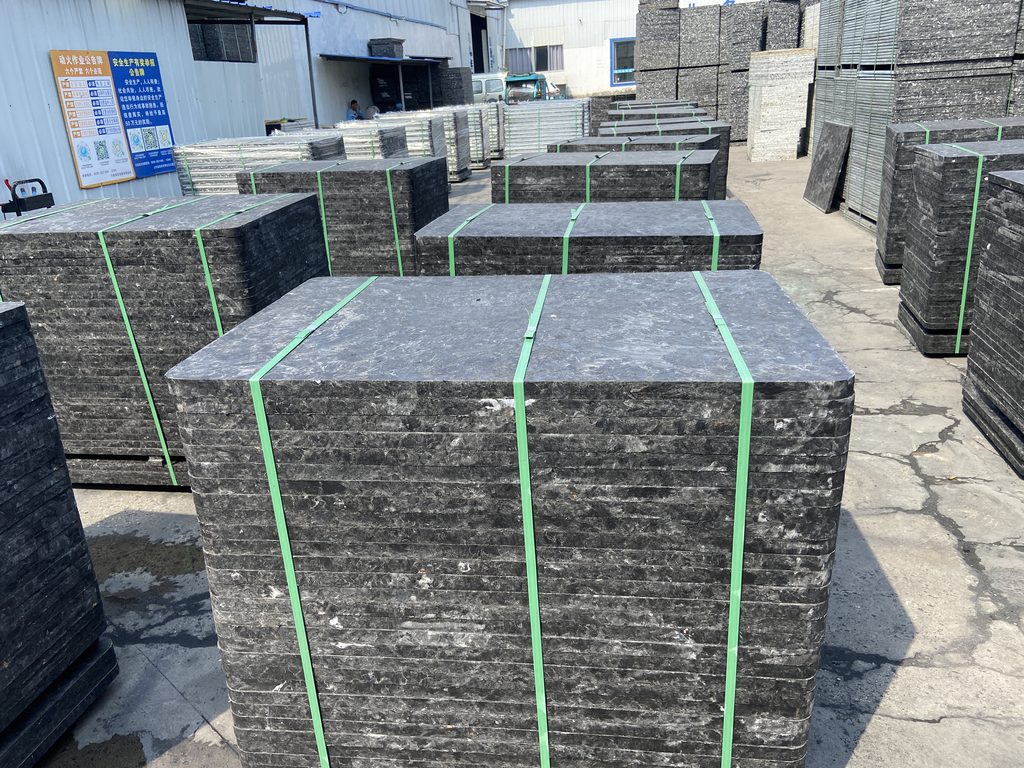
Wood pallet warping accelerates under moisture from fresh blocks. Moisture absorption causes 2-4mm surface irregularities within 6-12 months, while composite fiber pallets maintain ±1.5mm flatness through 10-12 year service life.
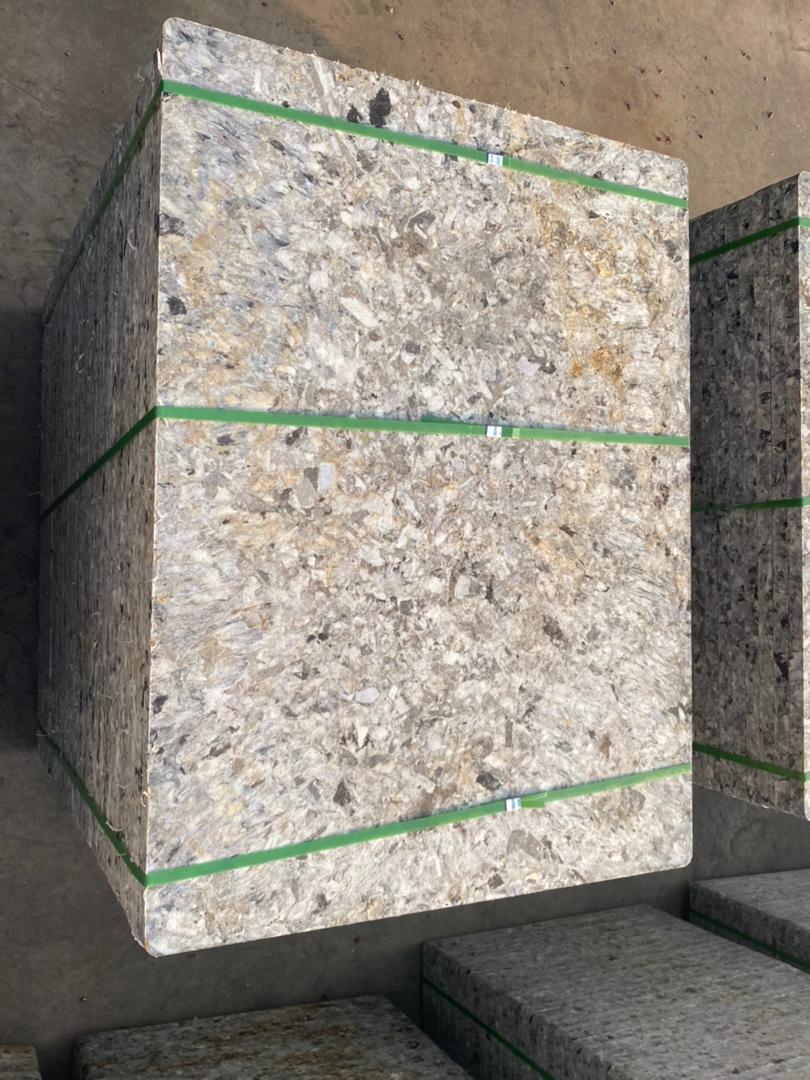
White yellow GMT pallets absorb less than 0.5% moisture, keeping dimensional variation below ±2mm and reducing rejection rates by 55-70%. Flat surfaces also reduce demolding forces by 30-50%, decreasing wall cracking risk.
Load Distribution for Hollow Core Structures
Hollow core geometry creates concentrated stress patterns. Standard 8×8×16-inch hollow blocks apply forces through just 420-480 cm² of their 1,356 cm² base—creating 200-280 psi pressure along wall zones.
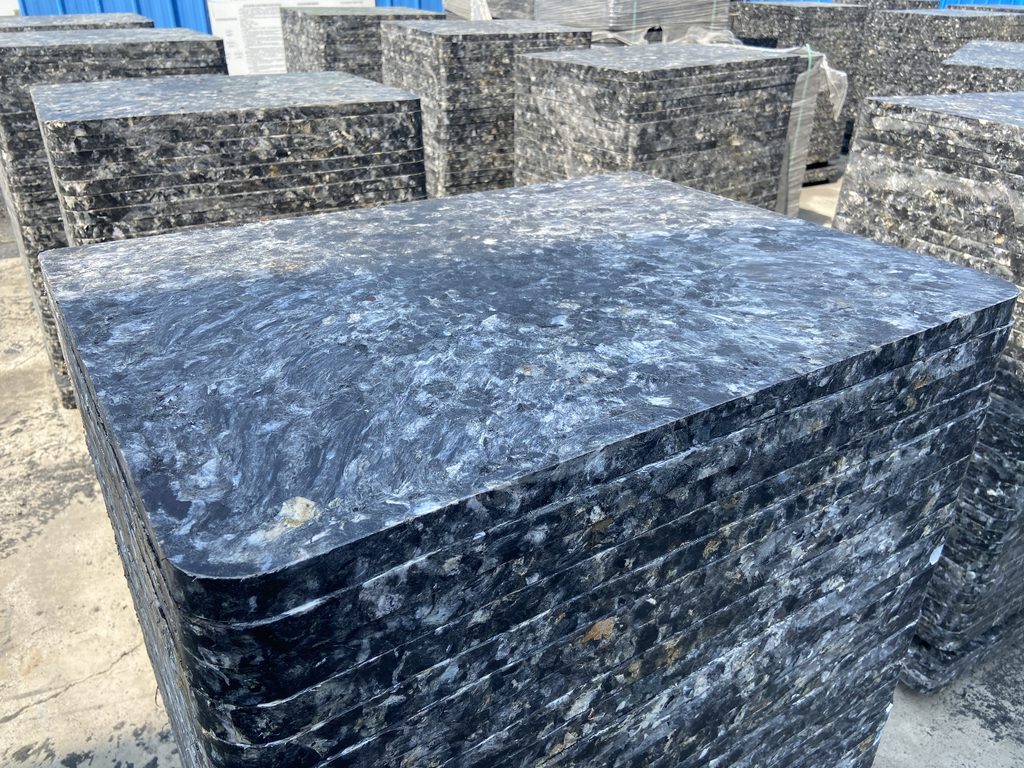
Wood compression under point loads generates 1.5-3mm permanent deformation after 300-500 cycles, creating raised zones that prevent proper block seating. Fiber-reinforced composite pallets distribute loads through glass fiber matrix, maintaining flatness after 5,000+ cycles with less than 0.8mm deformation.
Black glass fiber pallets withstand 250-300 psi point loads through 40-50 cm² contact areas—the specification needed for hollow block wall patterns.
Material Selection: Weight vs Durability
Pallet material properties directly affect hollow block production efficiency, product quality, and long-term cost-effectiveness. The ideal material balances adequate strength against handling convenience while providing the dimensional stability that lightweight concrete demands.
| Material Type | Weight per Pallet | Service Life | Flatness Retention | Suitability for Hollow Blocks |
|---|---|---|---|---|
| Hardwood | 18-25 kg | 2-3 years | Poor (±4-6mm after 1 year) | Marginal—warping causes dimensional issues |
| Plywood Composite | 15-20 kg | 3-4 years | Fair (±3-4mm after 2 years) | Adequate for low-volume operations |
| Recycled Plastic | 12-18 kg | 5-7 years | Good (±2-3mm after 3 years) | Suitable but thermal expansion issues |
| GMT Fiber Composite | 15-22 kg | 10-12 years | Excellent (±1-1.5mm after 5+ years) | Optimal—best balance of all factors |
Wood pallets present the lowest initial cost at $15-25 per unit, but moisture absorption and compression failure generate replacement costs of $30-50 annually per production position. A 100-pallet operation faces $3,000-5,000 yearly wood pallet replacement costs. The dimensional instability of wood also increases hollow block rejection rates by 35-50%, adding indirect quality costs.
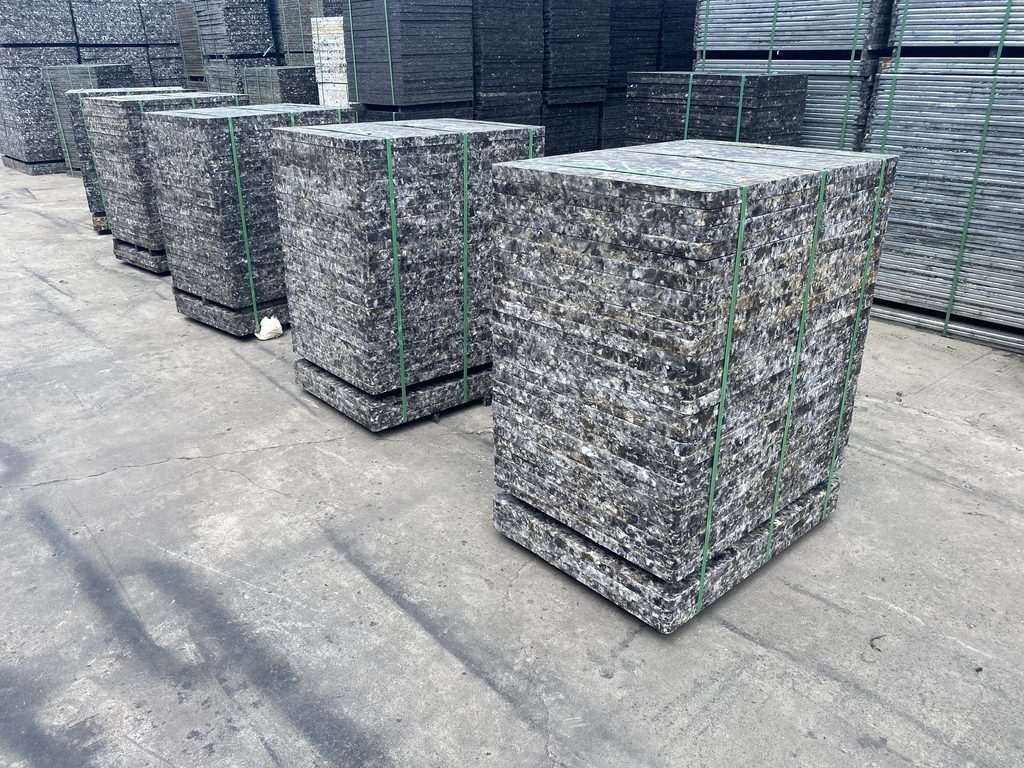
Plastic pallets offer moderate durability at $35-55 per unit with 5-7 year lifespan. However, thermal expansion coefficients of 80-120 × 10⁻⁶/°C cause 1-2mm dimensional changes during daily temperature cycling in production areas. These variations affect hollow block dimensional consistency, particularly in facilities with limited climate control.
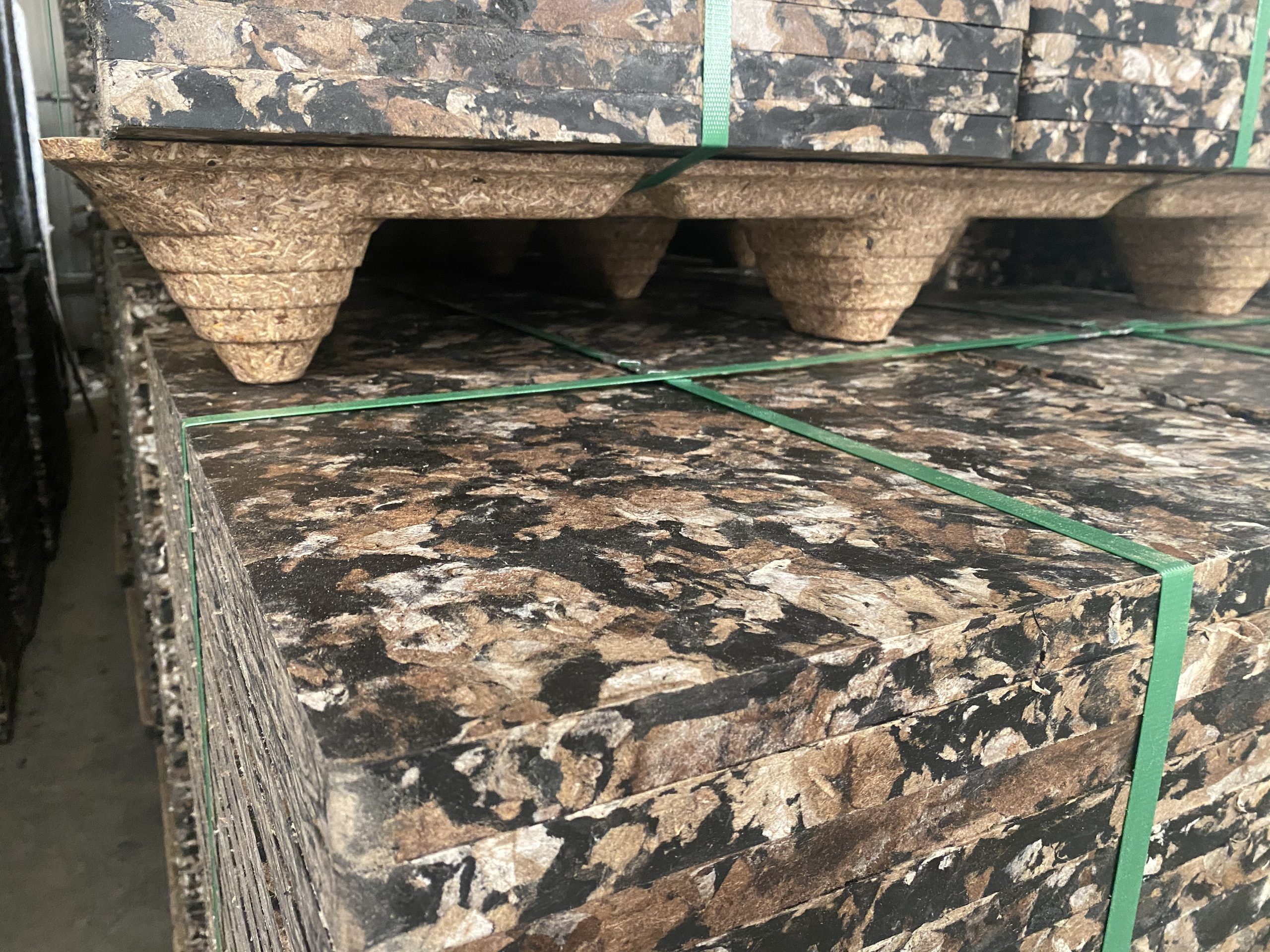
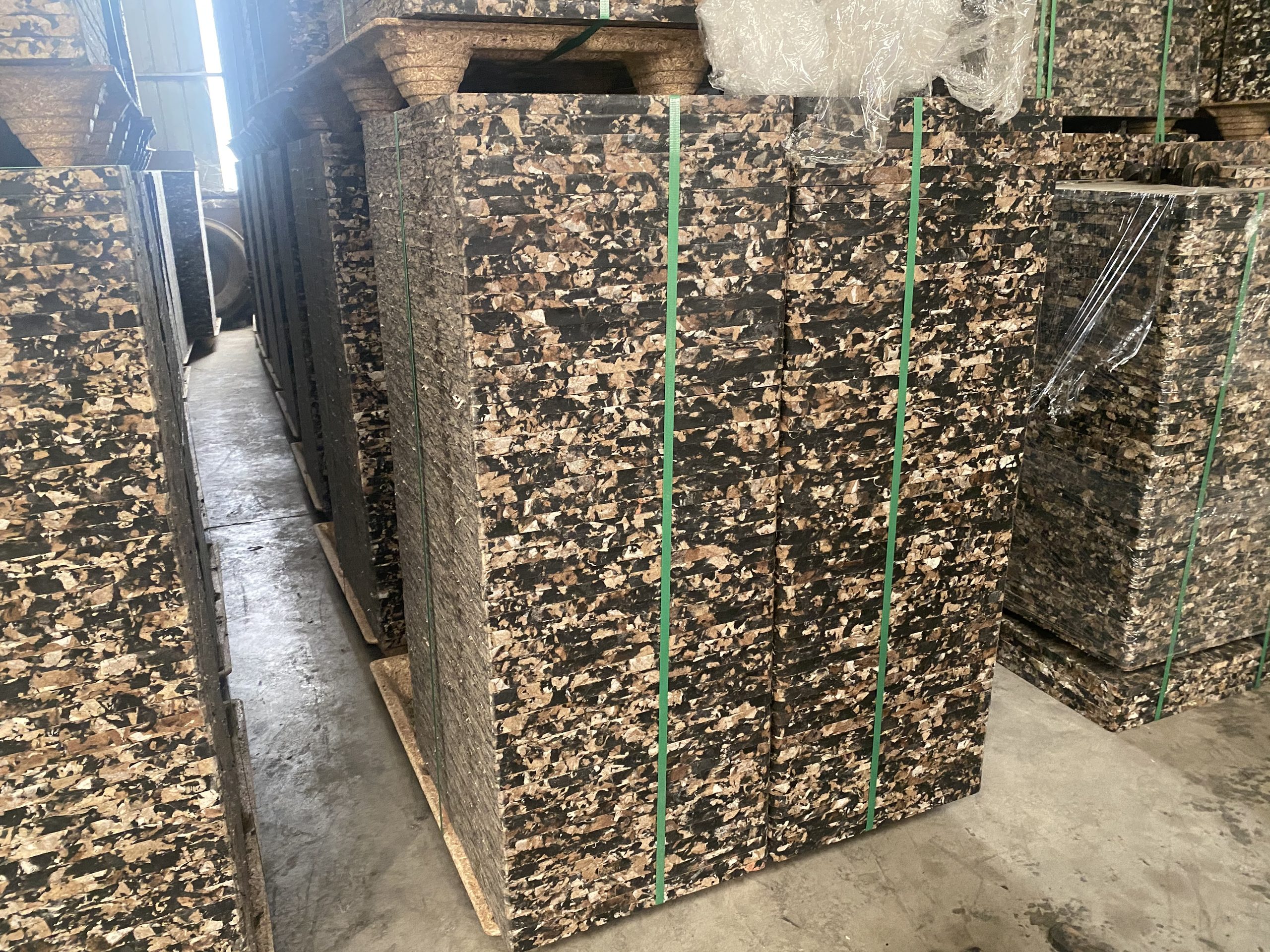
GMT fiber composite pallets combine optimal properties for hollow block manufacturing. The glass fiber reinforcement provides structural rigidity that prevents compression under concentrated loads, while thermoplastic resin matrix resists moisture absorption below 1%. Initial cost of $80-120 per pallet generates superior long-term value through 10-12 year service life and consistent dimensional performance.
You can reduce total pallet lifecycle costs by 60-75% while improving product quality through GMT composite selection. Fiber brick pallets deliver the dimensional stability and durability that hollow block production requires for profitable operation.
Moisture Resistance in Lightweight Concrete Production
Lightweight aggregate concrete contains 18-25% moisture after pressing versus 12-16% for normal-weight concrete. This moisture migrates into pallets during the first 6-12 hours—the critical strength development period.
Wood pallets absorb 8-15% weight in moisture, causing 0.5-1.2mm surface expansion. When surfaces later contract during drying, ±2-4mm dimensional inconsistencies develop. Repeated wet-dry cycling through 500-600 moisture cycles annually breaks down wood fibers, increasing block rejection rates by 30-45% after 12-18 months.
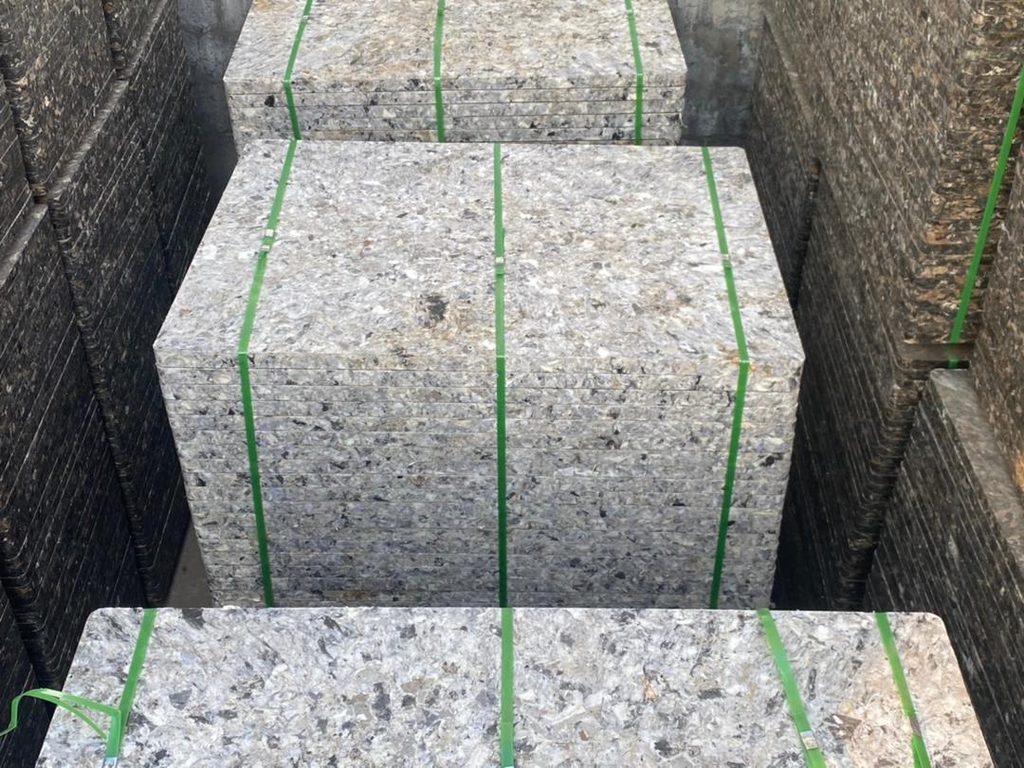
Composite fiber pallets absorb less than 0.8% moisture, maintaining thickness within ±0.2mm regardless of fresh concrete exposure. You can improve dimensional consistency by 45-60% and extend pallet life by 350-450% through low-absorption materials, generating returns within 14-20 months.
Comparing Pallet Types for Hollow Block Manufacturing
Comprehensive performance comparison reveals how different pallet materials affect hollow block production economics and product quality. Real manufacturing data quantifies the operational and financial impacts.
| Performance Factor | Wood Pallets | Plastic Pallets | GMT Fiber Pallets | Measurement Basis |
|---|---|---|---|---|
| Initial Cost | $15-25 | $35-55 | $80-120 | Per pallet unit |
| Service Life | 2-3 years | 5-7 years | 10-12 years | Normal production conditions |
| Annual Cost | $8-12/year | $6-9/year | $7-10/year | Amortized over lifespan |
| Dimensional Stability | ±4-6mm (poor) | ±2-3mm (good) | ±1-1.5mm (excellent) | Surface flatness after 2 years |
| Block Rejection Rate | 8-12% | 4-6% | 2-3% | Quality defects per 10,000 blocks |
| Handling Weight | 18-25 kg | 12-18 kg | 15-22 kg | Standard 850×680mm size |
| Moisture Absorption | 8-15% | 2-4% | <1% | Weight gain from fresh concrete |
| Load Capacity | 2000-2500 kg | 2500-3000 kg | 3000-3500 kg | Proven through testing |
The data demonstrates that while GMT fiber pallets carry higher initial costs, their superior dimensional stability and extended service life deliver lower lifecycle costs than wood alternatives. More importantly, the 60-75% reduction in block rejection rates generates quality-related savings of $4,000-9,000 annually in a 100,000-block monthly production facility.
Wood pallet economics become particularly unfavorable in hollow block production due to accelerated deterioration under moisture cycling. Replacement frequency of 2-3 years means continuous reinvestment that never builds long-term value. Dimensional instability also increases quality control costs through higher inspection requirements and customer returns.
GMT block pallets provide the optimal combination of performance and cost-effectiveness for hollow block manufacturing. You can achieve 18-24 month payback periods through combined savings in replacement costs and quality improvements.
Automated Production Line Requirements
Automated hollow block systems require ±1mm dimensional consistency for vision systems and mechanical grippers. Wood pallets exceeding ±3mm after 6-12 months cause 25-40% more production stoppages.
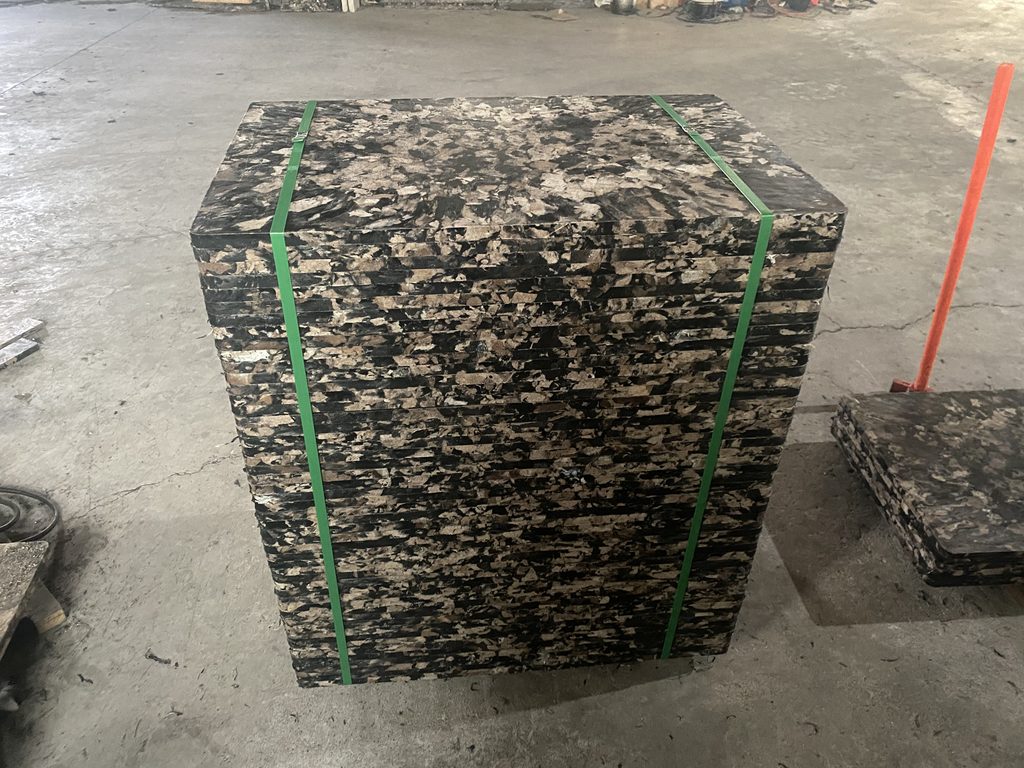
Weight consistency matters for robotic handling. Pallets varying more than ±8% from nominal weight create automation issues—GMT manufacturing achieves ±3% variation. Surface friction must stay stable (μ = 0.40-0.45) for conveyor transport, while wood changes from μ = 0.45-0.55 when new to μ = 0.25-0.35 after wear.
Facilities producing 50,000+ blocks monthly need automated production pallets with dimensional tolerance below ±1mm, weight variation under ±5%, and consistent friction coefficients.
Cost Analysis: Initial Investment vs Long-Term Performance
Lifecycle cost analysis reveals operational and quality impacts dominate profitability. A 100-pallet operation producing 100,000 hollow blocks monthly sees dramatically different 10-year economics:
| Cost Component | Wood Pallets | Plastic Pallets | GMT Fiber Pallets |
|---|---|---|---|
| Initial Purchase | $2,000 | $4,500 | $10,000 |
| Replacements (10 years) | $6,000-8,000 | $4,500-6,000 | $0 |
| Quality Losses (10 years) | $80,000-120,000 | $40,000-60,000 | $20,000-30,000 |
| Total 10-Year Cost | $88,000-130,000 | $49,000-70,500 | $30,000-40,000 |
Quality-related costs dwarf pallet expenses. Wood generates 4-6× higher total costs despite 80-85% lower initial investment. The 8-12% rejection rate costs $8,000-12,000 annually—overwhelming $1,500-2,500 yearly replacement costs.
GMT investment recovers within 14-18 months through $6,000-9,000 annual quality savings plus $600-800 eliminated replacement costs. You maximize profitability through lifecycle cost analysis rather than focusing on purchase price.
FAQ
What makes hollow block production different from solid block manufacturing?
Hollow blocks create concentrated wall loads through 35-45% of base area requiring pallets with ±1.5-2mm flatness and 250-300 psi point load resistance. Lightweight aggregate contains 40-60% higher moisture demanding low-absorption materials.
Why does pallet flatness matter for lightweight concrete blocks?
Lightweight concrete shrinks 0.08-0.12% during curing—double normal-weight rates. Each 1mm pallet variation generates 0.6-0.8mm dimensional error, making ±1.5-2mm tolerance critical for ASTM C90 compliance.
Can wood pallets work for hollow block production?
Wood functions adequately under 30,000 blocks monthly but generates 35-50% higher rejection rates and needs replacement every 2-3 years. Moisture causes instability problematic in automated facilities.
What load capacity do hollow block pallets need?
Pallets need 2500-3000 kg total capacity, but must withstand concentrated 250-300 psi loads through 40-50 cm² wall contact zones per block.
How does moisture absorption affect performance?
Pallets absorbing over 3% moisture experience 0.5-1.2mm dimensional changes creating uneven support and 25-40% more variation. GMT pallets absorb under 1%, maintaining stability.
What is the expected service life for different types?
Wood lasts 2-3 years, plastic 5-7 years, GMT composite 10-12 years in hollow block production’s harsh moisture cycling.
Are GMT pallets worth higher initial cost?
Lifecycle analysis shows GMT delivers lowest total cost despite 300-400% higher initial investment. Combined 10-12 year life and 60-75% quality improvement generates 14-18 month payback for 50,000+ monthly production.
Conclusion
Hollow block production demands specialized pallets addressing lightweight concrete’s concentrated wall loading, high moisture content, increased shrinkage, and fragile hollow cores. Proper selection reduces quality defects by 45-65% while extending service life by 350-450%.
Critical specifications include ±1.5-2mm surface flatness, 250-300 psi point load resistance, under 1% moisture absorption, and 10+ year dimensional stability. GMT fiber composite pallets meet these requirements while delivering lowest lifecycle costs through superior durability.
If you need high-performance hollow block pallets, Rhinos Pallet offers glass fiber reinforced GMT composites maintaining ±1.5mm flatness through 5,000+ cycles, under 0.8% moisture absorption, and 10-12 year service life reducing ownership costs by 60-75%.
Contact us today for custom hollow block pallet solutions tailored to your production requirements.