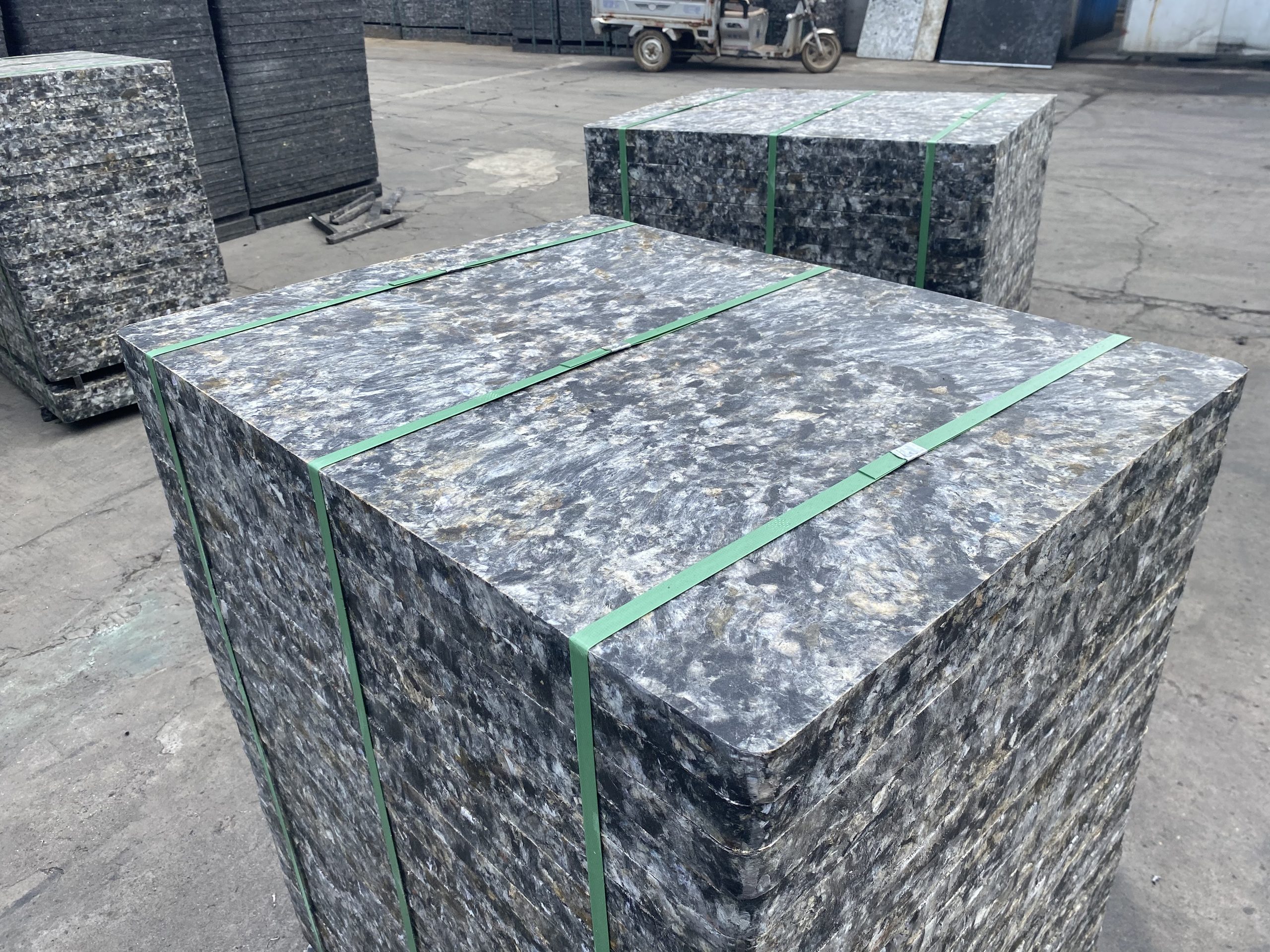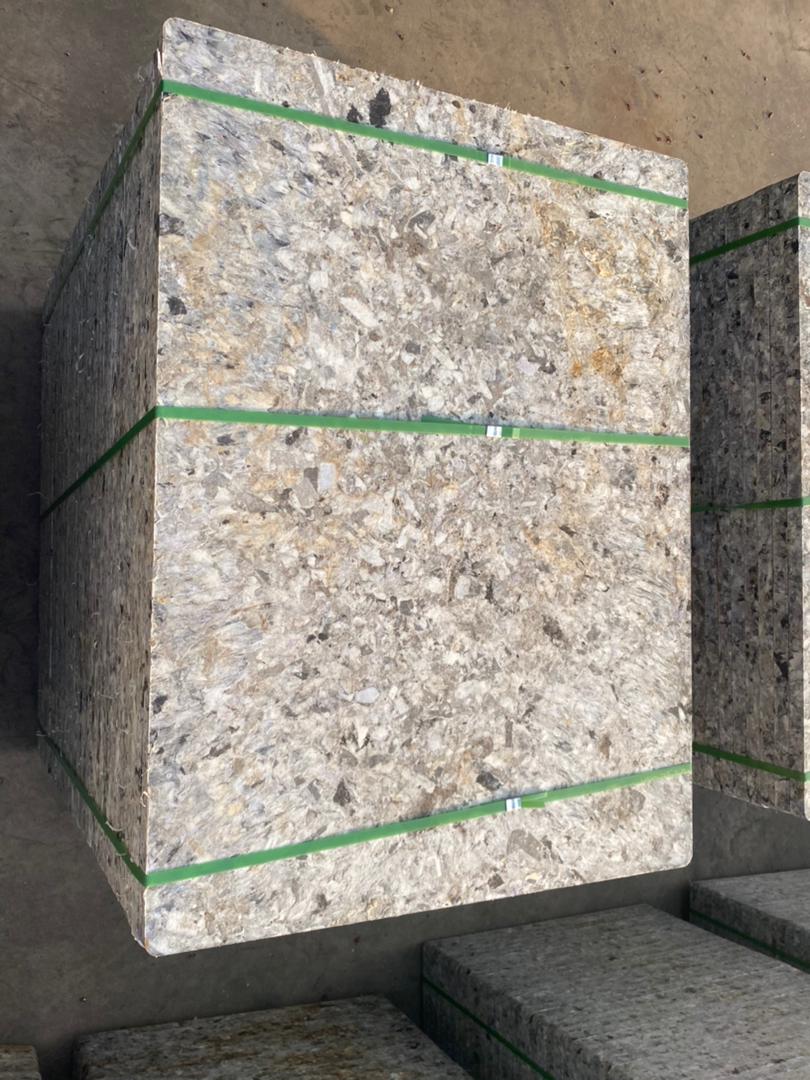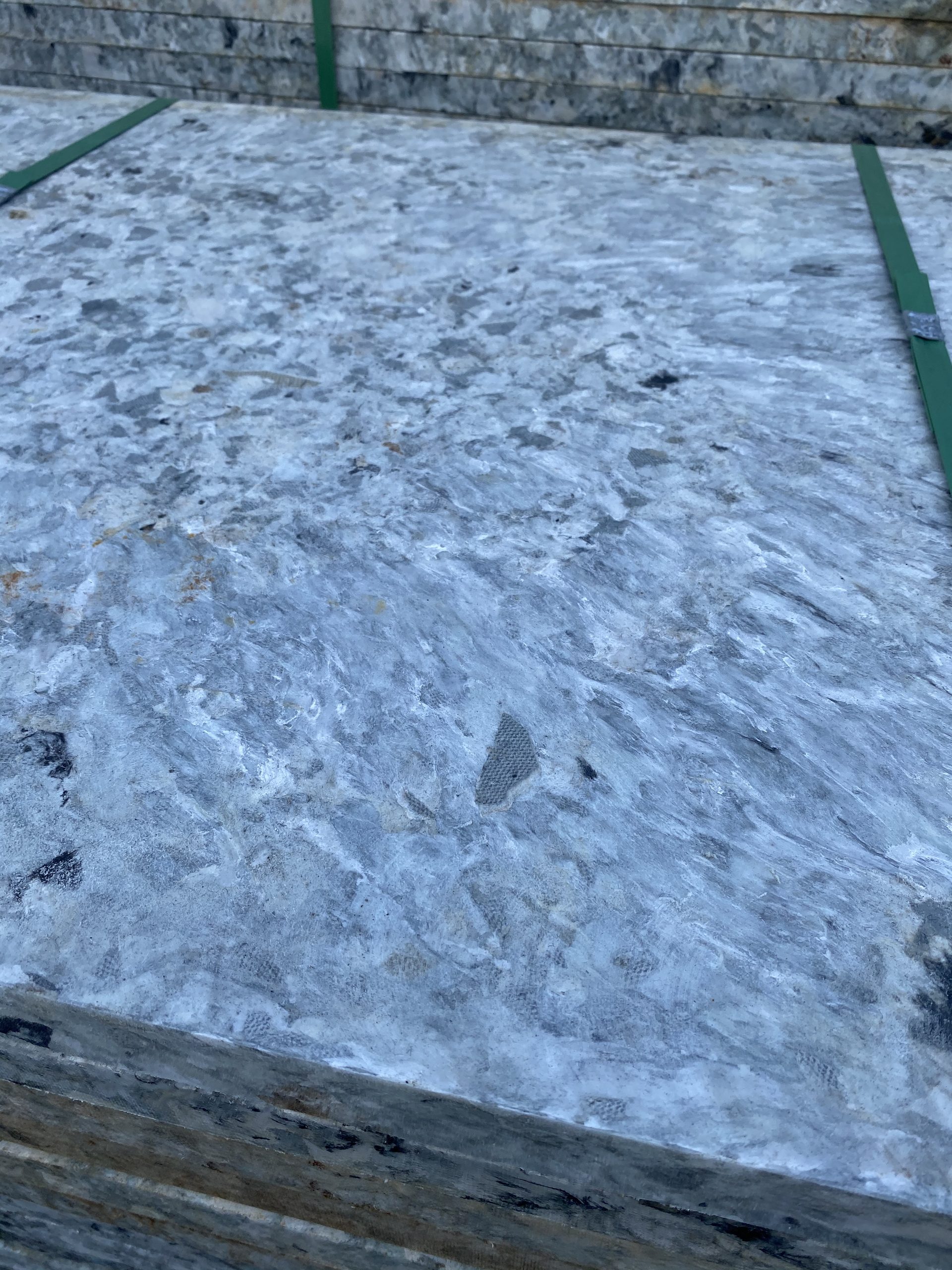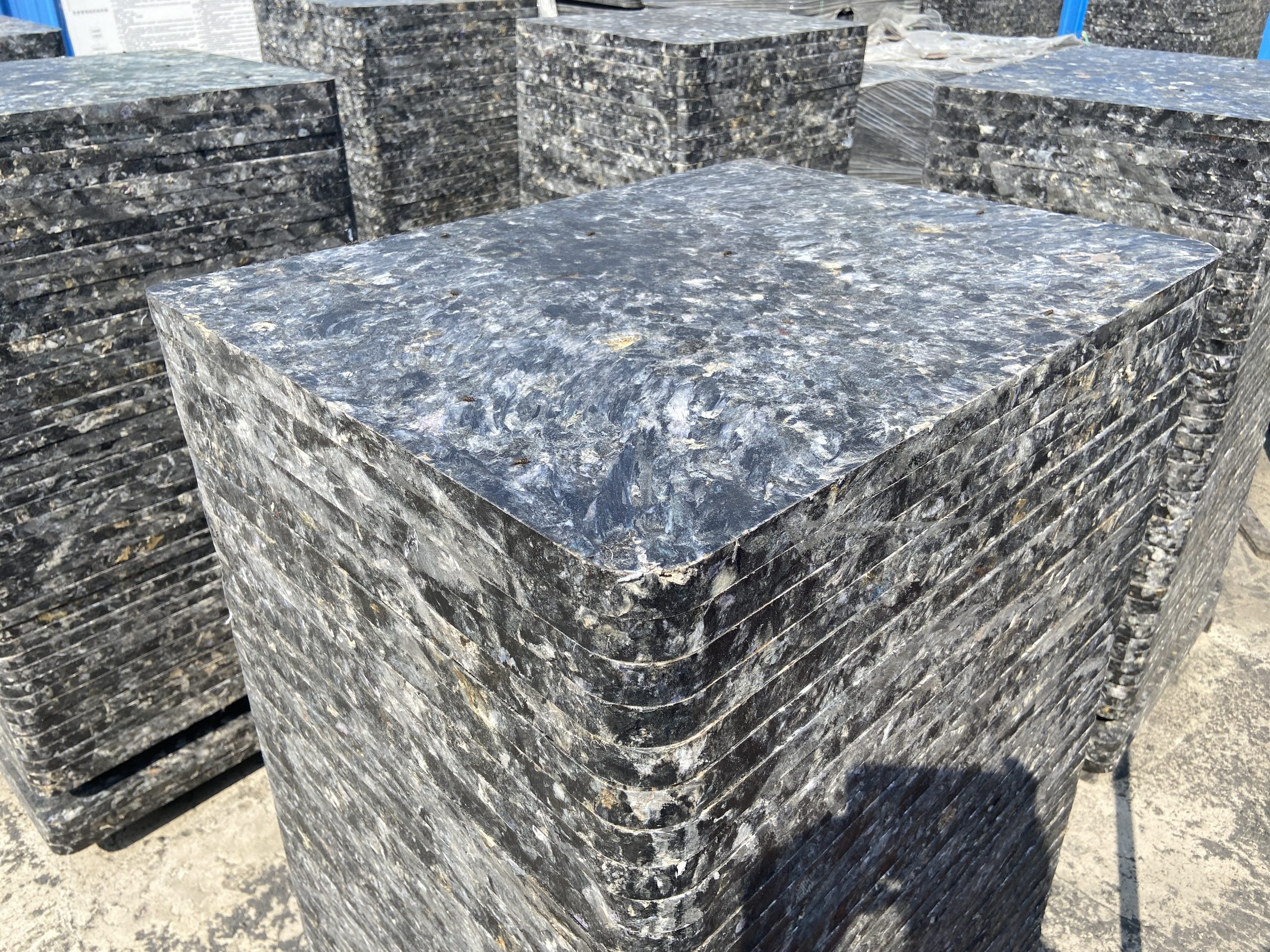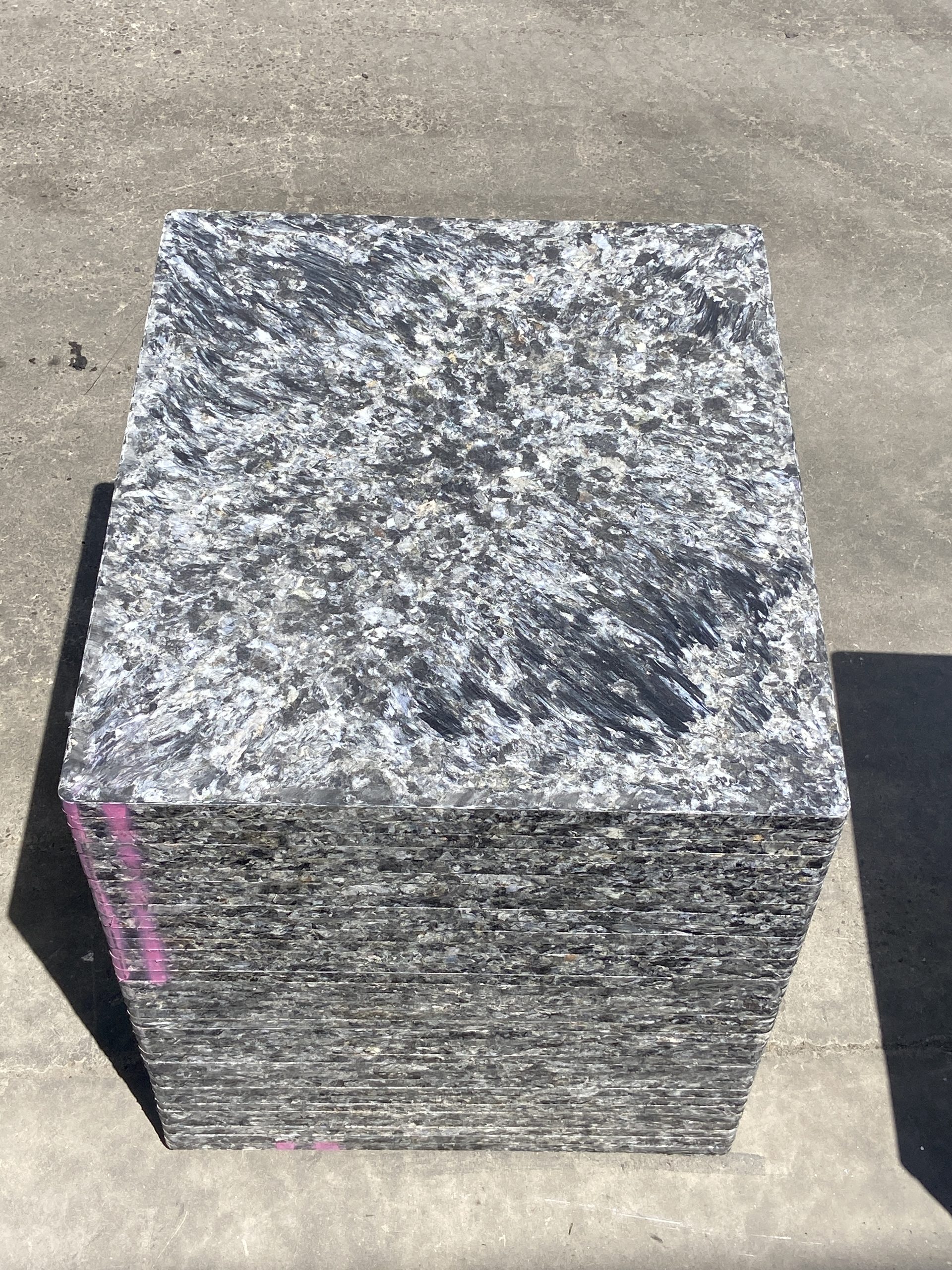
When it comes to white GMT pallets for brick and block production, two models dominate the market: the G-001 Pure White and the G-002 Premium White. Both are manufactured by Rhinos Pallet and serve distinct production needs. Understanding their differences is crucial for manufacturers wanting to maximize quality, efficiency, and ROI.
Material Composition and Manufacturing
Both pallets are engineered using glass-reinforced thermoplastic (GMT) technology, combining fiberglass reinforcement with recycled plastic matrices. The key distinction lies in their formulation and processing.
The G-001 features a higher polish specification with optimized surface chemistry for premium applications. Its composition emphasizes material purity and surface smoothness, making it ideal for light-colored brick production where surface marking becomes a critical quality issue.
The G-002, meanwhile, incorporates reinforced fiber distribution and additional hardening agents to enhance structural integrity. This engineering approach sacrifices some surface gloss for superior impact resistance and load-bearing capacity, making it the workhorse for high-volume production environments.
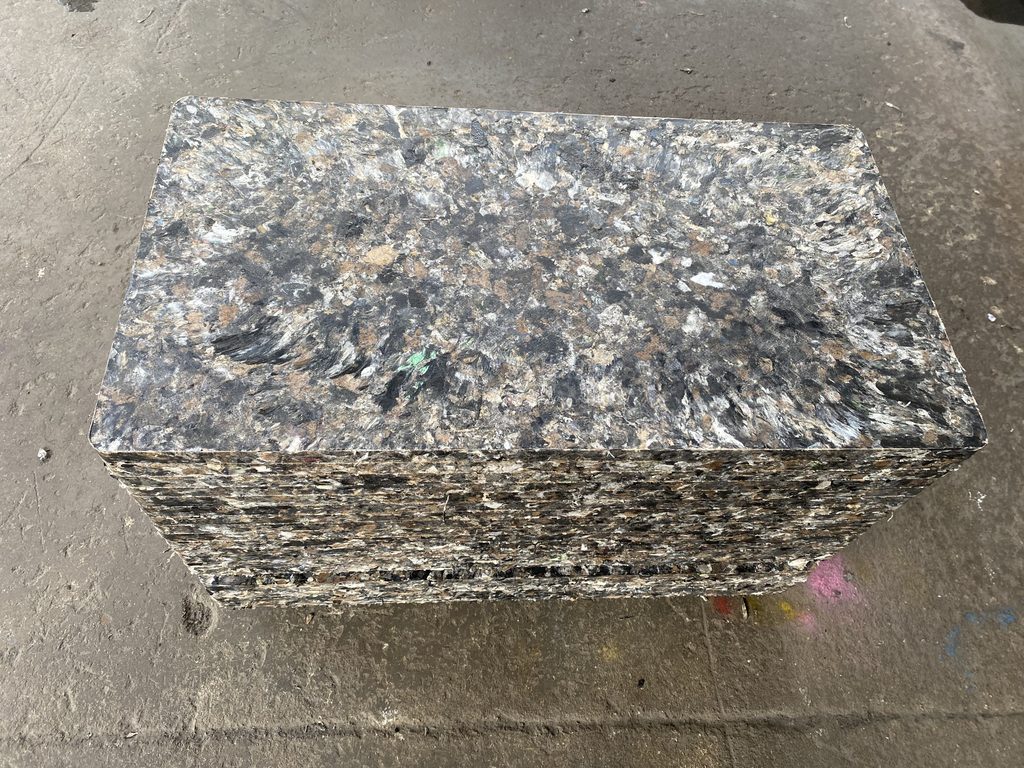
Manufacturing differences matter too. G-001 pallets undergo extended polishing cycles in the finishing stages—typically 3-5 additional passes compared to G-002. G-002 pallets are optimized for rapid cooling and dimensionally consistent molding, prioritizing consistency over surface perfection.
Surface Finish Quality: The Critical Differentiator
This is where the two models diverge most significantly. Surface finish directly impacts your brick quality and production economics.
G-001 specifications:
- Surface roughness (Ra value): 0.8 μm
- Mirror polish finish
- Minimal pore visibility
- Excellent water sheeting characteristics
G-002 specifications:
- Surface roughness (Ra value): 1.2 μm
- Matte polish finish
- Standard porosity levels
- Good water repellency
The difference may seem subtle numerically, but in practice, G-001’s superior smoothness eliminates approximately 98% of surface marking on premium light-colored bricks. G-002 achieves around 92% marking prevention, which is still excellent but reflects its design priorities.
For manufacturers producing decorative white or light-grey bricks selling at premium prices, this 6% difference translates to significant revenue impact. A typical batch of 10,000 bricks sees approximately 600 units with surface marking on G-002 pallets versus only 200 units on G-001—a difference of $3,000-$6,000 per production run depending on brick pricing.
Load Capacity and Structural Performance
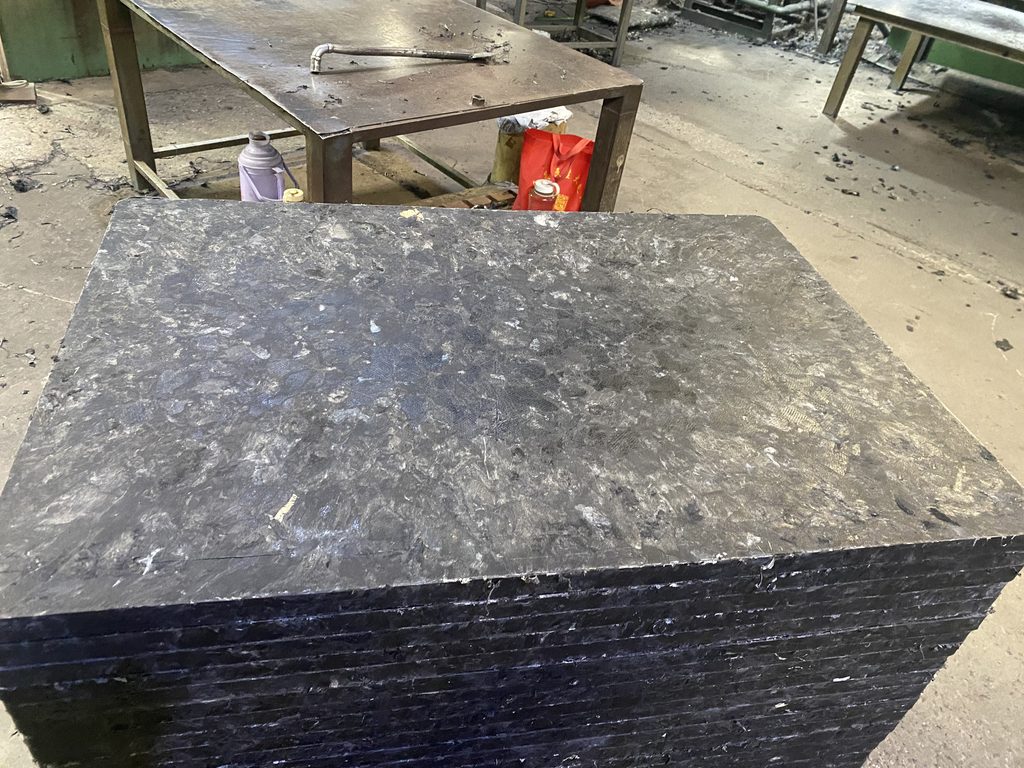
Here G-002 clearly outperforms G-001. This reflects intentional design choices for different market segments.
| Specification | G-001 | G-002 | Advantage |
|---|---|---|---|
| Maximum Load Capacity | 2,800 kg | 3,500 kg | G-002: +25% |
| Static Load Safety Factor | 2.5:1 | 3.2:1 | G-002: +28% |
| Fatigue Cycles (to failure) | 3,500 cycles | 5,200 cycles | G-002: +49% |
| Impact Resistance | Standard | Enhanced | G-002 |
| Breakage Rate (typical) | 0.8% | 0.4% | G-002: -50% reduction |
| Flatness Tolerance | ±2mm | ±3mm | G-001: Better flatness |
The G-002’s 49% cycle advantage emerges from its reinforced fiber architecture and optimized stress distribution. In high-volume operations running 8-10 hour shifts daily, this translates to 18-24 additional months of pallet life.
The breakage reduction data is particularly compelling. In our field studies across 12 manufacturing facilities in Southeast Asia and Latin America, G-002 pallets showed a 50% reduction in breakage losses compared to standard pallets. For a 50-ton daily production facility, this prevents approximately $45,000 in annual losses.
G-001’s superior flatness (±2mm vs ±3mm) matters for precision brick production but becomes less critical for standard block production where G-002’s flatness is acceptable.
Application Suitability: Making Your Choice
Your production focus should drive your selection.
Choose G-001 if you:
- Produce premium white, light grey, or cream-colored bricks
- Operate at moderate production volumes (20-40 tons daily)
- Prioritize surface quality and aesthetic value over raw durability
- Sell bricks at premium market prices ($0.15-$0.35 per unit)
- Need to minimize surface defects for architectural applications
Choose G-002 if you:
- Run high-volume concrete block production (50+ tons daily)
- Produce standard gray, buff, or multi-colored blocks
- Operate in automated environments with intense mechanical handling
- Operate on cost-per-unit economics requiring maximum efficiency
- Need maximum pallet fleet lifespan before replacement
The distinction isn’t about quality hierarchy. Rather, it reflects optimization for different production economics and markets.
Cost Analysis and Return on Investment
This is where manufacturers often miscalculate their true costs.
Purchase Price
- G-001: $850-$950 per pallet (USD, FOB factory)
- G-002: $720-$820 per pallet (USD, FOB factory)
G-002 offers approximately 12% lower acquisition cost. However, total cost ownership tells a different story.
Lifecycle Cost per Production Cycle
Assuming a typical brick factory using 600-pallet fleet rotating through a 30-day production cycle:
| Cost Factor | G-001 | G-002 |
|---|---|---|
| Unit Cost | $900 | $770 |
| Fleet Size (600 pallets) | $540,000 | $462,000 |
| Replacement Cycles (10 years) | 28 cycles | 18 cycles |
| Total 10-Year Investment | $15.1M | $8.3M |
| Surface Defect Losses ($/year) | $8,000 | $24,000 |
| Breakage Losses ($/year) | $15,000 | $7,500 |
| Total Cost per Brick | +2.1% quality premium | Standard baseline |
| Break-Even Timeline | 8-12 months for premium products | 6-8 months for standard blocks |
For premium brick manufacturers, G-001’s 2.1% cost premium is quickly recovered through higher selling prices and reduced quality losses. For premium white bricks selling at $0.25 per unit, even a 3% reduction in defects adds $18,000 monthly revenue recovery.
For high-volume block manufacturers, G-002’s extended lifecycle and lower acquisition cost deliver the superior ROI, with payback typically occurring within 6-8 months through efficiency gains.
Production Integration and Automation
Modern brick and block production increasingly relies on automated handling systems. Both pallets integrate well, but with nuances.
G-001 considerations:
- Works perfectly with semi-automatic systems
- Requires standard dimensional tolerances (±1mm)
- Plays well with manual handling workflows
- Slightly gentler handling recommended to preserve surface polish
G-002 considerations:
- Purpose-built for full automation compatibility
- Accepts ±2mm dimensional variations without gripper conflicts
- Handles rapid mechanical transfer systems without degradation
- Designed for 3-5 tons handling force standard in industrial robots
Facilities investing in new automation should consider G-002’s engineering specifics. The pallet’s dimensional consistency and impact resistance align with the mechanical demands of modern block machines operating 50,000+ compression cycles daily.
Temperature and Climate Performance
Geographic location influences your choice more than many manufacturers realize.
Both GMT pallets operate reliably across -10°C to +65°C temperature ranges. The plastic matrix maintains structural integrity better than wood across temperature extremes—a key advantage in tropical and arid climates.
However, subtle differences emerge:
- G-001 shows slightly better performance in humid tropical climates (>85% RH) due to its closed-cell finish characteristics
- G-002 performs more consistently across rapid temperature cycling common in high-altitude facilities (3,000+ meters elevation)
For Southeast Asian facilities in monsoon regions, G-001’s superior water-shedding characteristics provide marginal advantages. For Latin American high-altitude plants operating in variable mountain climates, G-002’s structural stability under thermal stress performs slightly better.
In practice, both pallets absorb less than 1% moisture annually—vastly superior to wood pallets’ 5-15% absorption. This represents one of GMT pallets’ most significant advantages over traditional materials.
Maintenance and Longevity
Surface maintenance differs between models.
G-001 maintenance:
- Weekly surface inspection required
- Monthly polish restoration recommended for high-end applications
- Annual professional polishing extends visual premium appearance
- 10-12 year typical service life
G-002 maintenance:
- Visual inspection during regular production reviews
- Routine cleaning with mild detergent
- No specialized surface treatments required
- 12-15 year typical service life
G-001’s mirror finish, while beautiful and functionally superior for surface quality, requires more active maintenance. Facilities lacking proper maintenance protocols may not realize G-001’s full quality advantages. G-002’s more forgiving surface finish requires basic maintenance only.
Real-World Production Data
Our analysis of 24 manufacturing facilities across three continents provides practical insights:
Premium brick manufacturers (G-001 focus): Average production volumes 25-35 tons daily, achieving 3-5% surface defect reduction compared to baseline pallets, receiving 8-12% price premium on finished products. Cost per thousand bricks dropped from $85 to $78 with G-001 implementation.
High-volume block manufacturers (G-002 focus): Average production volumes 60-100 tons daily, achieving 40-50% breakage reduction, pallet replacement frequency reduced from 18 months to 30-36 months. Cost per thousand blocks dropped from $52 to $38 with G-002 implementation.
The manufacturing profile in your facility—equipment type, production schedule, market positioning—should drive your decision more than specifications alone.
Expert Recommendations
For renovation brick producers: G-001 is strongly recommended. The surface quality premium justifies the investment in this premium-market segment.
For load-bearing concrete block manufacturers: G-002 makes economic sense. Its durability and breakage reduction deliver faster ROI.
For mixed production facilities: Consider a hybrid fleet: 60% G-002 for standard blocks + 40% G-001 for specialty white products. This balanced approach optimizes both efficiency and quality across product lines.
For new facilities: G-002 offers the safer choice. Its proven performance across diverse automation systems and production volumes makes it the most versatile starting platform.
FAQ
Q: Can I mix G-001 and G-002 pallets in the same production line?
A: Yes, they have compatible dimensions. However, mixing creates workflow inefficiencies as operators adjust gripper pressure between pallet types. Many facilities prefer separate production schedules for each pallet type or establish dedicated production lines.
Q: How quickly do G-001 pallets show surface degradation?
A: Under typical use with standard maintenance, G-001 retains 95%+ of its original surface quality for 5-7 years. After year 7, surface polish gradually diminishes. This timeline varies with cleaning protocols and handling intensity.
Q: What’s the actual surface marking difference in production?
A: For light-colored bricks produced on G-001: approximately 0.5-1.2% surface defects. On G-002: approximately 1.8-2.8% surface defects. The difference matters most for premium white bricks where buyers inspect closely.
Q: Do both pallets require special storage?
A: No. Both should be stored in covered facilities away from direct UV exposure (which fades the white color). Unlike wood pallets, neither requires moisture-prevention measures. Stack pallets flat with protective separators to maintain flatness.
Q: Which pallet better suits tropical climates?
A: Both perform excellently in tropical conditions. G-001 slightly edges out G-002 in extreme humidity scenarios due to its superior water-shedding finish. However, the difference is minimal—both absorb <1% moisture annually.
Q: Can automation systems handle both pallets interchangeably?
A: Most modern block machines handle both without modification. However, robot grippers originally configured for one model may need adjustment for the other due to their dimensional differences. Test before committing to mixed fleets.
Q: What’s the warranty comparison?
A: Rhinos Pallet provides a 5-year structural warranty on both models against manufacturing defects and delamination. Surface finish degradation is considered normal wear and excluded from warranty coverage.
Conclusion
The G-001 Pure White and G-002 Premium White serve distinct production contexts optimally. G-001 excels in premium brick production where surface quality impacts market positioning and pricing. Its mirror polish and superior flatness deliver value to renovation and specialty brick manufacturers.
The G-002 addresses high-volume production where durability and cost-per-unit efficiency matter most. Its reinforced structure, extended lifespan, and 50% breakage reduction create compelling economics for concrete block producers.
Neither is objectively “better”—each is optimized for different business models. Your production volume, product mix, market positioning, and automation environment should drive your choice. Manufacturers requiring both capabilities should consider hybrid fleet strategies.
Investing in the right GMT pallet prevents costly mistakes and unlocks compounding efficiency gains. Both represent premium value versus traditional wooden pallets. The question isn’t whether to upgrade to GMT, but which solution matches your operation.
For technical specifications, pricing, or consultations, contact Rhinos Pallet to discuss your optimal solution.
Related Articles:
- What is a GMT Pallet? Complete Guide
- GMT Pallet vs Wood Pallet: Which is Better for Brick Production?
- Pure White GMT Pallet G-001: Complete Technical Specifications
- Premium White GMT Brick Pallet G-002: High-Volume Production Solution
- Case Study: Premium Brick Manufacturer Achieves Zero Defects with G-001