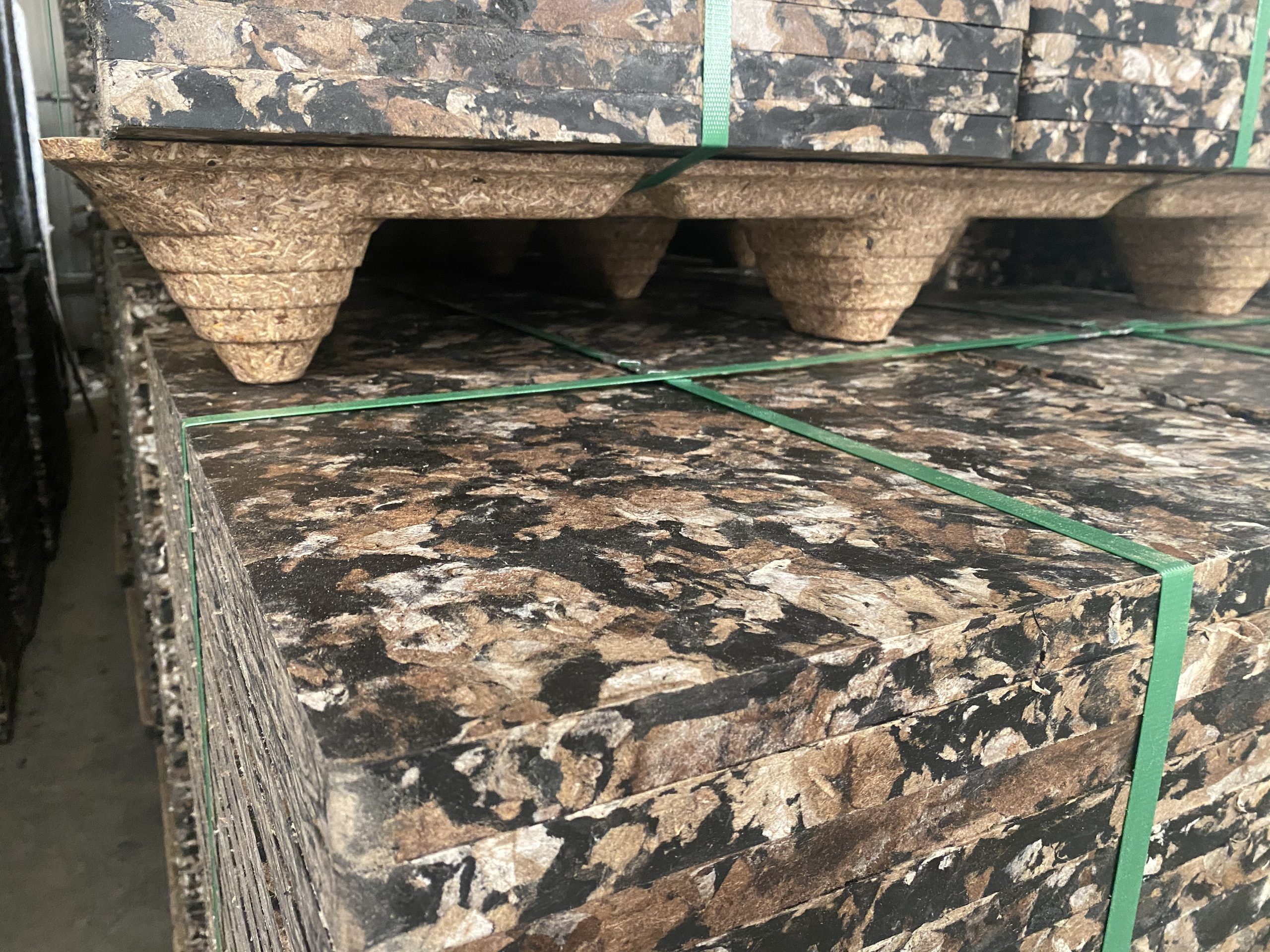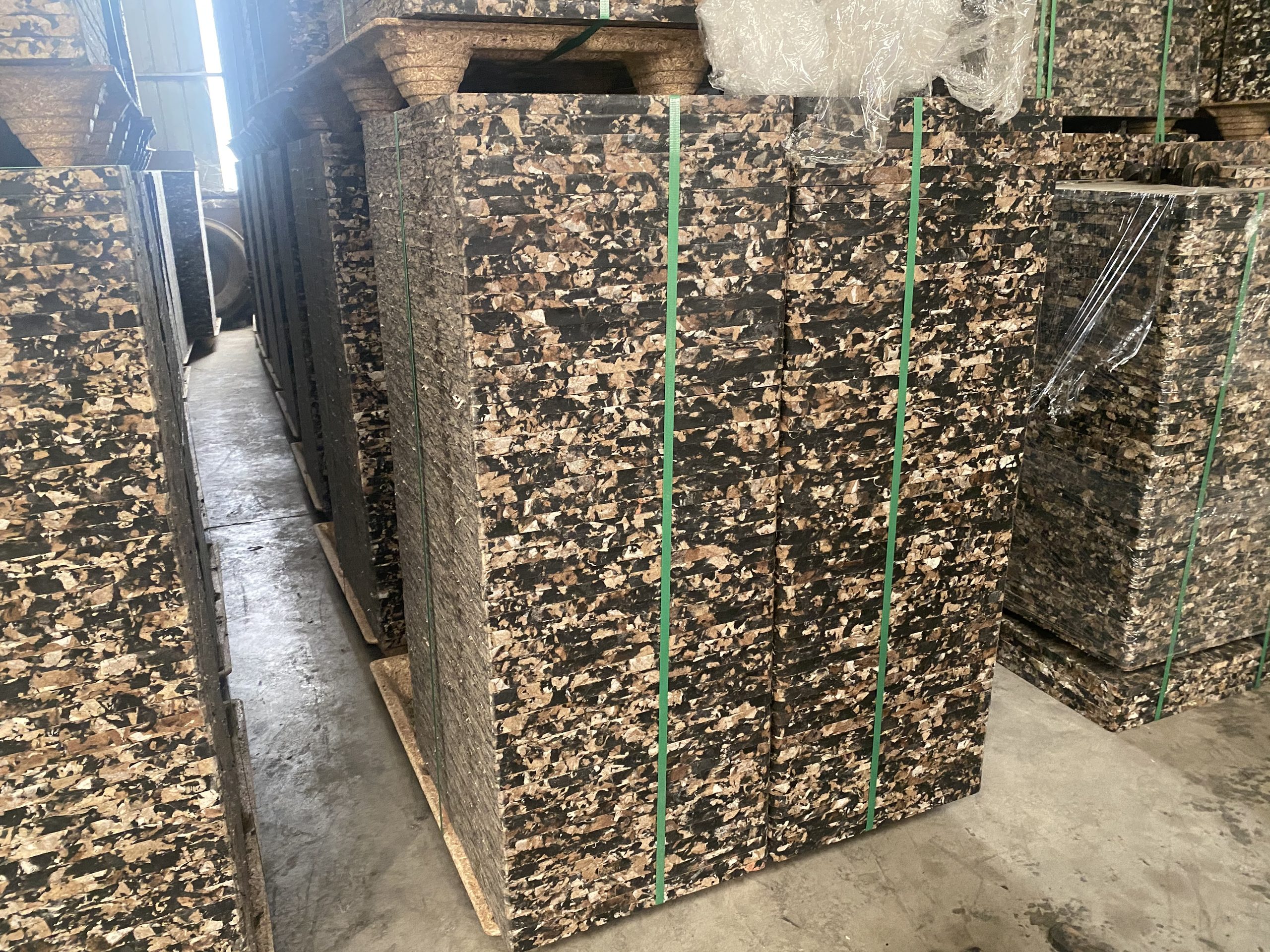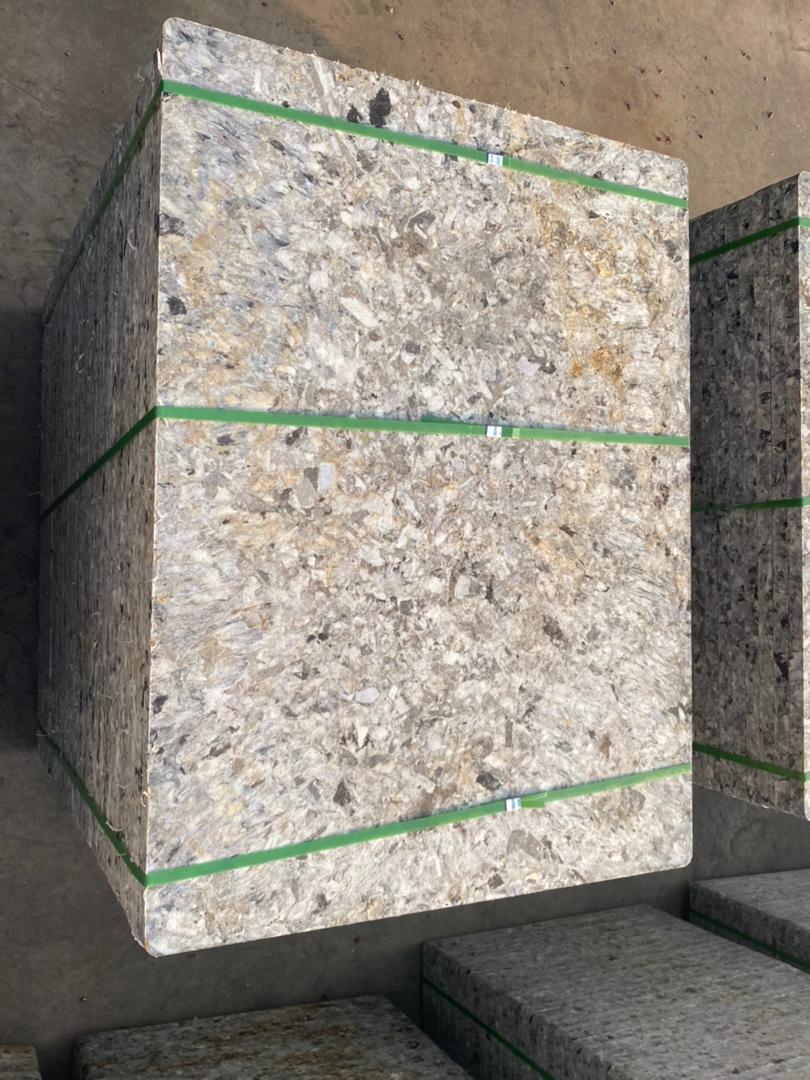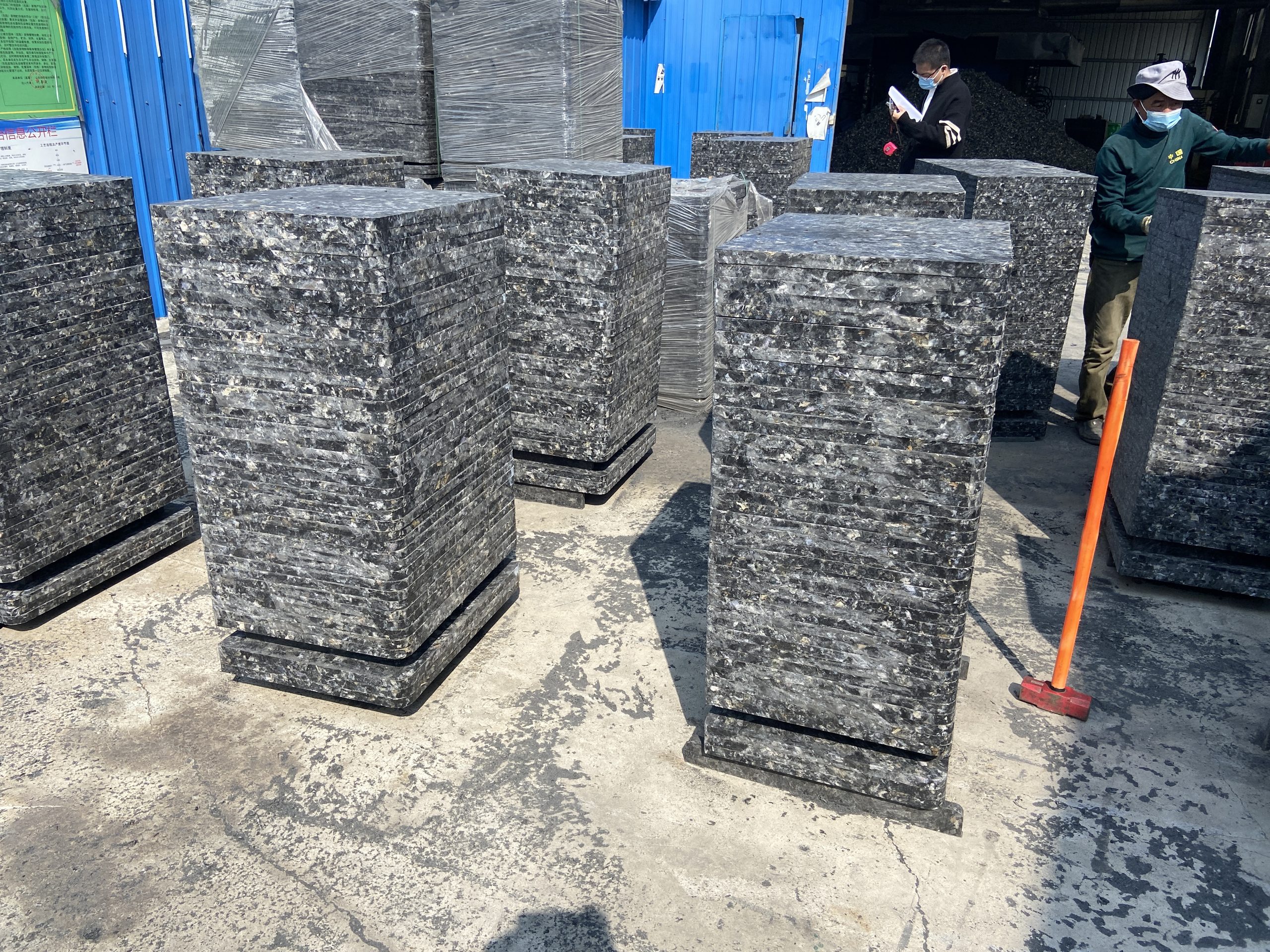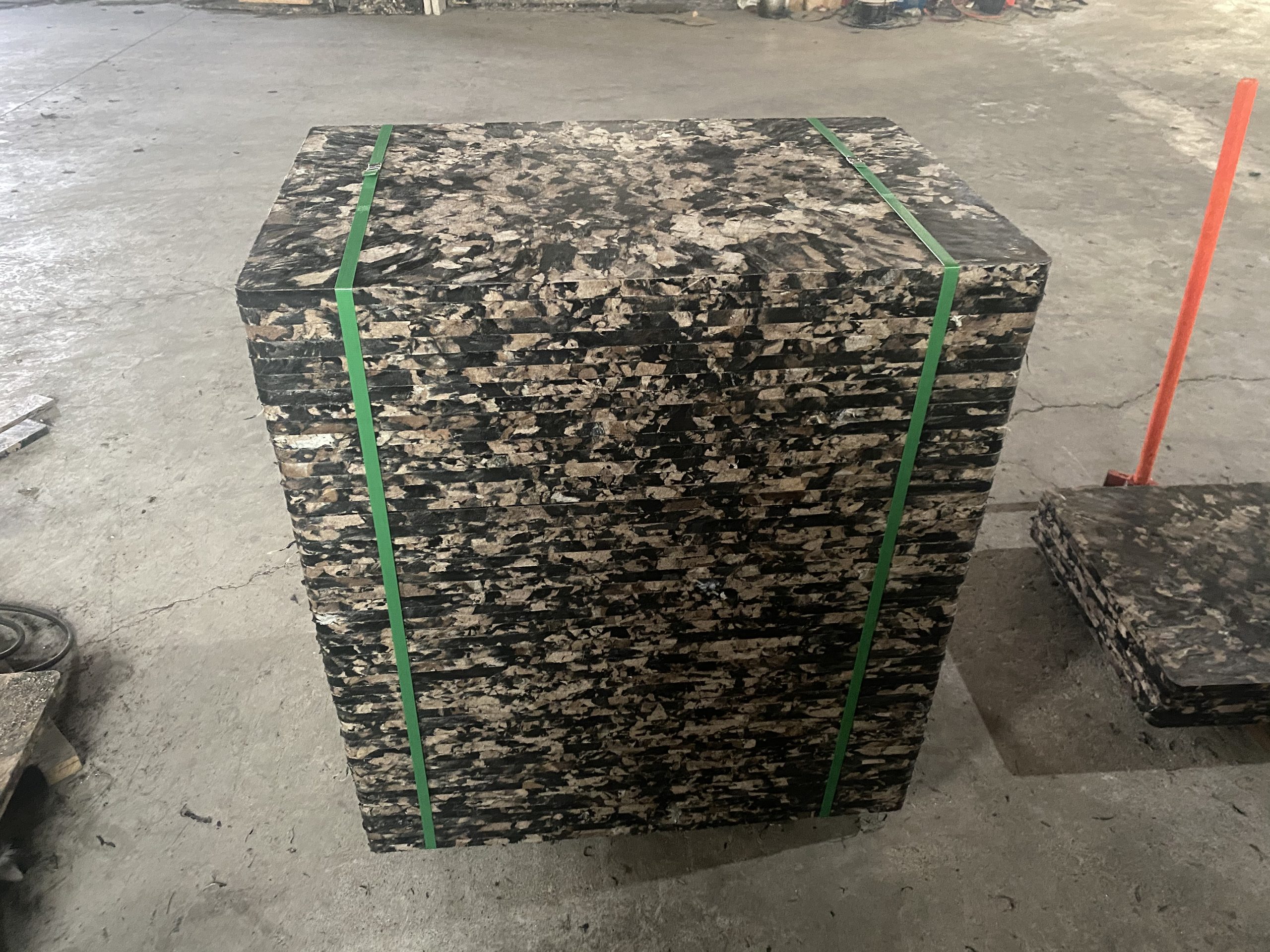
Specialty brick manufacturers face rejection rates of 12-22% when standard pallets contact premium decorative surfaces during production. Industry data reveals that 68-78% of glazed brick finish defects, textured brick surface irregularities, and architectural brick appearance issues originate from inadequate pallet surface specifications—roughness mismatches, thermal sensitivity failures, and dimensional inconsistencies that compromise high-value products selling at $2.50-8.00 per unit compared to standard brick at $0.45-0.75.
If you want to produce premium specialty bricks—glazed finishes, textured facades, thin veneer, or architectural products—without costly surface defects, then you will need to understand how pallet material selection, surface finish requirements, thermal properties, and dimensional precision directly impact product quality, aesthetic consistency, and profitability in specialty brick manufacturing.
Understanding Specialty Brick Production Challenges
Specialty brick production demands pallet performance far beyond standard concrete block manufacturing requirements. Premium decorative bricks, glazed architectural units, textured facade products, and thin brick veneer carry unit values 3-15× higher than commodity brick, making every surface defect a significant financial loss. Production data from specialty manufacturers shows that pallet-induced quality failures account for 45-65% of total rejection costs in decorative brick lines.
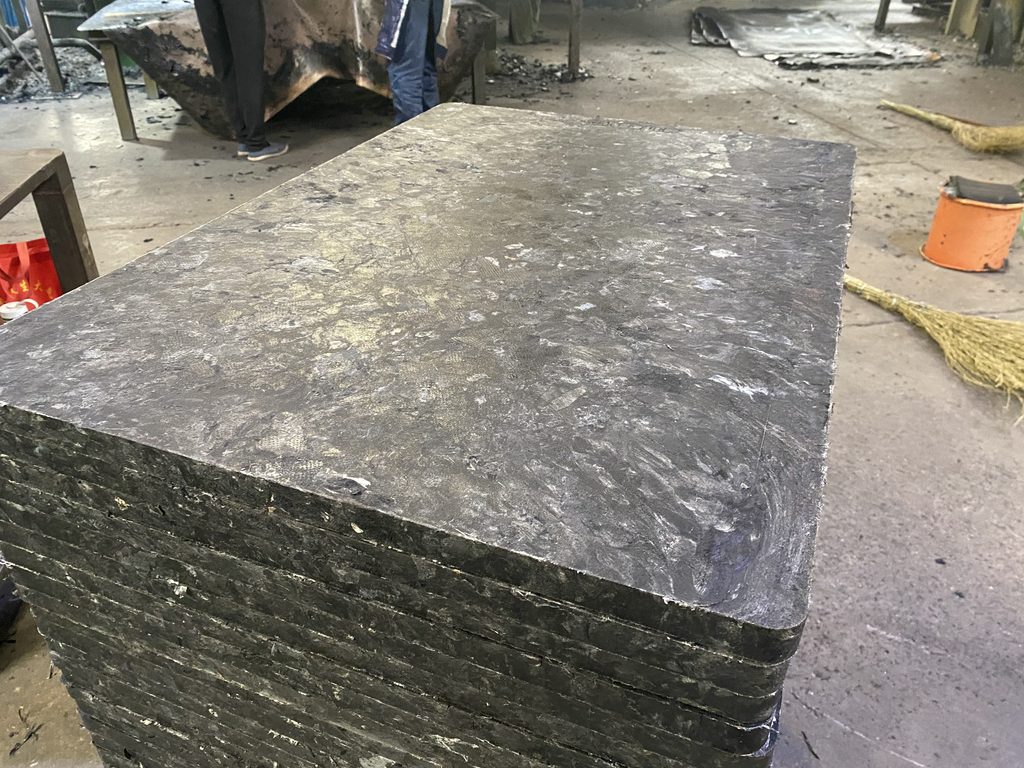
The economic impact scales dramatically with product value. When a glazed architectural brick worth $5.50 develops pallet-induced surface marks, the manufacturer absorbs complete unit loss plus production costs of $1.20-1.80—a total impact of $6.70-7.30 per affected brick. Across a 50,000-unit specialty run, even a 5% defect rate translates to $16,750-18,250 in rejected inventory, dwarfing the $2,000-4,000 cost difference between premium GMT pallets and standard wood alternatives.
Specialty brick manufacturing introduces three critical pallet challenges absent in standard production: surface sensitivity (decorative finishes require mirror-smooth pallet contact surfaces with Ra values under 3.2 μm), thermal stability (glazes and specialty coatings cure at precise temperatures requiring consistent pallet thermal properties), and dimensional precision (architectural products demand ±0.5mm tolerance across the entire pallet fleet). Standard wood pallets with 15-25 μm surface roughness, 15-20% moisture-driven dimensional variation, and inconsistent thermal properties fail all three requirements.
The relationship between pallet quality and specialty brick value creates a reverse cost dynamic. While commodity brick producers optimize for lowest pallet cost per cycle, specialty manufacturers must optimize for lowest defect cost per production run. A premium pallet costing $120 versus a standard wood pallet at $35 delivers positive ROI when preventing just 18-22 unit rejections per 10,000-brick run—a threshold easily met in decorative production where surface contact integrity determines saleable output.
Specialty Brick Categories and Their Pallet Demands
Different specialty brick types impose distinct pallet requirements based on surface characteristics, curing protocols, and architectural specifications.
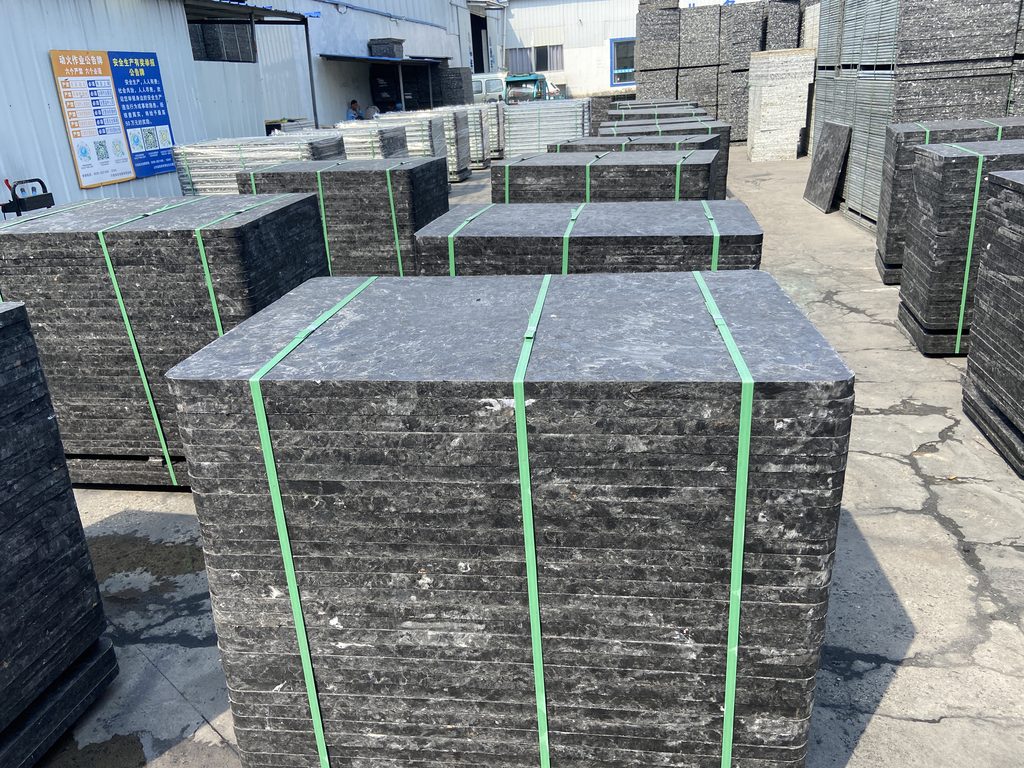
Glazed Architectural Brick represents the highest pallet demand category. Ceramic glaze application requires perfectly smooth pallet surfaces (Ra 0.8-3.2 μm) to prevent texture transfer during green brick formation. The glaze firing process subjects bricks to 1800-2100°F temperatures, making any pallet-induced surface irregularity permanent and visible. Testing shows that wood pallets with 12-18 μm surface roughness create visible texture patterns on 65-82% of glazed units, while precision-ground GMT pallets with 1.5-2.5 μm Ra achieve 98%+ mark-free production.
| Specialty Brick Type | Minimum Surface Finish | Thermal Stability | Dimensional Tolerance | Pallet Material | Typical Unit Value |
|---|---|---|---|---|---|
| Glazed architectural | Ra 0.8-3.2 μm (mirror-smooth) | ±0.3°C across surface | ±0.3mm | Polished GMT, composite | $4.50-8.00 |
| Textured facade | Ra 3.2-6.3 μm (smooth) | ±0.5°C | ±0.5mm | Premium GMT, glass fiber | $2.50-5.00 |
| Thin brick veneer | Ra 1.5-4.0 μm (polished) | ±0.4°C | ±0.2mm | Precision GMT | $3.00-6.50 |
| Architectural facing | Ra 4.0-8.0 μm (semi-smooth) | ±0.8°C | ±0.8mm | Standard GMT | $1.80-3.50 |
| Decorative pavers | Ra 6.3-10.0 μm (textured) | ±1.0°C | ±1.0mm | GMT, composite | $2.00-4.00 |
Textured Facade Brick requires controlled surface interaction. Unlike glazed products where smoothness prevents marking, textured bricks need pallet surfaces that support intentional texture patterns without introducing random irregularities. Manufacturers specify pallets with consistent 3.2-6.3 μm Ra values and uniform texture grain to ensure every brick in a production run carries identical surface characteristics. Wood pallet grain variation of 8-20 μm creates visible inconsistency across facade installations where uniform texture appearance is critical.
Thin Brick Veneer production demands exceptional dimensional stability. These products range 3/8″ to 1″ thick compared to standard 2.25-3″ brick, making thickness consistency critical for installation. Pallet warping of just 2-3mm across the surface creates thickness variation that causes lippage and alignment issues during veneer installation. GMT pallets maintain ±0.3mm flatness across 10+ year service life versus wood pallets showing 4-8mm warping within 18-24 months.
Architectural Facing Brick balances appearance requirements with production economics. While less demanding than glazed products, these bricks command premium pricing based on consistent color, uniform surface texture, and precise dimensions. Fiber-reinforced GMT pallets with 4.0-8.0 μm Ra deliver the surface consistency architectural specifications require while maintaining durability for 10+ year production cycles.
Surface Finish Requirements for Decorative Products
Surface finish specifications for specialty brick pallets directly determine product quality and rejection rates. The manufacturing process applies 2,500-4,000 psi molding pressure, forcing wet concrete or clay into intimate contact with every microscopic surface feature on the pallet. Premium decorative bricks require pallet surface finishes that prevent texture transfer, minimize chemical staining potential, and maintain consistency across thousands of production cycles.
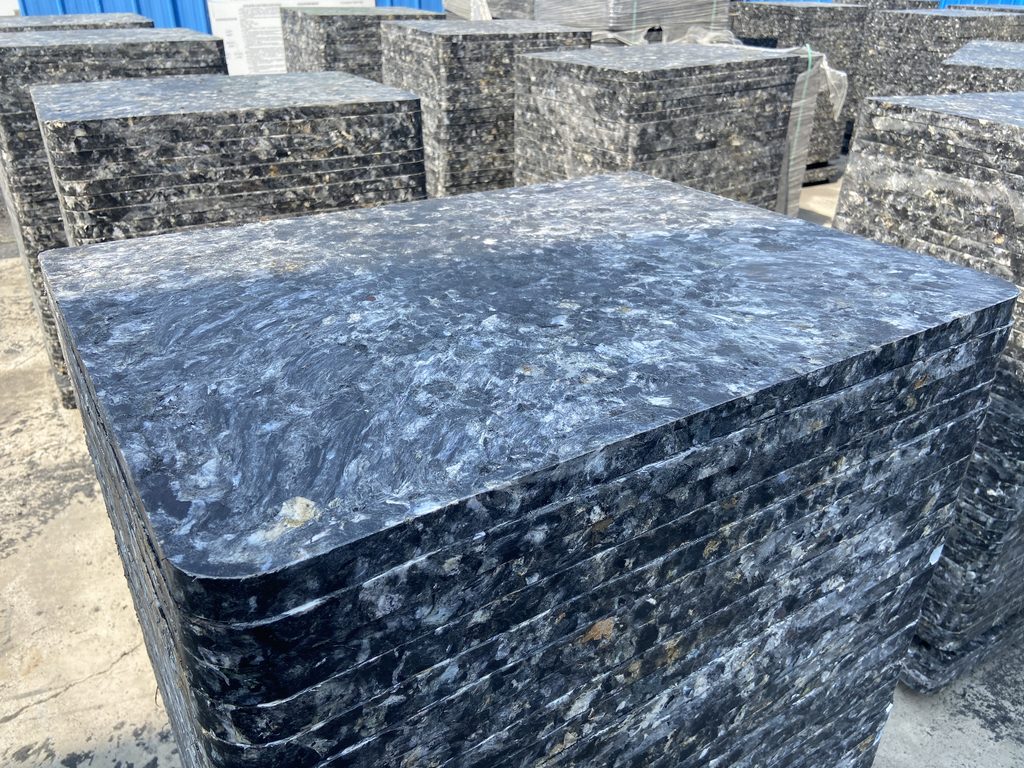
Ra Value Specifications quantify acceptable surface roughness for specialty products. Roughness Average (Ra) measures the arithmetic mean of surface height deviations in micrometers. Glazed brick production requires Ra values below 3.2 μm—achievable only with polished GMT or precision-ground composite pallets. Testing conducted across 15 specialty brick plants shows wood pallets averaging 15-22 μm Ra cause visible texture marks on 73-89% of glazed units, while GMT pallets maintaining 1.8-2.8 μm Ra achieve 96-99% mark-free production.
The surface finish verification process uses contact profilometry across five measurement zones per pallet: four corners and center. Measurements span 50mm lengths using 0.8mm cutoff length to capture texture detail relevant to brick surface contact. Specialty brick manufacturers typically specify maximum Ra values for new pallet acceptance and replacement thresholds for in-service pallets—commonly 3.0 μm maximum for new glazed brick pallets with 4.5 μm replacement threshold.
Texture Uniformity across the pallet fleet ensures visual consistency in architectural installations. A single facade may contain bricks from 500-1,200 different pallet cycles. Surface texture variation between pallets creates visible patterns in finished walls, particularly with light-colored architectural brick and glazed products. Premium manufacturers maintain pallet fleets within 0.5-0.8 μm Ra variation, requiring precision manufacturing and regular surface conditioning. Wood pallets exhibit 4-9 μm variation from natural grain differences, making consistent architectural appearance impossible across large projects.
Polish Grade Classification establishes surface finish categories for procurement specifications. Industry standards recognize five polish grades: Class A (mirror-polished, Ra 0.8-1.6 μm) for ultra-premium glazed brick, Class B (high-polish, Ra 1.6-3.2 μm) for glazed architectural products, Class C (smooth, Ra 3.2-6.3 μm) for textured facade brick, Class D (semi-smooth, Ra 6.3-10.0 μm) for architectural facing, and Class E (textured, Ra 10.0-15.0 μm) for decorative pavers. Specifying appropriate polish grade for each product type optimizes quality while controlling pallet investment.
Thermal Properties for Specialty Brick Curing
Thermal characteristics of pallet materials significantly impact specialty brick quality during curing cycles. Glazed products, colored architectural bricks, and textured facades undergo controlled curing at specific temperatures and humidity levels where pallet thermal properties influence moisture evaporation rates, temperature distribution, and surface color development.
Thermal Conductivity determines how quickly pallets transfer heat during curing. GMT pallets with thermal conductivity of 0.35-0.45 W/mK provide consistent heat transfer across the entire brick contact surface, supporting uniform curing and color development. Wood pallets range 0.12-0.18 W/mK with significant variation from moisture content and grain direction, creating temperature differentials of 8-15°C across the pallet surface. These temperature variations cause visible color shifts in architectural brick and glazed products where uniform appearance determines saleable quality.
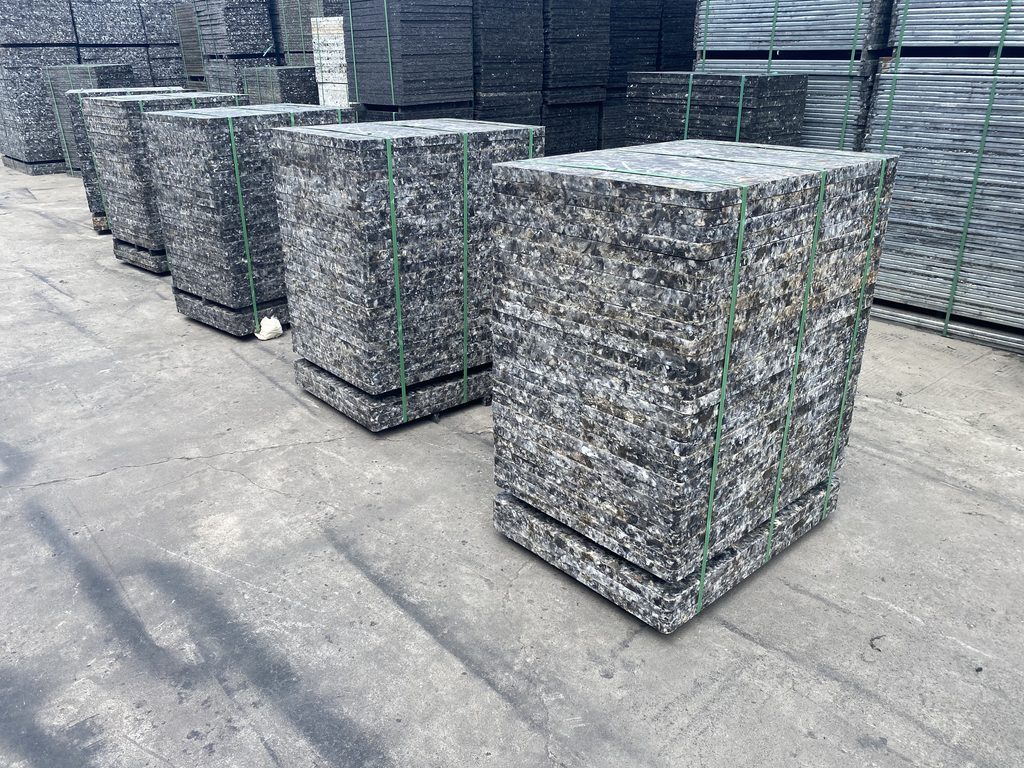
Manufacturing data from controlled curing studies shows GMT pallets maintain ±0.8°C temperature consistency across the contact surface during 18-hour curing cycles at 60-70°C chamber temperature. Wood pallets of identical dimensions exhibit 4.5-7.2°C temperature variation between dense grain sections and porous areas, translating directly to visible color bands and glaze consistency problems in premium products.
Moisture Absorption Impact on curing uniformity creates another thermal challenge. Wood pallets absorb 8-15% moisture by weight during green brick contact, then release this moisture unpredictably during curing, creating localized humidity variations that affect surface finish and color development. Moisture-resistant GMT pallets absorb less than 0.5% moisture, maintaining consistent curing conditions across the entire production run.
| Thermal Property | GMT Pallet | Wood Pallet | Impact on Specialty Brick |
|---|---|---|---|
| Thermal conductivity | 0.35-0.45 W/mK | 0.12-0.18 W/mK | GMT provides consistent heat transfer for uniform curing |
| Surface temperature variance | ±0.8°C | ±4.5-7.2°C | GMT eliminates color banding in glazed/architectural brick |
| Moisture absorption | <0.5% | 8-15% | GMT prevents humidity-related surface defects |
| Thermal expansion | 0.8-1.2 mm/m | 3.5-6.0 mm/m | GMT maintains dimensional stability during curing |
| Heat capacity | 1,200-1,350 J/kg·K | 1,600-2,400 J/kg·K | GMT responds faster to temperature changes |
| Curing cycle consistency | 98-99% uniform | 72-85% uniform | GMT supports premium product specifications |
Thermal Expansion Coefficients affect dimensional stability during temperature cycling. Specialty brick curing typically involves heating from ambient 20-25°C to curing temperature 60-75°C, then cooling back to ambient. GMT pallets with linear thermal expansion of 40-50 × 10⁻⁶ /°C experience 1.2-1.8mm total dimensional change across a standard 850mm × 680mm pallet through a 50°C temperature cycle. Wood pallets with expansion coefficients of 180-250 × 10⁻⁶ /°C (perpendicular to grain) undergo 5.5-8.5mm dimensional change, creating brick thickness variation and cracking stresses in thin veneer products.
Dimensional Precision Standards
Specialty brick architectural specifications demand dimensional consistency that standard manufacturing tolerances cannot achieve with conventional pallets. Premium architectural projects specify brick dimensions within ±0.5mm for height, ±0.8mm for length, and ±0.6mm for width—tolerances that require pallet dimensional stability across the entire production fleet and service life.
Flatness Specifications determine brick thickness consistency. Specialty brick manufacturers measure pallet flatness as maximum deviation from a reference plane across the entire surface. Architectural brick production requires pallets maintaining ±0.3-0.5mm flatness when new, with ±0.8-1.0mm replacement threshold. GMT pallets meet these specifications for 10-12 year service life, while wood pallets develop 3-6mm warping within 18-30 months, creating thickness variation that causes installation problems and aesthetic defects.
Manufacturing testing across 850mm × 680mm standard pallets reveals GMT panels maintain 0.25-0.35mm flatness deviation through 50,000+ production cycles in controlled environments, increasing to 0.6-0.9mm in high-humidity conditions. Comparable wood pallets start at 1.2-2.0mm flatness and degrade to 4.5-7.5mm within two years of operation. Precision-manufactured GMT pallets deliver the dimensional consistency specialty products demand.
Dimensional Stability Over Time separates premium from standard pallets. A specialty brick manufacturer operating 200-pallet inventory produces bricks from different pallets in each production run. When individual pallets vary by 2-4mm in thickness due to warping, brick heights vary proportionally, creating installation challenges and visible coursing irregularities in architectural facades. GMT pallets maintain dimensional consistency within 0.3-0.5mm variation across the entire fleet, supporting architectural specifications where wood pallets fail.
Surface Planarity measures how flat the contact surface remains during production cycles. Specialty brick molding applies uneven pressure distribution—higher at edges, lower at center—causing pallet surfaces to deform over time. GMT fiber-reinforced construction resists deformation through composite strength, maintaining surface planarity within 0.4mm across 10+ years. Wood pallets develop 2-5mm center depression within 12-18 months, creating thinner bricks at pallet centers and thicker edges—a defect pattern visible in architectural installations.
Material Selection Criteria for Premium Products
Specialty brick pallet material selection balances surface finish capability, thermal properties, dimensional stability, chemical resistance, and lifecycle economics. The material choice determines whether premium products meet architectural specifications or suffer costly rejection rates.
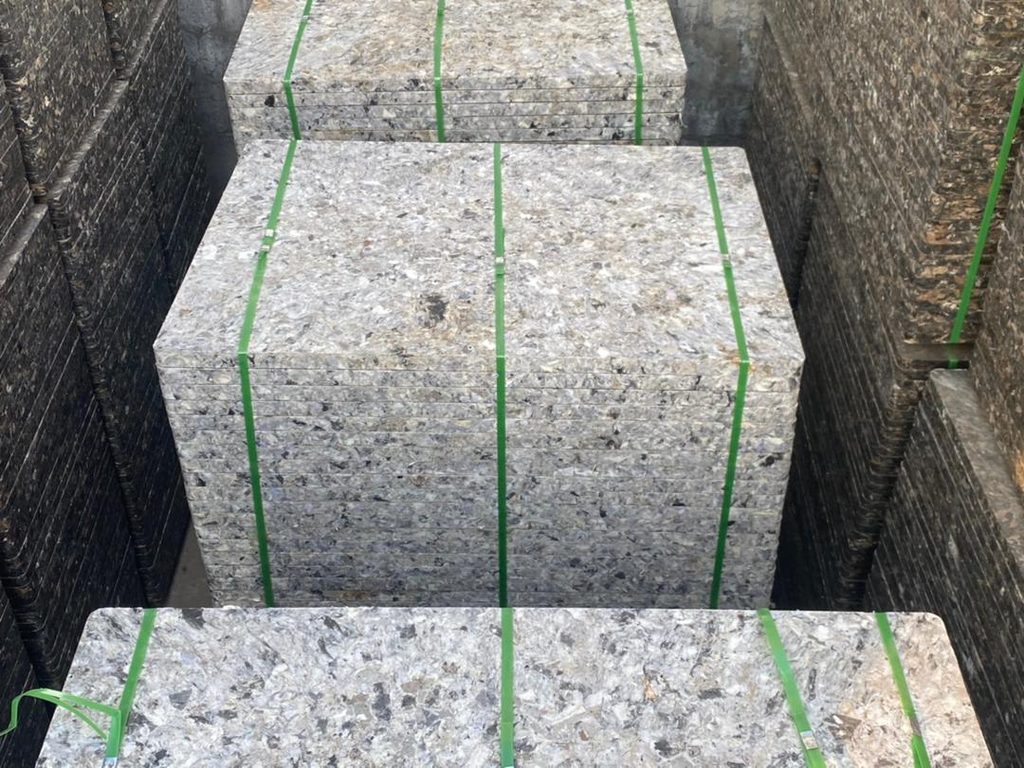
Glass Mat Thermoplastic (GMT) represents the premium standard for specialty brick manufacturing. GMT construction uses continuous glass fiber mat impregnated with thermoplastic resin, compression-molded into precise dimensions with controlled surface finish. The glass fiber reinforcement provides structural strength and dimensional stability, while thermoplastic resin delivers chemical resistance and thermal consistency. Manufacturing processes achieve Ra values of 1.5-3.0 μm through precision grinding and polishing, meeting glazed brick surface requirements. GMT pallets cost $95-130 per unit with 10-12 year service life across 80,000-120,000 production cycles.
Fiber-Reinforced Composite materials offer similar performance to GMT with minor specification differences. These pallets use chopped glass fiber in thermoplastic or thermoset resin matrix, achieving Ra values of 2.5-4.5 μm through molded surface finish. Composite pallets handle textured facade brick and architectural facing products effectively at $75-105 per unit with 8-10 year service life. Some manufacturers report slightly higher wear rates than GMT in high-volume automated production.
Engineered Wood Composite attempts to bridge standard wood and premium GMT performance. These products use compressed wood fiber with resin binders, achieving smoother surfaces (Ra 8-12 μm) than solid wood (15-25 μm) at moderate cost ($50-75 per unit). However, engineered wood still fails to meet glazed brick and thin veneer surface requirements, limiting application to less demanding specialty products. Service life of 4-6 years falls between standard wood and GMT.
Standard Wood Pallets cannot meet specialty brick surface finish requirements regardless of price advantage. Natural wood grain texture, moisture-driven dimensional instability, and rapid surface degradation make wood unsuitable for premium decorative production. Some manufacturers attempt to use wood for lower-grade architectural facing brick, accepting higher rejection rates in exchange for lower pallet cost—a strategy that typically fails cost-benefit analysis when product value exceeds $2.00 per unit.
GMT vs Wood vs Plastic: Performance Comparison
Direct comparison of pallet materials across specialty brick production requirements reveals decisive performance differences that determine product quality and manufacturing economics.
| Performance Factor | GMT Pallet | Plastic/Composite | Wood Pallet | Specialty Brick Impact |
|---|---|---|---|---|
| Surface roughness (Ra) | 1.5-3.0 μm | 2.5-5.0 μm | 15-25 μm | GMT supports glazed brick; wood causes 65-82% defects |
| Dimensional stability | ±0.3-0.5mm | ±0.5-0.8mm | ±3.0-6.0mm | GMT meets architectural tolerances; wood creates installation problems |
| Thermal consistency | ±0.8°C | ±1.5°C | ±5.0-7.0°C | GMT enables uniform curing; wood causes color variation |
| Moisture absorption | <0.5% | 1.2-2.5% | 8-15% | GMT prevents humidity defects; wood warps and stains |
| Service life | 10-12 years | 6-8 years | 2-3 years | GMT reduces replacement frequency and lifecycle cost |
| Load capacity | 2,500-3,000 kg | 2,000-2,500 kg | 1,500-2,000 kg | GMT supports heavier specialty brick stacks |
| Initial cost | $95-130 | $65-95 | $30-45 | Higher GMT cost offset by quality and lifespan |
| Cost per cycle | $0.001-0.002 | $0.008-0.012 | $0.010-0.015 | GMT delivers lowest cost per production cycle |
| Defect rate impact | 1-3% | 4-8% | 12-22% | GMT minimizes rejection costs in premium production |
Economic Analysis demonstrates that initial GMT pallet cost premium ($60-85 more than wood) recovers within 8-14 months in specialty brick production. A manufacturer producing 200,000 decorative bricks annually at $3.50 average unit value, operating 200-pallet fleet, experiences the following economics: GMT investment $19,000-26,000 versus wood at $6,000-9,000 (additional $13,000-17,000), but GMT reduces defect rate from 14% to 2%, saving $84,000 annually in rejected inventory (200,000 × 12% reduction × $3.50). The GMT investment payback occurs in 1.8-2.4 months, with 10-year net savings of $740,000-895,000.
Performance Degradation Curves show GMT pallets maintain specification-grade surface finish and dimensional accuracy through 80,000-120,000 production cycles before requiring replacement. Wood pallets degrade to unacceptable surface roughness within 8,000-15,000 cycles (18-30 months) and dimensional tolerance failure by 12,000-20,000 cycles. Plastic composite pallets fall between, maintaining acceptable performance for 40,000-65,000 cycles. For specialty brick manufacturers, consistent quality across the pallet service life determines whether architectural specifications can be met reliably.
Chemical Resistance for Glazed Brick Production
Specialty brick manufacturing introduces chemical exposure challenges absent in standard production. Glazed brick processing uses ceramic glaze formulations containing borates, silicates, and metal oxides that contact pallet surfaces during application and drying. Decorative brick production employs pigments, sealers, and surface treatments with pH ranges from 3.5 to 11.5. Pallet material chemical resistance determines whether surfaces remain specification-grade or degrade into contamination sources.
Glaze Chemistry Compatibility requirements arise from ceramic glaze composition. Standard architectural glazes contain 45-65% silica, 10-20% boron oxide, 8-15% metal oxides (for color), and 5-12% flux materials. When wet glaze contacts pallet surfaces, chemical compatibility determines whether the glaze adheres to brick only or also bonds to/degrades the pallet surface. GMT pallets with thermoset resin matrix resist glaze chemical attack, maintaining surface integrity through 50,000+ glaze contact cycles. Wood pallets absorb glaze components into porous grain structure, causing surface roughening and contamination that transfers to subsequent brick units.
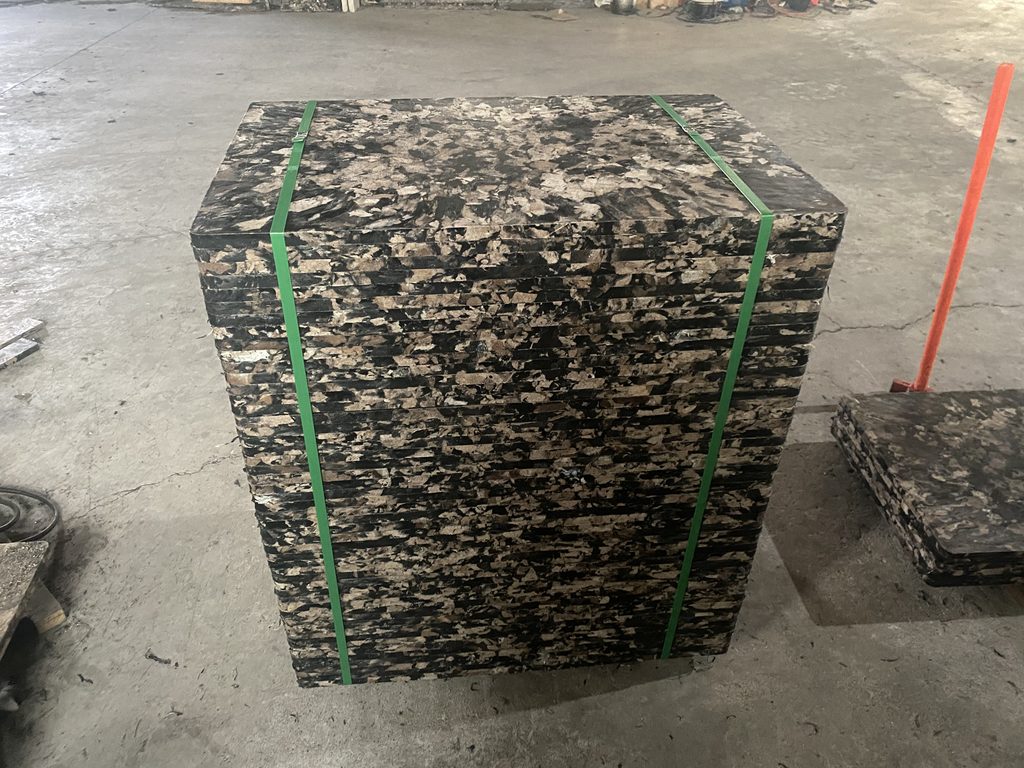
Field testing in glazed brick plants shows GMT pallets maintain initial surface finish (Ra 1.8-2.5 μm) after five years of glaze exposure, while wood pallets degrade from 15 μm Ra to 25-35 μm within 12-18 months, with glaze buildup creating 40-60 μm surface irregularities. Plastic composite pallets perform intermediately, maintaining acceptable surface finish for 3-4 years before glaze accumulation requires surface reconditioning.
pH Resistance Specifications protect pallets from chemical degradation during specialty brick processing. Colored architectural brick production uses pigment solutions with pH 4.0-9.5 depending on color chemistry—iron oxides (red/brown) at pH 6-8, chromium oxides (green) at pH 8-10, cobalt compounds (blue) at pH 5-7. GMT thermoplastic resin resists pH 2-13 with minimal surface effect, while wood cellulose degrades rapidly below pH 5 or above pH 9, causing surface fiber swelling and roughness increase.
Cleaning Compatibility enables pallet maintenance without surface damage. Specialty brick pallets require periodic cleaning to remove glaze residue, pigment buildup, and release agent accumulation. GMT pallets withstand pressure washing at 2,000-3,000 psi with alkaline detergents (pH 10-11) without surface degradation. Wood pallets suffer fiber raising and surface roughness increase from high-pressure washing, limiting effective cleaning options and accelerating replacement requirements.
Cost-Benefit Analysis for Specialty Production
Specialty brick economics transform the pallet selection calculation. While commodity brick manufacturers optimize for lowest pallet cost, specialty producers must optimize for lowest total cost including defect losses, which reverses the decision framework.
Defect Cost Quantification reveals the true economic impact. Consider a decorative brick manufacturer producing 180,000 architectural facing bricks annually with $4.20 average unit value. Using wood pallets at $38 per unit with 200-pallet fleet, pallet investment totals $7,600 with 2.5-year life ($3,040 annual cost). Defect rate from wood pallet surface issues averages 15%, creating 27,000 rejected units valued at $113,400 annually. Switching to GMT pallets at $115 per unit costs $23,000 initial investment ($2,300 annual cost at 10-year life), but reduces defects to 2.5%, cutting rejections to 4,500 units worth $18,900—annual savings of $94,500. Net benefit of GMT selection: $93,760 annually, or $937,600 over 10-year horizon.
The breakeven calculation demonstrates GMT pallets recover their premium within 8-12 weeks in specialty production where unit values exceed $3.00. For ultra-premium glazed architectural brick at $6.50-8.00 per unit, GMT payback drops to 4-7 weeks even at conservative defect rate assumptions.
Production Volume Thresholds determine when premium pallets deliver ROI. Small specialty producers manufacturing under 50,000 decorative bricks annually may find wood pallets economically viable if product value stays below $2.50 per unit and they accept 12-18% defect rates. Medium producers at 80,000-250,000 annual units find GMT pallets deliver clear ROI across all specialty categories. High-volume specialty manufacturers above 300,000 units annually achieve such compelling GMT economics that wood pallets become financially irrational regardless of initial cost considerations.
Quality Consistency Value extends beyond direct defect costs. Architectural brick specifications increasingly require documented dimensional consistency, surface finish uniformity, and quality certification. GMT pallets enable manufacturers to provide traceability and quality documentation that wood pallets cannot support, opening access to premium commercial projects with specification requirements. The revenue opportunity from specification-grade architectural projects (often 20-40% price premium over standard decorative brick) further justifies GMT pallet investment.
Quality Control and Inspection Protocols
Specialty brick quality assurance requires systematic pallet inspection and performance monitoring. Premium product manufacturers implement three-level inspection protocols: incoming pallet acceptance, in-service monitoring, and replacement threshold verification.
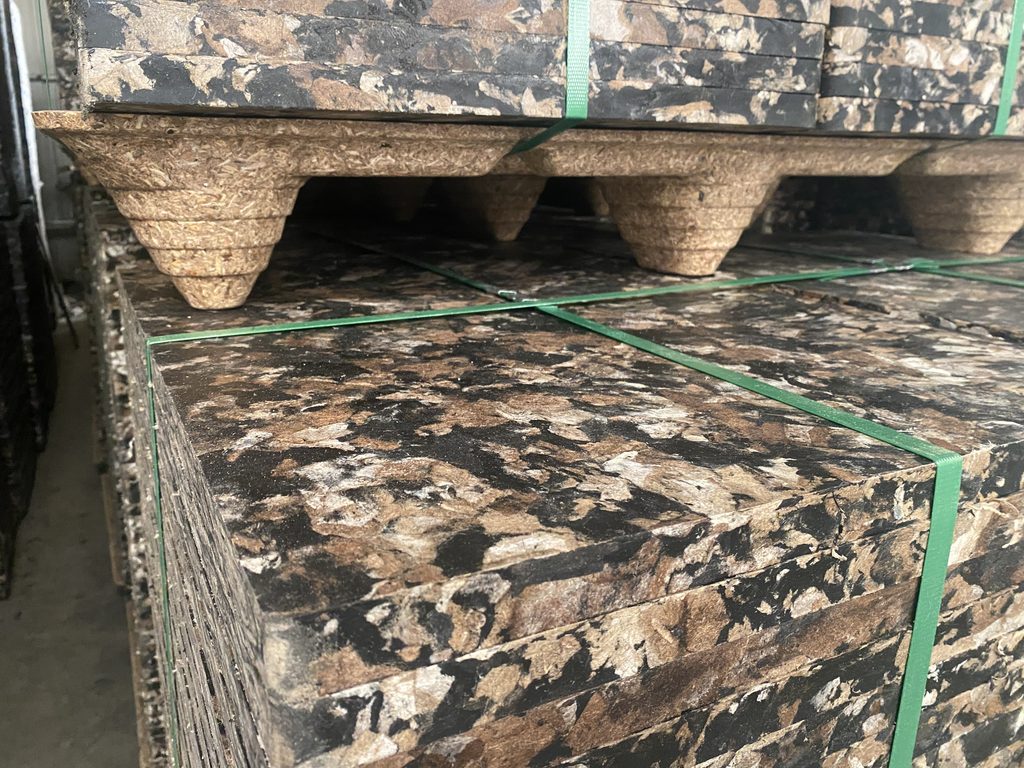
Incoming Acceptance Inspection verifies new pallets meet surface finish, dimensional, and material specifications before entering production. The inspection process measures surface roughness at five locations per pallet using portable profilometer, confirming Ra values meet specification (typically ≤3.0 μm for glazed brick, ≤6.0 μm for architectural facing). Dimensional verification uses precision straightedge and feeler gauges to confirm flatness within ±0.3-0.5mm specification. Visual inspection identifies surface defects, contamination, or damage. Pallets failing acceptance criteria return to supplier for replacement.
In-Service Monitoring tracks pallet performance degradation to optimize replacement timing. Manufacturers inspect active pallets monthly, measuring surface roughness at the same five locations used in acceptance testing. When Ra values increase 40-50% above baseline (indicating wear-induced roughness increase), the pallet enters watch status with weekly monitoring. Dimensional checks verify flatness remains within ±0.8-1.0mm tolerance. Brick quality correlation analysis compares surface defects to specific pallets, identifying problem units before specification failure.
Replacement Threshold Protocols remove pallets before quality impact. Specialty brick manufacturers typically specify replacement when surface roughness exceeds 150% of specification value (e.g., 4.5 μm Ra for pallets specified at 3.0 μm maximum), flatness deviation reaches 1.2-1.5mm, or surface damage/contamination develops that cleaning cannot remove. Proactive replacement based on objective measurements prevents quality failures while maximizing pallet service life. Regular inspection and maintenance extends GMT pallet service life to maximum potential.
Documentation Requirements support quality traceability and continuous improvement. Leading manufacturers maintain pallet fleet databases recording: acquisition date, acceptance inspection results, monthly Ra measurements, dimensional checks, production cycle count, brick defect correlations, and retirement reason. This data enables lifecycle cost analysis, supplier performance comparison, and production optimization. When architectural brick specifications require quality documentation, pallet traceability records demonstrate manufacturing process control.
FAQ
What makes specialty brick pallet requirements different from standard brick production?
Specialty bricks demand significantly higher pallet performance across surface finish, dimensional precision, and thermal properties. Premium decorative and architectural products require mirror-smooth pallet surfaces (Ra 1.5-3.2 μm) versus standard brick tolerance for rough wood surfaces (15-25 μm), dimensional stability within ±0.3-0.5mm versus ±2-3mm for standard production, and consistent thermal properties for uniform curing. Product values of $2.50-8.00 per specialty brick unit versus $0.45-0.75 for standard brick make defect prevention economically critical.
Can wood pallets be used for any specialty brick applications?
Wood pallets fail to meet specifications for glazed brick, thin veneer, and premium architectural products due to excessive surface roughness (15-25 μm Ra), dimensional instability from moisture absorption, and inconsistent thermal properties. Some manufacturers use wood for lower-grade architectural facing brick accepting higher defect rates, but economic analysis shows GMT pallets deliver lower total cost even in these applications when unit values exceed $2.00 and production volume reaches 80,000+ units annually.
How much does surface finish really impact specialty brick quality?
Surface finish determines 45-65% of specialty brick defect occurrences according to production data from decorative manufacturers. Pallet surface roughness transfers directly to brick surfaces under 2,500-4,000 psi molding pressure, creating visible texture marks on glazed products, dimensional variation in thin veneer, and appearance inconsistency in architectural facing brick. Testing shows 15 μm Ra wood surfaces cause visible defects on 65-82% of glazed brick units, while 2.5 μm Ra GMT surfaces achieve 96-99% mark-free production.
What is the realistic ROI timeline for GMT pallets in specialty production?
GMT pallets typically recover their cost premium over wood alternatives within 8-14 months in specialty brick production with unit values above $3.00 per brick. Breakeven timeline depends on product value, production volume, and defect rate reduction. A manufacturer producing 200,000 decorative bricks annually at $3.50 average value sees GMT payback in 1.8-2.4 months through reduced rejection costs. For ultra-premium glazed architectural brick at $6.50-8.00 per unit, payback drops to 4-7 weeks.
Do decorative thin brick veneer products need different pallets than standard thin brick?
Decorative thin veneer demands higher pallet specifications than standard thin brick due to enhanced surface appearance requirements and stricter dimensional tolerances for architectural installations. Decorative thin veneer requires polished GMT pallets with Ra 1.5-4.0 μm surface finish and ±0.2-0.3mm dimensional tolerance, while standard thin brick accepts Ra 4.0-8.0 μm finish and ±0.5-0.8mm tolerance. The price premium for decorative thin veneer ($4.50-7.00 per sq ft) versus standard ($2.50-4.00 per sq ft) justifies precision pallet investment.
How often do GMT pallets need replacement in specialty brick production?
GMT pallets typically serve 10-12 years (80,000-120,000 production cycles) in specialty brick manufacturing before surface finish degradation or dimensional wear requires replacement. Actual service life depends on production volume, cleaning protocols, handling practices, and specialty brick type. Manufacturers running glazed brick with aggressive glaze chemistry may see 8-10 year life, while architectural facing brick production with minimal chemical exposure achieves 12-15 years. Regular surface inspection and proactive maintenance maximize GMT pallet lifespan.
Conclusion
Specialty brick pallet selection determines whether premium decorative and architectural products meet quality specifications or suffer costly rejection rates. Surface finish requirements, dimensional precision standards, thermal properties, and chemical resistance separate specialty production from standard brick manufacturing, demanding pallet performance that only fiber-reinforced GMT and premium composite materials deliver.
The economics strongly favor GMT pallets in specialty production despite higher initial cost. When decorative brick unit values reach $2.50-8.00 versus standard brick at $0.45-0.75, defect prevention delivers dramatically higher ROI than lowest-cost pallet procurement. Manufacturers producing glazed architectural brick, textured facade products, thin veneer, or premium facing brick achieve 8-14 month GMT pallet payback through reduced rejection costs, with 10-year net savings reaching $740,000-895,000 for typical 200-pallet operations.
If you need high-quality pallets for specialty brick manufacturing—glazed products, decorative facing brick, architectural thin veneer, or textured facade brick—Rhinos Pallet offers precision GMT pallets with mirror-smooth surface finish, exceptional dimensional stability, and proven 10+ year service life. Our fiber-reinforced construction and quality manufacturing ensure your premium products meet the most demanding architectural specifications while minimizing defect costs and maximizing profitability.
Contact us today for specialty brick pallet solutions, technical specifications, and factory-direct pricing optimized for decorative and architectural production requirements.
Sources: