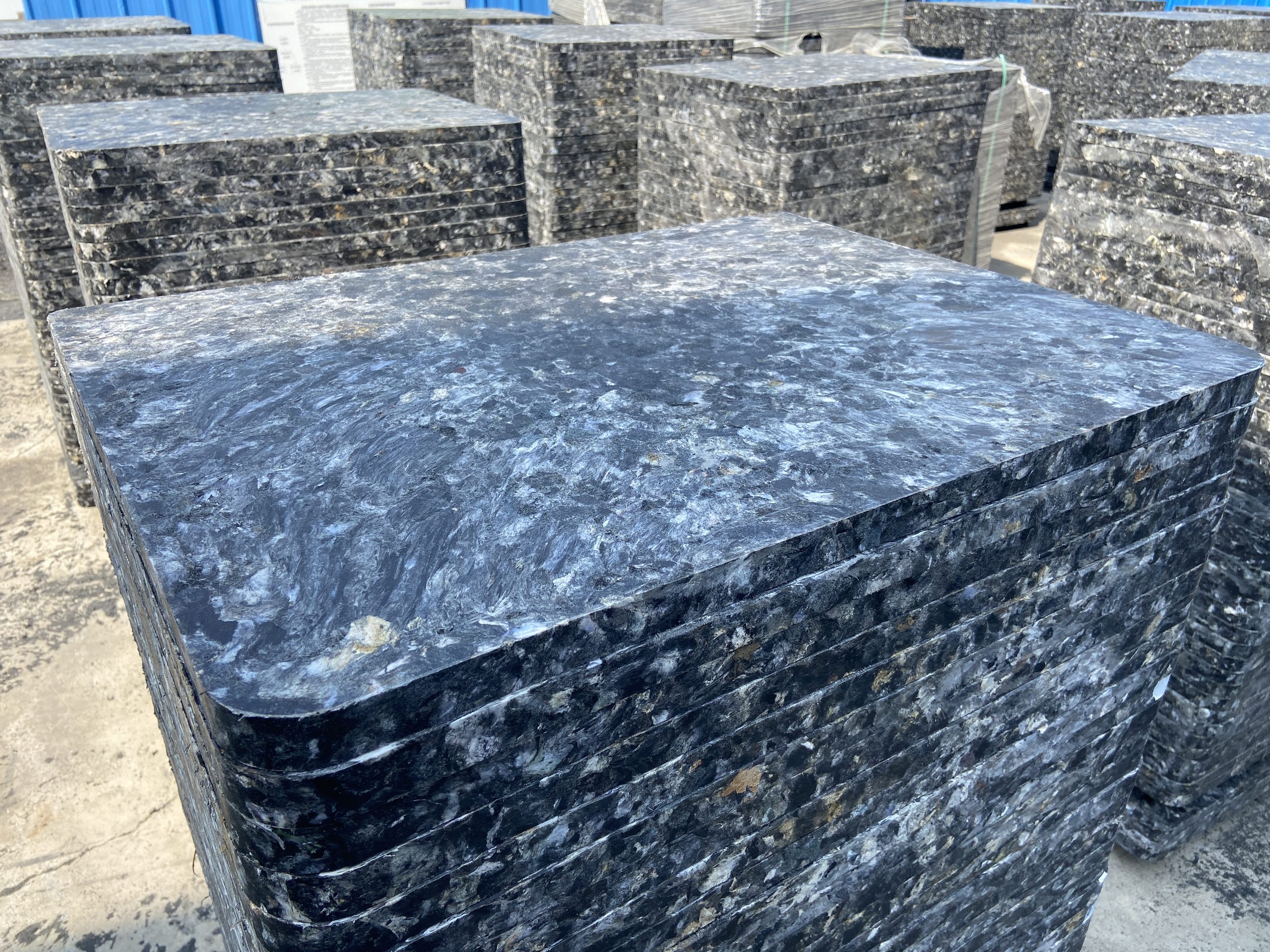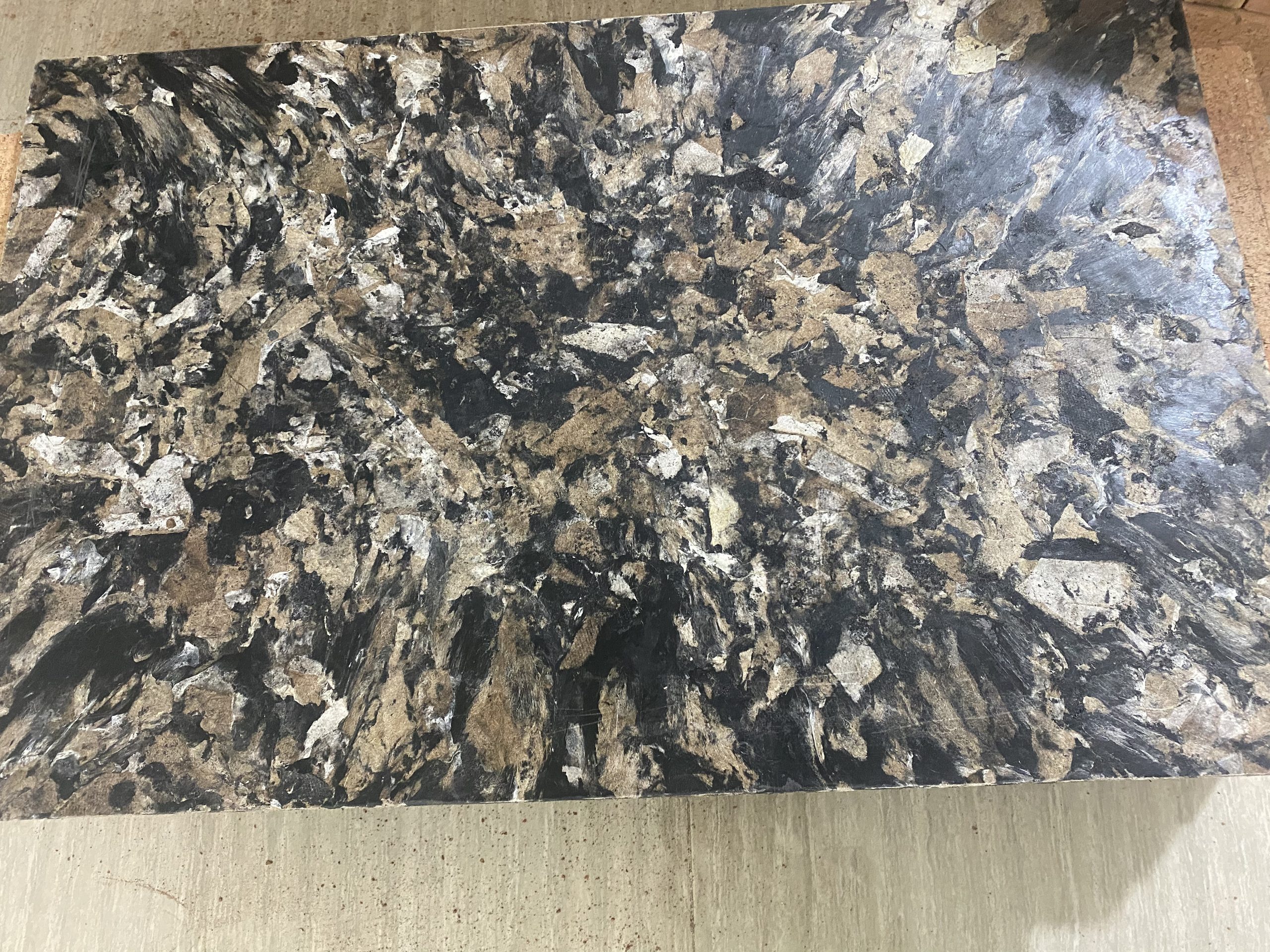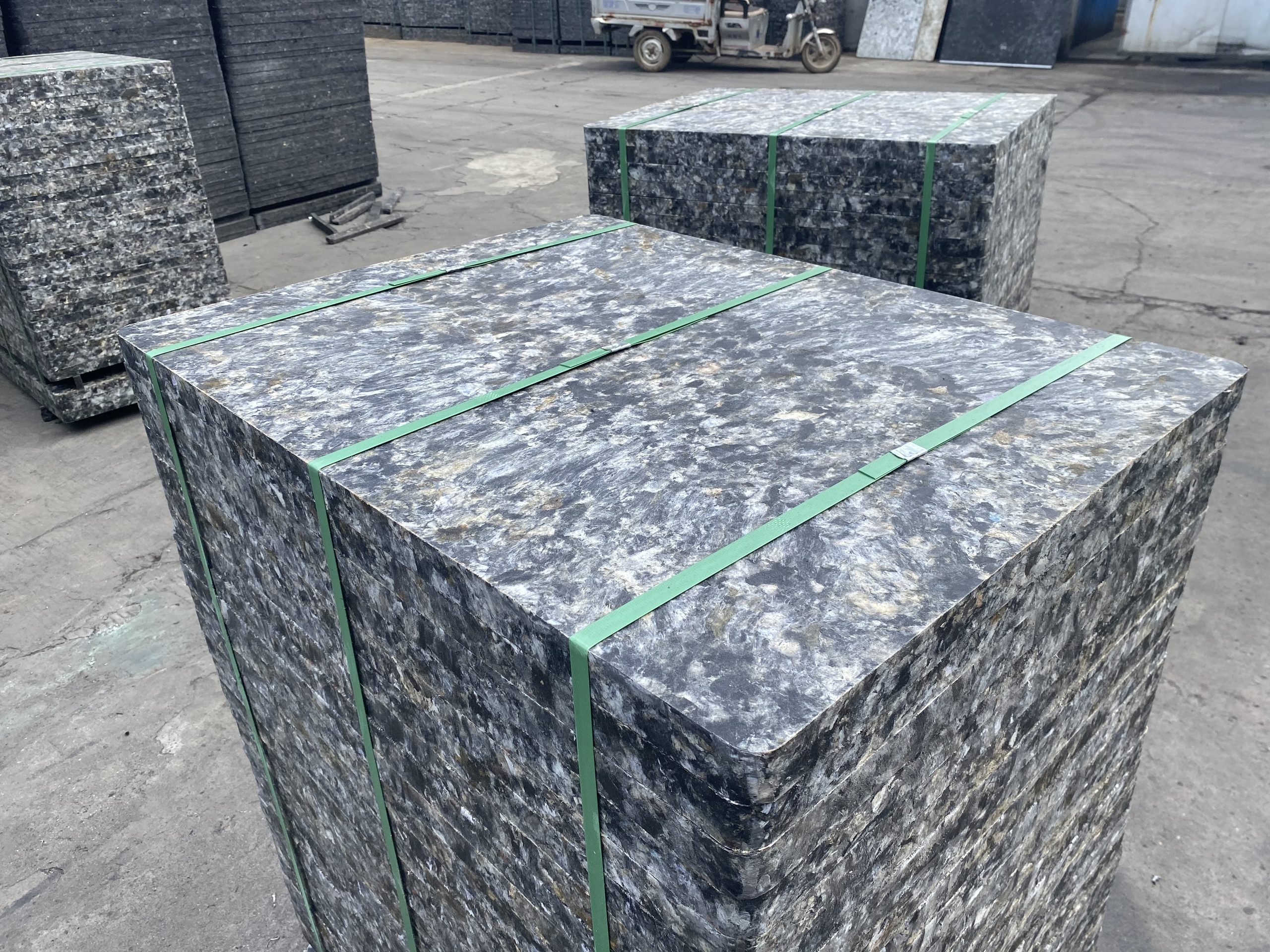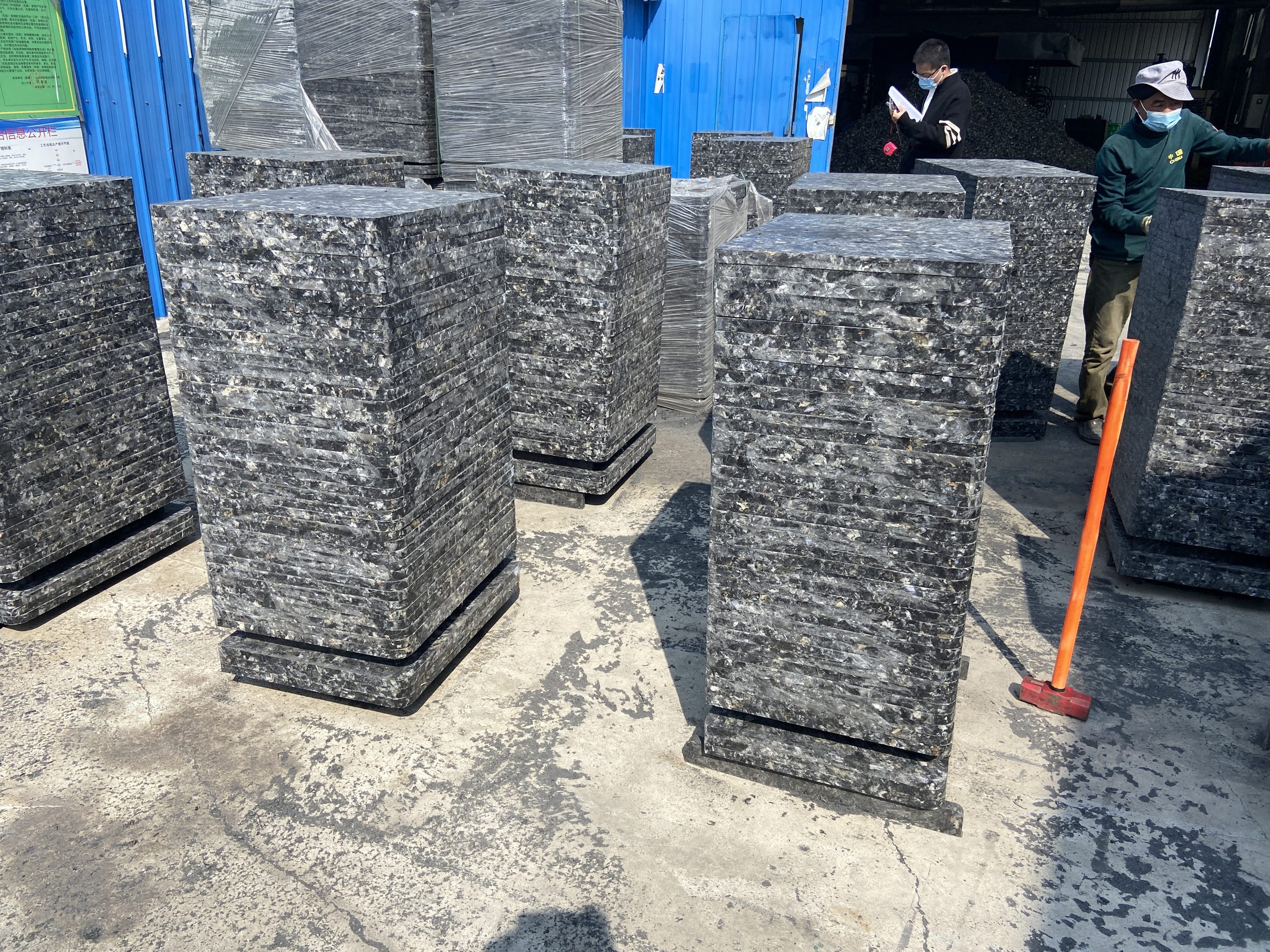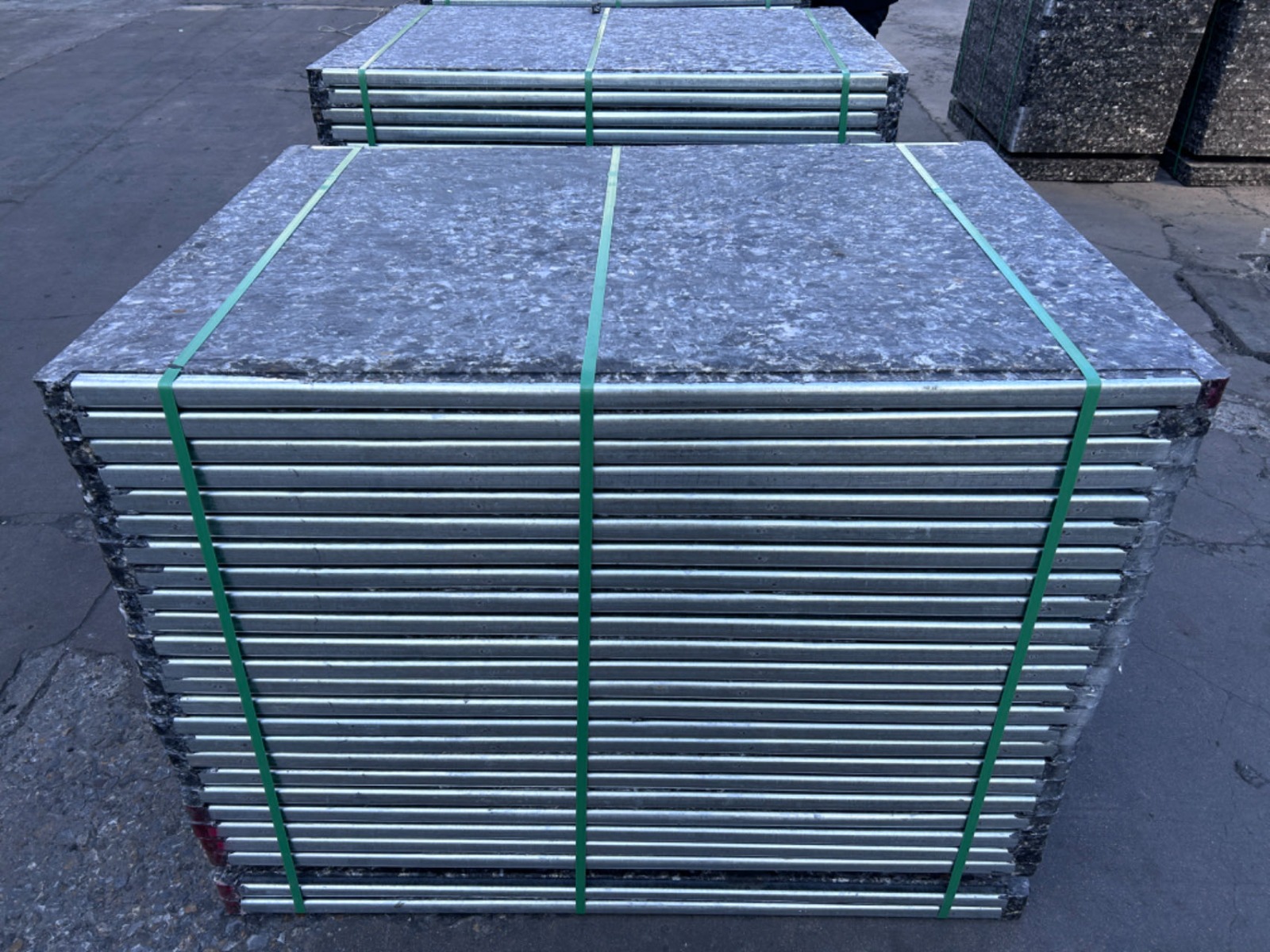
Concrete block manufacturers spending $80,000-$150,000 annually on pallet replacement often don’t realize that manufacturing quality—not material choice—determines whether a GMT pallet lasts 3 years or 12 years. The difference between a pallet maintaining ±2mm flatness across 10,000 cycles versus one warping after 800 cycles comes down to production steps separating precision manufacturers from cost-cutting operations.
This guide walks through GMT pallet formation from raw material arrival to final inspection, explaining technical decisions impacting production line efficiency and long-term costs.
Understanding GMT Composite Material Technology
GMT (Glass Mat Thermoplastic) combines continuous glass fiber mats (30-50% by weight) with polypropylene matrix. Continuous strand E-glass fibers (100-300mm lengths) distribute mechanical stress across the entire structure, preventing localized cracking that destroys wood pallets under concentrated loads.
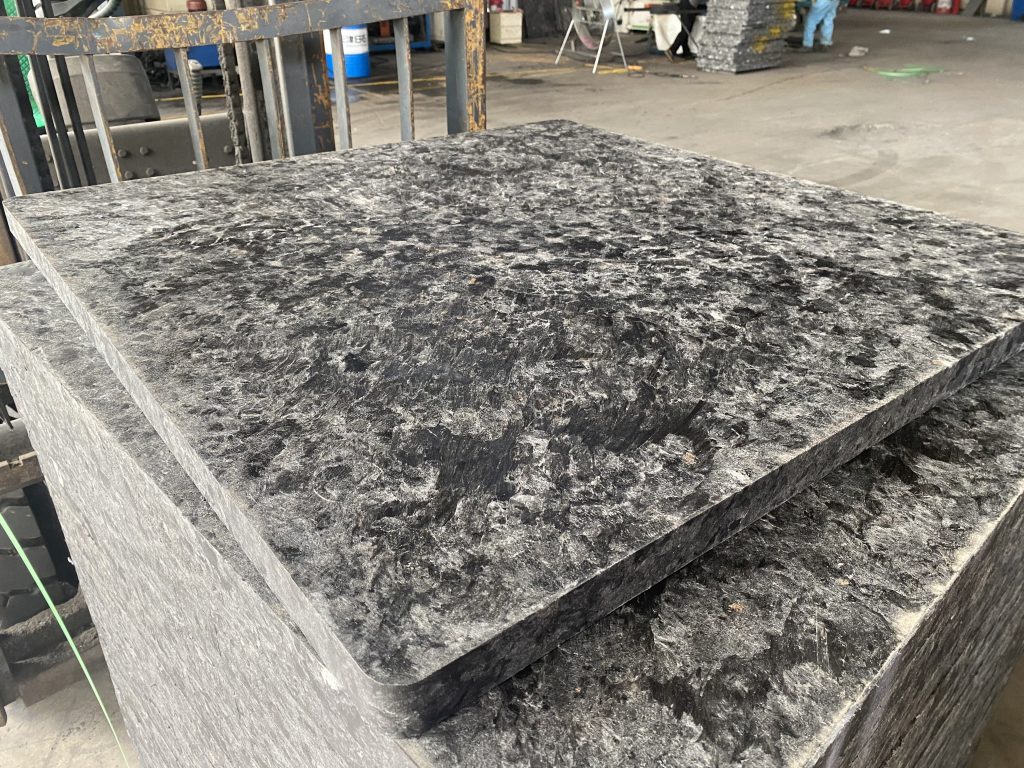
The polypropylene matrix protects glass fibers from moisture and chemical attack while providing thermal formability. It resists concrete’s pH 12-13 alkaline environment, absorbs <0.4% moisture, and maintains properties across -30°C to +80°C ranges. Compression molding applies uniform pressure across the entire surface, creating consistent fiber-to-resin ratio—no resin-rich weak spots or fiber-poor brittle zones.
Raw Material Selection and Quality Control
GMT pallet quality begins with raw material specifications that separate reliable manufacturers from those cutting corners. Production facilities capable of 10-12 year pallet lifespan enforce material standards adding 8-12% to raw material costs but delivering 3-4x longer service life.
Glass Fiber Mat Specifications
E-glass continuous strand mats arrive in rolls with areal weight specifications of 300-450 g/m². Lighter mats (<300 g/m²) produce pallets that deflect excessively under 2,500+ kg loads, while heavier mats (>500 g/m²) create unnecessarily stiff pallets that crack under impact. Standard E-glass uses 13-17 micron diameter fibers—thicker fibers resist resin penetration creating dry spots, while thinner fibers break during handling.
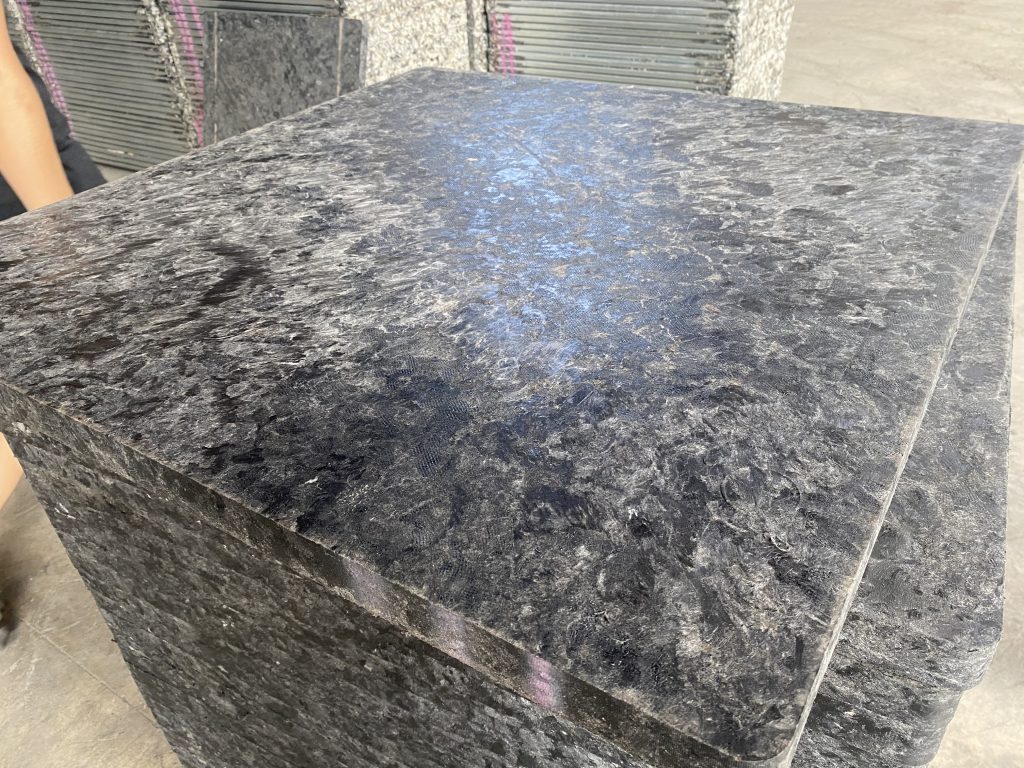
Quality mats use thermoplastic-compatible binders softening at 120-140°C, allowing fiber redistribution during molding. Inferior mats use thermoset binders that char during molding, creating contamination weakening the final part.
Polypropylene Resin and Additives
Homopolymer polypropylene with melt flow index (MFI) of 10-25 g/10min provides the base matrix. Impact modifiers at 5-12% by weight prevent brittle failure in cold climates—pallets without them survive <18 months below 10°C ambient. UV stabilizers extend outdoor storage life from 3-4 years to 8-10+ years, preventing photo-oxidation causing 40-60% impact strength loss within 24-36 months. Some manufacturers incorporate 20-40% recycled polypropylene from clean industrial scrap—post-consumer content introduces contamination reducing pallet lifespan by 30-50%.
Material Preparation: Creating GMT Blanks
GMT blanks—pre-consolidated sheets feeding compression molding—represent the first critical quality control point. The blank creation line uses unwinding stations for glass fiber mat and polypropylene film rolls with computer-controlled tensioning maintaining consistent feed rates.
A typical GMT blank uses symmetric layup: glass mat / PP film / glass mat / PP film / glass mat. This creates balanced reinforcement preventing warping. A blank using three 400 g/m² glass mats (1,200 g fiber per m²) combined with PP films totaling 1,800 g/m² yields 40% fiber content—the target range for brick pallets. Cost-cutting manufacturers reduce fiber to 25-30%, producing pallets deflecting 5-8mm under rated loads.
The layered materials pass through pre-consolidation ovens at 180-200°C for 90-180 seconds where PP begins impregnating glass mats. Pre-consolidated blanks pass through pinch rollers at 5-15 bar pressure, then get cut 20-40mm oversize for material flow during molding. Cut blanks require 24-48 hours storage at 20-25°C and 40-60% RH for stress relaxation—facilities molding immediately experience 12-18% higher defect rates.
Compression Molding Process
Tool steel dies heated to 180-200°C mold the GMT blank through simultaneous heat and pressure. Polished die surfaces (Ra <1.6 microns) transfer smooth finish for concrete release, while rough dies (Ra >3.2 microns) produce textured surfaces where concrete bonds, increasing brick defects by 15-25%. Multi-zone heating maintains ±2°C uniformity—±5°C variation causes warping.
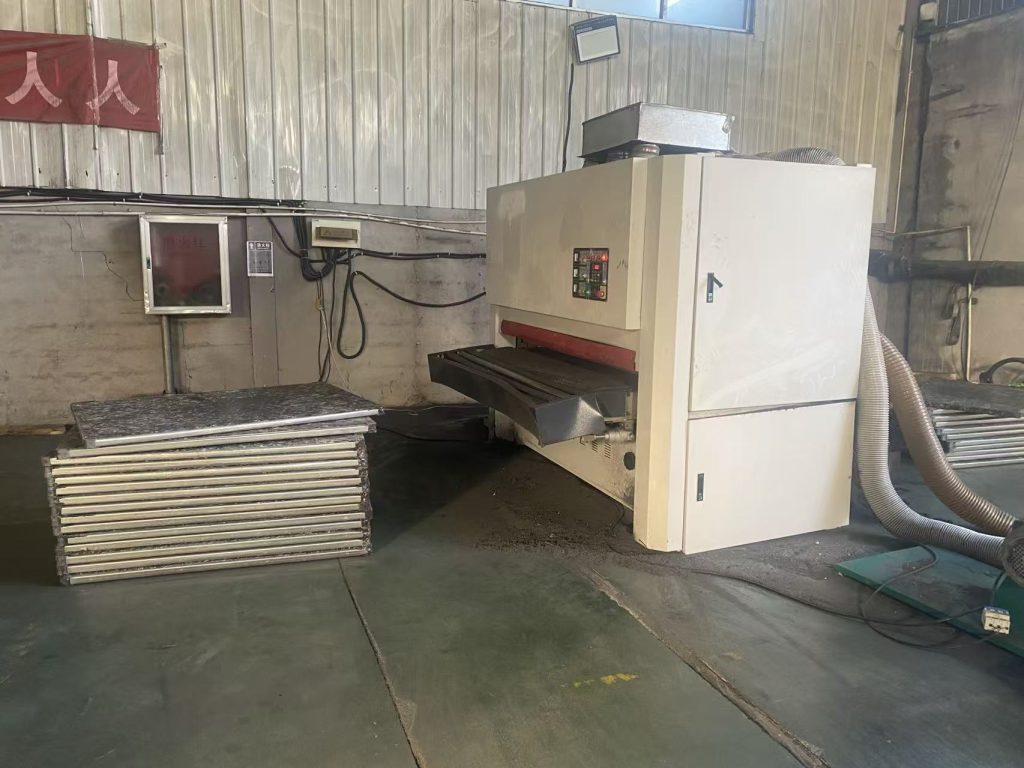
Optimal press closing speed (20-35mm/sec) allows air escape without premature cooling. Compression pressure of 50-100 bar fully impregnates fibers and eliminates voids; excessive pressure (>120 bar) squeezes resin from reinforcement creating weak zones. Pressure holds 60-120 seconds for complete resin flow—short cycles (<60 seconds) leave micro-voids reducing durability by 25-35%.
During compression, the blank reduces from 12-18mm to final 15-22mm thickness while expanding laterally, reorienting fibers toward flow direction for preferential strength. Quality manufacturers position blanks so fiber alignment matches primary load directions; improper orientation reduces load capacity by 15-20%.
Cooling and Dimensional Stabilization
Controlled cooling determines whether GMT pallets maintain dimensional specifications throughout service life or develop progressive warping within 18-24 months. After compression, pallets at 170-180°C transfer to cooling stations where temperature drops to <60°C. Quality manufacturers specify 5-10°C/min cooling through the critical 170-100°C range where PP crystallizes—rapid cooling (>15°C/min) creates temperature gradients causing permanent curvature.
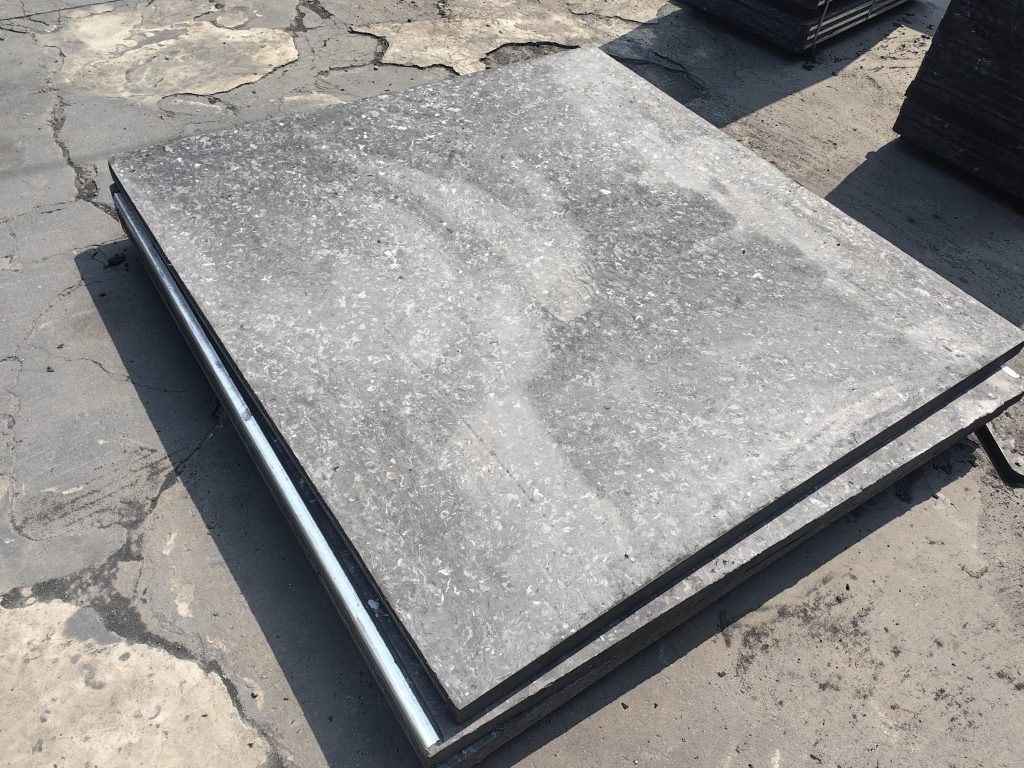
Fixture-based cooling constrains outer dimensions while allowing thickness shrinkage, maintaining ±1mm consistency versus ±2-4mm from unconstrained cooling. Post-mold annealing at 80-100°C for 2-4 hours provides controlled stress relief, delivering pallets with stable dimensions for 10+ years versus 18-36 months for non-annealed pallets. After cooling to <40°C, automated coordinate measuring equipment checks 12-20 points per pallet for length, width, thickness, flatness, and diagonal dimensions. Units outside ±2mm tolerance get rejected.
Edge Finishing and Reinforcement
GMT pallets exit molds with 10-20mm flash that must be trimmed to achieve final dimensions. Precision CNC routers trim edges to ±0.5mm tolerance with smooth surfaces and no delamination. Inferior manufacturers use manual grinding or sawing, creating ragged edges with exposed fiber ends that catch on automated equipment and gradually delaminate.
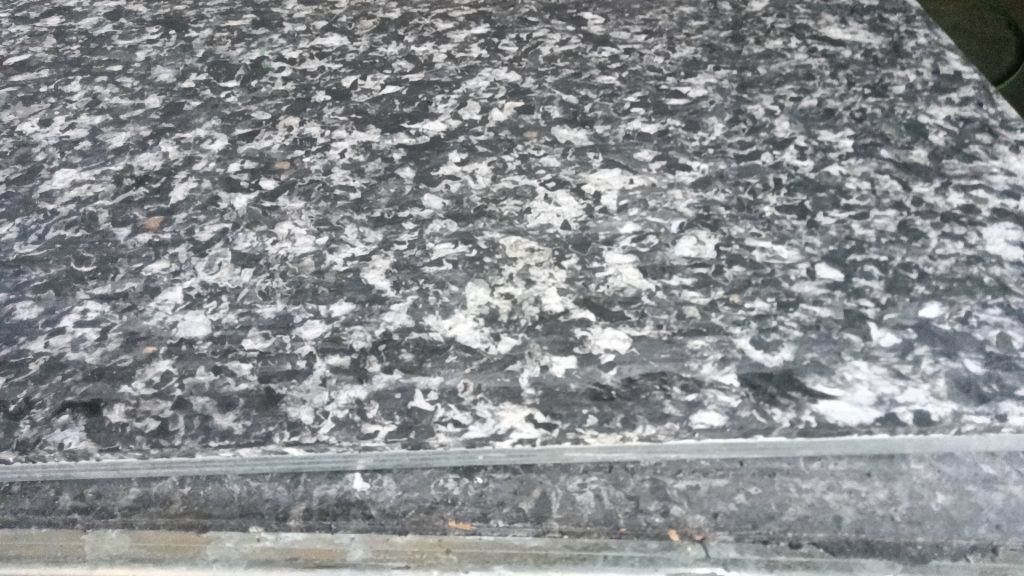
Corner radius affects durability—sharp 90-degree corners concentrate stress during impact, while quality manufacturers specify 3-5mm corner radii distributing forces, extending edge life by 2-3x. Heavy-duty applications benefit from aluminum or steel edge channels thermally bonded to GMT perimeter, adding $15-25 per pallet but extending service life by 40-60% with payback within 24-36 months for facilities processing >500,000 blocks annually.
Surface Treatment for Concrete Release
Raw GMT surfaces can develop concrete bonding where fresh concrete chemically bonds to the pallet. Silicone-based release agents create a thin (<10 microns) hydrophobic layer preventing water in concrete from wetting the surface. Uniform coverage matters: too thin (<5 microns) leaves bonding gaps; too thick (>20 microns) transfers silicone residue onto blocks.
Premium silicone formulations bond chemically to PP, surviving 800-1,200 concrete contacts before reapplication. Economy treatments using physical coating last only 200-400 cycles. Alternatively, mechanical polishing to <0.8 micron roughness creates a micro-smooth surface minimizing concrete contact area. Polishing removes 0.3-0.5mm surface material using progressive grits (120 to 800), creating a resin-rich layer with minimal exposed fibers, providing permanent release properties without consumable costs.
Quality Control and Performance Testing
Quality assurance separates manufacturers delivering consistent 10-12 year pallet life from those shipping products with hidden defects emerging after 6-18 months.
Every production batch undergoes coordinate measurement of critical dimensions: length ±2mm, width ±2mm, thickness ±1.5mm, flatness ±2mm, corner squareness ±1mm. Automated CMM systems check 15-20 points per pallet in 90-120 seconds.
Representative samples undergo destructive testing. Static load testing applies 3,000-3,500 kg (1.2-1.4x rated capacity) for 24 hours; pallets deflecting >3mm fail. Impact testing drops 25 kg from 1.5 meters onto the center, revealing fiber-resin bonding issues. Moisture resistance testing submerges pallets at 23°C for 48 hours—quality GMT absorbs <1% moisture with <0.5mm dimensional change.
Manufacturing Process Comparison
Understanding how different manufacturing approaches impact pallet quality helps explain price variations and why apparently similar pallets deliver vastly different service life.
| Manufacturing Factor | Premium Process | Standard Process | Economy Process |
|---|---|---|---|
| Glass fiber mat quality | 400-450 g/m², 13-17µ diameter | 300-350 g/m², 15-20µ diameter | 250-300 g/m², 18-25µ diameter |
| Fiber content | 35-45% by weight | 30-35% by weight | 25-30% by weight |
| Molding pressure | 70-100 bar | 50-70 bar | 30-50 bar |
| Molding time | 90-120 seconds | 60-90 seconds | 45-60 seconds |
| Cooling control | Fixture-cooled, 5-10°C/min | Air-cooled, 10-15°C/min | Open-air, >20°C/min |
| Post-mold annealing | 4 hours at 90°C | 2 hours at 80°C | None |
| Edge finishing | CNC trimmed, ±0.5mm | Router trimmed, ±1.5mm | Manual ground, ±3mm |
| Expected service life | 12-15 years | 8-10 years | 3-5 years |
| Manufacturing cost | $75-95 per unit | $55-70 per unit | $35-50 per unit |
A $90 premium pallet lasting 12 years costs $7.50 per year; a $40 economy pallet lasting 3 years costs $13.33 per year—nearly 2x the annual cost despite 55% lower purchase price.
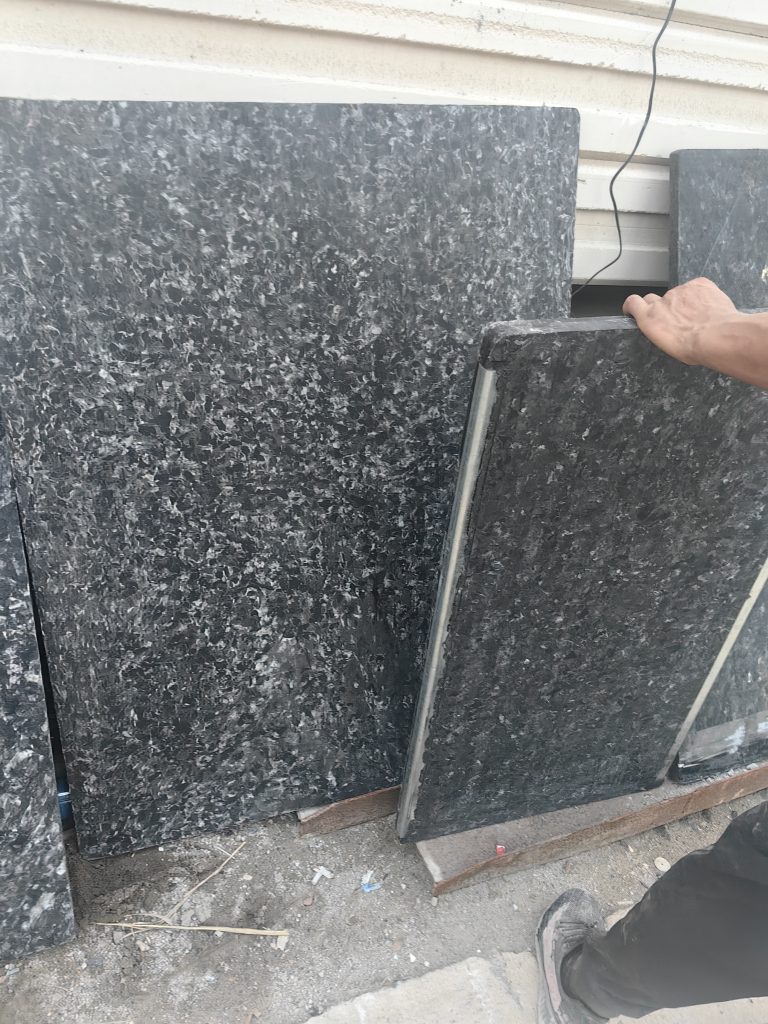
How Manufacturing Quality Impacts Your Operations
Manufacturing process quality directly translates to measurable differences in brick production facility efficiency and costs.
Precision-manufactured GMT pallets with ±1mm dimensional tolerance enable automated handling systems to operate at design speed with minimal positioning errors. Economy pallets with ±5mm tolerance force conservative parameters reducing throughput by 12-18% and increasing safety stops by 40-60%. Facilities switching from economy to premium GMT pallets document 15-22% throughput improvements.
Surface flatness directly affects brick curing quality. Pallets warping >3mm create uneven support where bricks develop internal stresses during curing, manifesting as micro-cracks causing 20-30% of bricks to fail during kiln firing or after installation. Facilities producing premium architectural bricks (defect costs: $3-8 per unit vs. $0.50-1.50 for standard) cannot tolerate quality variation from economy pallets. The 40-60% defect reduction premium pallets deliver justifies their 2-2.5x higher cost within 6-12 months through reduced waste and breakage.
A facility operating 200 pallets faces these 12-year scenarios: Economy path costs $36,000 (initial $8,000 + 3 replacement cycles at $24,000 + $4,000 replacement labor). Premium path costs $18,000 (initial only, zero replacements). The $18,000 savings (50% reduction) excludes eliminated production disruptions, reduced brick defects, and freed maintenance labor.
FAQ
What raw materials are used to make GMT pallets?
GMT brick pallets are manufactured from continuous glass fiber mats (E-glass, 13-17 micron diameter) and polypropylene thermoplastic resin. Quality pallets use 35-45% glass fiber by weight combined with impact-modified polypropylene containing UV stabilizers. Glass provides structural strength while polypropylene protects fibers from moisture and chemical attack.
How long does it take to manufacture one GMT pallet?
Complete manufacturing requires 4-8 hours from raw materials to finished pallet. GMT blank preparation takes 15-30 minutes, compression molding 90-180 seconds, controlled cooling 30-60 minutes, and post-mold annealing 2-4 hours for dimensional stability. Edge finishing and inspection add 10-15 minutes.
Why are GMT pallets more expensive than wood pallets?
GMT pallets cost $80-120 versus $25-45 for wood due to higher raw material costs (glass fiber and engineering-grade polypropylene) and capital-intensive manufacturing equipment (compression presses cost $200,000-500,000). However, GMT pallets last 10-12 years versus 2-3 years for wood, making annual cost $7-10 for GMT versus $10-18 for wood.
Can GMT pallets be recycled?
Yes, GMT pallets can be recycled because polypropylene is thermoplastic material that can be remelted and reformed. The process grinds used pallets into granules, separates glass fiber and PP matrix, then reprocesses materials for new products. Quality manufacturers incorporate 20-40% recycled PP from industrial scrap without compromising performance.
What is the difference between compression molding and injection molding for pallets?
Compression molding applies uniform pressure across the entire surface, consolidating pre-positioned glass fiber mats with molten polypropylene for consistent fiber orientation. Injection molding pumps molten plastic through gates, creating flow patterns with varying fiber orientation and potential weak spots. Compression molding delivers superior dimensional stability.
How do I verify GMT pallet manufacturing quality?
Request documentation showing dimensional tolerance testing (length/width ±2mm, flatness ±2mm), mechanical testing results (load capacity >2,500 kg, deflection <3mm), and moisture absorption testing (<1% weight gain after 48-hour immersion). Ask about post-mold annealing practices—quality manufacturers conduct 2-4 hour stress relief cycles.
Why do some GMT pallets warp after 12-18 months while others stay flat for 10+ years?
Warping indicates inadequate post-mold annealing or uncontrolled cooling. Pallets with residual thermal stresses gradually relax over months, causing progressive dimensional changes. Quality manufacturers use controlled cooling rates (5-10°C/min) and post-mold annealing (2-4 hours at 80-100°C) to eliminate residual stresses before shipping.
What causes GMT pallets to crack at edges during handling?
Edge cracking stems from inadequate edge finishing leaving exposed fiber ends, sharp corner geometry concentrating impact stress, or insufficient impact modifier content in the polypropylene matrix. Quality pallets use CNC edge trimming for clean-cut edges, incorporate 3-5mm corner radii to distribute stress, and include 5-12% impact modifiers for shock absorption.
Conclusion
GMT pallet manufacturing quality determines whether your brick production facility achieves 10-12 years of trouble-free service or faces recurring replacement cycles every 3-4 years. The formation process—from raw material selection through compression molding, controlled cooling, and post-mold annealing—directly impacts dimensional stability, load capacity retention, and resistance to moisture and chemical exposure in brick production environments.
Precision-molded pallets with ±1mm dimensional tolerance enable automated production lines to operate at design speed with 40-60% fewer positioning errors compared to ±5mm tolerance economy alternatives. Post-mold annealed pallets maintain dimensional stability for 10+ years while non-annealed pallets develop progressive warping within 18-36 months.
Rhinos Pallet offers fiber-reinforced pallets with verified 10-15 year service life. Our controlled manufacturing process—including post-mold annealing, precision edge finishing, and 100% dimensional inspection—delivers the consistent quality automated production lines require. Contact us today for GMT pallet specifications and factory-direct pricing tailored to your block machine requirements.