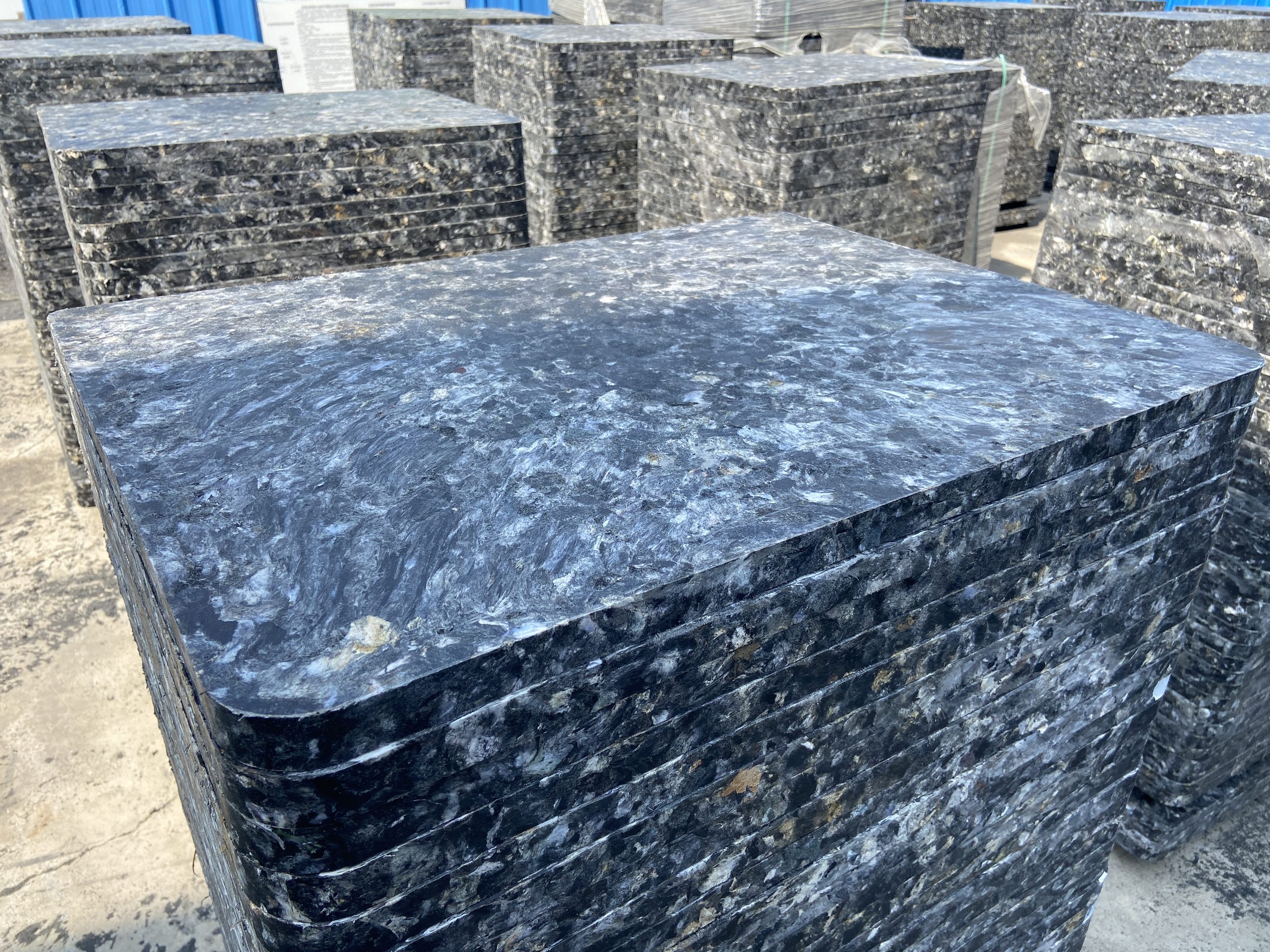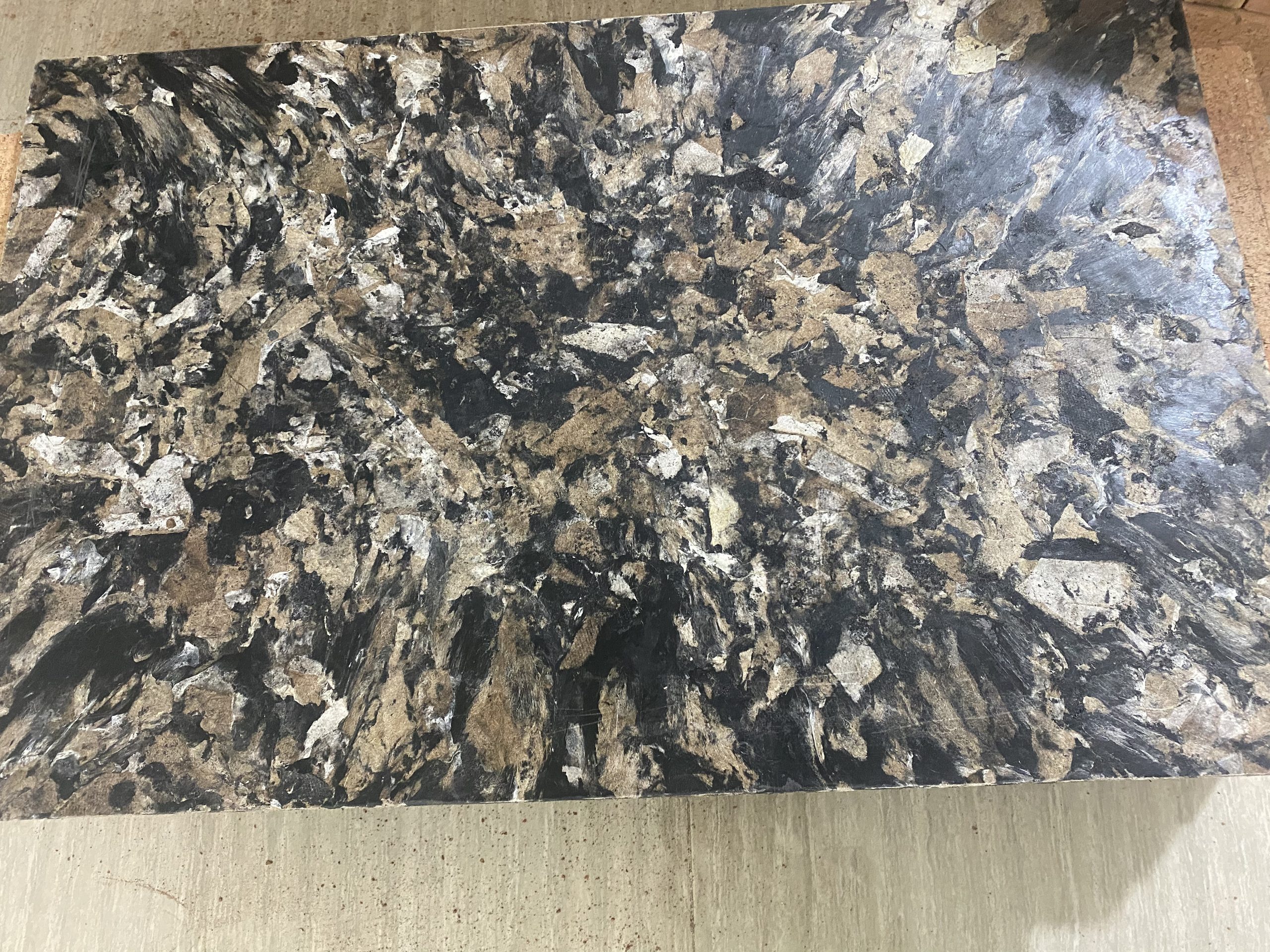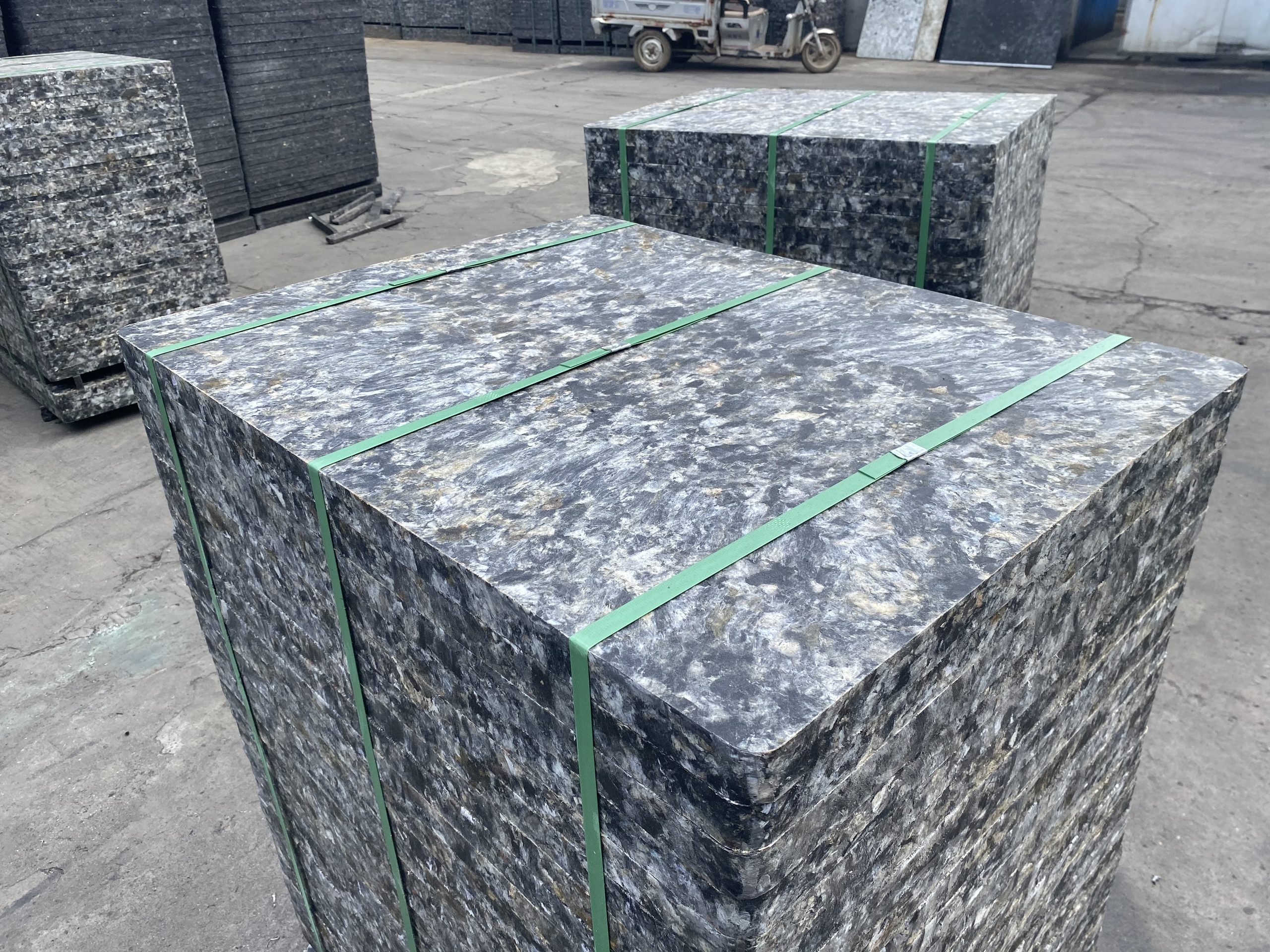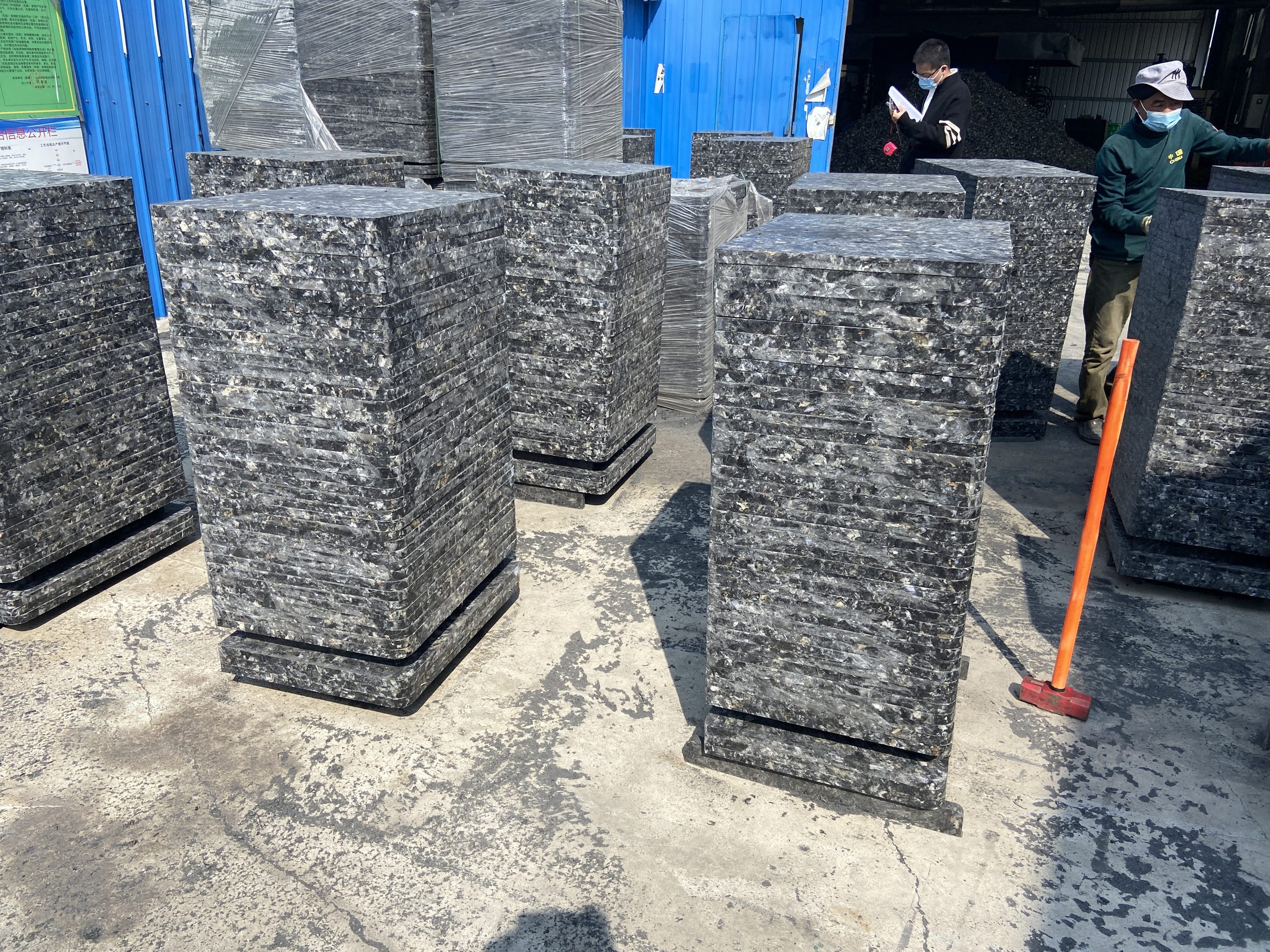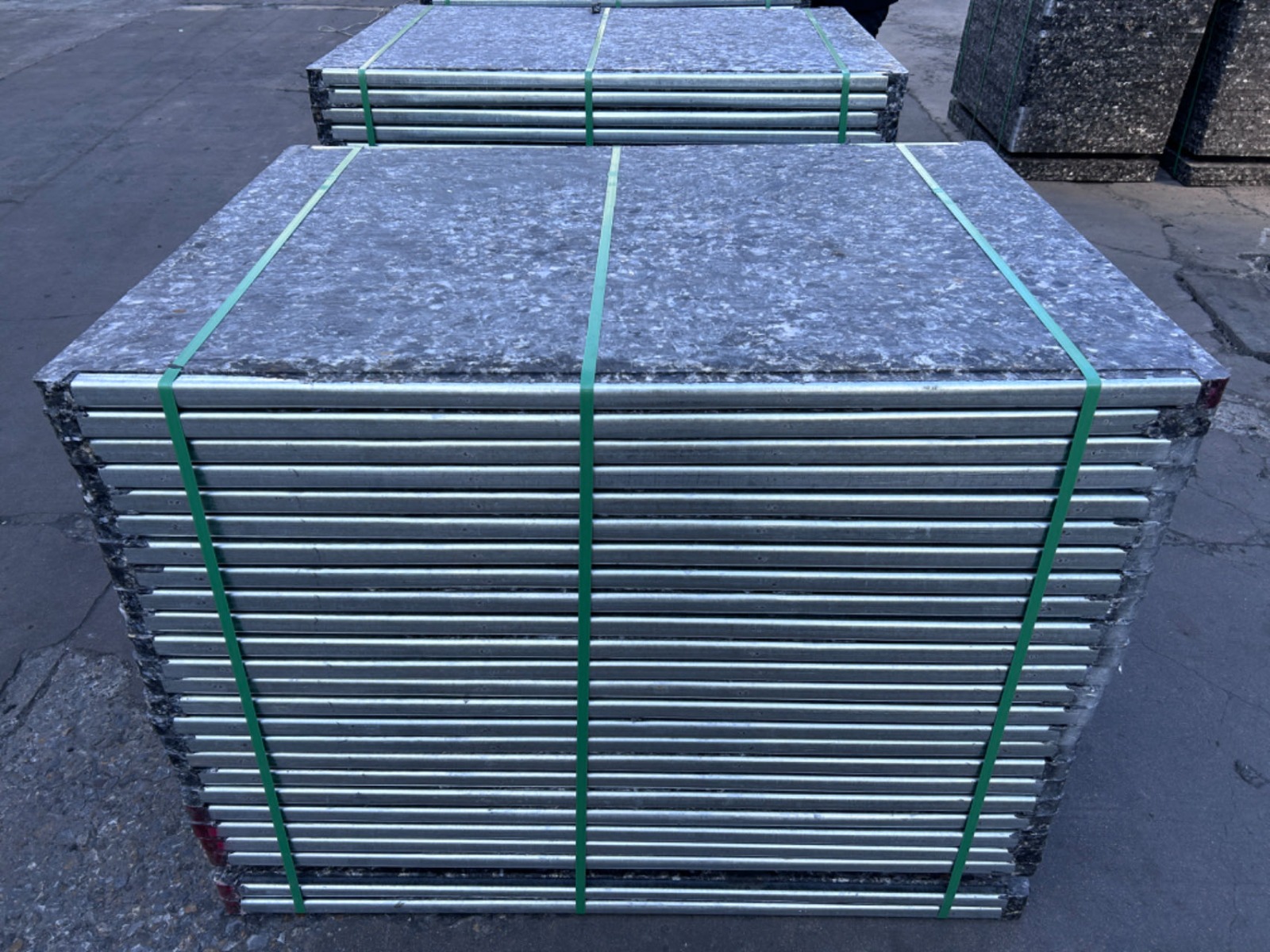
Brick manufacturers waste $18,000-42,000 annually on pallet replacements when using inferior molding processes. The difference between a pallet lasting 3 years versus 12 years comes down to compression molding pressure. Factories using 3000-ton hydraulic presses create GMT pallets with 1200 kg/m³ density and molecular-level fiber integration that cheaper 800-ton processes cannot achieve.
Understanding the formation process reveals which factories deliver genuine 10+ year performance versus pallets that fail within 36 months. This guide explains exactly how 3000-ton compression molding works and why this manufacturing method separates premium GMT pallets from economy alternatives.
What Makes 3000-Ton Pressing Different
The tonnage specification directly determines material density and fiber-matrix integration. 3000-ton hydraulic presses apply 6.5-8.5 MPa pressure across the pallet surface during compression molding, forcing glass fibers into intimate contact with molten polypropylene at the molecular level. This pressure eliminates voids, achieves 1200 kg/m³ density, and creates the mechanical properties enabling 10-12 year service life.
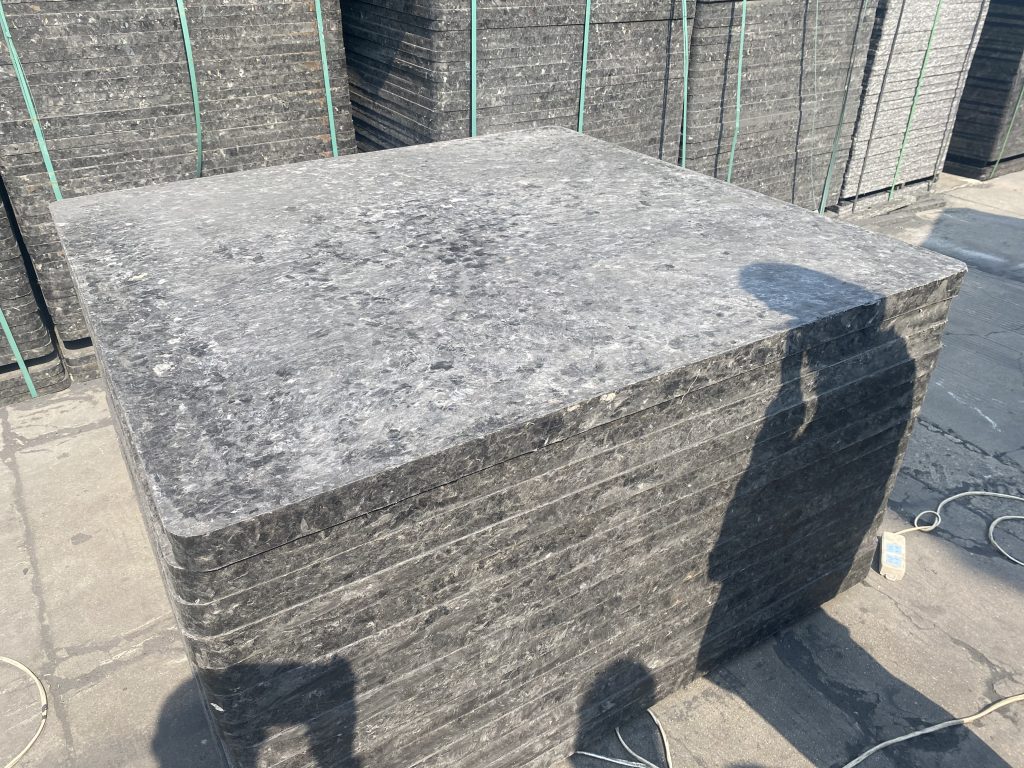
Standard compression molding using 800-1200 ton presses generates only 2.5-4.0 MPa pressure—insufficient for complete fiber wet-out. The resulting pallets show 15-25% lower density (950-1050 kg/m³), trapped air pockets that initiate crack propagation, and incomplete fiber-matrix adhesion. These deficiencies reduce service life to 3-5 years even when using identical raw materials.
The pressure threshold matters because glass fiber impregnation requires overcoming surface tension between glass and polypropylene. At pressures below 5.0 MPa, resin flow cannot displace air trapped between fiber bundles. Production data confirms the gap: pallets from 3000-ton presses maintain ±2mm dimensional tolerance across 10,000+ cycles, while 800-ton molded pallets develop 4-8mm warping within 2,000 cycles.
The Five-Stage 3000-Ton Compression Molding Process
Stage 1: Raw Material Preparation
GMT pallet manufacturing begins with semi-finished GMT sheets combining continuous glass fiber mats with polypropylene matrix. Premium factories source recycled automotive interior materials—specifically headliners, door panels, and dashboard components offering superior impact resistance.
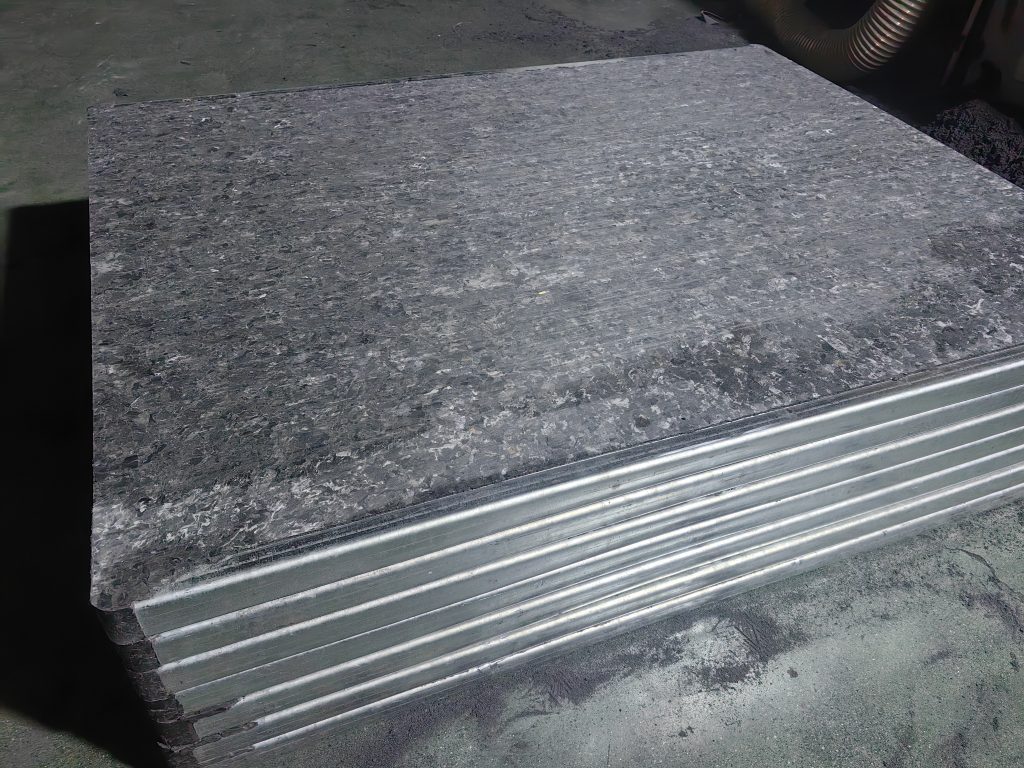
Raw materials undergo mechanical shredding into 50-80mm fragments, then pass through metal detectors removing steel clips that would damage molds. The material mixture contains 35-45% glass fiber by weight with the remainder being polypropylene and impact additives.
Charge preparation involves weighing precise material quantities—typically 18-28 kg depending on final pallet dimensions. Quality control includes moisture content verification (<0.5%) and contamination screening.
Stage 2: Preheating to Processing Temperature
The prepared charge moves into infrared preheating ovens maintaining 200-220°C for 8-12 minutes. This heating cycle brings core temperature to 180-200°C where polypropylene becomes viscous enough to flow under pressure.
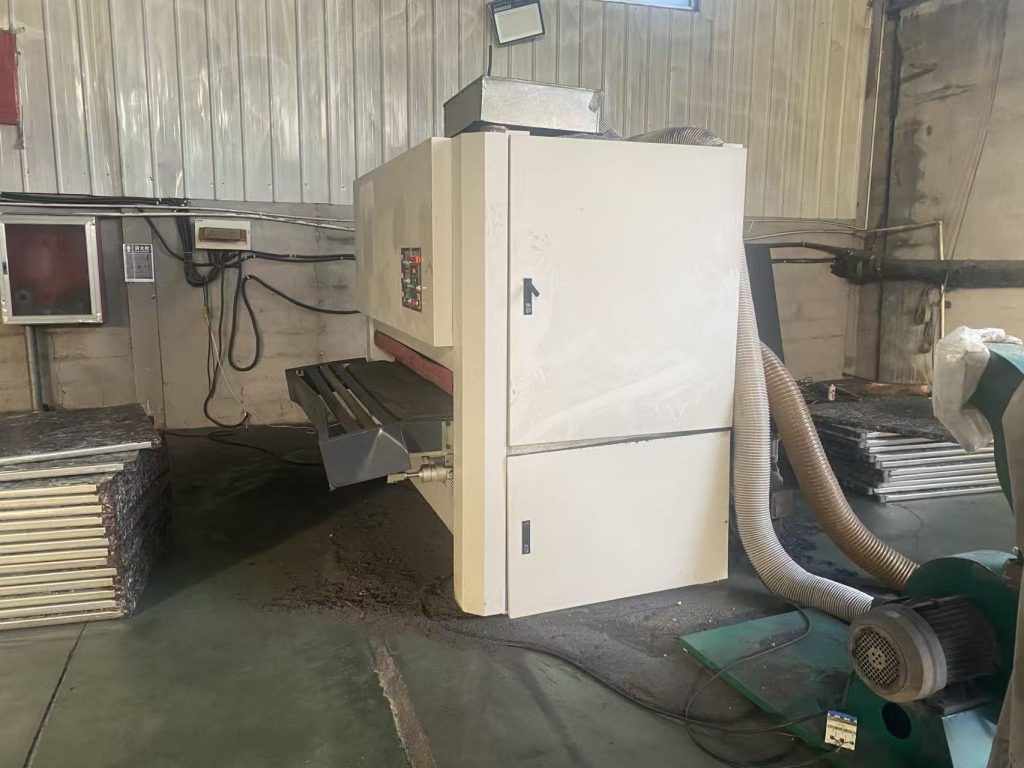
Temperature uniformity matters critically because polypropylene’s viscosity drops exponentially with temperature. If preheating creates hot and cold zones, the hot zones flow excessively while cold zones remain under-compacted—creating density variations that compromise structural performance.
Stage 3: Transfer and Mold Loading
Once preheating completes, operators have 15-25 seconds to transfer the heated charge into the preheated mold cavity before temperature drops below the processing window. 3000-ton GMT factories position preheating ovens directly adjacent to press stations.
The mold itself operates at 100-140°C, maintained by integrated heating circuits. Mold design incorporates venting channels allowing trapped air to escape during compression, textured surfaces creating non-slip patterns, and edge reinforcement channels where aluminum extrusions get integrated. Premium white GMT pallets demonstrate the surface quality achievable with precision-machined mold cavities.
Stage 4: High-Pressure Compression at 3000 Tons
Press closing initiates the critical compression phase. The 3000-ton hydraulic system applies force through matched steel platens measuring 900mm × 750mm, generating 7.0-8.5 MPa pressure uniformly across the mold cavity.
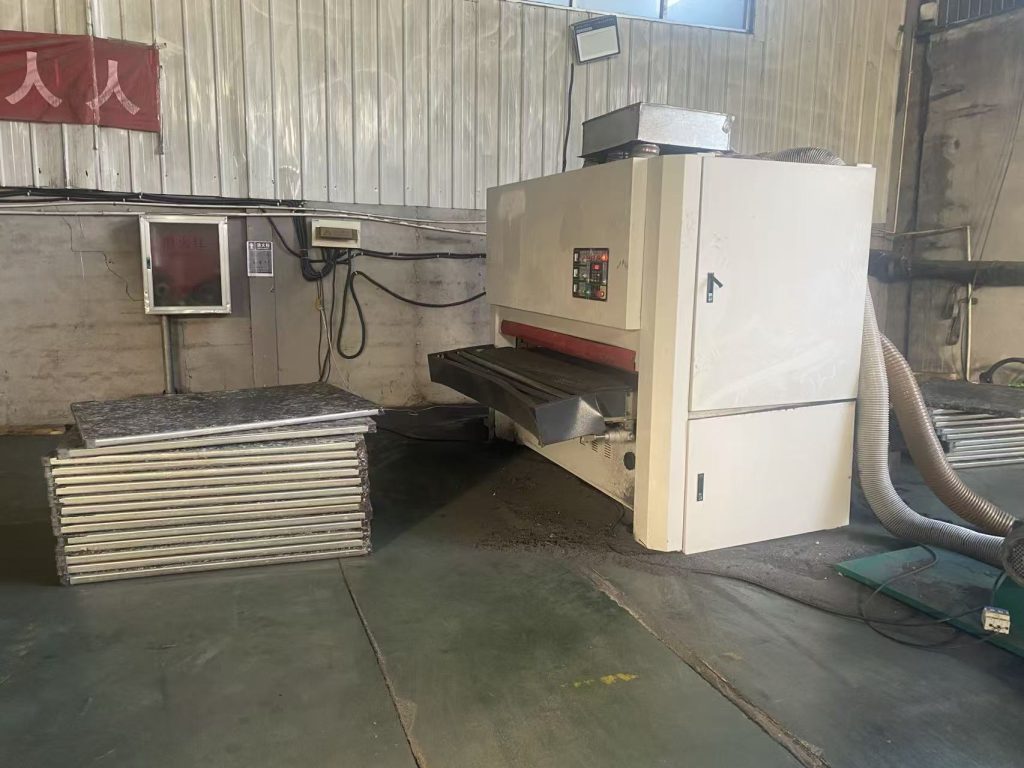
Once platens contact and cavity reaches final thickness of 18-25mm, the press maintains 3000 tons force for 45-75 seconds while material temperature remains above 160°C. This hold phase allows glass fibers to fully wet-out with polymer matrix, trapped air escapes through mold vents, and molecular chains rearrange to minimize internal stress.
For manufacturers producing different brick formats, half GMT pallets use identical compression parameters despite smaller dimensions, maintaining the same 1200 kg/m³ density.
Stage 5: Controlled Cooling and Demolding
After the compression hold phase, controlled cooling begins while maintaining full press tonnage. Mold temperature drops from 120-140°C to 60-80°C over 90-180 seconds through integrated cooling channels. This gradual cooling prevents thermal shock that creates internal stress and warping.
The cooling rate affects crystallinity development in the polypropylene matrix. Quality manufacturers target 2.5°C per minute cooling rates optimizing the crystallinity balance for brick production environments.
Press tonnage remains applied throughout cooling until mold temperature drops below 80°C—the threshold where polypropylene solidifies enough to maintain dimensional stability. Once cooling completes, hydraulic systems open the mold and ejection pins push the finished pallet free. The finished pallet emerges at 60-70°C, with final cooling to ambient temperature occurring on rack storage over 4-8 hours.
Material Science: What Happens During 3000-Ton Compression
Understanding fiber-matrix interaction during 3000-ton compression explains why pressure levels matter critically. Glass fibers provide structural reinforcement, but only when completely surrounded by polymer matrix without voids. At 3000 tons pressure, molten polypropylene flows into spaces between individual glass filaments (10-20 microns diameter), creating mechanical interlocking and chemical adhesion that transfers load from matrix to reinforcement.
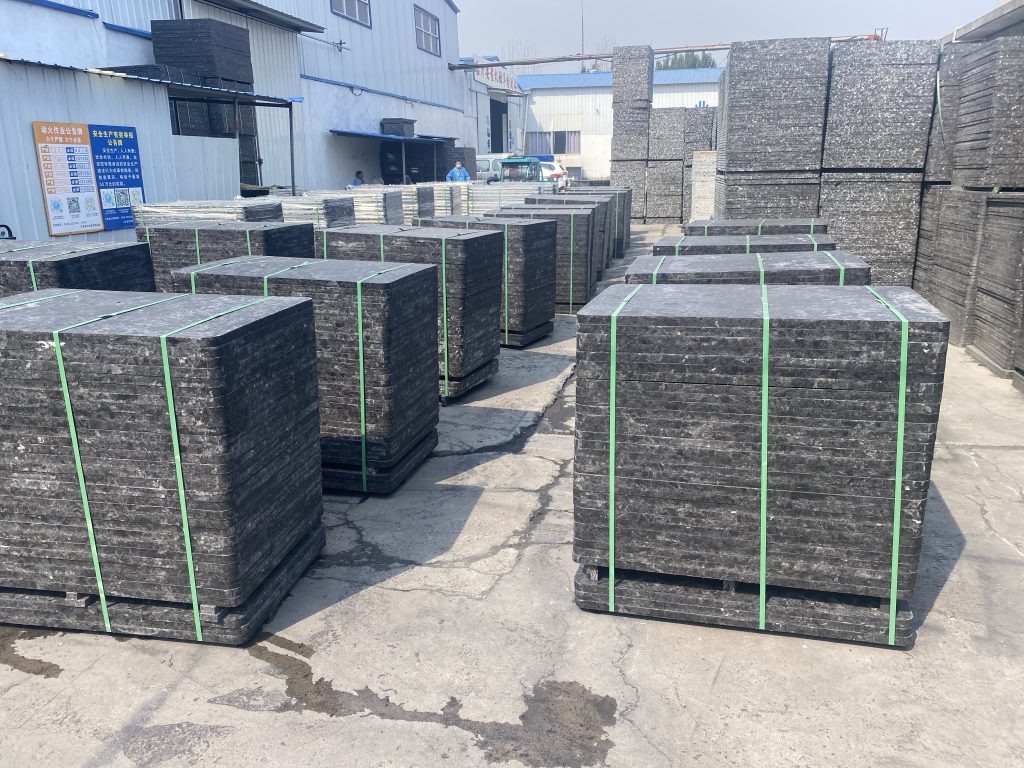
The glass fiber mat structure consists of continuous strands arranged in random orientation. During compression, the thermoplastic matrix flows around fiber bundles, and pressure determines how completely this infiltration occurs. At 3000 tons, resin pressure overcomes surface tension and forces polymer into fiber bundle interiors—achieving 95-98% fiber wet-out.
Lower pressure molding (800-1200 tons) achieves only 75-85% fiber wet-out, leaving dry fiber regions that act as stress concentrators. When pallets experience loading during brick production, these unwetted fiber zones cannot transfer stress effectively, creating localized failures that propagate into visible cracks.
Quality Control and Performance Verification
Premium GMT factories implement multiple inspection points throughout the production process. Raw material testing includes glass content verification (target 35-45% by weight), contamination screening, and moisture analysis. Deviations in glass content directly affect mechanical properties—2% variation can change load capacity by 150-200 kg.
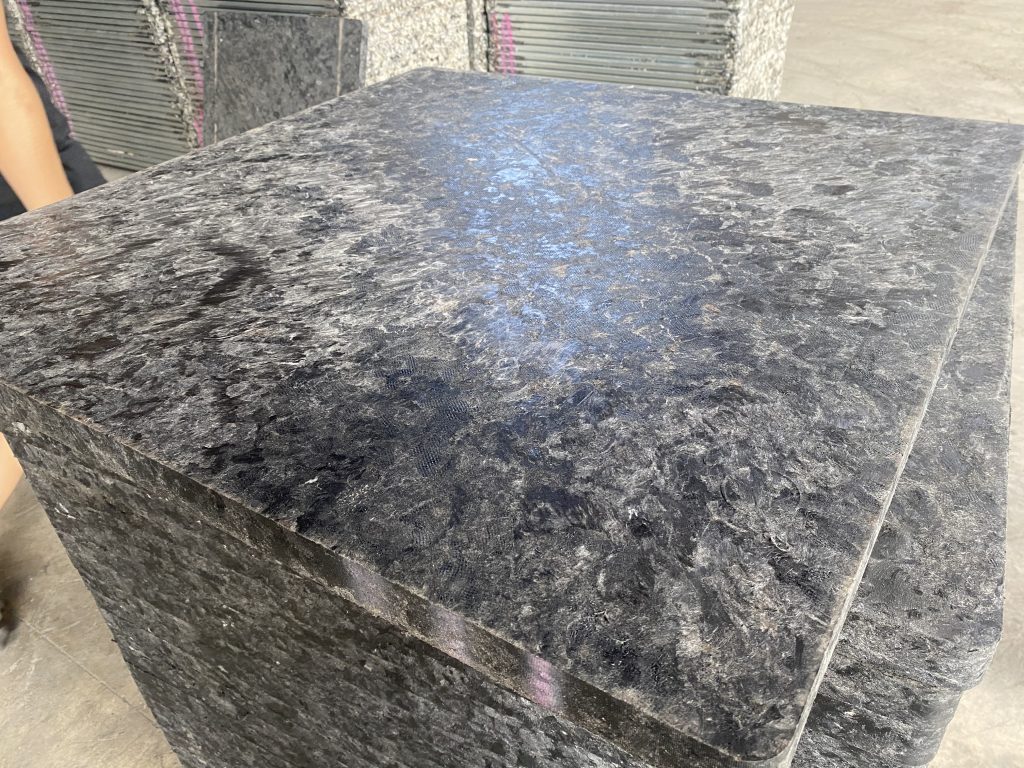
Post-molding inspection begins with dimensional verification checking thickness uniformity (±1mm tolerance), flatness (<2mm deviation across surface), and overall dimensions (±3mm tolerance). Density measurement confirms proper compression—finished pallets should measure 1180-1220 kg/m³. Lower density indicates incomplete compression or material contamination.
Mechanical testing on sample pallets includes static load capacity verification (target 3,500 kg without permanent deformation), impact resistance testing, and moisture absorption measurement (target <1% after 24-hour water immersion). Pure white GMT pallets particularly reveal manufacturing quality because virgin resin formulations show defects more clearly than recycled blends.
Comparing 3000-Ton vs Lower-Pressure Manufacturing
The performance difference between 3000-ton and 800-1200 ton pressed pallets becomes evident in demanding production environments. Real-world data from brick manufacturers operating both types reveals distinct failure patterns and service life differences.
| Manufacturing Factor | 3000-Ton Pressing | 800-1200 Ton Pressing | Performance Impact |
|---|---|---|---|
| Applied Pressure | 6.5-8.5 MPa | 2.5-4.0 MPa | 2-3× higher compaction force |
| Material Density | 1180-1220 kg/m³ | 950-1050 kg/m³ | 20-25% denser structure |
| Fiber Wet-Out | 95-98% | 75-85% | Complete vs partial impregnation |
| Void Content | <2% | 8-15% | 4-8× fewer structural defects |
| Load Capacity | 3,000-3,500 kg | 2,000-2,500 kg | 40-50% higher strength |
| Service Life | 10-12 years | 3-5 years | 3-4× longer operation |
| Dimensional Stability | ±2mm for life | ±4-8mm after 24 months | Maintains tolerances 4× better |
| Moisture Absorption | <0.8% | 1.5-3.0% | 2-4× better moisture resistance |
Cost analysis reveals that 3000-ton pressed pallets justify their 35-45% higher initial cost through extended service life. A 500-pallet facility over 10 years requires 1,500-2,000 lower-pressure pallets ($80,000-120,000) to match the performance of 500 premium 3000-ton pallets ($50,000-75,000). The equation reverses when replacement cycles and downtime costs factor into total ownership.
Automated production lines amplify these differences. Lower-density pallets develop dimensional variations within 18-24 months, triggering positioning errors on robotic handling systems. These errors cause line stoppages costing $150-400 per incident in lost throughput. Facilities report 4-9 stops per shift from pallet-related positioning errors when using lower-pressure pallets, versus <1 stop per week with 3000-ton pressed alternatives.
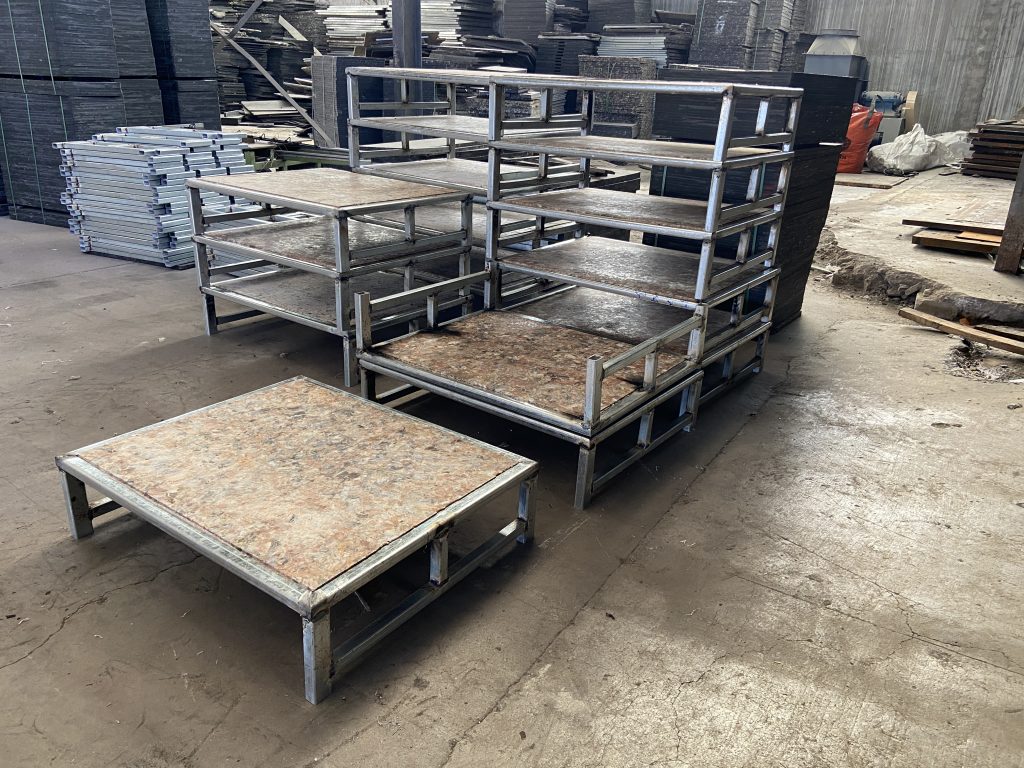
The moisture absorption difference matters critically in humid environments. Lower-density pallets absorb 2-3% moisture by weight in 75-95% RH conditions typical of curing areas, causing 3-6mm dimensional swelling. This swelling creates problems on automated lines where sensor systems flag dimensional deviations as safety issues. 3000-ton pressed pallets maintain <0.8% absorption—below the threshold causing measurable dimensional changes.
Factory Setup and Equipment Investment
Establishing a 3000-ton GMT pallet production facility requires $800,000-1,500,000 capital investment depending on automation level and capacity targets. The 3000-ton hydraulic press represents $350,000-550,000—the single largest equipment cost.
Supporting equipment adds substantial cost: infrared preheating ovens ($80,000-120,000), mold sets for different pallet sizes ($45,000-75,000 per mold), material preparation equipment ($60,000-95,000), and cooling water systems ($35,000-55,000).
Production capacity depends on cycle time and press utilization. A single 3000-ton press operating at 8-12 minute cycles produces 400-600 pallets per day running three shifts. Annual capacity reaches 120,000-180,000 pallets assuming 85% uptime.
Quality manufacturers maintain multiple mold sets enabling quick changeover between pallet sizes. High-quality GMT pallets in various dimensions serve different brick formats, requiring mold inventory representing $200,000-350,000 investment. This tooling investment creates market entry barriers protecting established manufacturers from low-cost competition.
Environmental and Sustainability Considerations
3000-ton compression molding enables economically viable recycling of automotive interior materials that would otherwise reach landfills. End-of-life vehicle dismantlers separate PP-based components (headliners, door panels, dashboard covers) which become GMT pallet feedstock. This material stream diverts 15,000-25,000 tons annually from waste disposal.
The thermoplastic nature of GMT pallets enables material recovery at end-of-life. Unlike thermoset composites that cannot remelt, GMT pallets can be shredded and reprocessed into new products after 10-12 years of service. This closed-loop recyclability appeals to manufacturers targeting sustainability certifications.
Material density from 3000-ton pressing reduces transportation environmental impact. Higher density pallets require 20-25% less shipping volume per functional unit compared to lower-density alternatives, reducing freight emissions. A truckload carrying 400 premium pallets provides equivalent service to 1,200-1,600 lower-quality pallets requiring three truckloads.
Frequently Asked Questions
Why does 3000 tons specifically matter versus 2000 or 2500 tons?
The 3000-ton threshold relates to the pressure required across standard pallet surface area (850mm × 680mm = 0.578 m²) to achieve 6.5+ MPa compression pressure. This pressure level ensures complete fiber wet-out and void elimination in glass mat thermoplastic composites. Lower tonnage presses cannot generate sufficient pressure across this surface area to achieve 1200 kg/m³ density and complete fiber impregnation. Smaller specialty pallets could achieve equivalent results with lower absolute tonnage, but industry-standard brick pallet dimensions require 3000+ tons for optimal properties.
Can factories upgrade 1500-ton presses to achieve similar results?
No—press tonnage represents the maximum hydraulic force the frame structure can withstand safely. Increasing pressure in an 1500-ton rated press beyond design limits risks catastrophic structural failure. The frame, platens, and hydraulic cylinders must be engineered for 3000-ton loads from initial design. Attempting pressure upgrades on lower-rated equipment creates severe safety hazards and violates pressure vessel regulations in most jurisdictions.
How do you verify a pallet was actually pressed at 3000 tons?
Density measurement provides reliable verification—finished pallets from 3000-ton presses measure 1180-1220 kg/m³. Lower-pressure pallets rarely exceed 1050 kg/m³. Premium pallets show <2% void content with complete polymer infiltration. Dimensional stability testing under load also differentiates quality—3000-ton pallets maintain dimensions under 3,500 kg loads while lower-pressure alternatives deform.
Do 3000-ton pressed pallets work with all brick machine types?
Yes—dimensional specifications remain compatible with standard brick machine pallet interfaces. The 3000-ton process affects internal material properties (density, strength, moisture resistance) rather than external dimensions. Fiber brick pallets pressed at 3000 tons fit identical machines as lower-quality alternatives while delivering superior performance.
How long does the compression cycle take?
Total cycle time runs 8-12 minutes including preheating (8-12 min), transfer (30-45 sec), compression and hold (1.5-2.5 min), cooling under pressure (2-3 min), and demolding (30-45 sec). The high-pressure compression phase lasts 45-75 seconds, but material must remain under tonnage through cooling to prevent warping.
Conclusion
3000-ton compression molding separates premium GMT brick pallets from economy alternatives. The high pressure creates 1200 kg/m³ density, complete fiber-matrix integration, and <2% void content enabling 10-12 year service life.
The five-stage process—raw material preparation, preheating to 200-220°C, rapid mold loading, 45-75 second compression at 6.5-8.5 MPa, and controlled cooling—directly determines performance. Lower pressure, faster cycles, or inadequate quality control produce pallets failing within 3-5 years despite similar appearance.
For brick manufacturers evaluating suppliers, request density verification (target 1180-1220 kg/m³), examine factory press ratings, and review third-party test results. The 35-45% price premium for authentic 3000-ton pallets delivers 3-4× longer service life and reduced total ownership costs.
Rhinos Pallet manufactures GMT brick pallets using 3000-ton compression molding, maintaining the quality standards detailed in this guide. Our pallets serve brick manufacturers across 40+ countries, delivering 10+ year performance that transforms pallet selection from recurring expense to long-term asset.