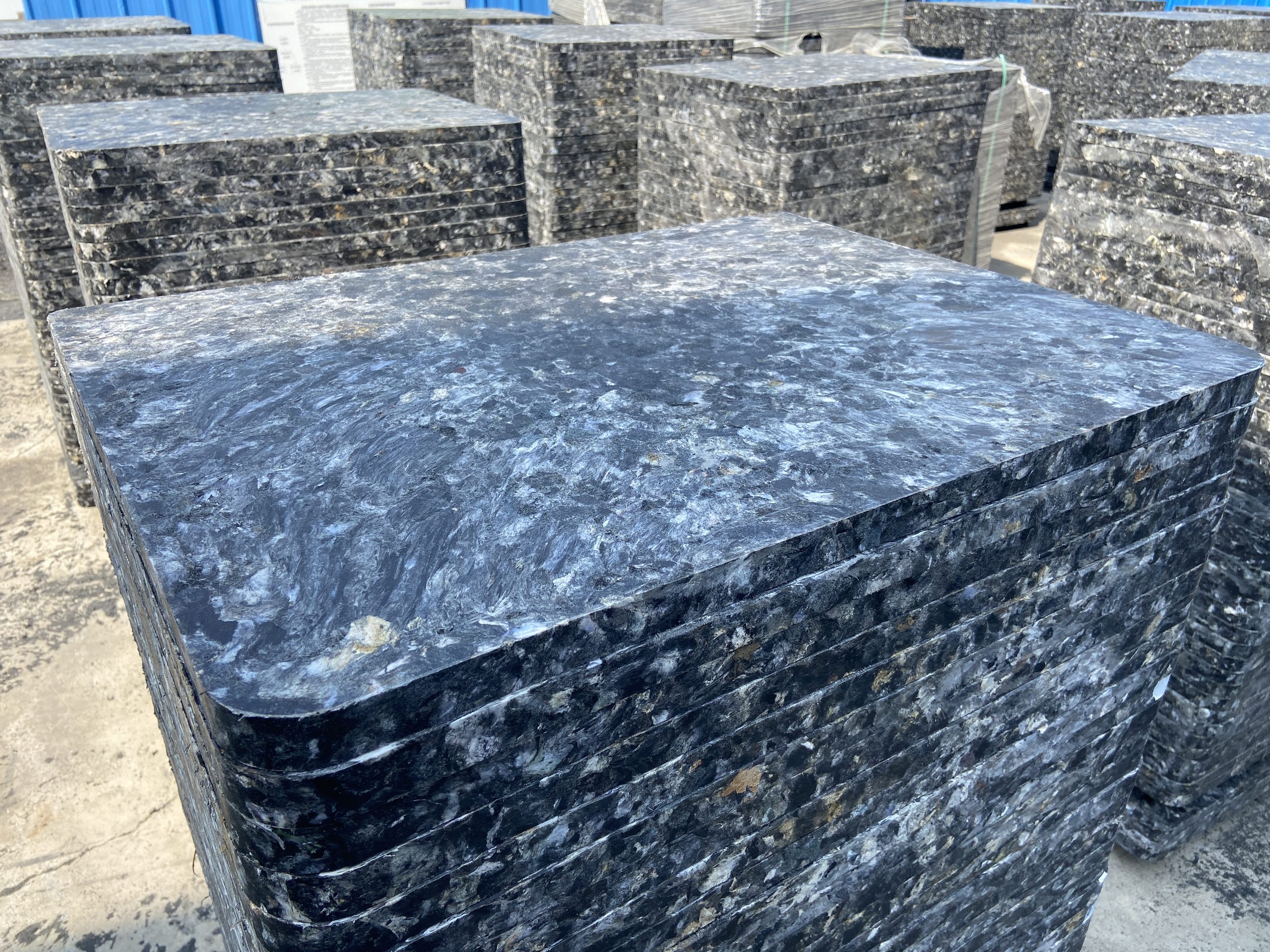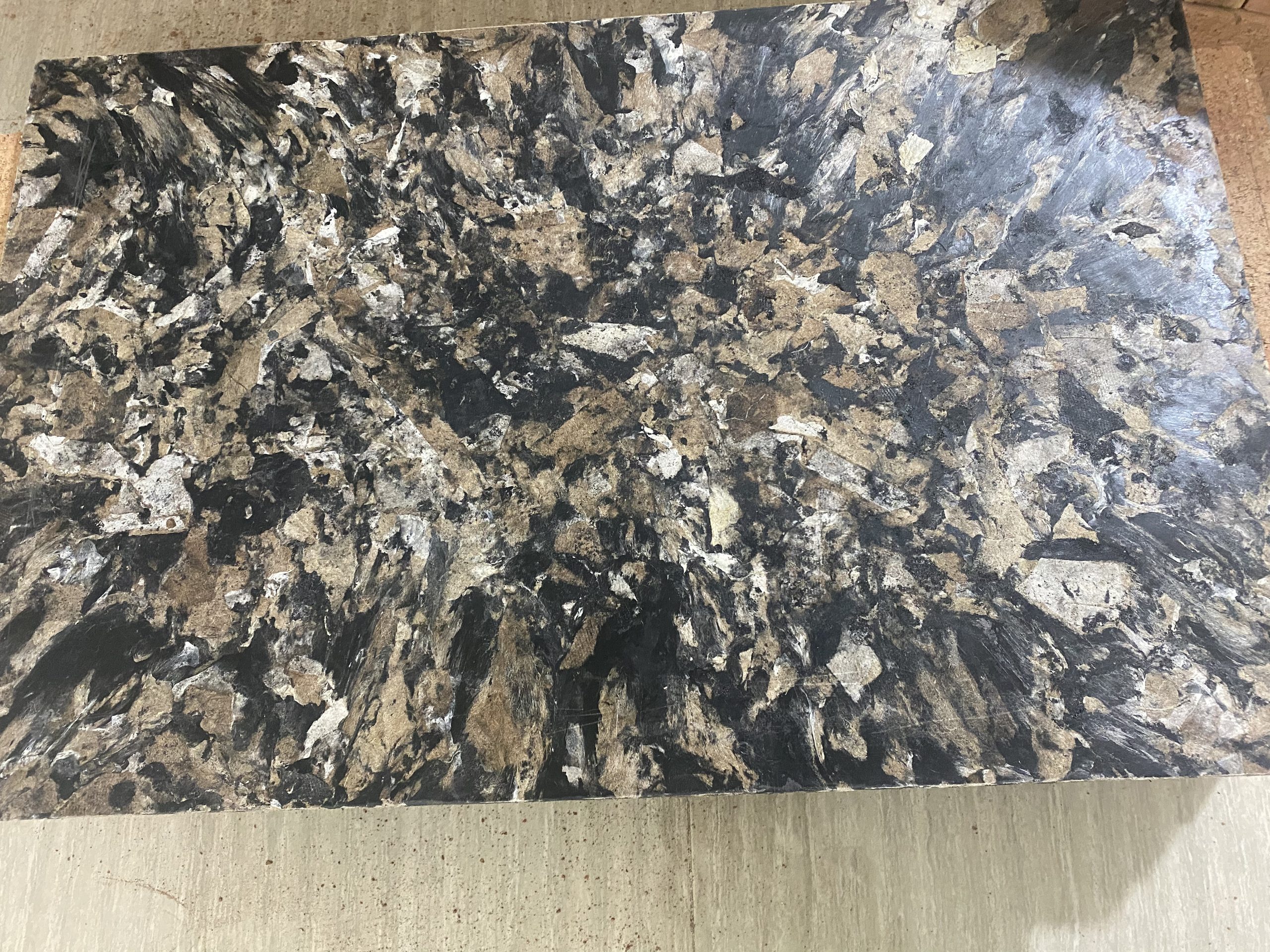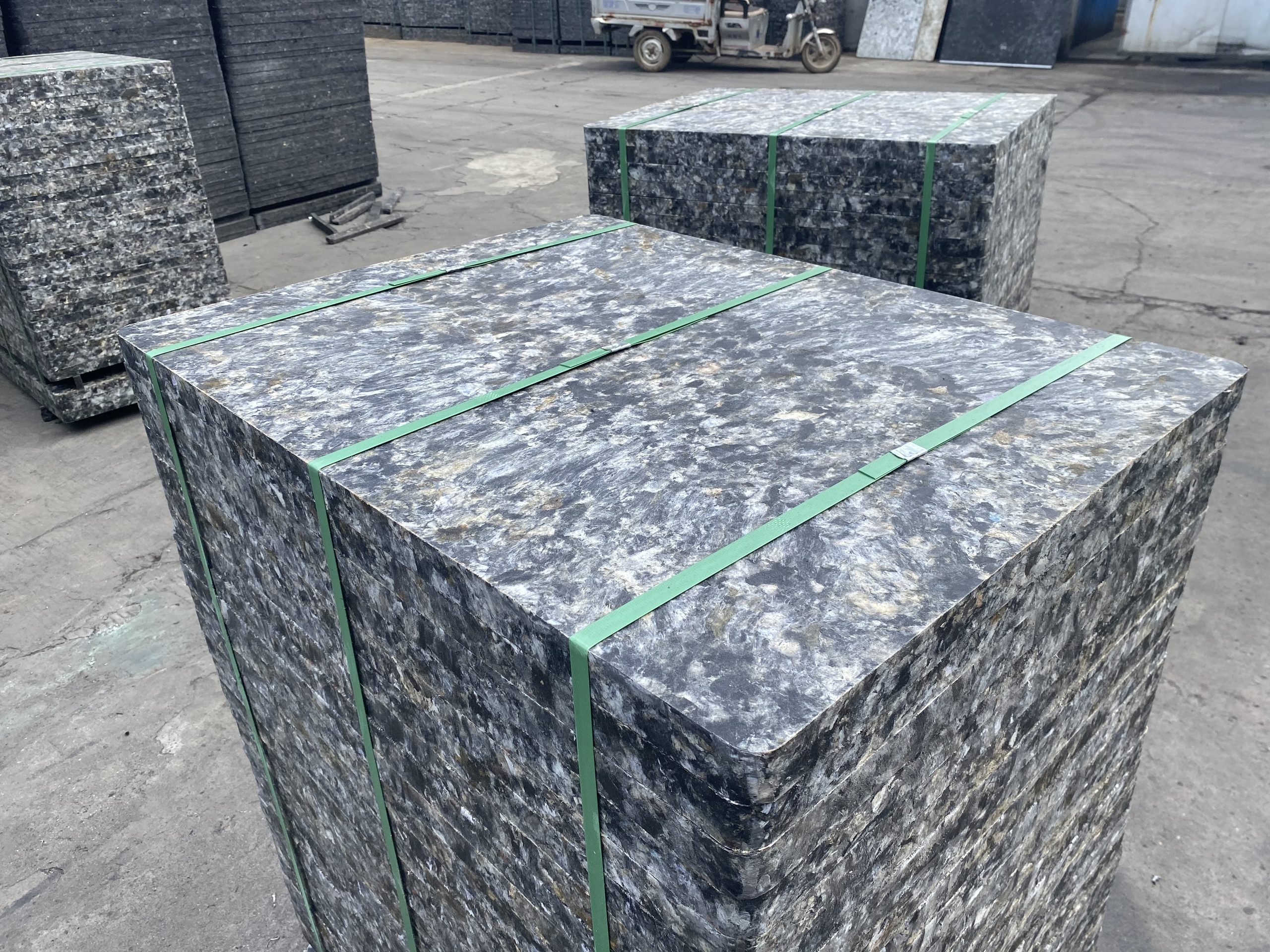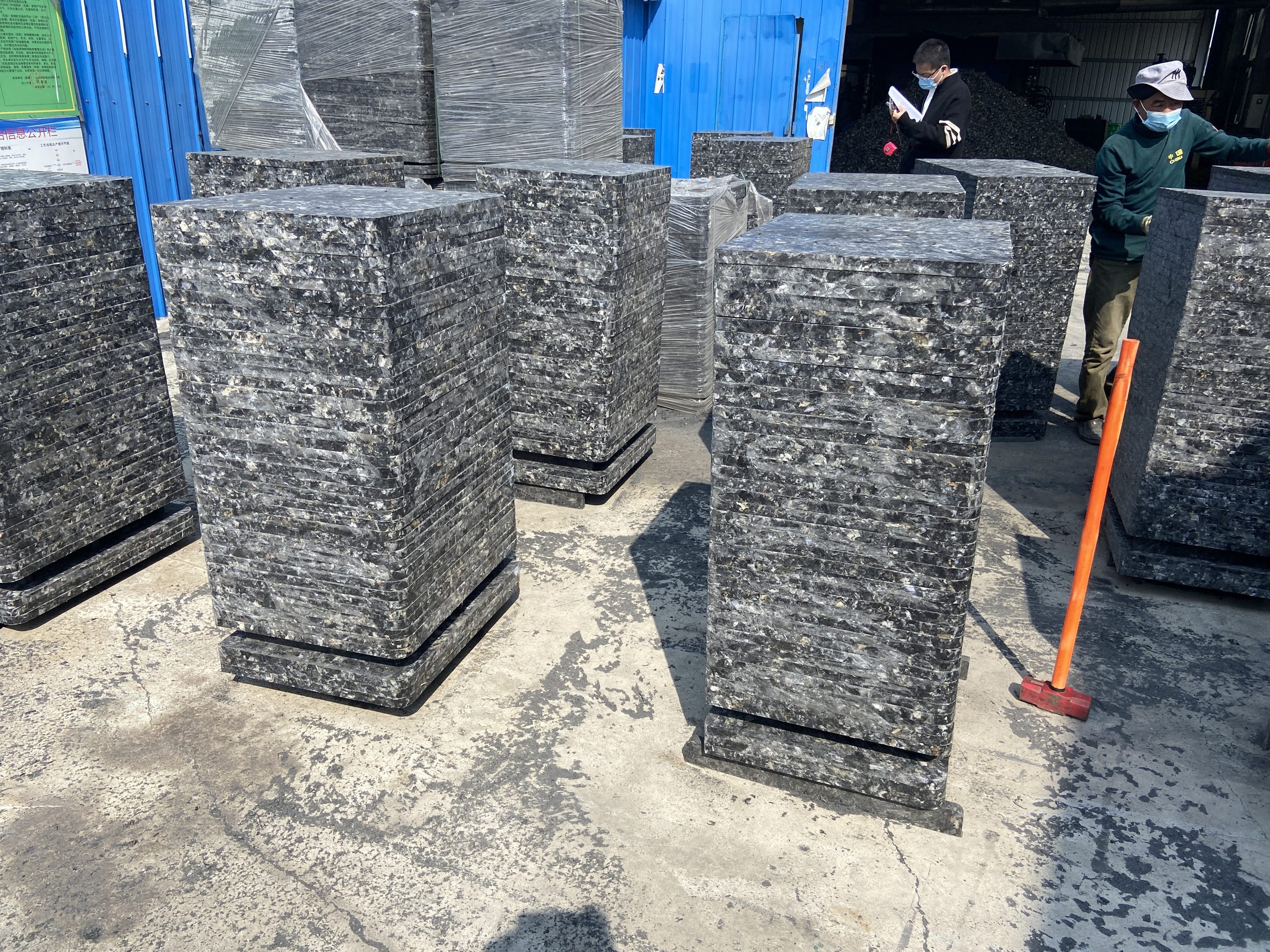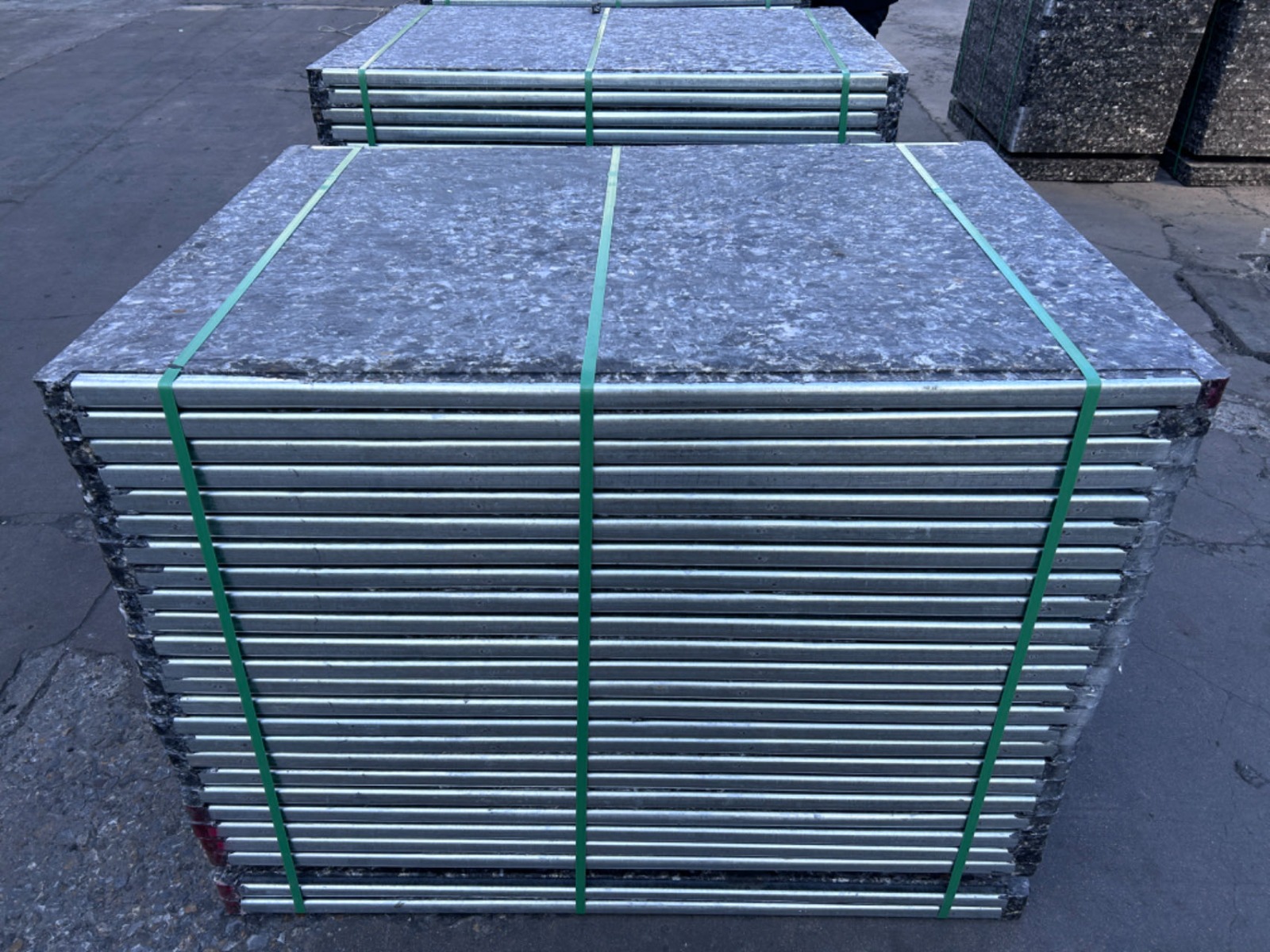
Block manufacturers handling 800-1,200 pallets daily face a hidden productivity drain—pallet weight. When your crew moves 30-50 pallets per hour across production floors, kiln loading zones, and storage yards, each kilogram of unnecessary pallet weight multiplies into measurable fatigue, slower handling speeds, and higher labor costs. GMT pallets solve this through engineered density optimization: 1,100-1,200 kg/m³ material density creates pallets 30% lighter than PVC alternatives while maintaining equivalent load capacity of 2,500-3,500 kg.
The density advantage delivers operational benefits beyond just lighter handling. Lower material density means GMT pallets require less raw material per unit, reducing shipping costs by 25-35% when ordering bulk quantities. Production facilities in Southeast Asia and Africa—where freight costs significantly impact total landed costs—report freight savings of $8,000-15,000 annually when switching from heavier pallet types to GMT alternatives.
What Makes GMT Pallets Lightweight: Material Density Explained
GMT (Glass Mat Thermoplastic) achieves its lightweight characteristics through controlled material composition. The base material consists of polypropylene resin matrix reinforced with continuous glass fiber mats, creating a composite density of 1,100-1,200 kg/m³. This density sits strategically between pure polypropylene (900 kg/m³) and pure PVC (1,380-1,450 kg/m³), balancing weight reduction with structural performance.
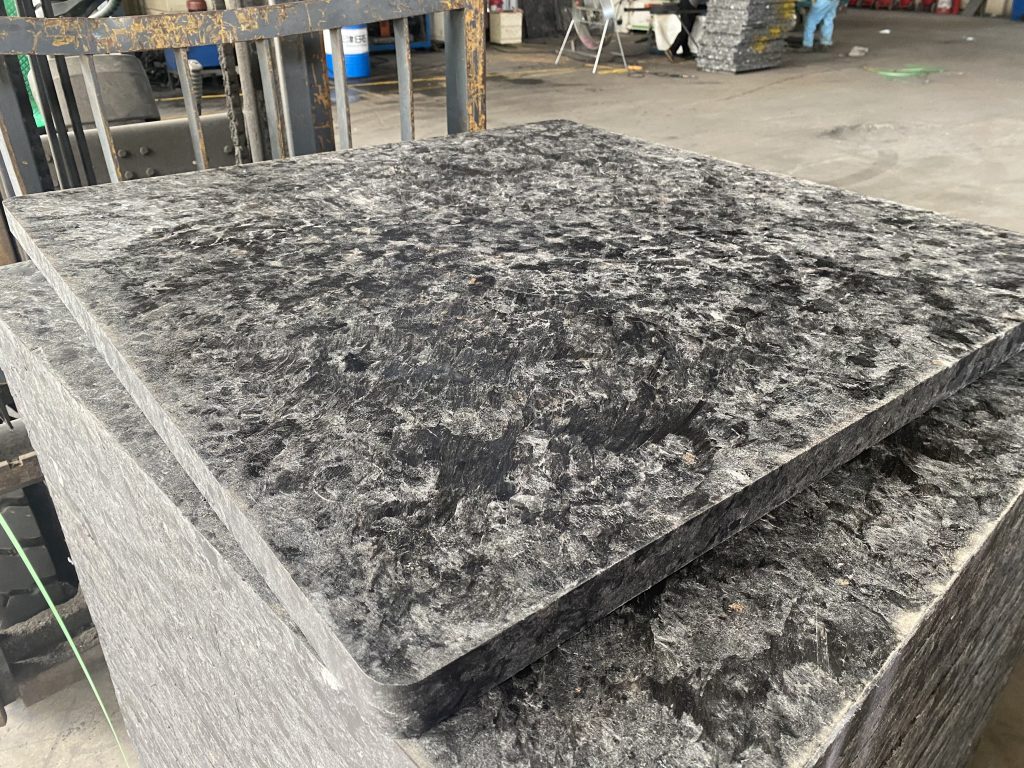
Here’s how density translates to actual pallet weight: A standard 850mm × 680mm × 20mm GMT pallet weighs approximately 10-13 kg, while an equivalent PVC pallet weighs 14-18 kg, and a wood pallet ranges from 15-22 kg depending on moisture content. The 30-40% weight reduction versus PVC and 20-35% reduction versus wood compounds across daily handling operations.
The glass fiber content (typically 30-40% by weight) provides the structural backbone without adding excessive density. Unlike mineral-filled composites that increase density to 1,400-1,600 kg/m³, GMT maintains lower density through strategic fiber placement—continuous strand mats positioned in load-bearing planes where strength matters most.
Material science demonstrates why this density range works: Below 1,000 kg/m³, pallets lack sufficient rigidity for 2,500+ kg loads. Above 1,300 kg/m³, weight increases without proportional strength gains. The 1,100-1,200 kg/m³ range hits the performance sweet spot for concrete block applications.
Lightweight vs Load Capacity: Performance Comparison
Block manufacturers often question whether lighter pallets compromise load-bearing capacity. Performance data shows GMT pallets deliver superior strength-to-weight ratios compared to heavier alternatives.
| Pallet Type | Material Density | Pallet Weight (850×680mm) | Load Capacity | Strength-to-Weight Ratio | Deflection Under Load |
|---|---|---|---|---|---|
| GMT Pallet | 1,100-1,200 kg/m³ | 10-13 kg | 2,500-3,500 kg | 192-350:1 | Minimal (<2mm) |
| PVC Pallet | 1,380-1,450 kg/m³ | 14-18 kg | 2,500-3,000 kg | 139-214:1 | Minimal (<2mm) |
| Wood Pallet | Variable (moisture) | 15-22 kg | 1,500-2,500 kg | 68-167:1 | Moderate (4-8mm) |
| Bamboo Composite | 1,200-1,300 kg/m³ | 13-16 kg | 2,000-2,800 kg | 125-215:1 | Low-Moderate (2-4mm) |
The strength-to-weight ratio reveals GMT’s engineering efficiency. A 12 kg GMT pallet supporting 3,000 kg loads achieves a 250:1 ratio—meaning the pallet supports 250 times its own weight. PVC pallets achieve 167-214:1, while wood pallets typically manage only 68-167:1 due to moisture absorption and structural deterioration.
Glass fiber reinforcement explains this performance. The continuous strand mats distribute loads across the entire pallet surface, preventing stress concentration that causes failure in homogeneous materials. This fiber architecture maintains structural integrity while using less material volume than solid PVC or densified composites.
Load deflection measurements confirm real-world performance: GMT pallets deflect less than 2mm under 3,000 kg loads, matching PVC performance while weighing 30% less. Wood pallets deflect 4-8mm under equivalent loads, creating instability during stacking and transport.
Handling Efficiency: How Weight Reduction Improves Daily Operations
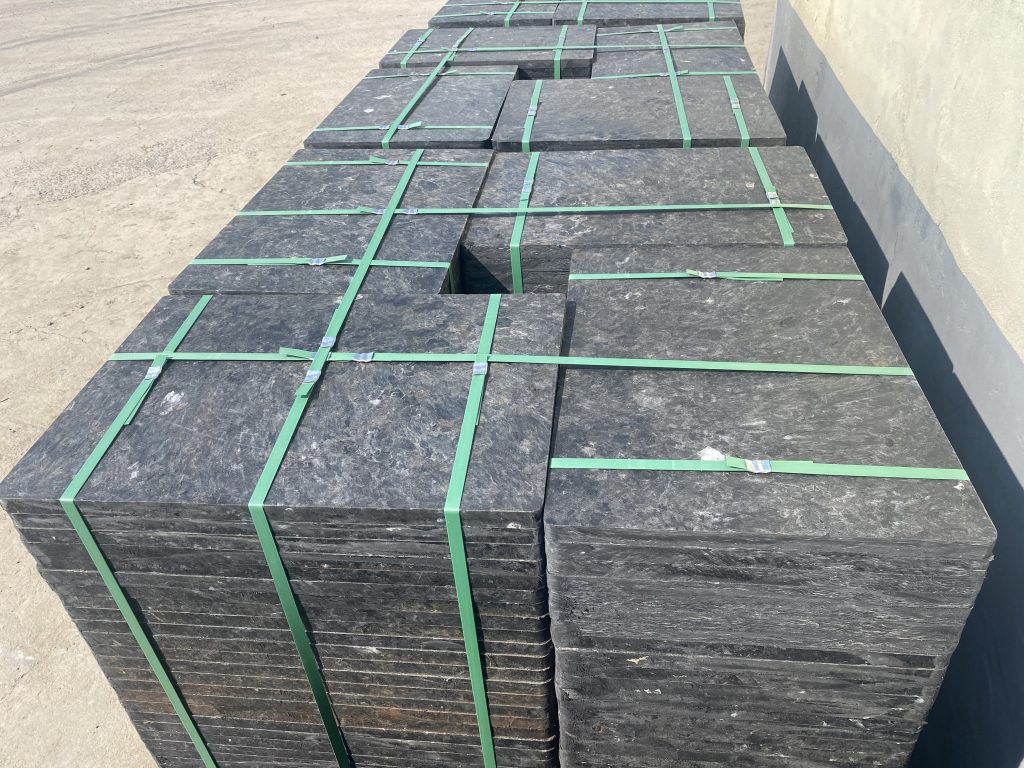
The 30-40% weight reduction translates directly to measurable productivity improvements across three critical handling scenarios: manual pallet positioning, forklift operations, and automated handling systems.
Manual Handling Operations
Production workers positioning pallets manually move 30-50 units per hour during setup and changeover operations. A 4-5 kg weight difference per pallet compounds to 120-250 kg less weight moved hourly. Over an 8-hour shift, workers handle 960-2,000 kg less total weight with GMT pallets versus PVC alternatives.
Ergonomic studies demonstrate fatigue reduction correlates with handled weight. Workers moving GMT pallets report 25-30% less perceived exertion versus PVC pallets during extended shifts. This fatigue reduction improves safety metrics—facilities switching to GMT pallets document 15-20% fewer handling-related injury reports over 12-month periods.
The weight difference matters most during repetitive operations. Loading kiln carts with 40-60 pallets requires workers to lift and position each unit multiple times. The cumulative weight savings of 160-300 kg per cart loading operation significantly reduces physical strain.
Forklift and Material Handling Equipment
Lighter pallets reduce forklift cycle times by 8-12% through faster acceleration and deceleration. This matters critically in high-volume operations moving 800-1,200 pallets daily. The time savings accumulate to 45-75 minutes of additional productive handling capacity per shift.
Fuel consumption decreases proportionally with handled weight. Block facilities operating 3-5 forklifts report diesel savings of 12-18% when switching from wood or PVC pallets to GMT alternatives. Annual fuel cost reductions range from $3,500-8,000 for medium-volume operations.
Equipment wear reduction extends maintenance intervals. Lighter pallets reduce stress on forklift hydraulics, tires, and transmission systems. Maintenance managers report 15-20% longer intervals between major service events, reducing annual maintenance budgets by $2,000-4,500 per forklift.
Automated Handling Systems
Robotic pallet handling systems programmed for specific weight parameters operate more efficiently with consistent lightweight pallets. GMT’s controlled density (1,100-1,200 kg/m³) ensures weight variation stays within ±0.5 kg across production batches, enabling precise robotic programming.
Conveyor systems benefit from reduced motor loads. Production lines equipped with roller conveyors, chain conveyors, and automated transfer systems consume 8-12% less electricity when handling GMT pallets versus heavier alternatives. For facilities running automated lines 18-22 hours daily, this translates to $4,000-9,000 annual electricity savings.
Positioning accuracy improves with lighter pallets. Robotic handlers accelerating and decelerating lighter loads achieve ±1mm positioning accuracy versus ±2-3mm with heavier pallets. This precision reduces block damage during automated stacking operations.
Shipping and Logistics Cost Advantages
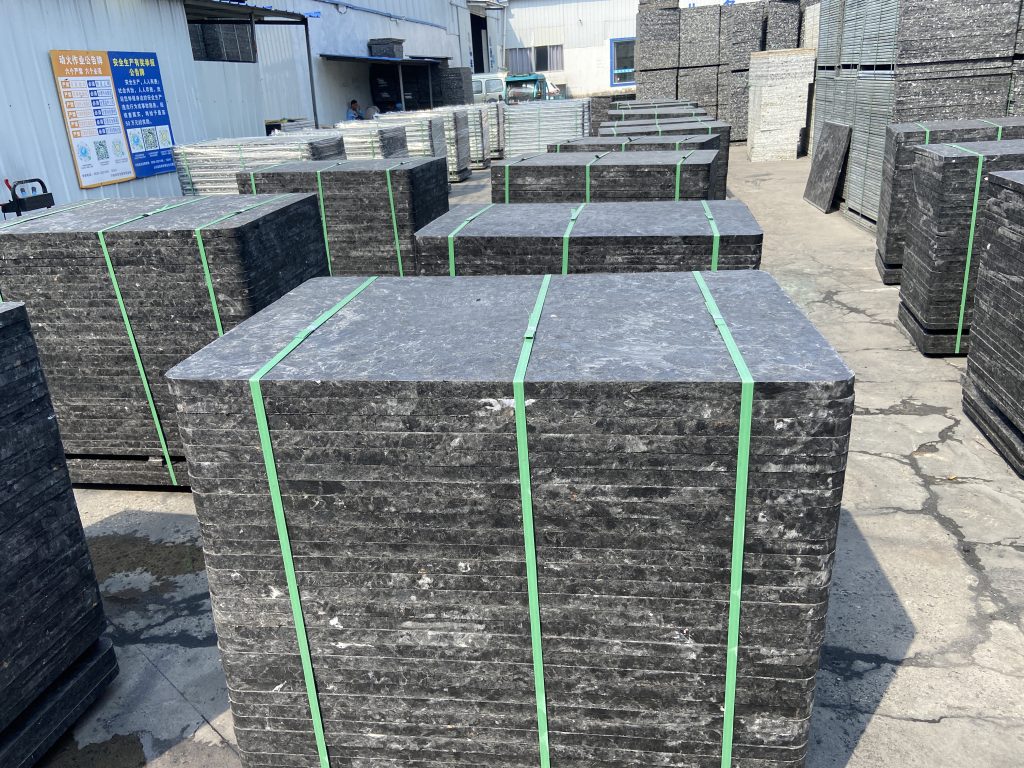
Material density directly impacts freight costs when ordering pallet inventory. GMT’s 1,100-1,200 kg/m³ density reduces shipping weight by 25-35% versus PVC pallets, creating substantial savings for bulk orders.
| Order Quantity | GMT Pallet Weight | PVC Pallet Weight | Wood Pallet Weight | Weight Savings vs PVC | Freight Cost Reduction |
|---|---|---|---|---|---|
| 100 pallets | 1,000-1,300 kg | 1,400-1,800 kg | 1,500-2,200 kg | 400-500 kg (28-36%) | $120-280 |
| 500 pallets | 5,000-6,500 kg | 7,000-9,000 kg | 7,500-11,000 kg | 2,000-2,500 kg (28-36%) | $600-1,400 |
| 1,000 pallets | 10,000-13,000 kg | 14,000-18,000 kg | 15,000-22,000 kg | 4,000-5,000 kg (28-36%) | $1,200-2,800 |
International shipping costs compound weight savings. Block manufacturers in Africa, South America, and Southeast Asia importing container loads of pallets report freight savings of $2,500-6,000 per 40-foot container when switching from PVC to GMT pallets. These savings recur with each inventory replenishment order.
Container utilization improves with lighter pallets. Standard shipping containers have weight limits of 28,000-30,000 kg depending on jurisdiction. Lighter GMT pallets allow fitting more units per container before reaching weight limits—typically 15-20% more pallets per shipment versus PVC alternatives.
Customs and duties calculated on weight basis further amplify savings. Countries charging import duties based on gross weight see 25-35% lower duty assessments for GMT pallet shipments versus equivalent PVC volumes.
Density Engineering: How GMT Achieves Optimal Weight-to-Strength Balance
The 1,100-1,200 kg/m³ density results from deliberate material engineering rather than incidental composition. GMT manufacturers control three variables to optimize density: resin selection, fiber content percentage, and manufacturing pressure.
Resin Matrix Selection
Polypropylene serves as the primary resin matrix due to its favorable density (900 kg/m³) combined with excellent impact strength and chemical resistance. Alternative thermoplastics like PVC (1,380 kg/m³) or polyamide (1,140 kg/m³) increase density without proportional performance gains for block pallet applications.
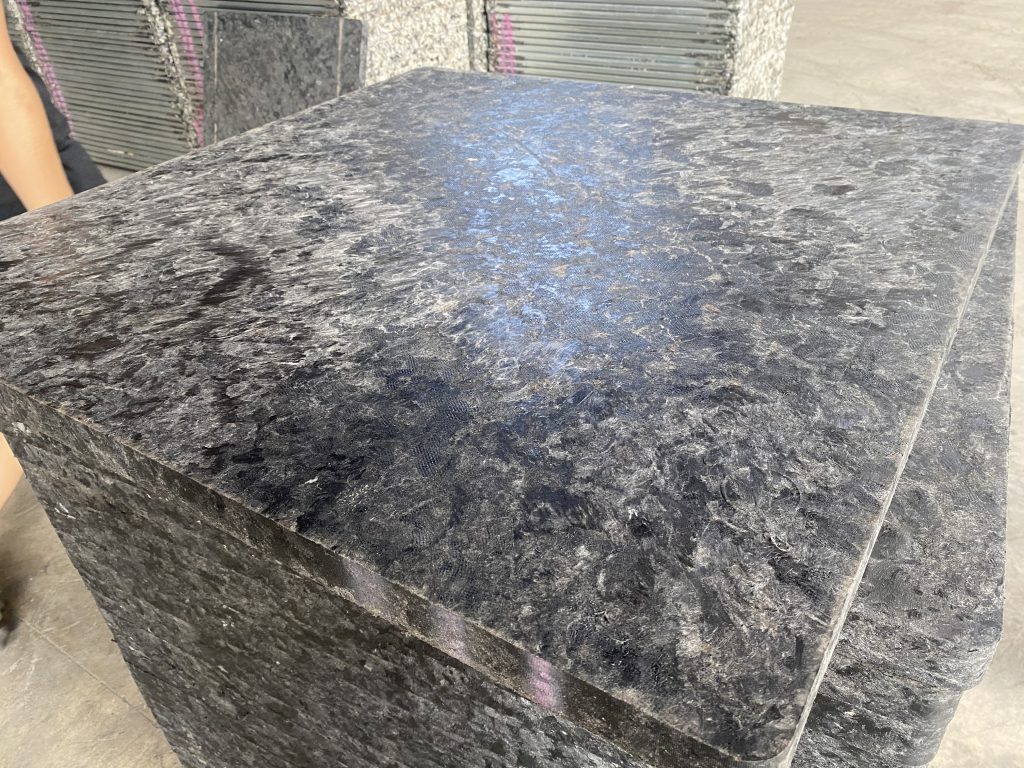
Modified polypropylene formulations incorporate impact modifiers maintaining toughness across temperature ranges (-40°C to +90°C) without density penalties. These additives typically comprise 5-8% of total composition, increasing density minimally (20-40 kg/m³) while significantly enhancing cold-temperature impact resistance.
UV stabilizers and colorants add negligible density—less than 10 kg/m³ total—while extending outdoor storage life from 3-5 years to 8-10+ years. The density cost of these additives is minimal compared to their functional benefits.
Glass Fiber Content Optimization
Glass fiber reinforcement (density 2,540 kg/m³) increases overall composite density but provides disproportionate strength gains. The optimal fiber content range of 30-40% by weight balances density, strength, and manufacturing processability.
Below 30% fiber content, pallets lack rigidity for 2,500+ kg loads and deflect excessively. Above 40% fiber content, density increases above 1,250 kg/m³ while resin flow during molding becomes difficult, creating inconsistent material distribution and potential weak spots.
Continuous strand mat configuration distributes fibers efficiently. Unlike chopped fiber reinforcement requiring 45-50% content to achieve equivalent strength, continuous mats achieve superior mechanical properties at 30-40% content, keeping density lower.
Manufacturing Pressure Control
Compression molding pressure (50-100 bar at 180-220°C) compacts material to final density. Higher pressures create denser pallets with better surface finish but increase weight. Lower pressures reduce density but may compromise dimensional tolerances.
Production facilities optimize pressure profiles based on application requirements. Standard GMT pallets for manual/semi-automated operations use 50-70 bar pressure achieving 1,100-1,150 kg/m³ density. Premium pallets for high-precision automated systems use 70-100 bar pressure achieving 1,150-1,200 kg/m³ density with tighter dimensional tolerances.
The pressure-density relationship allows manufacturers to tune pallet properties. Facilities prioritizing minimum weight specify lower-pressure molding for 1,100 kg/m³ density. Operations requiring maximum dimensional stability specify higher-pressure molding for 1,180-1,200 kg/m³ density.
Real-World Performance: Case Studies and Data
Block manufacturing facilities across different production scales document measurable benefits from GMT pallet weight reduction. Three representative cases demonstrate operational improvements.
Case 1: High-Volume Automated Facility (Southeast Asia)
A fully automated block plant producing 180,000 units daily replaced 1,200 PVC pallets (16 kg each) with GMT pallets (11 kg each). The 5 kg weight reduction per pallet created multiple compound benefits:
- Handling productivity: Robotic pallet handlers increased throughput by 11% due to faster acceleration/deceleration cycles with lighter pallets
- Energy consumption: Conveyor systems reduced electricity consumption by 14%, saving $8,400 annually
- Equipment maintenance: Reduced mechanical stress extended conveyor motor life by 18 months, deferring $12,000 replacement costs
- Freight savings: Initial pallet purchase shipping costs were $4,200 lower than equivalent PVC order
Total first-year operational savings exceeded $28,000, with ongoing annual savings of $12,000-15,000 from energy and maintenance reductions.
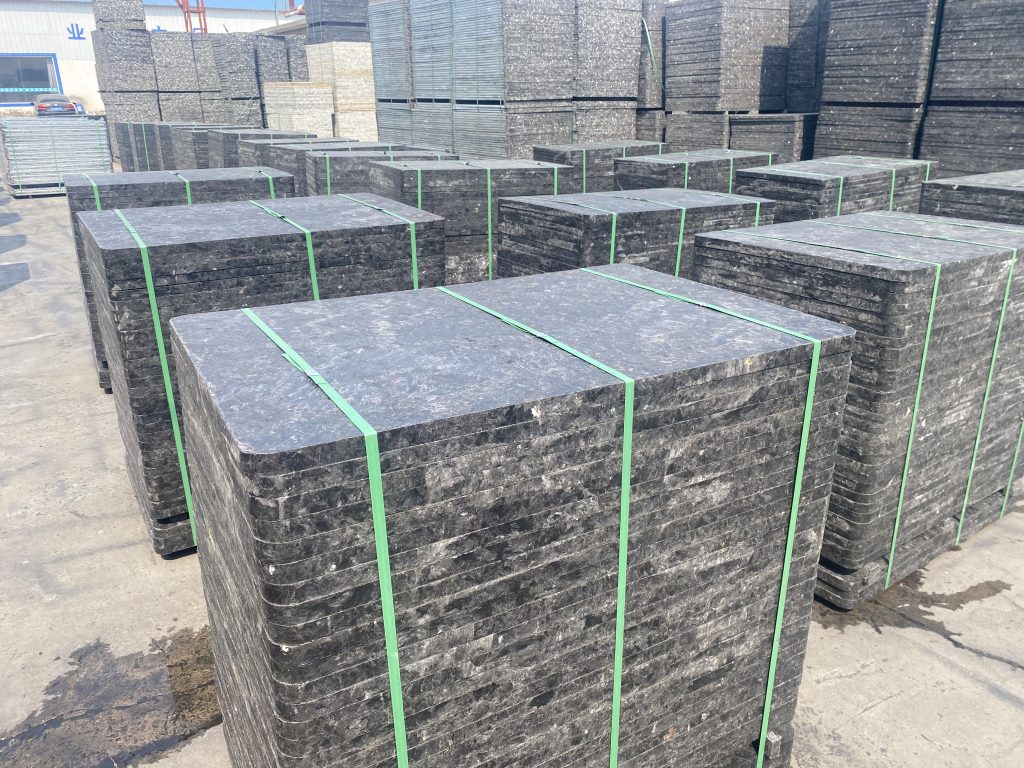
Case 2: Medium-Volume Manual Operation (East Africa)
A semi-automated facility producing 45,000 blocks daily employing 12 workers for pallet handling replaced 400 wood pallets (18 kg average with moisture) with GMT pallets (12 kg each). Worker productivity and safety metrics improved significantly:
- Handling capacity: Workers positioned 42 pallets per hour versus 35 previously (20% productivity gain)
- Fatigue reduction: End-of-shift worker surveys showed 35% reduction in reported physical fatigue
- Injury reduction: Handling-related injury reports decreased from 8 incidents per year to 2 incidents
- Freight costs: Container shipping from China cost $3,100 less than equivalent wood pallet volume due to weight savings
The facility calculated total first-year benefits of $18,500 including reduced injury costs, productivity gains, and freight savings.
Case 3: Small-Scale Producer (South America)
A 200-pallet operation producing 8,000 blocks daily replaced mixed wood pallets (15-22 kg variable weight) with standardized GMT pallets (11 kg). The consistent lightweight pallets enabled efficiency improvements:
- Forklift efficiency: Single forklift operator increased daily pallet moves from 650 to 780 (20% capacity gain)
- Fuel savings: Diesel consumption decreased 16%, saving $2,800 annually
- Labor optimization: Reduced handling time allowed reallocation of 0.5 FTE to production operations
- Quality improvement: Consistent pallet weight enabled predictable kiln loading, reducing uneven curing by 40%
Combined benefits delivered $14,200 first-year value for a small-scale operation.
GMT vs PVC vs Wood: Complete Density and Weight Comparison
Understanding how different pallet materials compare on density, weight, and functional performance helps manufacturers make informed selection decisions.
| Performance Factor | GMT Pallet | PVC Pallet | Wood Pallet | Key Advantage |
|---|---|---|---|---|
| Material Density | 1,100-1,200 kg/m³ | 1,380-1,450 kg/m³ | 550-850 kg/m³ (dry) | GMT: Optimal balance |
| Pallet Weight (850×680mm) | 10-13 kg | 14-18 kg | 15-22 kg (varies with moisture) | GMT: Lightest |
| Load Capacity | 2,500-3,500 kg | 2,500-3,000 kg | 1,500-2,500 kg | GMT: Highest capacity |
| Strength-to-Weight Ratio | 192-350:1 | 139-214:1 | 68-167:1 | GMT: Best ratio |
| Weight Consistency | ±0.5 kg | ±0.8 kg | ±3-8 kg (moisture variation) | GMT: Most consistent |
| Moisture Absorption | <1% | <0.5% | 15-20% | GMT/PVC: Stable |
| Handling Ergonomics | Excellent (lightweight) | Moderate (heavier) | Poor (heavy + variable) | GMT: Best |
| Shipping Cost Efficiency | Excellent (30% lighter than PVC) | Moderate | Poor (heavy + bulk) | GMT: Most economical |
| Operational Lifespan | 10-12 years | 8-10 years | 2-3 years | GMT: Longest |
[IMG_9]
The comparison reveals GMT’s competitive position: lighter than both PVC and wood alternatives while maintaining superior load capacity and longest operational lifespan. The density optimization delivers functional advantages without performance compromises.
Wood pallets appear lighter by density specification (550-850 kg/m³ dry), but moisture absorption increases actual operational weight to 15-22 kg—heavier than GMT pallets. The density variability creates weight inconsistency that complicates automated handling and forklift operations.
PVC pallets offer comparable durability to GMT but carry 30-40% weight penalty due to higher material density. This weight disadvantage compounds across daily handling volumes, creating measurable productivity and cost differences favoring GMT alternatives.
Frequently Asked Questions
What is the density of GMT pallets compared to other materials?
GMT pallets have a material density of 1,100-1,200 kg/m³, which is approximately 20-25% lower than PVC pallets (1,380-1,450 kg/m³) and higher than dry wood (550-850 kg/m³). However, wood pallets absorb 15-20% moisture in typical block production environments, increasing their operational density to 630-1,020 kg/m³ and actual weight to 15-22 kg—heavier than GMT’s 10-13 kg for equivalent size.
How much lighter are GMT pallets than PVC pallets?
For a standard 850mm × 680mm concrete block pallet, GMT weighs 10-13 kg while equivalent PVC weighs 14-18 kg. This represents a 28-36% weight reduction. The weight savings compounds significantly across bulk orders—1,000 GMT pallets weigh 4,000-5,000 kg less than equivalent PVC volumes, reducing freight costs by $1,200-2,800 per shipment.
Does lighter weight mean GMT pallets are weaker?
No. GMT pallets achieve 2,500-3,500 kg load capacity despite being 30% lighter than PVC alternatives. The glass fiber reinforcement (30-40% by weight) provides exceptional strength-to-weight ratios of 192-350:1, significantly outperforming PVC (139-214:1) and wood (68-167:1). Continuous strand mat architecture distributes loads efficiently, maintaining structural integrity with less material volume.
How does GMT pallet weight affect handling productivity?
Workers moving GMT pallets handle 960-2,000 kg less total weight per 8-hour shift versus PVC pallets, reducing fatigue by 25-30%. Forklift operations increase throughput by 8-12% due to faster acceleration/deceleration with lighter loads. Automated systems consume 8-12% less electricity, saving $4,000-9,000 annually for facilities running 18-22 hours daily.
What shipping cost savings do GMT pallets provide?
GMT pallets weigh 28-36% less than equivalent PVC volumes, reducing freight costs proportionally. A 40-foot container holds 4,000-5,000 kg less weight with GMT pallets versus PVC, saving $2,500-6,000 per shipment. Annual savings for facilities importing 2-3 container loads reach $5,000-18,000 from reduced freight and customs duties calculated on weight basis.
Can GMT pallets handle the same loads as heavier PVC pallets?
Yes, GMT pallets support 2,500-3,500 kg loads—equal to or exceeding PVC capacity of 2,500-3,000 kg. The lower density (1,100-1,200 kg/m³ vs 1,380-1,450 kg/m³) does not compromise load-bearing performance. Glass fiber reinforcement provides structural strength while polypropylene matrix maintains rigidity. Deflection under maximum load stays below 2mm, matching PVC performance.
How does GMT’s density optimization improve automated handling?
GMT’s controlled density creates weight consistency of ±0.5 kg across production batches, enabling precise robotic programming. Lighter pallets accelerate and decelerate faster, improving positioning accuracy to ±1mm versus ±2-3mm with heavier pallets. Conveyor systems reduce motor load by 8-12%, extending equipment life and reducing energy costs.
Do lighter GMT pallets reduce worker injuries?
Yes. Facilities switching to GMT pallets document 15-20% fewer handling-related injury reports over 12-month periods. The 4-5 kg weight reduction per pallet decreases cumulative strain during repetitive operations like kiln loading (40-60 pallets per cart). Ergonomic studies show 25-30% reduction in perceived exertion during extended shifts.
Conclusion
GMT pallet lightweight advantage stems from engineered density optimization—1,100-1,200 kg/m³ material composition creates pallets 30% lighter than PVC alternatives while maintaining superior 2,500-3,500 kg load capacity. The glass fiber reinforced thermoplastic structure achieves strength-to-weight ratios of 192-350:1, outperforming heavier materials through efficient fiber architecture rather than excess material volume.
This weight reduction delivers compound operational benefits: workers handle 960-2,000 kg less weight per shift, reducing fatigue and injury rates by 15-30%; forklift operations increase throughput by 8-12% while consuming 12-18% less fuel; automated systems improve positioning accuracy to ±1mm while reducing energy costs by $4,000-9,000 annually. Shipping and logistics savings add 25-35% freight cost reductions for bulk orders, accumulating to $5,000-18,000 annual savings for operations importing 2-3 container loads.
The performance data confirms density optimization creates genuine competitive advantages. Block manufacturers handling 800-1,200 pallets daily gain measurable productivity improvements, reduced operating costs, and improved workplace ergonomics through GMT’s engineered lightweight design—proving that less weight delivers more value when material science targets optimal density rather than maximum mass.
If you need high-quality lightweight GMT pallets for your concrete block production facility, Rhinos Pallet offers fiber-reinforced composite pallets engineered for optimal density of 1,100-1,200 kg/m³. Our precision-molded construction ensures consistent weight (±0.5 kg tolerance), superior load capacity (2,500-3,500 kg), and 10-12 year operational lifespan. We supply block manufacturers worldwide with customized pallet solutions optimized for manual handling, forklift operations, and automated production systems.
Contact us today for GMT pallet specifications, density certifications, and factory-direct pricing tailored to your production volume and handling requirements.