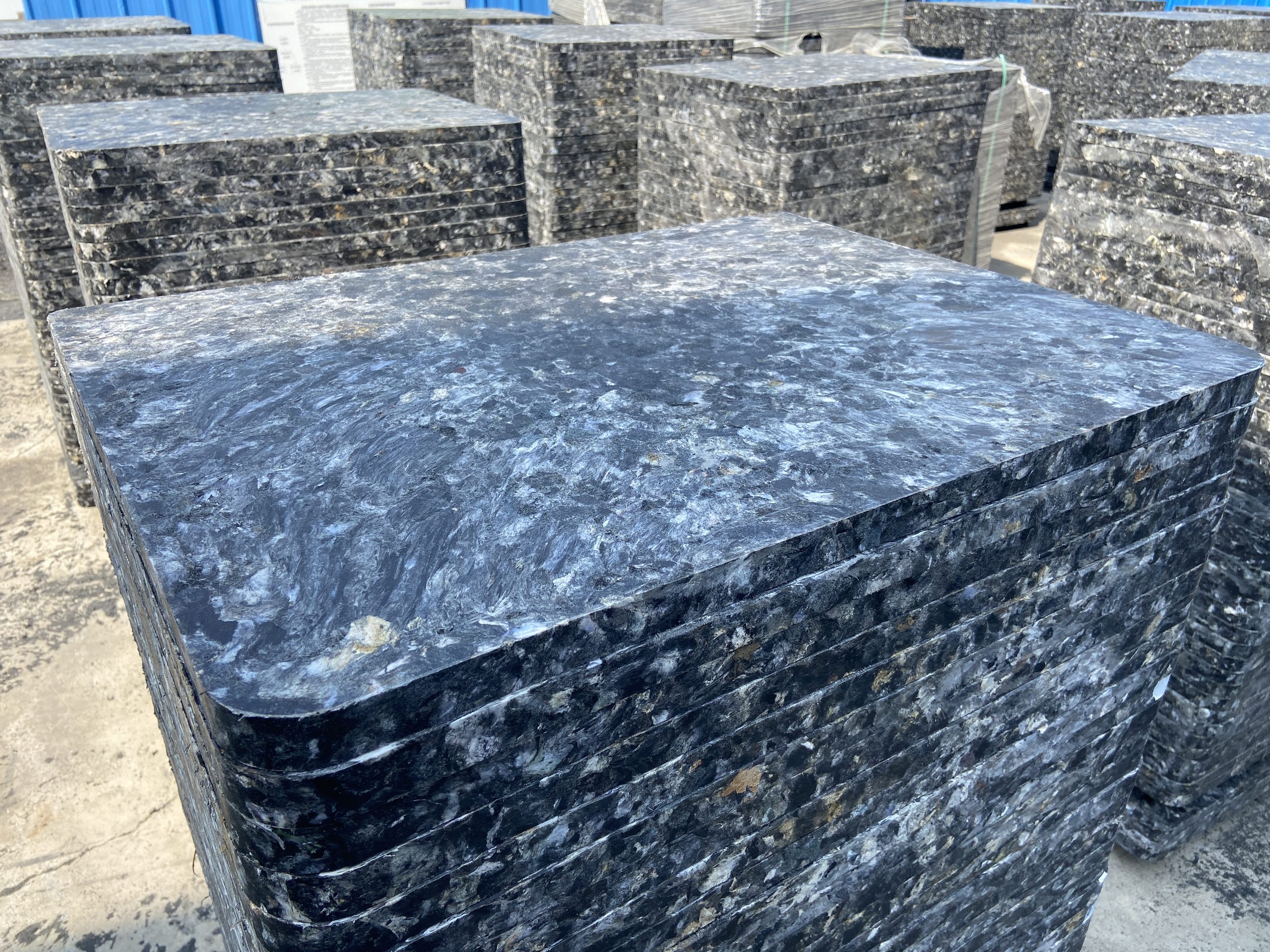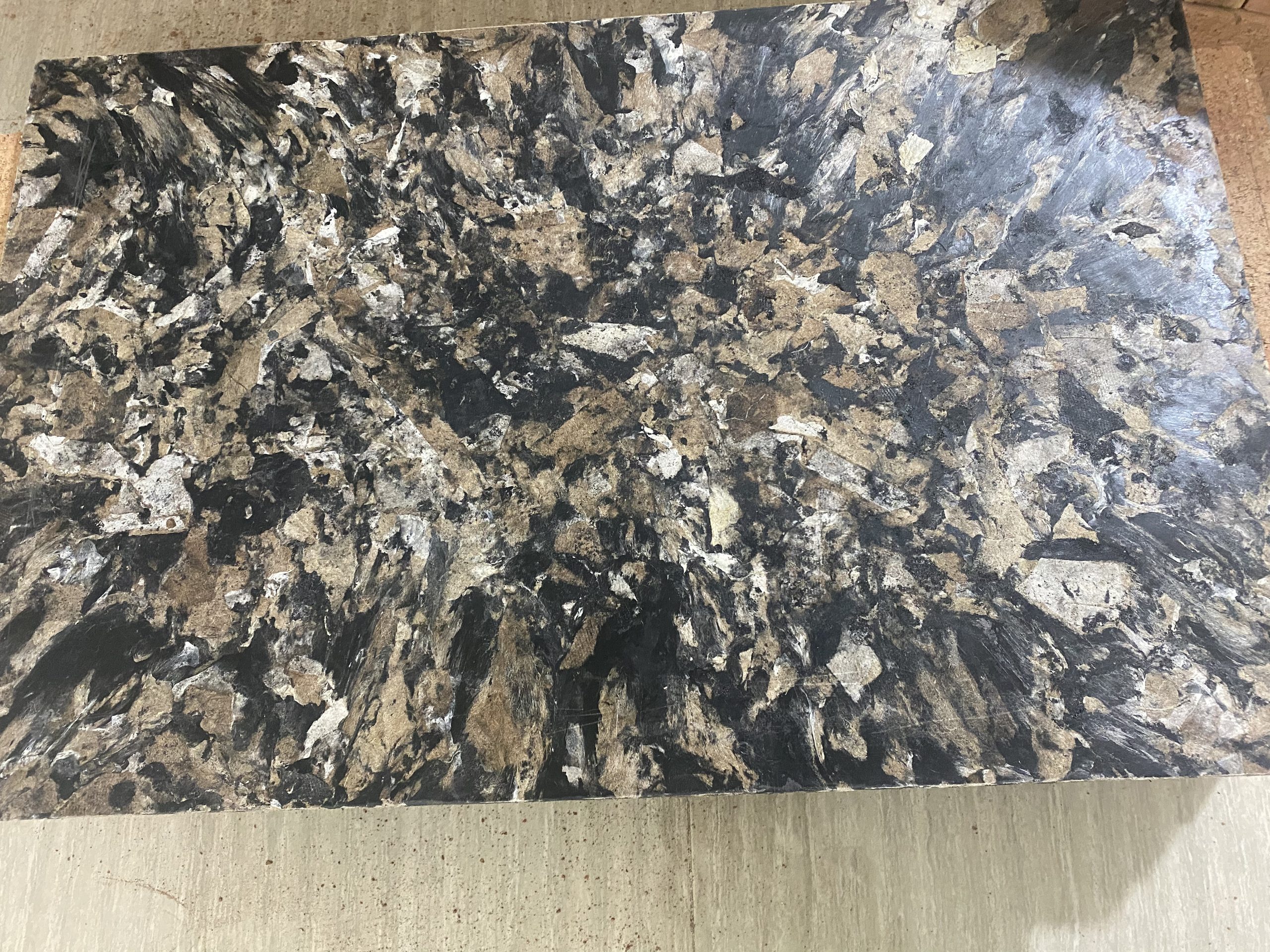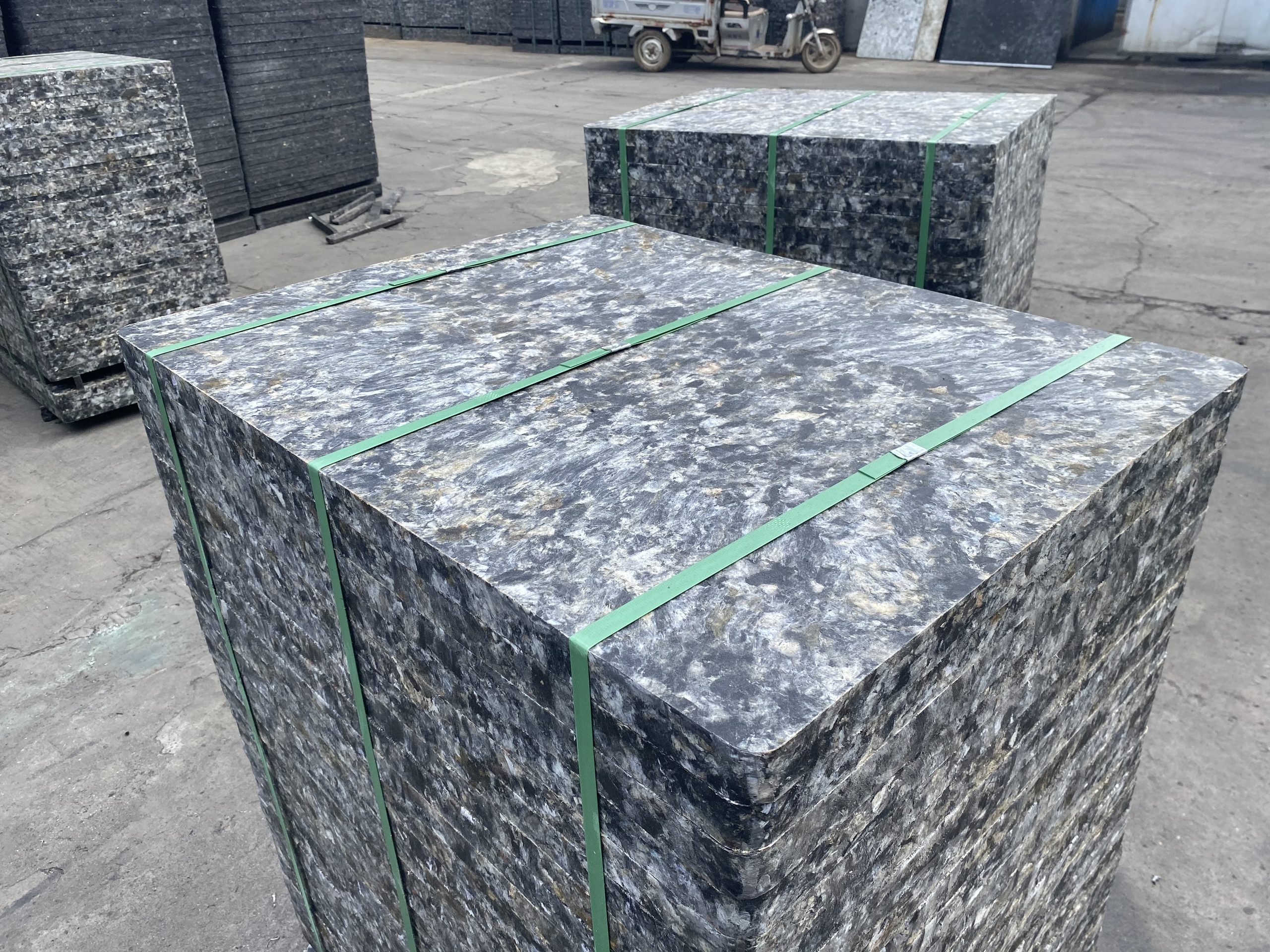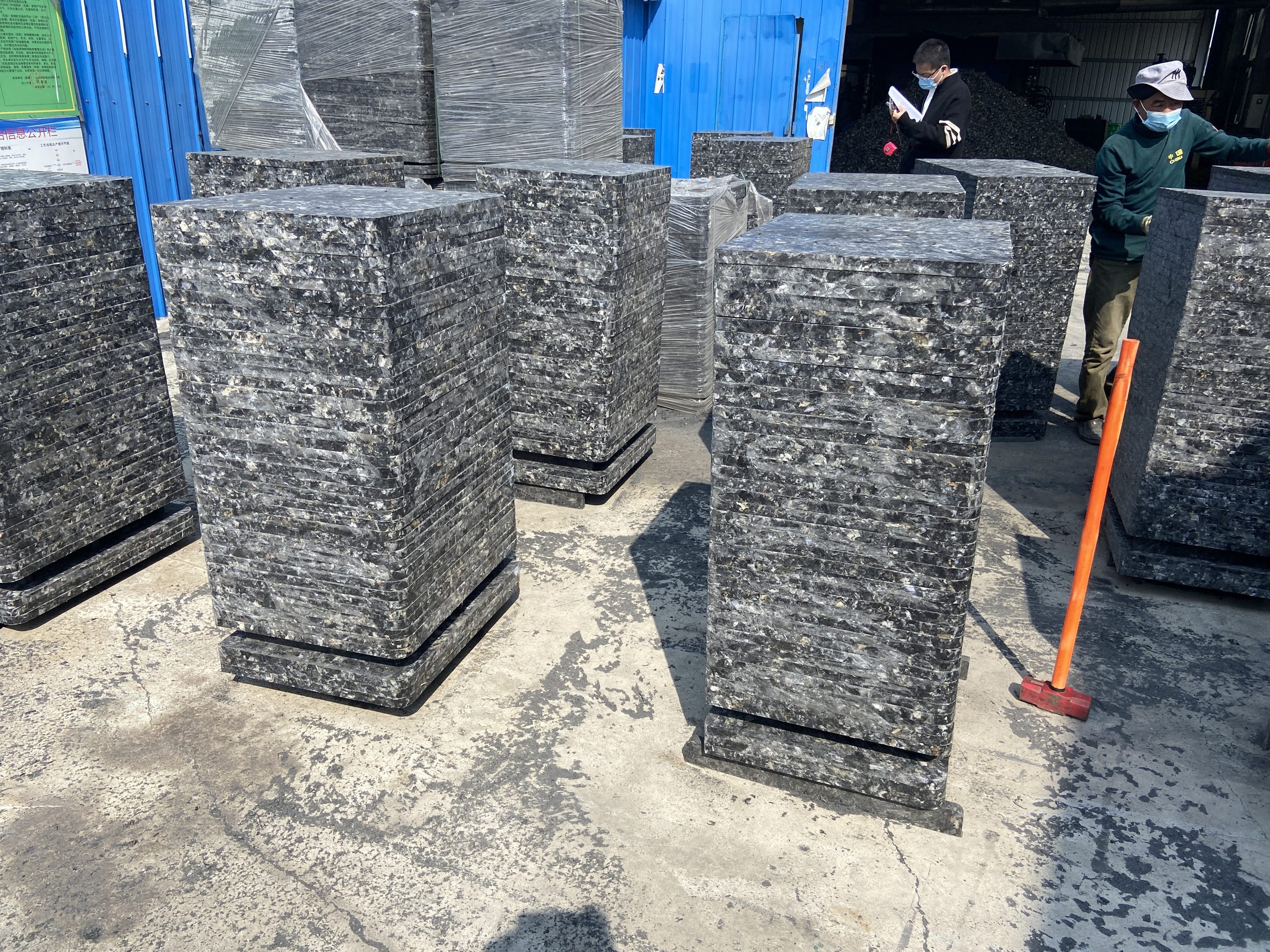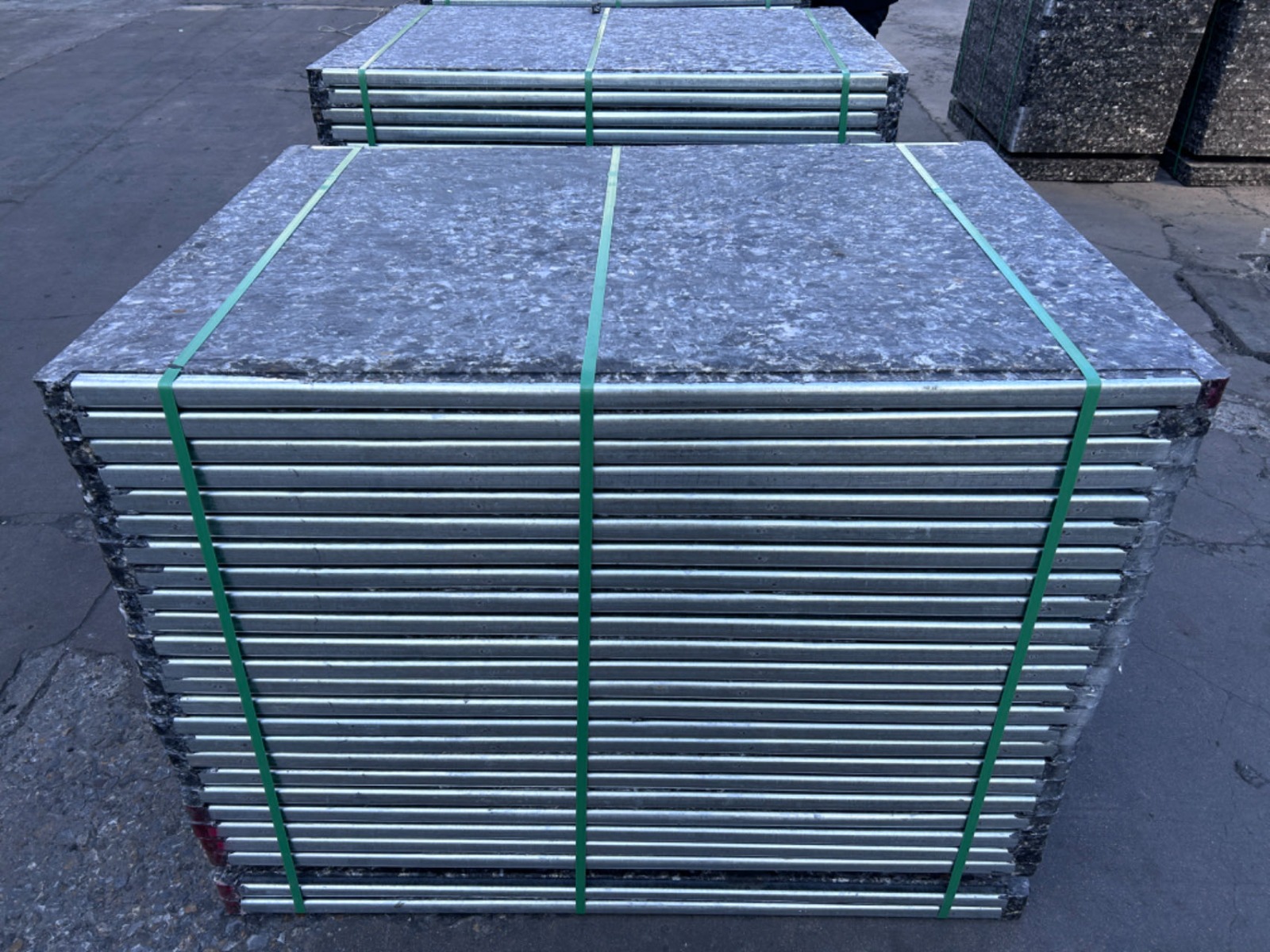
Understanding how GMT pallets are manufactured isn’t just technical curiosity—it’s business intelligence. After visiting 12 GMT pallet production facilities, I’ve seen how manufacturing quality directly impacts your bottom line. A pallet that warps after 200 cycles instead of 3,000 is a 15x cost multiplier that kills your ROI.
This guide walks through the complete GMT brick pallet production process, from raw material selection to final quality control. You’ll understand what separates a reliable supplier from one shipping pallets with hidden defects. Whether evaluating GMT pallet options for a new production line or auditing your current supplier, knowing these manufacturing fundamentals gives you leverage to make informed decisions.
What GMT Material Actually Is
GMT (Glass Mat Thermoplastic) combines continuous glass fiber mats with polypropylene matrix. Unlike traditional reinforced plastics using chopped fibers, GMT maintains continuous fiber structure throughout manufacturing.
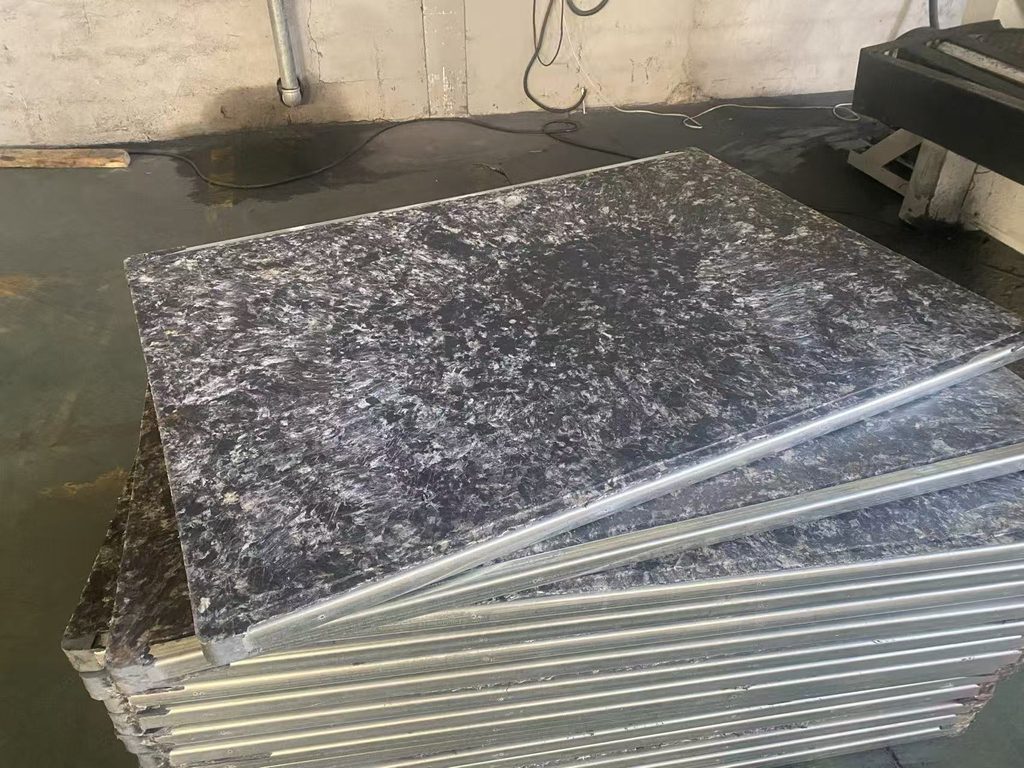
For brick pallets, GMT contains 30-40% glass fiber by weight. Lower fiber content (<25%) produces pallets that flex excessively, causing brick misalignment. Higher fiber content (>45%) makes material brittle and prone to edge chipping. Understanding this specification helps evaluate manufacturer claims when comparing different pallet materials.
Raw Material Selection and Preparation
GMT pallet production starts with E-glass fiber mats and polypropylene resin. Glass fiber mats arrive in 1-2 meter wide rolls with 13-17 micron fiber diameter and 300-450 g/m² areal weight.
The polypropylene uses virgin or recycled PP pellets. Many manufacturers incorporate recycled automotive GMT scrap—headliners and door panels from end-of-life vehicles containing high-quality fibers. Pallets with 30% recycled content match virgin-material performance across 4,200 cycles.
| Material Component | Specification | Impact on Pallet Performance |
|---|---|---|
| Glass Fiber Mat | 300-450 g/m², 13-17 micron fiber | Tensile strength and flex resistance |
| Polypropylene Resin | Virgin or recycled, MFI 10-25 | Impact resistance and temperature stability |
| Coupling Agent | Silane or maleic anhydride, 1-3% | Fiber-matrix adhesion for durability |
| Stabilizers | UV stabilizers, antioxidants, 0.5-2% | Prevents outdoor degradation |
Polypropylene pellets are dried in dehumidifying hoppers at 80-90°C for 2-4 hours to remove moisture. Even 0.1% moisture causes steam pockets during molding, creating voids that weaken structure.
Coupling agents—silane or maleic anhydride-grafted PP—are dry-blended with PP pellets at 1-3% concentration. These molecules bond chemically to both glass fiber and PP matrix, preventing fiber pull-out under stress. Pallets manufactured without coupling agents show 40-55% lower tensile strength.
The GMT Sheet Production Process
The prepared PP compound melts in twin-screw extruders at 200-230°C and is pumped through a slot die onto moving glass fiber mat. This impregnation step is critical—the liquid polymer must fully penetrate the fiber mat structure. Incomplete impregnation leaves dry fiber bundles that act as crack initiation sites.
The impregnated mat passes through heated rollers that compress the material while removing air and ensuring uniform fiber distribution. After consolidation, the GMT sheet enters cooling with chilled rollers or water bath. Controlled cooling is essential; rapid quenching creates internal stresses causing warping.
The cooled GMT sheet emerges as continuous material, typically 1.8-2.5mm thick, wound onto storage rolls for compression molding.
Compression Molding: Forming the Pallet Shape
GMT sheets are cut into blanks and loaded into infrared heating ovens. The blanks must reach 190-210°C throughout their thickness—hot enough for PP matrix to flow but below degradation temperature. Infrared ovens heat a 2mm blank in 90-120 seconds.
The compression mold consists of matched upper and lower steel dies machined to final pallet geometry. Mold surface finish directly transfers to the pallet, which is why understanding common brick production problems requires examining pallet surface quality.
Heated GMT blanks are transferred to the open mold within 10-15 seconds. Multiple blanks are stacked to achieve target thickness of 18-25mm. The press closes with 250-400 tons of force.
Compression pressure is held for 30-60 seconds at 140-160°C mold temperature. After dwelling, the mold cooling system rapidly cools the part to 80-100°C for ejection.
| Molding Parameter | Typical Range | Effect of Deviation |
|---|---|---|
| Blank Temperature | 190-210°C | Too low: incomplete filling; Too high: degradation |
| Compression Pressure | 250-400 tons | Too low: voids; Too high: fiber damage |
| Mold Temperature | 140-160°C | Too low: surface defects; Too high: warping |
| Dwell Time | 30-60 seconds | Too short: incomplete consolidation; Too long: reduced output |
Edge Reinforcement Installation
Most brick pallets incorporate aluminum extrusion edge reinforcement. These U-channel or L-angle profiles protect edges from impact damage and provide rigidity preventing edge lifting during high-temperature curing.
Aluminum extrusions are either pre-placed in the mold before the GMT blank (strongest bond), or mechanically fastened to the finished pallet (more flexible but weaker).
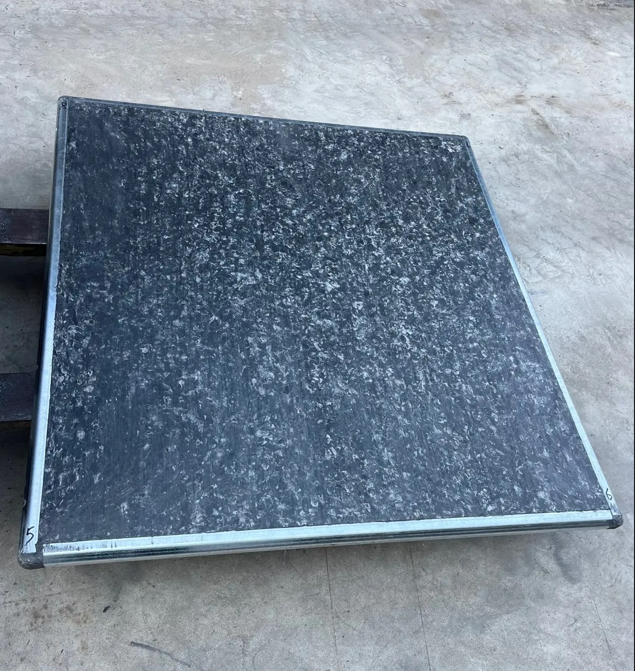
High-volume factories use automated systems that cut aluminum extrusions to length and attach them continuously. Edge quality determines how long GMT pallets last—poor edge attachment reduces service life by 40-50%.
Trimming and Finishing Operations
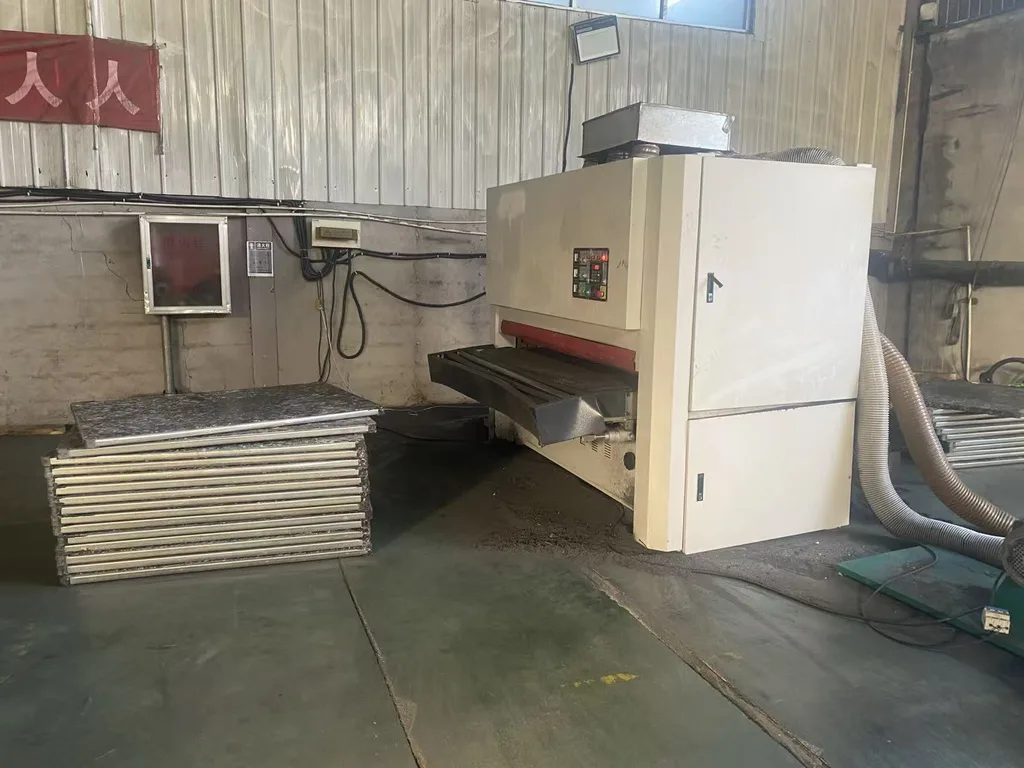
Pallets emerge from the mold with flash—excess material squeezed out at the parting line. This flash must be removed to achieve final dimensions and eliminate sharp edges.
Automated trimming uses CNC-controlled routers or water jets that follow programmed paths around the pallet perimeter. Trimmed scrap is collected, ground, and recycled back into PP feedstock.
Surface finishing includes deburring sharp edges and cleaning residual release agent from mold surfaces. Some manufacturers apply a thin silicone coating to the bearing surface to aid brick release during demolding.
Quality Control and Testing Protocols
Every production batch undergoes dimensional verification. Inspectors measure overall pallet length, width, and thickness at multiple locations. For a standard 850x680mm pallet, typical tolerance is ±2mm in length/width, ±0.5mm in thickness.
Flatness is critical—a warped pallet causes uneven brick surfaces. Flatness is measured using precision surface plates and dial indicators. Maximum allowable deviation is typically 1.5-2.0mm.
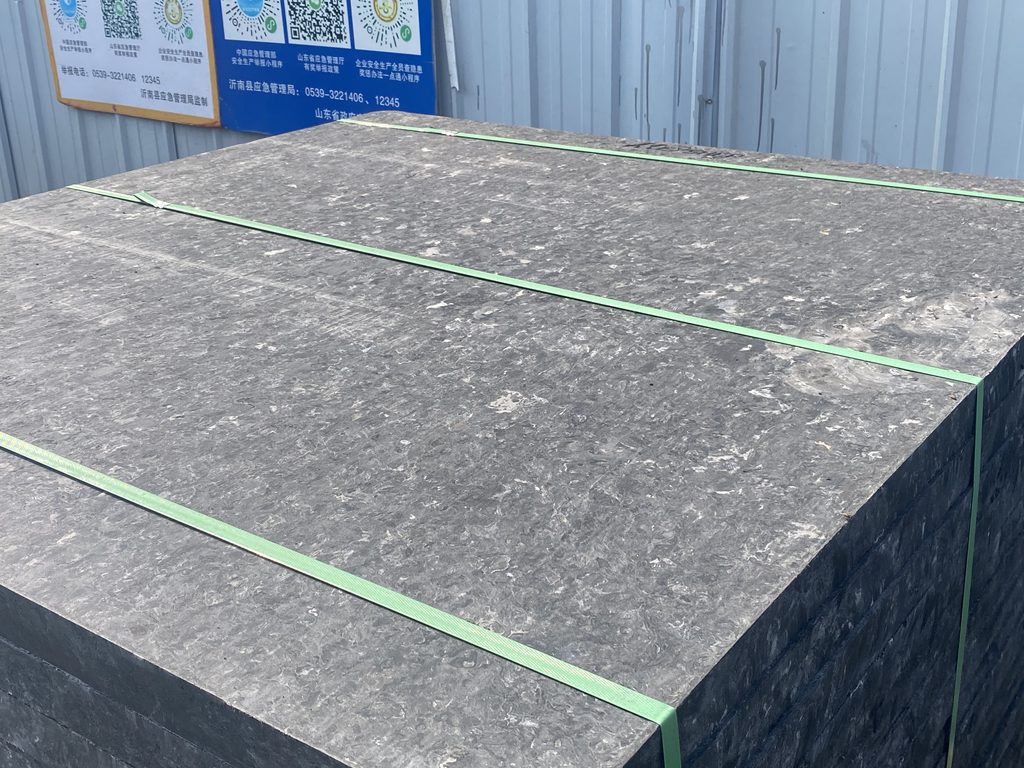
Pull-through testing verifies edge reinforcement strength by applying force to the aluminum extrusion. Specification typically requires >800N pull-through resistance. Impact resistance testing drops a steel hemisphere (2kg, 50mm diameter) from 0.5-1.5 meters onto the pallet surface. The pallet must show no cracking.
Load-bearing capacity testing places the pallet on supports and applies 300-500kg distributed load. The pallet must support this load for 24 hours with deflection less than 3mm.
Accelerated aging tests expose sample pallets to repeated thermal cycles: heating to 70-80°C for 8 hours, then cooling to ambient for 4 hours. After 500 cycles, pallets are inspected for warping, cracking, and dimensional changes.
Factory Layout and Production Capacity
A modern GMT pallet manufacturing facility occupies 8,000-15,000 m² of floor space. The layout follows linear flow from raw material receiving through finished product warehousing.
The production floor contains the extrusion/impregnation line, GMT sheet storage, blank cutting stations, infrared ovens, and compression presses. A facility with four 400-ton presses produces 1,200-1,600 pallets per 8-hour shift.
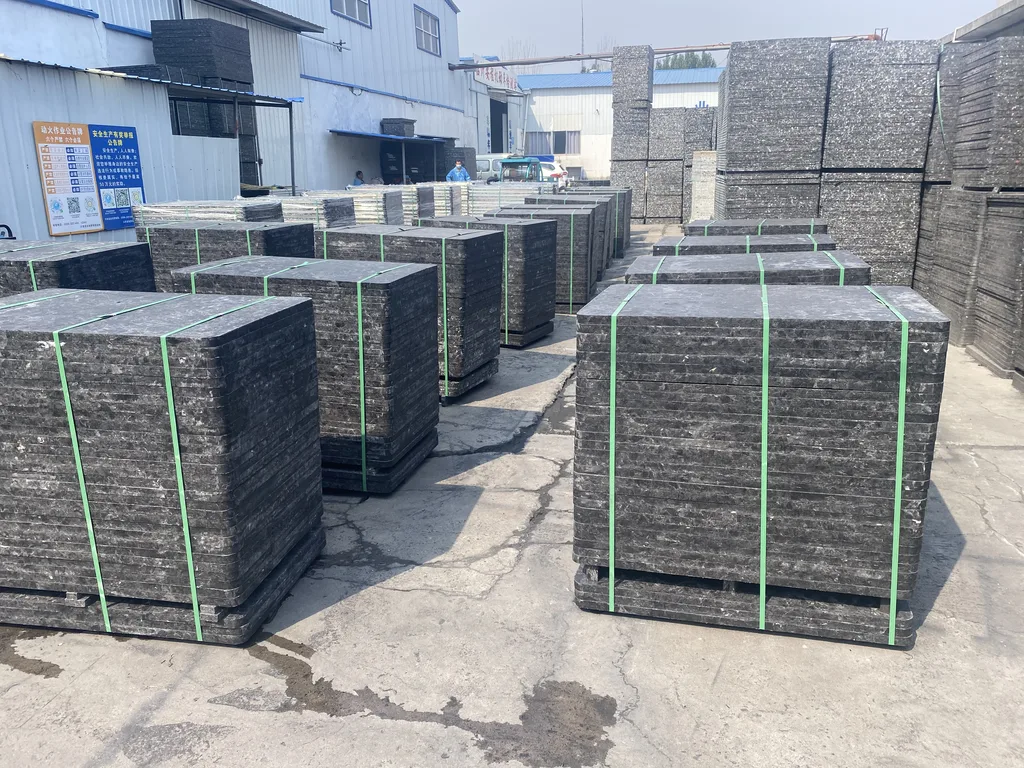
Finishing areas include trimming stations, edge reinforcement installation, and dimensional inspection. High-volume factories automate these operations, achieving cycle times of 90-110 seconds per finished pallet.
Capital investment varies by automation level. A minimal facility with a single 400-ton press requires $600,000-$900,000. A fully automated four-press facility exceeds $4.5-6 million.
Quality Indicators That Separate Good Factories from Bad
Cut a cross-section through a pallet edge and examine it under magnification. In a quality pallet, glass fibers should be evenly distributed with no visible dry fiber bundles or resin-rich pockets.
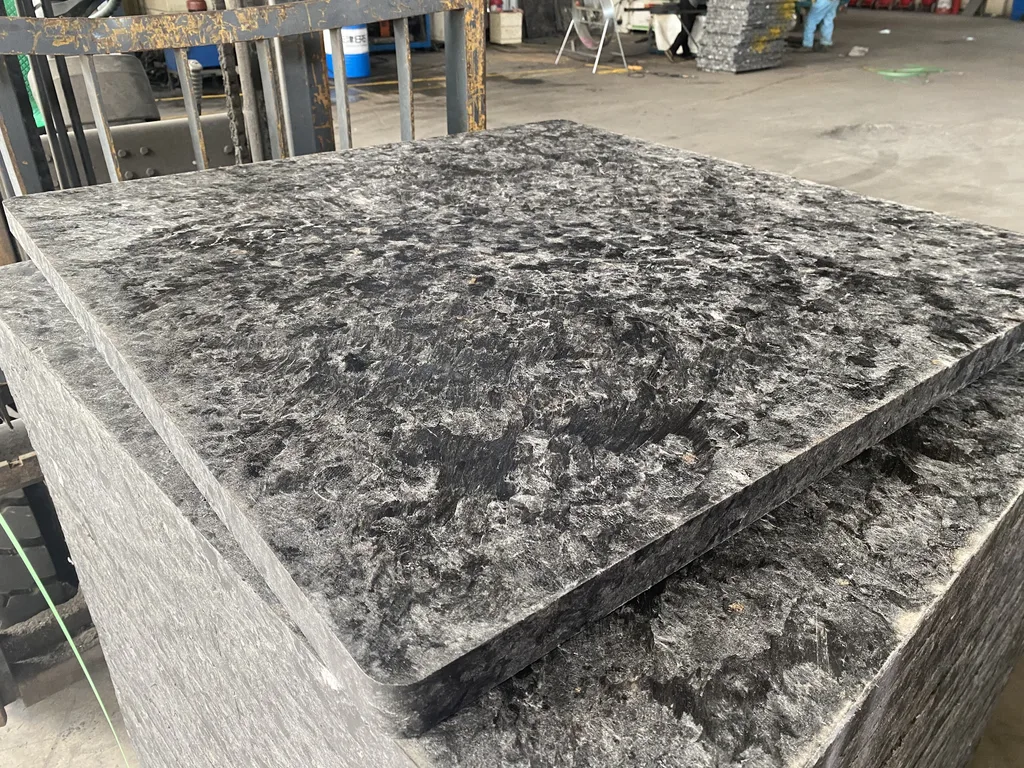
The pallet bearing surface should be smooth with no visible porosity, sink marks, or flow lines. Run your hand across the surface—you should feel consistent texture with no rough patches or areas where glass fibers protrude (“fiber show-through”).
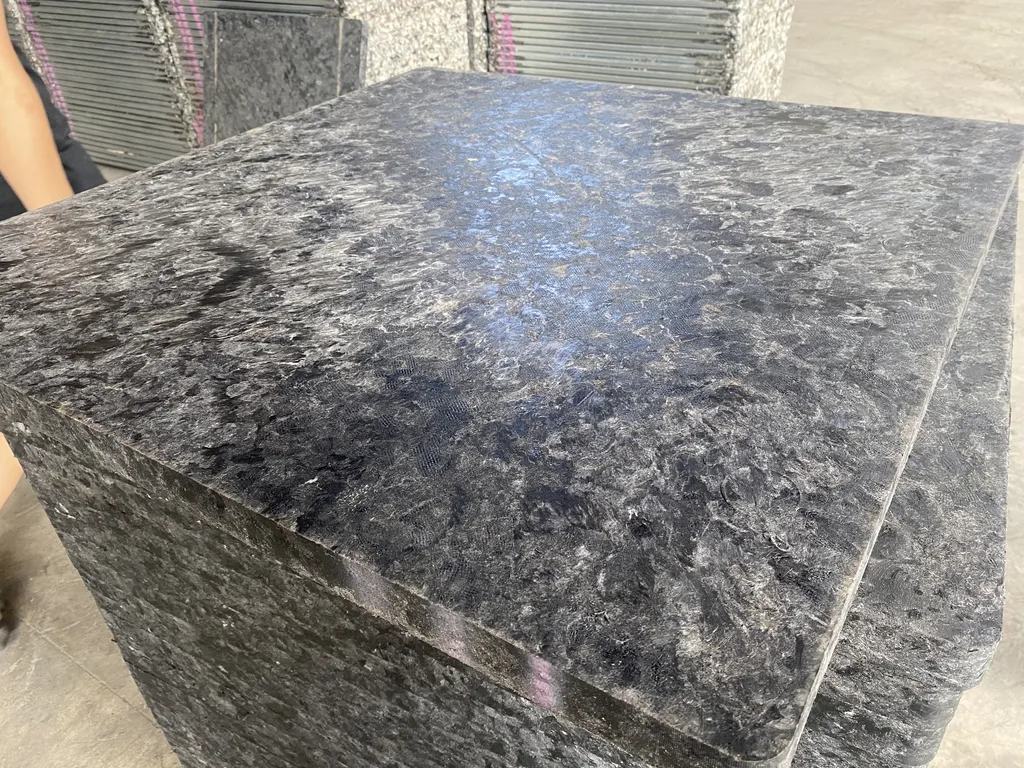
Check all edges and corners for complete mold filling. Edge reinforcement channels should fully capture aluminum extrusions with no gaps—a gap exceeding 0.5mm indicates worn molds.
Request dimensional inspection data for multiple production batches spanning several months. Consistent factories maintain thickness tolerance within ±0.3mm and length/width tolerance within ±1.5mm.
Common Production Defects and Their Causes
Understanding defect patterns helps identify factory quality control weaknesses before committing to large orders. For quality indicators, see our guide on reducing brick breakage through quality pallets.
| Defect Type | Visual Appearance | Root Cause | Performance Impact |
|---|---|---|---|
| Fiber Show-Through | Glass fibers visible on surface | Insufficient resin layer, low mold temperature | Rapid surface wear, reduced service life by 40-60% |
| Delamination | Separation between layers when bent | Inadequate bonding, no coupling agent | Catastrophic failure within 100-300 cycles |
| Porosity/Voids | Small holes or bubble defects | Moisture in materials, insufficient consolidation | Reduced strength, localized cracking |
| Warping | Non-flat surface, twisted geometry | Uneven cooling, residual stresses | Poor brick surface quality, increased breakage |
| Edge Cracking | Fine cracks radiating from edges | Excessive cooling rate, impact during handling | Crack propagation, edge failure, reduced load capacity |
Fiber show-through is the most common defect in budget GMT pallets. Manufacturers save cost by using thinner resin layers or running production too fast. These pallets feel rougher and show visible fiber texture under raking light.
Delamination results from poor fiber-matrix adhesion, typically due to omitting coupling agents. A simple field test: try to peel the aluminum edge reinforcement away—if you can initiate separation with moderate force, fiber-matrix bonding is inadequate.
Environmental Considerations and Recycling
GMT pallets offer environmental advantages over wood pallets and thermoset composites. At end-of-life (8-12 years), GMT material can be ground, remelted, and reformed into new products.
The recycling process involves grinding used pallets into 5-15mm flakes, separating aluminum edge reinforcement, and washing to remove brick residue. The cleaned GMT flake is blended with virgin PP resin (30-50% recycled content) and re-extruded into new GMT sheet.
Mechanical properties of recycled GMT are slightly lower—tensile strength decreases 10-15% and impact resistance decreases 15-20% with each recycling cycle due to fiber breakage.
Selecting a GMT Pallet Manufacturer
When evaluating potential suppliers, factory visits reveal capabilities that specification sheets cannot. Request a facility tour and observe manufacturing competence indicators.
Quality factories use automated process monitoring tracking critical parameters—blank temperature, compression pressure, mold temperature, cooling rate, and cycle time. This data is logged with batch traceability so defects discovered later can be correlated to specific production conditions.
Ask to see process control charts spanning 3-6 months. Statistical process control charts should show parameters centered within specification limits with low variation.
Manufacturers committed to quality maintain in-house testing labs verifying material properties daily. The lab should have equipment for dimensional measurement, mechanical testing, and impact testing.
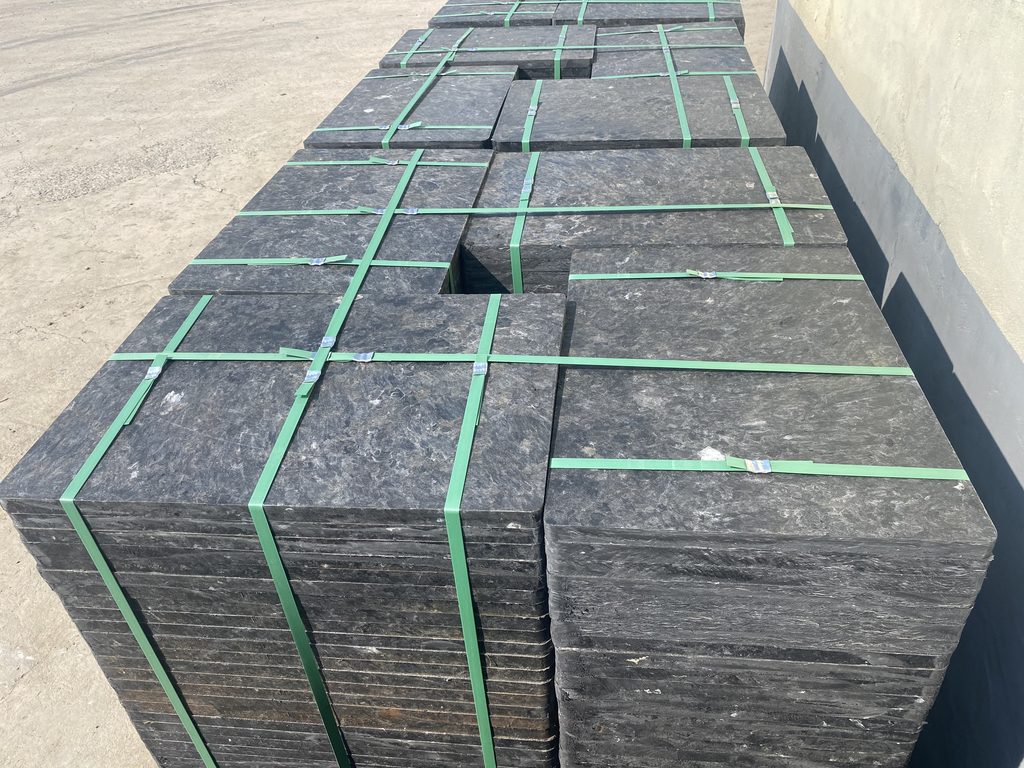
Ask for references from brick manufacturers using the same pallet model, preferably in similar climatic conditions and production volumes. Contact these references and ask about service life achieved, defect rates, and warranty claim experience.
Understanding factory capacity helps set realistic delivery expectations. A manufacturer operating at >90% capacity struggles to meet aggressive delivery schedules. A well-managed factory runs at 75-85% capacity.
Lead times for standard pallet designs typically range from 2-4 weeks. Custom designs requiring new tooling extend lead times to 6-10 weeks for mold fabrication plus 2-3 weeks for first-article production.
Frequently Asked Questions
What is the typical lifespan of GMT pallets in brick production?
GMT pallets in brick production achieve 8-12 years of service life when properly maintained, corresponding to 3,000-5,000 production cycles. Lifespan varies based on brick type, curing method, and handling practices. Pallets used in automated production lines with minimal manual handling last 30-40% longer than those in manual operations.
How do I verify if a GMT pallet manufacturer uses quality materials?
Request material certifications showing PP resin grade, glass fiber specifications, and coupling agent type. Quality manufacturers provide material data sheets and can reference specific supplier part numbers. Test fiber content by burning a small sample—GMT should leave 30-40% residue (glass fiber) after combustion; lower residue indicates inadequate fiber content.
Can GMT pallets be repaired if damaged?
Minor edge damage can be repaired by trimming the damaged section and installing new aluminum edge reinforcement. Surface scratches that don’t affect flatness don’t require repair. More serious damage—cracks extending >50mm, delamination, or warping exceeding 2mm—typically renders the pallet unsuitable for continued use. Damaged pallets should be removed and recycled.
What’s the difference between GMT pallets and regular plastic pallets?
Regular plastic pallets are injection-molded from unfilled polypropylene or HDPE without reinforcement, designed for general material handling. GMT pallets contain 30-40% continuous glass fiber reinforcement providing 4-5x higher stiffness and 60-70% better heat resistance, making GMT suitable for brick production’s demanding thermal cycling and dimensional stability requirements.
Conclusion
GMT brick pallet manufacturing combines material science, precision engineering, and rigorous quality control to produce pallets that withstand demanding brick production conditions. The complete process—from raw material selection through compression molding to final quality inspection—determines whether pallets deliver 10+ years of reliable service or fail prematurely.
Manufacturing details matter. Proper fiber-matrix bonding through coupling agents, adequate consolidation pressure during molding, controlled cooling rates, and comprehensive quality testing separate suppliers who deliver consistent performance from those shipping pallets with hidden defects. Understanding these production fundamentals lets you evaluate suppliers based on actual manufacturing capabilities rather than marketing claims.
A well-manufactured GMT pallet from Rhinos Pallet costs 40-60% more than a budget alternative but delivers 3-4x longer service life and prevents production disruptions and brick breakage losses from pallet failures. For most brick manufacturers, calculating the ROI shows that manufacturing quality pays for itself within 18-24 months of service.