Premium light-colored brick manufacturers face a critical challenge: surface discoloration from production pallets can cause rejection rates as high as 12-18% and cost facilities $15,000-$30,000 annually in wasted materials. Industry data shows that 73% of light-colored brick defects originate from color transfer during the molding and curing stages, where brick surfaces maintain direct contact with pallets for 24-72 hours.
In today’s article, we will explain why pure white GMT pallets prevent color transfer, how they preserve aesthetic quality in premium brick production, and why leading manufacturers choose white pallets over traditional colored alternatives. This technical guide will help you eliminate surface marking, reduce rejection rates by up to 95%, and maintain the pristine appearance your premium customers demand.
Understanding Color Transfer in Brick Production
Color transfer occurs when pigments, residues, or material particles migrate from pallet surfaces onto wet brick during molding and curing. Light-colored bricks show even microscopic discoloration that darker bricks conceal.
The problem intensifies during curing. Wet brick surfaces remain porous for 18-48 hours while moisture evaporates. During this window, any colored material on the pallet surface can transfer onto the brick, creating permanent stains.
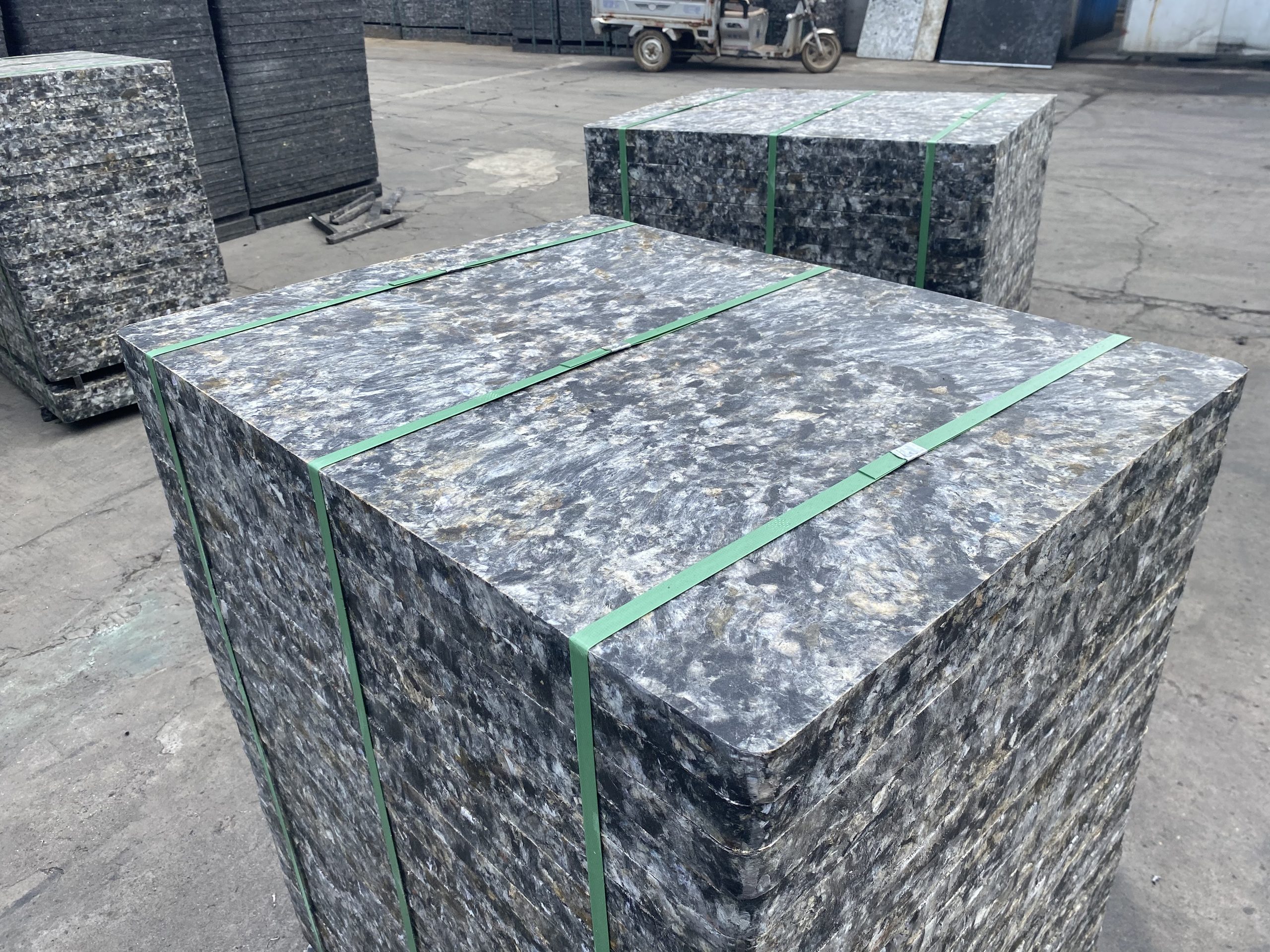
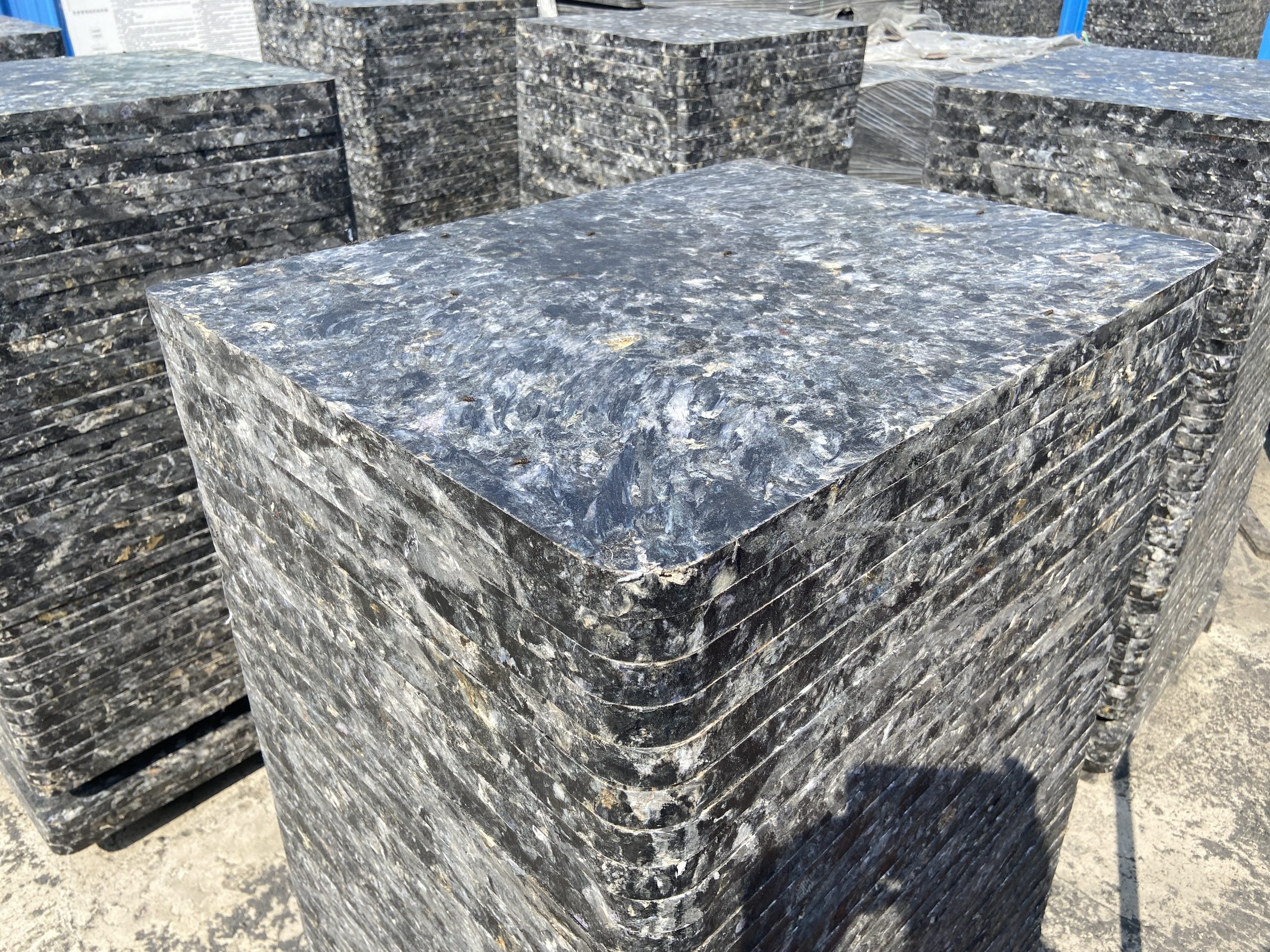
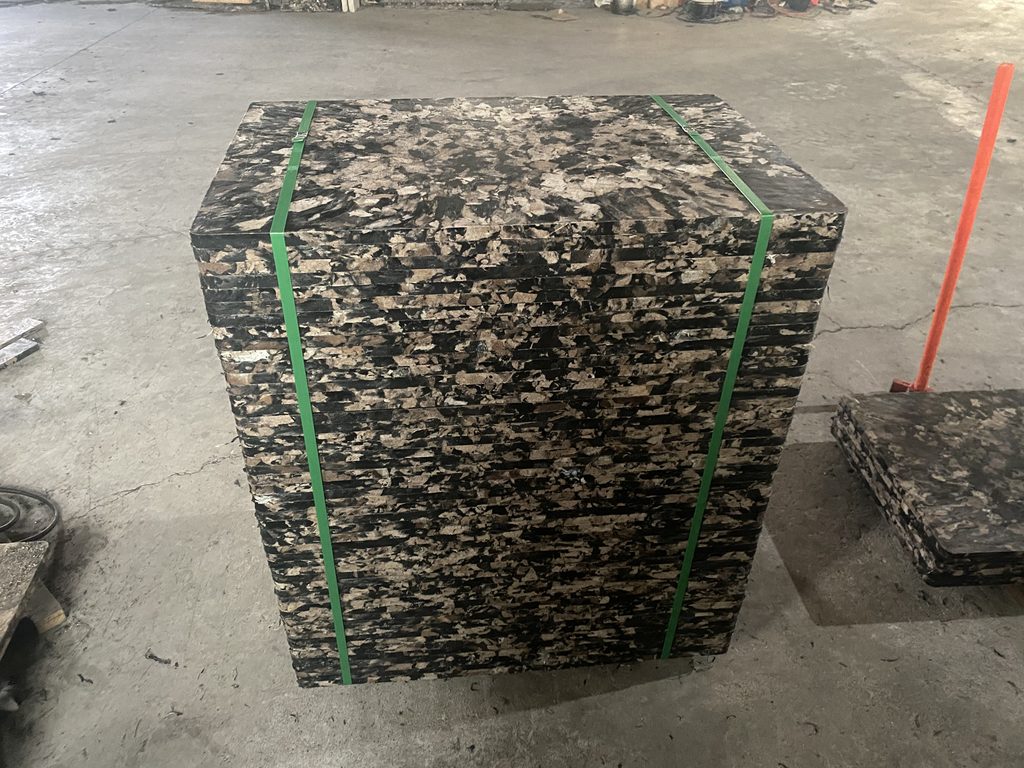
Manufacturing data reveals that traditional yellow and black fiber pallets contain darker pigments and recycled materials that increase discoloration risk. When these pallets age, embedded colored particles become more likely to transfer onto product.
How Surface Contact Causes Marking
Three mechanisms drive color transfer:
Direct pigment migration happens when colored materials in the pallet matrix contact wet cement. Yellow pallets containing recycled colored fibers or black glass fiber pallets with carbon-based pigments can leave corresponding tints on white brick surfaces.
Residue accumulation occurs as cement particles and production dust build up on pallet surfaces. On colored pallets, these residues combine with underlying pigment to create darker deposits that mark subsequent bricks.
Abrasion and wear expose subsurface materials as pallet surfaces degrade. Yellow and black pallets show darker fibers and particles as the top layer wears away, increasing marking potential.
Why Pure White Pallets Solve the Problem
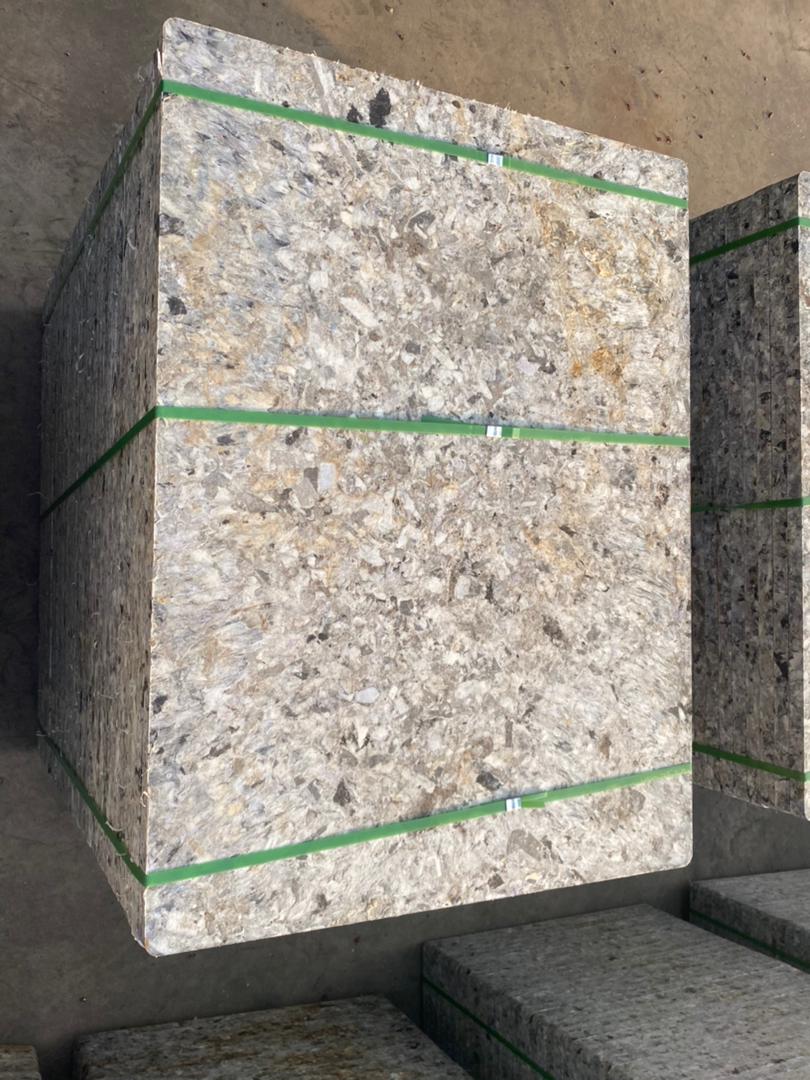
Pure white GMT pallets use white glass fiber reinforcement and unpigmented resin matrices, eliminating the colored materials that cause surface marking. This material selection creates a fundamental advantage for light-colored brick production.
Material Composition Advantages
White GMT pallets achieve their color through material purity rather than added pigments. The glass fiber mat uses ECR (electrical/chemical resistance) glass fibers that naturally appear white or translucent. The thermoplastic resin matrix remains clear or neutral without carbon black or organic pigments.
This composition means that even if surface abrasion exposes subsurface material, the exposed layers maintain the same white appearance. Production facilities using Rhinos Pallet’s G-001 Pure White GMT Pallet report 95% reduction in color-transfer defects compared to yellow fiber pallets.
| Pallet Type | Base Material Color | Pigment Content | Mark Transfer Risk | Light Brick Suitability |
|---|---|---|---|---|
| Pure White GMT (G-001) | White glass fiber + clear resin | None | Minimal (<1%) | Excellent |
| Premium White GMT (G-002) | White fiber + light resin | Low | Very Low (1-3%) | Excellent |
| Yellow Fiber Pallet | Yellow/amber fiber + colored resin | Medium-High | High (15-25%) | Poor |
| Black Glass Fiber | Black fiber + carbon pigment | Very High | Very High (25-40%) | Not Recommended |
Surface Finish Quality
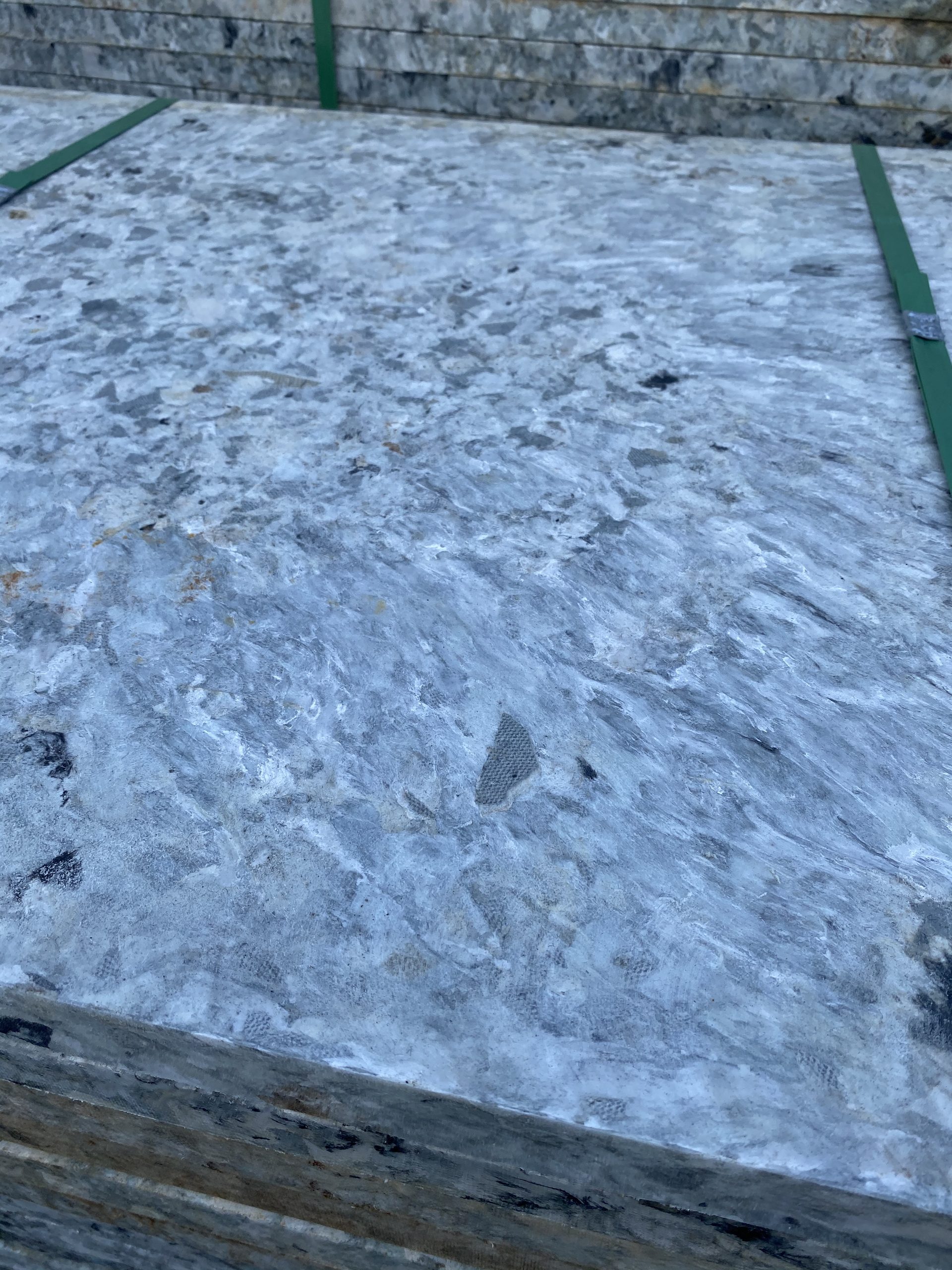
White GMT pallets maintain smoother surface finishes that reduce physical marking alongside color transfer. Surface roughness measurements show that premium white pallets achieve Ra values of 3.2-6.3 μm compared to 12.5-25 μm for standard colored fiber pallets.
This smoothness prevents cement particles from lodging in surface irregularities, where they would otherwise create permanent marks on brick. The combination of material purity and surface quality explains why premium brick manufacturers specify white pallets for their highest-value products.
Premium Brick Production Requirements
Light-colored brick serves premium architectural markets where aesthetic perfection drives purchasing decisions.
Market Positioning and Quality Standards
Premium light-colored bricks command 40-60% higher prices than standard varieties, but this premium depends entirely on flawless surface appearance.
Testing shows that visual inspection can detect color variations as small as ΔE*2.3. White brick with yellow or gray tinting from pallet contact exceeds this threshold immediately.
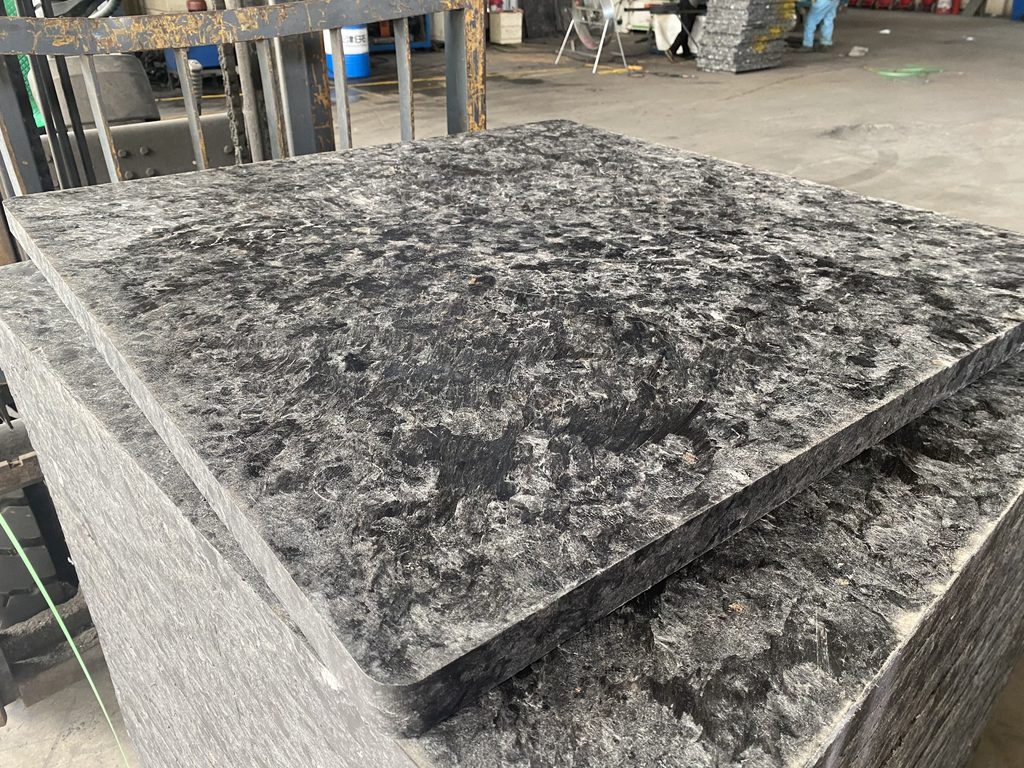
Facilities switching from yellow fiber pallets to G-001 Pure White GMT Pallets reduced rejection rates from 12-15% to less than 1%.
Comparing White vs Colored Pallet Performance
Direct performance comparison reveals the measurable advantages of pure white pallets for light-colored brick production. Field data from multiple facilities demonstrates consistent patterns across different production volumes and brick types.
Color Transfer Testing Results
Laboratory testing measured color transfer from different pallet types onto standardized white cement test blocks. Blocks were demolded after 24-hour contact and evaluated using spectrophotometry to measure color difference (ΔE*) from control samples.
| Test Condition | Pure White GMT | Premium White GMT | Yellow Fiber | Black Glass Fiber |
|---|---|---|---|---|
| New Pallet (0-500 cycles) | ΔE* 0.3-0.8 | ΔE* 0.8-1.5 | ΔE* 8.2-12.5 | ΔE* 15.8-22.3 |
| Mid-Life (2000-3000 cycles) | ΔE* 0.5-1.2 | ΔE* 1.2-2.3 | ΔE* 12.5-18.7 | ΔE* 22.3-35.2 |
| Aged (5000+ cycles) | ΔE* 0.8-1.8 | ΔE* 2.0-3.5 | ΔE* 18.7-28.5 | ΔE* 35.2-48.9 |
Values below ΔE* 2.0 remain imperceptible to most observers under normal lighting. White GMT pallets maintain this standard throughout their operational lifespan, while colored alternatives produce visible marking from initial use.
Long-Term Performance Stability
Accelerated aging tests simulating 8-10 years of production demonstrate that pure white pallets maintain low marking potential throughout their service life. This stability contrasts with colored fiber pallets, where surface degradation progressively increases marking risk.
Surface color measurements show that G-001 Pure White pallets maintained L* (lightness) values above 92 throughout 6,000 cycles, while yellow fiber pallets declined from L* 75 to L* 58. This darkening directly correlates to increased marking.
White Pallet Selection Criteria
Choosing the right white pallet requires understanding the differences between available options and matching pallet specifications to your production requirements.
Pure White (G-001) vs Premium White (G-002)
Both options serve light-colored brick production effectively, but distinct characteristics make each better suited for specific applications.
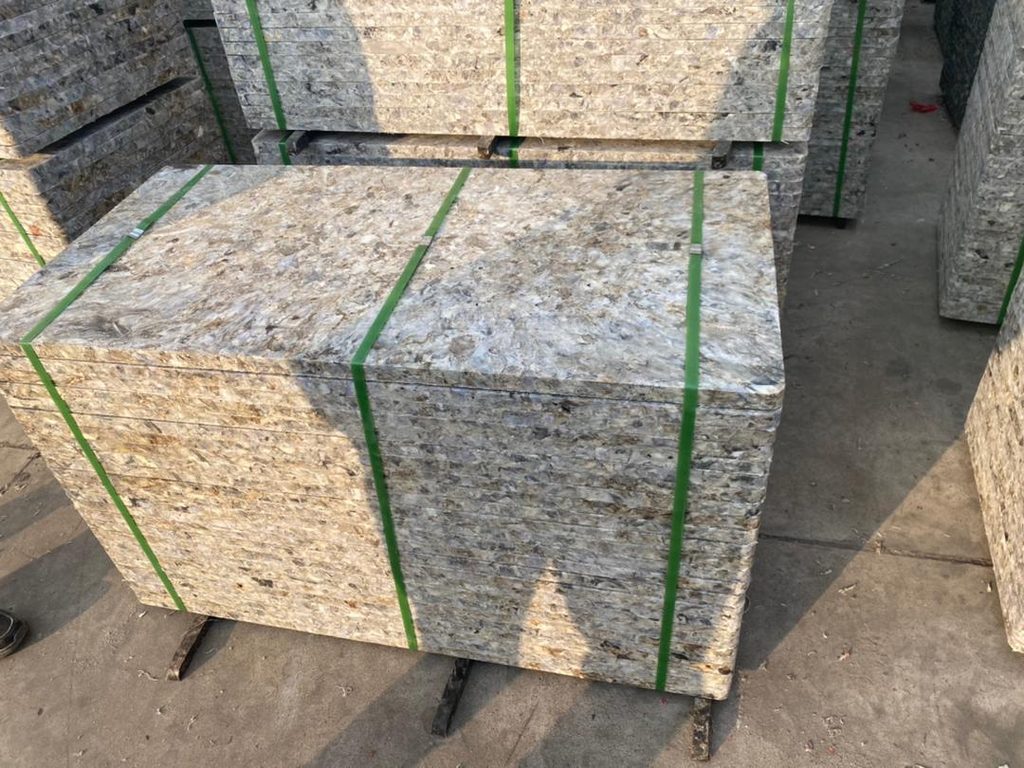
G-001 Pure White GMT Pallet uses 100% white glass fiber reinforcement with completely clear resin systems. This construction delivers the absolute lowest marking potential and suits ultra-premium white and cream brick where even microscopic discoloration causes rejection. The material purity creates a pristine surface that maintains its appearance through 10-12 years of production use.
G-002 Premium White GMT Brick Pallet incorporates high-strength white fiber with performance-optimized resin blends. This pallet offers exceptional mechanical properties including 3,000+ kg load capacity and enhanced impact resistance, making it ideal for high-volume automated production lines where pallets undergo rapid cycling.
Choose G-001 when color perfection takes absolute priority. Select G-002 when you need to balance excellent marking resistance with maximum strength in demanding production environments.
Surface Finish Specifications
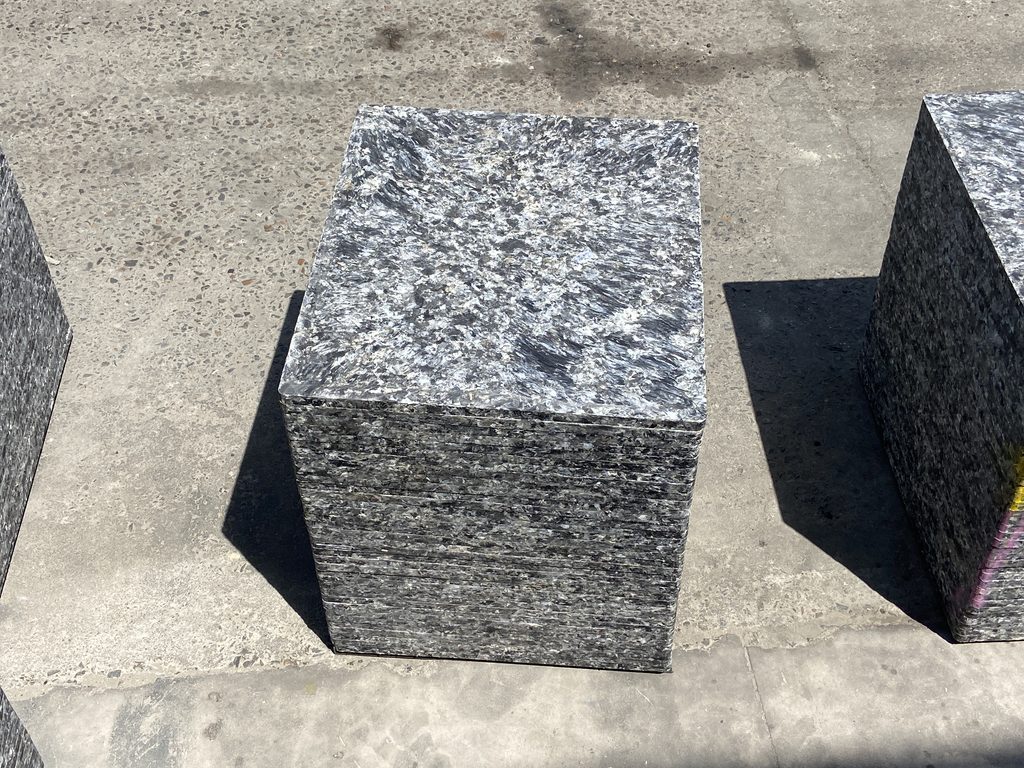
White pallet surface quality directly impacts marking prevention. Specify pallets with surface roughness Ra values below 6.3 μm for light-colored brick. Smoother surfaces reduce cement particle adhesion.
Compression-molded white GMT pallets achieve better surface quality than extrusion-formed alternatives because molding pressure creates a denser surface layer.
Inspect new pallets to verify surface smoothness. You should feel minimal texture compared to rough standard fiber pallets.
Implementing White Pallets in Production
Successful transition to white pallets requires attention to cleaning procedures and maintenance schedules that preserve their marking-prevention properties.
Cleaning and Maintenance Protocols
White pallets show residue accumulation more visibly than colored alternatives, making contamination obvious before it affects product. Establish daily cleaning procedures to maintain optimal performance.
Pressure washing with clean water removes cement dust and release agent buildup without damaging pallet surfaces. Use water pressure between 1,500-2,000 PSI with fan spray nozzles positioned 300-400mm from the surface.
For stubborn cement deposits, mild alkaline cleaners (pH 9-10) dissolve residue effectively. Apply cleaner, allow 5-10 minutes contact time, then pressure wash thoroughly.
Cleaning frequency depends on production volume and brick composition. High-volume facilities producing white facing brick should clean pallets every 50-100 cycles. Lower-volume operations can extend this to 200-300 cycles.
Storage and Handling Best Practices
Store white pallets in covered areas protected from environmental contamination. Outdoor storage exposes pallets to dust, organic staining, and water-borne contaminants that can transfer onto bricks.
Handle pallets carefully to prevent surface damage that creates marking potential. Even minor gouges can trap cement particles. Train production staff to avoid dropping or dragging pallets.
Implement rotation schedules that distribute wear evenly across your pallet fleet. Systematic rotation ensures all pallets age uniformly and prevents concentrated wear that could create marking hotspots.
Cost-Benefit Analysis for Premium Production
White pallets carry higher initial costs but deliver decisive economic advantages when you account for rejection prevention and premium product value.
Investment vs Quality Protection
Premium white GMT pallets cost approximately $95-$135 per unit compared to $65-$85 for standard yellow fiber pallets. For a typical facility requiring 200 pallets, the cost difference amounts to $6,000-$10,000 additional investment.
Consider this against prevented rejections. A facility producing 1.5 million light-colored bricks annually with a 12% rejection rate loses 180,000 bricks valued at $0.45 each—$81,000 in wasted product. Reducing rejection to 1% recovers $74,000 annually, achieving payback in 60-82 days.
For ultra-premium white brick selling at $0.75-$1.25 per unit, preventing a 12-percentage-point rejection improvement generates $135,000-$225,000 annual value.
Long-Term Cost Efficiency
Pure white GMT pallets deliver 10-12 year service life when properly maintained. Over a 10-year horizon, the facility requiring 200 pallets invests approximately $27,000 total for white pallets. Alternative yellow pallets cost about $18,700 initially, but generate $740,000 in additional rejections over the same period at 12% vs 1% rejection rates.
You should calculate this analysis for your specific production volume and brick pricing. Most premium brick manufacturers discover that white pallet investment ranks among their highest-ROI quality improvement opportunities.
Case Studies from Premium Brick Facilities
Real-world implementations demonstrate the measurable impact of switching to pure white pallets.
European Architectural Brick Manufacturer
A German facility producing premium white and cream facing brick struggled with 15-18% rejection rates on their lightest-colored products. Visual inspection rejected bricks showing any yellow or gray tinting.
The facility transitioned 180 pallets to G-001 Pure White GMT Pallets for white and cream brick production. After 90 days, quality data showed:
- Rejection rate decreased from 16% to 1.2%
- Color variation reduced from ΔE* 12-18 to ΔE* 0.8-1.5
- Customer complaints dropped 92%
- Annual rejection costs fell from €94,000 to €7,000
The facility recovered its pallet investment in 67 days and now specifies white pallets as mandatory for all light-colored brick programs.
North American Lightweight Block Producer
A U.S. manufacturer of white lightweight concrete block faced persistent quality issues where yellow marks appeared on finished blocks. Investigation traced the marking to yellow fiber pallets.
Switching to G-002 Premium White GMT Brick Pallets throughout the facility required $23,400 for 180 pallets. Within the first month, results included:
- Surface marking defects dropped from 14% to less than 1%
- Production line efficiency increased 8%
- Customer returns fell 87%
- Premium product pricing increased 12%
The facility now maintains a 100% white pallet fleet and credits the decision as critical to their competitive positioning in premium architectural block markets.
Frequently Asked Questions
How much more do pure white pallets cost compared to standard yellow pallets?
Pure white GMT pallets cost approximately 35-45% more than standard yellow fiber pallets, typically priced at $95-$135 versus $65-$85 for yellow alternatives. Rejection prevention in light-colored brick production typically generates payback within 50-90 days.
Can white pallets be used for all brick colors?
White pallets work effectively for all brick colors. Many facilities use white pallets universally to simplify fleet management and eliminate the risk of accidentally using colored pallets for light-colored products.
Do white pallets stain or discolor over time?
Quality white GMT pallets maintain their appearance for 10-12 years when cleaned regularly. Surface staining from cement residue removes easily with pressure washing. White pallets maintain consistent color throughout their thickness, so surface wear does not increase marking potential.
What is the difference between G-001 and G-002 white pallets?
G-001 Pure White uses 100% white glass fiber with clear resin for minimum marking potential. G-002 Premium White incorporates high-strength white fiber with performance-optimized resins for enhanced load capacity and impact resistance. Choose G-001 for ultra-premium products and G-002 for high-volume automated production.
How often do white pallets need cleaning?
High-volume facilities producing white facing brick should clean pallets every 50-100 cycles. Lower-volume operations can extend to 200-300 cycles. Visual inspection provides the best guide—clean when cement residue becomes visible.
Do white pallets require special maintenance?
Storage requirements remain the same as colored pallets—covered areas protected from weather. Contamination shows more visibly on white surfaces, which benefits quality by making cleaning needs obvious.
Conclusion
Pure white pallets eliminate color transfer that causes rejection and quality issues in premium light-colored brick production. Manufacturing data demonstrates that facilities switching from yellow or black pallets to white GMT pallets reduce color-transfer defects by 90-95%, protecting the premium pricing and customer satisfaction that light-colored products demand.
The material composition of white pallets—using white glass fiber reinforcement and unpigmented resin systems—ensures that marking prevention persists throughout 10-12 year service life. Combined with proper cleaning protocols and handling practices, white pallets maintain the aesthetic perfection required in premium architectural brick markets.
If you need durable white pallets for premium light-colored brick production, Rhinos Pallet offers G-001 Pure White and G-002 Premium White GMT pallets engineered specifically for demanding quality requirements. Our fiber-reinforced composite construction delivers 10+ year lifespan while maintaining the pristine surface quality your premium products require.
Contact us today for technical specifications, factory-direct pricing, and samples to verify performance in your production environment.